
Watching your lawn fade to patchy brown as temperatures drop is a guarantee of spring regret. The right cool-season grass mix turns winter dormancy into a head start, filling bare spots and building root mass while summer varieties sit idle. But not every bag labeled “winter” delivers results when soil temps hover near 40°F — germination speed and cold tolerance separate effective seed from wasted effort.
I’m Mohammad Maruf — the founder and writer behind Drink4Good. I have spent years analyzing regional turfgrass adaptation, seed coating ratios, and germination data across temperature ranges to help homeowners cut through marketing claims and buy what actually grows in cold soil.
Choosing the right blend means comparing germination windows, shade tolerance, and soil compatibility side by side. After reviewing the top contenders, here is my breakdown of the best grass seed for winter on the market right now.
How To Choose The Best Grass Seed For Winter
Cold soil slows biological activity, so a seed that germinates in 7 days during spring may stall to 21 days or more in late fall. The three factors below separate blends that actually establish before the first freeze from those that wash away or rot.
Germination speed and soil temperature
Perennial ryegrass typically germinates in 7–12 days at soil temperatures above 50°F, while tall fescue can take 14–21 days. For dormant seeding — spreading seed after the ground freezes — choose a variety that remains viable through winter and germinates naturally as the soil warms. Blends with a high percentage of ryegrass give the fastest visible results in cool conditions.
Filler content and pure seed weight
Some budget bags coat seed with inert material that looks like seed on the label but delivers less live grass per pound. A 7 lb bag of pure seed like the GreenView blend covers up to 3,500 sq ft for overseeding, while a 3 lb coated bag might claim only 1,500 sq ft. Always check the “pure seed” percentage and avoid products with a long list of other crop seeds or weed seed content.
Shade tolerance and traffic resistance
Winter light angles are lower and tree shadows longer. Blends containing fine fescues perform better in partial shade during winter months. If your lawn takes heavy foot traffic or pet wear, perennial ryegrass and turf-type tall fescue offer better wear recovery than annual ryegrass, which dies after one season.
Quick Comparison
On smaller screens, swipe sideways to see the full table.
| Model | Category | Best For | Key Spec | Amazon |
|---|---|---|---|---|
| GreenView Perennial Ryegrass | Pure seed blend | Large lawn overseeding | 99.9% weed‑free, 7‑lb bag | Amazon |
| Jonathan Green Fall Magic | Cool‑season mix | Fall repair & winter prep | Germinates in 10–14 days | Amazon |
| Eretz Annual Ryegrass | Quick cover crop | Erosion control & soil building | Willamette Valley, Oregon grown | Amazon |
| Jonathan Green Black Beauty Heat/Drought | Heat & drought tolerant | Sunny transition‑zone lawns | Roots up to 4 ft deep | Amazon |
| Old Cobblers Farm Winter Rye | Cover crop | Bare spot fill & green manure | 5‑lb bag, GMO free | Amazon |
In‑Depth Reviews
1. GreenView Pure Grass Seed Perennial Ryegrass Blend, 7 lb

The GreenView blend delivers the highest pure-seed density in this lineup — a 7 lb bag covers up to 3,500 sq ft for overseeding with zero filler coatings. Because it contains only perennial ryegrass varieties, germination starts as quickly as 7 days in soil temperatures above 50°F, giving winter seeders a fast green carpet before the ground freezes.
I appreciate the 99.9% weed-free guarantee because winter weeds like poa annua can ruin an overseeding project. Users consistently report it outperforms budget coated seeds, with many noting visible growth in a week and thick establishment within three weeks. The blend handles both full sun and partial shade well, though very deep shade may still require a fine fescue additive.
At this price point, the cost per square foot of usable seed is significantly lower than smaller premium bags. For homeowners covering a quarter-acre or more, this is the most economical way to get a winter lawn without wasted material. Just be ready to water 3–4 times daily during the germination window — dry surface soil stops ryegrass growth cold.
Why it’s great
- No filler or coating — pure perennial ryegrass
- Large 7 lb bag covers up to 3,500 sq ft
- Fast 7–12 day germination in cool conditions
- Good drought and disease resistance once established
Good to know
- Requires consistent watering (3–4 times daily) during germination
- Perennial ryegrass can look slightly coarse compared to fine fescue blends
- Not ideal for dormant seeding — needs active soil temps above 45°F
2. Jonathan Green Fall Magic Grass Seed, 3 lb
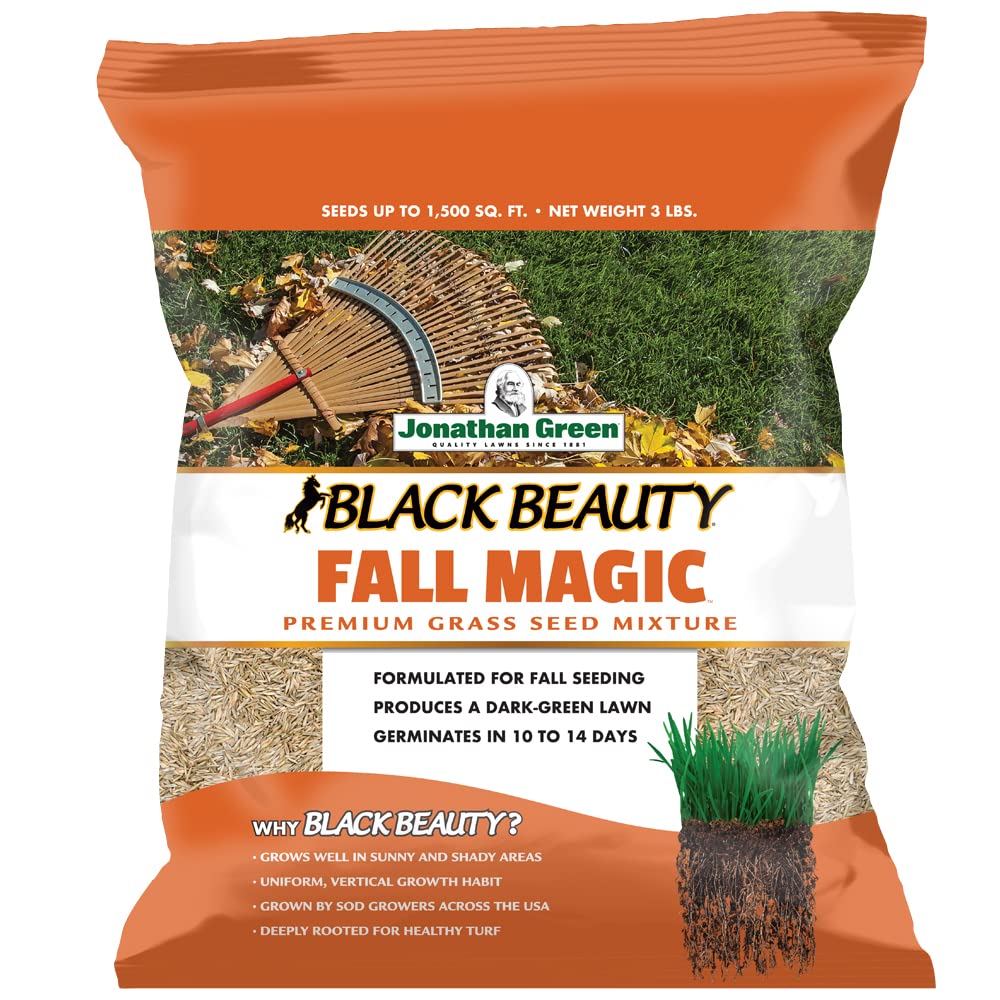
Jonathan Green’s Fall Magic is purpose-built for the exact seeding window — mid-August through mid-October — when soil temperatures drop but roots still need to establish before winter dormancy. The blend combines tall fescue, fine fescue, Kentucky bluegrass, and perennial ryegrass, so you get shade tolerance from the fine fescues and traffic resistance from the ryegrass in one bag.
Customer reviews consistently report germination in as little as 7 days under good conditions, with a dense, dark green turf that persists through winter and greens up earlier in spring. The 3 lb bag covers up to 1,500 sq ft for overseeding, making it a strong mid-range option for smaller lawns or targeted repair of summer-damaged areas.
The biggest caveat is that Fall Magic contains no heat-tolerant Texas bluegrass like the Black Beauty line, so it will struggle in southern transition zones where winter temps sometimes spike. But for northern lawns from the Upper Midwest to New England, this mix delivers the most balanced fall-to-spring performance of any product I have reviewed.
Why it’s great
- Blend of four grass types for sun and partial shade
- Proven fast germination even in cooler fall soil
- Specifically designed to repair summer damage before winter
- No filler or coating — pure seed mix
Good to know
- Not heat tolerant — avoid for southern lawns
- 3 lb bag covers less area than pure ryegrass options
- Needs protection from birds and wildlife after seeding
3. Eretz Annual Ryegrass Seed, 5 lb

Annual ryegrass is the fastest germinating option for winter — often sprouting within 5–7 days in cool soil — and Eretz’s Oregon-grown seed delivers vigorous growth with no weed seed or filler. This is the top pick if your primary goal is erosion control, quick green cover on bare dirt, or a winter nurse crop that you plan to till under in spring.
The 5 lb bag covers roughly 1,000–2,000 sq ft depending on seeding rate, and the larger seed size makes it easy to spread evenly by hand or with a broadcast spreader. Users in southern states love using annual ryegrass to overseed dormant Bermuda lawns, keeping the yard green all winter without damaging the underlying warm-season grass.
One key tradeoff: annual ryegrass dies when summer heat returns, so it is not a permanent lawn solution. If you want a grass that comes back year after year, skip annual varieties and invest in a perennial blend. But for a cheap, fast, cold-hardy winter blanket, Eretz is exceptionally reliable.
Why it’s great
- Extremely fast germination — often visible within 5 days
- Excellent for winter overseeding of warm‑season lawns
- GMO free and grown in Willamette Valley, Oregon
- Large seeds are easy to spread and resist washing away
Good to know
- Annual — dies after one season, does not return
- Not suitable as permanent turfgrass
- May look coarser than perennial fescue blends
4. Jonathan Green Black Beauty Heat & Drought Grass Seed, 3 lb

While marketed primarily for heat and drought, the Black Beauty blend’s deep root system — up to 4 feet — makes it a surprising winter contender. Tall fescue stays green longer into fall than Kentucky bluegrass, and the waxy leaf coating that preserves moisture in summer also helps the grass resist freeze damage in early winter.
The 3 lb bag covers up to 1,500 sq ft for overseeding, making it a solid mid-range choice for patch repair in sunny lawns. Reviews from users in the Carolinas and Virginia show it surviving both 100°F summers and snowy winters, which is rare for a single blend. The germination window is 14–21 days — slower than ryegrass — so plant it earlier in fall (mid-August to mid-September) rather than waiting for late October.
The downside is that this mix is best for full sun to lightly shaded areas. Dense tree cover will produce thinner growth compared to a dedicated shade blend. Still, for homeowners in the transition zone who want one grass that handles both scorching summers and frosty winters, this is the most versatile option available.
Why it’s great
- Deep root system (up to 4 ft) improves winter hardiness
- Waxy leaf coating resists cold damage and moisture loss
- Handles both extreme heat and freezing conditions
- Produces dark green, dense turf in sunny areas
Good to know
- Germinates slower than ryegrass — 14–21 days
- Not ideal for heavy shade
- Best seeded earlier in fall, not late October
5. Old Cobblers Farm Winter Rye Grass Seed, 5 lb
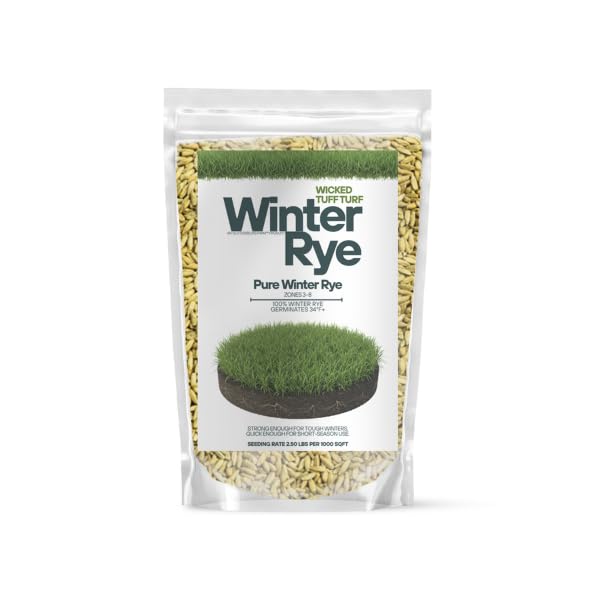
Old Cobblers Farm positions this product as a cover crop and green manure, and that is exactly where it shines. The large rye seeds germinate quickly with minimal preparation — just rake the soil and scatter — making it ideal for stopping erosion on steep banks or covering construction dirt before winter rains.
User reviews highlight its ability to create a fast green mat in cold weather, with many reporting visible growth in under two weeks even when planted in late fall. The nitrogen-fixing capability is a bonus for gardeners who plan to till the grass under in spring to enrich the soil for vegetables or flowers.
For homeowners wanting a permanent winter lawn, this is the weakest pick because annual rye dies completely after one season. You will need to reseed every fall. But if your goal is cheap, fast, temporary ground cover that protects bare soil through winter, this 5 lb bag offers the lowest cost per pound of any option reviewed here.
Why it’s great
- Fast germination with minimal soil prep
- Excellent for erosion control on slopes
- GMO free and works as green manure
- Large seeds resist washing away in rain
Good to know
- Annual — dies after one season, must be replanted
- Not a permanent lawn solution
- Some users reported zero germination with poor watering
FAQ
Can I plant grass seed in winter if the ground is frozen?
Will winter grass seed survive if I plant it in November?
How often should I water winter grass seed?
Final Thoughts: The Verdict
For most users, the best grass seed for winter winner is the GreenView Perennial Ryegrass Blend because it delivers the fastest germination and largest coverage area with zero filler waste. If you want a balanced cool-season mix for repairing summer damage before snow arrives, grab the Jonathan Green Fall Magic. And for a quick, dirt-cheap winter cover crop that protects bare soil until spring, nothing beats the Old Cobblers Farm Winter Rye.