
The screech of metal-on-metal from your brakes isn’t just annoying—it’s your car telling you the caliper pins are bone-dry and binding. The right lubricant transforms that noise into silence, prevents corrosion from road salt, and ensures every stop feels confident rather than grabby. But slathering on any old bearing grease can damage rubber boots or wash away after one rainy commute.
I’m Mohammad Maruf — the founder and writer behind Drink4Good. I’ve spent years analyzing manufacturer formulations, thermal limits, and real-world user data to separate the cheap protectants from the compounds that survive high-friction brake zones.
Whether you’re a weekend DIY mechanic or a professional tech, choosing the right synthetic compound prevents caliper stick, pad chatter, and uneven wear. This guide breaks down the best grease for brake pads by chemistry, temperature tolerance, and application fit.
How To Choose The Best Grease For Brake Pads
Brake grease isn’t one-size-fits-all. A lubricant that works on a wheel bearing can eat through caliper pin rubber boots within months. Choosing the wrong formulation leads to seized pins, uneven pad wear, and noisy stops. Focus on three core factors to get it right the first time.
Temperature Range & Flash Point
Brake systems radiate intense heat, especially during repeated stops. Standard petroleum-based greases liquefy and run off above 300°F, leaving pins dry and prone to sticking. Premium options use synthetic bases, ceramic powders, or PTFE to maintain a consistent lubricating film past 600°F. Check the rated flash point—anything below 500°F risks melting onto the rotor surface.
Rubber & Plastic Compatibility
Brake caliper pins are sealed with rubber boots and dust covers. Lithium-based greases and some molybdenum compounds can swell, soften, or crack these seals over time. Silicone-based greases (like Super Lube) and calcium sulfonate formulations (like the Honda OEM) stay inert against EPDM and NBR rubber. If you plan to grease slide pins, a silicone-compatible paste is the safer bet.
Water Washout & Corrosion Resistance
Brake components are constantly exposed to road splash, rain, and winter salt. A grease that washes away after a few wet miles offers zero long-term protection. Synthetic and ceramic blends form a tenacious barrier that resists water ingress, preventing the galvanic corrosion that seizes steel pins into aluminum calipers. Thicker, non-drip formulas cling better and outlast thin pastes in wet conditions.
Quick Comparison
On smaller screens, swipe sideways to see the full table.
| Model | Category | Best For | Key Spec | Amazon |
|---|---|---|---|---|
| Keze High Temp Ceramic | Ceramic | Extreme heat resistance | 3000°F flash point | Amazon |
| CRC SL3301 Synthetic | Synthetic | Full brake job coverage | -30°F to 600°F range | Amazon |
| Super Lube 97008 Silicone | Silicone | Rubber boot preservation | NSF H1 food-grade safe | Amazon |
| Honda 08798-9002 Urea | Calcium Sulfonate | OEM clutch & pin fit | 50g bottle, OEM exact | Amazon |
| Sta-Lube SL3111 | Lithium | Budget wheel bearing lube | 14 wt. oz cartridge | Amazon |
In‑Depth Reviews
1. Keze High Temp Ceramic Brake Caliper Grease
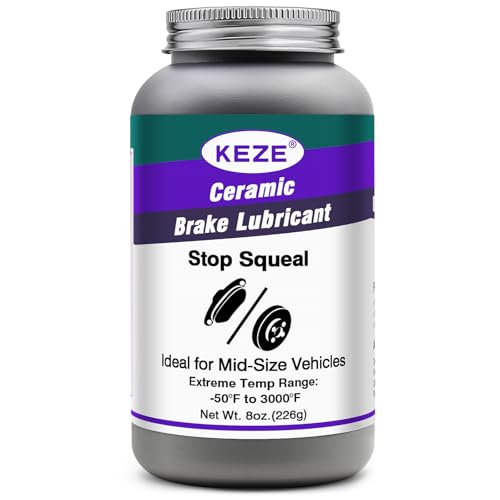
This purple ceramic blend edges past every competitor with a staggering 3000°F flash point—more than enough to handle repeated high-speed braking without melting off the pins. The synthetic MCA base combined with ceramic powder creates a thick, color-coded film that clings aggressively to caliper guide pins and pad backing plates. DIYers report that it instantly eliminated sticky calipers and the uneven pad wear that follows.
The 8-ounce tub comes with a brush-top applicator, which makes coating slide pins and pad ears a clean, targeted process. Unlike runny tube-style greases, this paste stays put during installation and doesn’t migrate onto the rotor face. Multiple users with heavy-duty SUVs and track cars confirm it silences squealing after the first bedding cycle.
Because the formulation is ceramic-based, it remains inert against caliper rubber boots and dust seals. You can confidently use it on every friction point—pad shims, slider pins, and caliper piston faces—without worrying about rubber degradation over time. It also resists water washout far better than standard lithium soap greases.
Why it’s great
- Highest flash point in its class (3000°F)
- Thick, non-drip formula stays put on vertical surfaces
- Brush-top lid simplifies precise application
Good to know
- Purple color can stain fabric if spilled
- Not recommended for wheel bearing packing
2. CRC SL3301 Synthetic Brake & Caliper Grease

CRC packs three solid lubricants—molybdenum, PTFE, and graphite—into one tube rated from -30°F up to 600°F. That broad thermal window covers everything from freezing winter drives to hard mountain descents. The synthetic base prevents caliper binding by maintaining a consistent film across the entire temperature swing, which stops the “one-pad-worn” failure pattern that comes from a sticking slide pin.
The tube format gives you precise control over volume, so you won’t over-grease the pins and risk contaminating the pad friction material. A single 2.5-ounce tube treats several full brake jobs, making this a budget-friendly pick for home mechanics who service multiple vehicles. Users highlight its adhesion—it won’t drip off during reassembly or road vibration.
One trade-off: it’s not VOC compliant for California and some OTC areas, so availability may be limited depending on your state. Also, moly-containing greases can be slightly aggressive with certain synthetic rubber compounds, so stick to using it on metal-to-metal contact points like caliper bracket slides rather than inside rubber dust boots.
Why it’s great
- Triple-friction modifier blend (moly, PTFE, graphite)
- Extreme range from -30°F to 600°F
- Easy-to-control tube nozzle
Good to know
- Not compliant for California/OTC regulations
- Moly can degrade certain rubber seals over time
3. Super Lube 97008 Silicone Lubricating Brake Grease
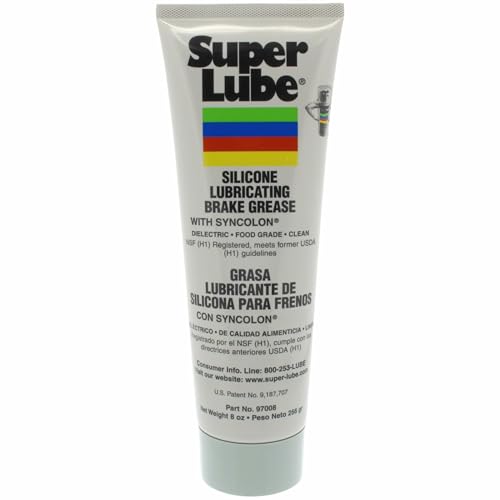
Super Lube is the go-to choice when you’re working on modern calipers with delicate rubber boots and dust seals. Its silicone base with PTFE additive is chemically inert against EPDM, NBR, and Viton, so it won’t swell or crack the seals that keep moisture out of the slide pin bores. It’s also NSF H1 registered for incidental food contact, adding a safety layer if you work in a food-adjacent shop environment.
The translucent white paste has a slightly thinner consistency than calcium sulfonate or ceramic greases, which actually helps it wick into tight pin-to-bore clearances. Users with 3D printers and motorcycle calipers alike praise its corrosion resistance and dielectric strength—a thin coating on electrical connections prevents green corrosion without shorting. The 8-ounce tube holds enough for dozens of brake jobs.
The primary limitation is temperature ceiling: rated to 572°F, it’s sufficient for daily commuters and light track use but not ideal for heavy-duty towing or repeated hard stops where rotor temperatures soar past 700°F. Also, because it’s silicone-based, avoid using it on any part that will later be painted—silicone residue causes fisheyes and poor paint adhesion.
Why it’s great
- Safe for all rubber boot materials
- NSF H1 food-grade certified
- High dielectric strength for electrical insulation
Good to know
- Upper limit of 572°F not for extreme track use
- Silicone spoils paint adhesion if overspray occurs
4. Genuine Honda 08798-9002 Urea Grease

When your car was designed around a specific lubricant, sticking to the factory formula removes all guesswork. This Honda OEM grease is calcium sulfonate-based—an overbased chemistry that offers extreme water resistance and anti-corrosion properties that outlast many aftermarket blends. It’s the exact lubricant Honda spec’d for clutch spline shafts, release fork pivots, and caliper components on their entire lineup.
Users on Acura and older Honda models report it instantly silenced clutch fork squeak and reduced pedal resistance where molybdenum greases had failed. The 50-gram bottle is small, but a little goes a long way on precision components. Because it’s a genuine factory part, the fit and chemical compatibility with Honda’s rubber seals is guaranteed—no guessing about boot swelling or embrittlement.
The trade-off is cost-per-ounce: this is the most expensive option by volume, and the small bottle size means you’ll use it up faster if you’re doing full brake jobs on multiple cars. It’s also formulated specifically for Japanese OEM applications, so European or American vehicles with different seal compounds may not see the same compatibility benefits.
Why it’s great
- OEM exact part—guaranteed compatibility
- Calcium sulfonate resists water washout
- Eliminates clutch squeak on Honda/Acura models
Good to know
- Small 50g bottle is expensive per ounce
- Best suited for Japanese OEM applications
5. Sta-Lube SL3111 New Generation Wheel Bearing Grease

Sta-Lube’s SL3111 is a classic lithium-based wheel bearing grease that performs well on heavy-duty applications like trailer bearings and agricultural equipment. Users describe it as “the good thick stuff”—it stays in place without dripping even on vertical bearing surfaces. The 14-ounce cartridge delivers a lot of volume for the price, making it an attractive choice for farms or shops that grease bearings in bulk.
Where it falls short for brake-specific use is temperature tolerance and rubber compatibility. Lithium soap greases tend to soften and run at brake-system temperatures above 300°F, which can lead to the lubricant migrating onto the rotor surface. Also, lithium soap can cause swelling in some caliper-pin rubber boots over extended periods.
If you’re packing trailer wheel bearings or greasing suspension pivot points, this is a solid, affordable performer. But for direct brake-pad backing plate or caliper slide pin lubrication, a synthetic or ceramic blend is a better long-term choice. Save this one for bearings that don’t see the extreme heat of a braking rotor.
Why it’s great
- Excellent value for high-volume bearing packing
- Thick, non-drip consistency
- Made in the USA
Good to know
- Lithium base can degrade rubber boots
- Low temp tolerance for brake-system heat
FAQ
Can I use regular bearing grease on brake caliper pins?
How often should I reapply brake pad grease?
Will too much grease cause brake failure?
Final Thoughts: The Verdict
For most users, the grease for brake pads winner is the Keze High Temp Ceramic Grease because its 3000°F flash point and thick ceramic formula deliver unbeatable heat resistance and long-term adhesion on caliper pins. If you want rubber-safe lubrication that won’t damage seals, grab the Super Lube 97008. And for an OEM exact fit on Honda or Acura vehicles, nothing beats the Honda 08798-9002.