
A dried-out, cracked O-ring turns a perfect seal into a slow leak—or worse, a sudden blowout that shuts your equipment down. The right grease doesn’t just lubricate; it conditions the rubber, prevents swelling, and holds its consistency across extreme temperature swings so your valves, pumps, and fittings stay airtight.
I’m Mohammad Maruf — the founder and writer behind Drink4Good. I’ve spent hundreds of hours analyzing viscosity grades, NSF ratings, temperature ranges, and rubber compatibility data across dozens of silicone and synthetic lubricants to separate the seal-savers from the messy failures.
Whether you’re maintaining a high-pressure pool filter, a PCP air compressor, marine electronics, or food-processing gear, this guide breaks down the five best picks on the market so you can pick the right grease for o-rings with confidence and zero guesswork.
How To Choose The Best Grease For O-Rings
Not all grease plays nice with rubber. The wrong base oil can swell, shrink, or embrittle your O-ring material, turning a simple lubrication job into a costly replacement. Focus on three core areas to get it right every time.
Silicone vs. Petroleum: The Rubber Compatibility Rule
Silicone-based grease is the universal safe choice for nearly every common O-ring material—EPDM, Buna-N, Neoprene, and Viton. Petroleum-based greases attack these rubbers, causing them to swell and lose dimensional stability. If you’re working with a system that already has an unknown seal compound, silicone grease eliminates the risk of chemical incompatibility.
Temperature Range and Viscosity
An O-ring in a pool pump runs cooler than one inside a high-pressure air compressor or near a hot motor. Check the grease’s listed operating window—good silicone greases handle -40°F to 500°F. For dynamic seals that move under pressure, a thicker non-melting paste stays put without dripping into the mechanism. For static seals, a lower-viscosity compound is easier to spread and still prevents dry rot.
NSF and Food-Grade Certification
If your O-rings are in water filtration, food processing, or any potable-water system, you need an NSF H1 or USDA H-1 rated grease. This certification guarantees the lubricant is safe for incidental food contact and won’t leach harmful chemicals into the media it touches. Non-certified greases may work mechanically but violate health codes and void warranties.
Quick Comparison
On smaller screens, swipe sideways to see the full table.
| Model | Category | Best For | Key Spec | Amazon |
|---|---|---|---|---|
| Super Lube O-Ring Silicone Grease 93016 | Premium Canister | Food processing & industrial vacuum systems | NSF H1 rated, -40°F to 500°F | Amazon |
| Haynes Silicone Grease HAYSG 4OZ TUBE | Mid-Range Tube | Air compressor O-rings & EPDM seals | FDA ingredients, 4-oz tube | Amazon |
| TacParts Magic Lube II 651 | Mid-Range Tube | Pool valves, gaskets & water filter O-rings | USDA H-1 rated, 5-oz tube | Amazon |
| Berkland Silicone Paste Dielectric Grease | Mid-Range Jar | Automotive connectors & marine wiring | 8-oz jar with lid brush | Amazon |
| CRC Marine Premium Dielectric Grease 6113 | Budget Can | Underwater electrical connectors & saltwater gear | Non-curing, 3.3 Wt Oz pressurized can | Amazon |
In‑Depth Reviews
1. Super Lube O-Ring Silicone Grease 93016
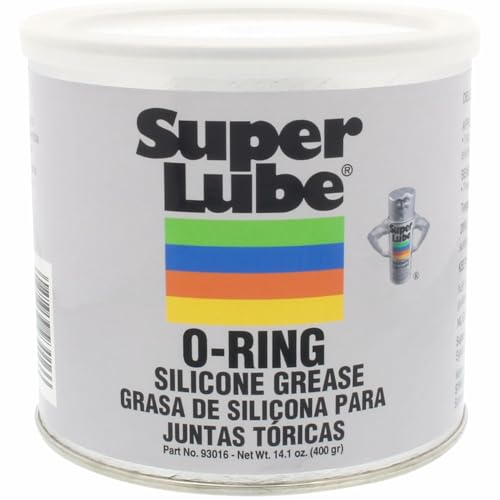
The Super Lube 93016 delivers the widest safe operating window of any grease on this list—from -40°F all the way up to 500°F. This non-curing silicone compound stays put on dynamic seals and doesn’t melt or drip when your equipment runs hot, making it the go-to choice for industrial vacuum systems and high-pressure valve components where consistency directly affects uptime.
At 14.1 ounces of NSF H1 food-grade paste, this canister offers the best per-ounce value for heavy users. Kosher certified and oxidation-resistant, it works on water filter O-rings, wet/dry vac gaskets, and pool filter seals without degrading the rubber over months of contact. Users specifically note it outperforms lower-quality lubricants on installations where the seal must remain pliable for years.
The thick paste consistency requires a small dab per seal—a little goes a long way. The large cartridge format is ideal for a shop bench or maintenance cart, though its size means it’s overkill if you only need a single tube for one valve job.
Why it’s great
- 500°F temperature ceiling handles extreme heat without melting
- NSF H1 rated so it’s safe for potable water and food contact
- Non-curing and oxidation-resistant for long-term seal preservation
Good to know
- Large canister is bulky for small toolboxes or occasional use
- Thicker paste needs more effort to spread in tight fittings
2. Haynes Silicone Grease HAYSG 4OZ TUBE
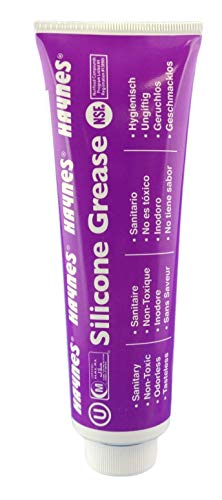
Haynes is a name synonymous with food-grade lubrication, and this 4-ounce tube brings its FDA-compliant formula directly to O-ring maintenance. The grease is formulated with high-quality silicone fluids and additives designed to prevent valves and O-rings from sticking at both high and low temperature extremes—a critical feature for PCP air compressors where piston burn-out is a common failure point without adequate lubrication.
Users on high-end GX compressors report that this grease stays thick enough to feed through an applicator without running off vertical surfaces, creating airtight seals on hose connections, zerk fittings, and scuba gear. The compatibility with EPDM seals removes the worry of rubber degradation, and unlike multi-purpose greases, it won’t wash away in high-moisture environments like pump sprayers or underwater connectors.
The tube format is compact and mess-free, but at 4 ounces it runs out faster if you’re lubricating large pool filter gaskets or multiple compressor rebuilds. It’s made in the USA with FDA ingredients, so you can trust it in any incidental food-contact scenario.
Why it’s great
- FDA food-grade formula safe for incidental food and water contact
- Excellent EPDM compatibility prevents rubber swelling or cracking
- Stays put on vertical surfaces during compressor and valve work
Good to know
- Only 4 ounces per tube—frequent users need multiple tubes
- Not rated for the 500°F ceiling of the premium canister options
3. TacParts Magic Lube II Silicone Lube Grease 651

Magic Lube II is purpose-built for pool equipment, and its USDA H-1 rating means it’s environmentally safe while remaining completely waterproof and chemical resistant. The 5-ounce squeeze tube delivers enough grease for multiple seasons of pool filter maintenance, salt cell O-rings, and multiport valve gaskets without the buyer needing to buy a huge canister they’ll never finish.
The synthetic compound is non-melting, so it doesn’t thin out in the warm chlorine-laden environment inside a pump lid. Users specifically call out its effectiveness on aquarium filter gaskets and winterizing tasks where salt cell nuts seize without proper lubrication. The 0W viscosity grade means it spreads easily across rubber surfaces while still providing a durable film that resists washout.
Because it’s a dedicated pool and water-system grease, it lacks the extreme 500°F temperature range of the premium options, making it less suited for high-speed compressors or engine bay applications. But for anyone maintaining residential or commercial pool gear, this is the most targeted, cost-effective pick on the list.
Why it’s great
- USDA H-1 rated for environmentally safe pool equipment use
- 5-ounce tube holds plenty for multi-season pool maintenance
- Non-melting formula stays put in warm, chlorinated water
Good to know
- Temperature range is narrower—not for high-heat machinery
- Primarily designed for pool use, less flexible for automotive or marine
4. Berkland Silicone Paste Dielectric Grease

Berkland’s silicone paste doubles as a dielectric grease and an O-ring sealant lubricant, making it the most versatile option for automotive and marine hybrid use. The 8-ounce jar provides hundreds of applications, and the built-in lid brush allows direct application onto connectors, brake caliper pins, and gaskets without needing separate tools or dipping fingers into the tub.
The pure silicone formula won’t swell rubber or degrade plastic components the way petroleum-based greases can, which is critical when you’re applying it to spark plug boots, battery terminals, and trailer wiring harnesses that mix rubber seals with plastic housings. Users praise its ability to keep weatherstripping from drying out while also lubricating O-rings in pool equipment and boat hardware.
Keep in mind that this is a paste rather than a heavy grease, so it works wonderfully for electrical and low-pressure seal applications but may not hold up in high-pressure hydraulic systems where a thicker non-curing compound is required. The jar format also risks contamination if stored without the brush cap fully seated.
Why it’s great
- Lid brush built into the jar for clean application on connectors
- 8-ounce size offers hundreds of applications for the workshop
- Safe on rubber, plastic, and marine wiring without chemical attack
Good to know
- Paste consistency is thinner than dedicated O-ring grease
- Jar format can collect debris if brush isn’t kept clean
5. CRC Marine Premium Dielectric Grease 6113
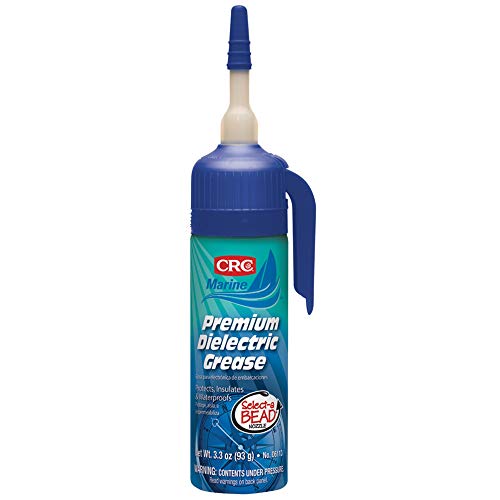
CRC Marine 6113 is the tightest package on the list at only 3.3 weight ounces, but its pressurized can with a Select-A-BEAD nozzle delivers precise application without mess. The non-curing compound is formulated specifically for saltwater environments, protecting electrical connectors, ROV motors, and outboard wiring from short circuits and corrosion that standard greases can’t handle.
The marine-grade formula withstands heat and water submersion without melting or washing away, making it a reliable choice for boat trailer connectors, bilge pump fittings, and any underwater electrical component where seal integrity is life-or-death. Users report it prevents ECU failures in wet environments and remains effective even after prolonged saltwater exposure.
The downsides are its small volume—you’ll go through it faster if you’re doing heavy marine work—and the specialized nozzle system, which some users find less convenient than a standard tube. Price-per-ounce is higher than the tub or tube options, making it a targeted tool rather than a general workshop staple.
Why it’s great
- Pressurized can with precision nozzle for controlled application
- Marine-grade formula withstands submersion and saltwater corrosion
- Non-curing compound won’t harden or crack in marine environments
Good to know
- Small canister runs out faster than tubs or tubes
- Nozzle system can be messy if trigger pressure isn’t adjusted
FAQ
Can I use petroleum jelly on O-rings instead of silicone grease?
How often should I reapply grease to a pool filter O-ring?
Is dielectric grease the same as silicone O-ring grease?
Final Thoughts: The Verdict
For most users, the grease for o-rings winner is the Super Lube 93016 because its NSF H1 certification and 500°F temperature range make it safe and effective across pool gear, compressors, and food equipment alike. If you want a compact food-grade tube for air tools and compressor rebuilds, grab the Haynes Silicone Grease. And for targeted pool valve work at a bargain per-ounce rate, nothing beats the TacParts Magic Lube II.