
Nothing ruins a trip faster than a trailer hitch that screams, groans, and fights every turn. That metal-on-metal grinding isn’t just an annoyance — it’s the sound of friction wearing down your hardware and making your tow vehicle work harder. The right lubricant transforms that harsh connection into a smooth, quiet partnership between truck and trailer.
I’m Mohammad Maruf — the founder and writer behind Drink4Good. I’ve spent years analyzing the chemical makeup, water resistance, and load-bearing characteristics of hundreds of lubricants to understand what truly protects high-friction towing points.
After examining formulation data and real-world performance across dozens of trailering scenarios, I’ve identified the five best options to keep your connection secure and silent. This guide breaks down everything you need to know to select the ideal grease for trailer hitch ball.
How To Choose The Best Grease For Trailer Hitch Ball
Hitch ball grease is a specialized extreme-pressure lubricant designed to withstand the massive shear forces and constant friction between a trailer coupler and ball. Unlike general-purpose lubricants, it must resist water washout, stay put under heavy loads, and protect against rust without collecting road grit. Understanding the base chemistry and consistency grade is the first step toward a quiet, long-lasting towing setup.
Water Resistance and Washout Prevention
Rain, pressure washers, and humid conditions will quickly degrade a grease that lacks waterproofing. For a trailer hitch ball exposed to the elements, you need a formula that passes the ASTM D1264 water washout test. Aluminum complex and calcium sulfonate greases excel here, forming a tenacious film that shrugs off moisture. Silicone-based greases also resist water well but may not offer the same extreme-pressure protection for heavy trailers.
Extreme-Pressure (EP) Additives and Load Capacity
The contact area between a coupler and ball is small, meaning the grease must handle immense pounds-per-square-inch without squeezing out. Look for formulations that contain molybdenum disulfide (moly), graphite, or calcium sulfonate — these EP additives create a sacrificial layer that prevents metal-to-metal welding under load. A grease with a high Timken OK load rating is a reliable indicator of its ability to protect during hard braking or sharp turns.
Consistency Grade and Tackiness
The National Lubricating Grease Institute (NLGI) grades greases from 000 (semi-fluid) to 6 (brick-hard). For a vertical hitch ball that rotates against a coupler, an NLGI #2 grade strikes the ideal balance — thick enough to stay put on the ball surface but soft enough to spread evenly. High-tack additives increase adhesion, preventing the grease from slinging off at highway speeds or dripping in summer heat.
Quick Comparison
On smaller screens, swipe sideways to see the full table.
| Model | Category | Best For | Key Spec | Amazon |
|---|---|---|---|---|
| EQUALIZER 91-00-4250 | Calcium Sulfonate | Weight distribution hitches | NLGI #2, calcium sulfonate | Amazon |
| Bel-Ray Waterproof Grease | Aluminum Complex | High-moisture environments | 16 oz can, aluminum complex | Amazon |
| Super Lube 97008 | Silicone | Low-temp dielectric use | 8 oz tube, PTFE-infused | Amazon |
| CRC Marine Dielectric Grease | Silicone | Saltwater corrosion protection | 3.3 oz can, non-curing | Amazon |
| Phil Wood Grease Tube | Lithium | Light-duty, clean application | 3 oz tube, waterproof | Amazon |
In‑Depth Reviews
1. EQUALIZER 91-00-4250 High Performance Lubricant

Formulated by the makers of Equal-i-zer hitches, this calcium sulfonate grease is engineered specifically for the extreme pressures of weight distribution systems. The NLGI #2 consistency clings tenaciously to the ball surface, eliminating the ear-piercing squeaks that plague heavy trailer setups. Users consistently report an 85 percent or greater reduction in noise after a single application, even on long cross-country hauls through changing climates.
The 4-ounce tube is deliberately compact — easy to stash in a glove box or trailer toolbox for on-the-road touch-ups. Calcium sulfonate chemistry provides inherent rust inhibition and handles wet conditions better than standard lithium greases. It also resists melting and dripping in triple-digit temperatures, a critical advantage for southern or desert towing.
One note: owners of heavy campers may find that reapplication is needed after every major trip rather than twice a year as the directions suggest. The trade-off is a remarkably clean, low-mess grease that doesn’t turn into a black sludge over time. For anyone running a weight distribution hitch, this is the most purpose-built solution available.
Why it’s great
- Virtually eliminates hitch squeak and chatter
- Calcium sulfonate base resists water washout
- Small tube is perfect for portable storage
Good to know
- Requires more frequent reapplication than stated
- Not ideal for submerged marine applications
2. Bel-Ray Waterproof Grease

Bel-Ray’s long-standing aluminum complex grease is the go-to for anyone towing in persistently wet or marine environments. Its chemistry is built around extreme water resistance — it passes the standard water washout test with ease, making it a top pick for boat trailer wheels and hitch balls exposed to launch ramps and salt spray. The 16-ounce can provides enough volume for multiple applications and other high-friction points like suspension components.
The grease maintains a thick, tacky consistency even as temperatures climb, which prevents it from slinging off the ball during highway travel. Users report that it stays sticky and viscous when warm, effectively curing drive-line noise issues on trucks and trailers alike. It’s also compatible with other aluminum-complex greases, so mixing with existing residue won’t cause separation.
Color has shifted from brown to a blue-green in recent years, but the formula remains the same effective blend. The canister format means you’ll need a grease gun or a clean finger to apply — not as sanitary as a squeeze tube, but the performance justifies the extra effort. For those who tow in rain, snow, or near saltwater, this is the most reliable barrier against corrosion.
Why it’s great
- Exceptional water resistance and washout performance
- Large can offers great value per ounce
- High tack prevents sling-off at speed
Good to know
- Can format requires a grease gun or manual application
- Blue-green dye can stain surfaces
3. Super Lube 97008 Silicone Grease with PTFE
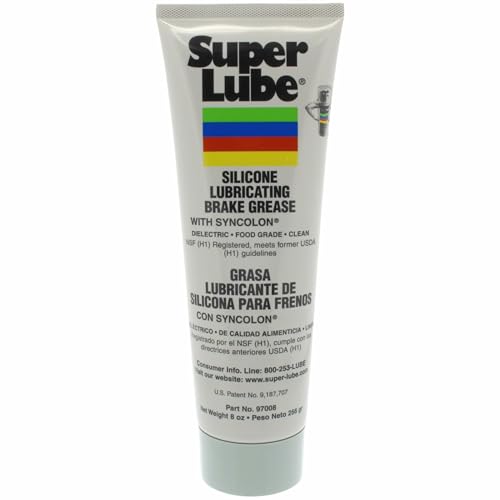
Super Lube’s silicone grease is NSF H1 registered for incidental food contact, but its real strength for hitch ball use is its dielectric nature and moisture resistance. The PTFE (Teflon) additive provides a slick, non-staining film that prevents galling between the coupler and the ball. It’s a paste-like consistency that spreads smoothly and doesn’t dry out or harden over time, even in temperature swings from below freezing to engine-bay heat.
The 8-ounce tube is generous and will last the typical weekend tower several years. Users also love it for brake caliper pins, trailer light connectors, and even 3D printer rails — making it a multi-role lubricant rather than a single-use purchase. Its high dielectric strength (400 volts per mil) means it can be used on electrical connections without causing shorts, a bonus for trailer wiring.
One caveat: silicone grease offers lower extreme-pressure protection compared to calcium sulfonate or aluminum complex formulas. For very heavy trailers (over 8,000 pounds), you may find the film squeezes out under extreme load, requiring more frequent reapplication. For standard recreational towing, it’s a clean, odorless, and highly versatile choice that won’t stain clothes or upholstery.
Why it’s great
- NSF H1 food-grade safe and non-toxic
- Wide temperature range and dielectric properties
- Large tube delivers long-term value
Good to know
- Not ideal for extremely heavy loads
- Slightly runny consistency can drip in high heat
4. CRC Marine Premium Dielectric Grease
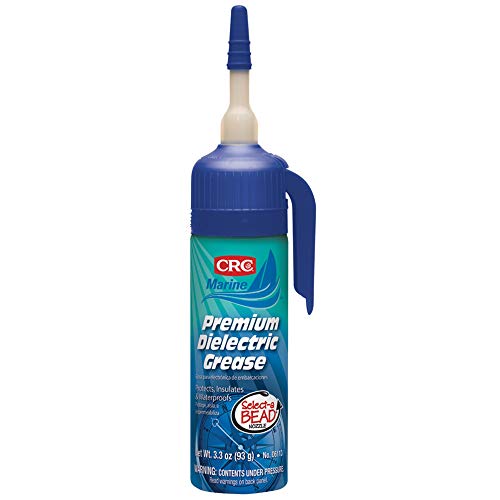
CRC’s marine-grade dielectric grease is a non-curing silicone compound formulated to seal out saltwater and prevent galvanic corrosion on exposed metal surfaces. The pressurized can with the Select-A-BEAD nozzle allows precise application onto the hitch ball without over-applying — just a thin, even coat is needed to form a protective barrier that resists washout from pressure washers and rain.
While dielectric grease excels at insulating electrical connections, it also works well as a lubricant for hitch balls in coastal environments. Users confirm it protects underwater electrical components from shorts and prevents rust on unsealed connectors. The 3.3-ounce can is small, but a little goes a long way due to the aerosol delivery system.
The main drawback for dedicated hitch use is its relatively low extreme-pressure rating. This grease is better suited for preventing corrosion and squeaks in light- to moderate-duty towing rather than heavy fifth-wheel or gooseneck hitches. The dispenser nozzle, while precise, can clog if not cleaned after each use. For boat trailer owners who need a corrosion fighter that pulls double duty on electrical contacts, this is a targeted solution.
Why it’s great
- Excellent saltwater corrosion protection
- Aerosol can delivers clean, precise application
- Non-curing formula remains pliable
Good to know
- Limited EP protection for heavy loads
- Nozzle prone to clogging if not wiped clean
5. Phil Wood Waterproof Grease Tube

Phil Wood’s waterproof grease is a dark green, lithium-based formula that has been a staple in the bicycle industry for decades, but its waterproofing and tackiness make it a surprising contender for light trailer hitch use. The 3-ounce squeeze tube is compact enough to fit in a saddlebag or small tool pouch, and users note that one tube can service several applications on loose-bearing hubs and hitch balls alike.
The grease is exceptionally thick and fills the coupler cup neatly without squeezing out. Its waterproof properties — originally designed for bicycle hubs exposed to rain and road spray — translate well to hitch ball protection. It performs silently even after extended periods of wet weather, and the tacky consistency prevents sling-off during towing.
The trade-off is that lithium-based greases have lower maximum temperature tolerance and extreme-pressure ratings than aluminum complex or calcium sulfonate greases. For small utility trailers, jet ski trailers, or light campers, this is a perfectly capable and affordable option. For heavy-duty towing or long-haul trips, you’ll want something with more robust EP additives. It’s a niche choice, but one that proves big performance can come in small packages.
Why it’s great
- Compact tube for easy portability
- Excellent waterproofing for light-duty use
- Thick tack prevents sling-off
Good to know
- Not designed for extreme towing loads
- Small volume requires more frequent repurchase
FAQ
How often should I reapply grease to my trailer hitch ball?
Can I use regular chassis grease on a hitch ball?
Final Thoughts: The Verdict
For most users, the grease for trailer hitch ball winner is the EQUALIZER 91-00-4250 because its calcium sulfonate formula was designed specifically for the extreme pressures and noise issues of modern weight distribution hitches. If you want unmatched water resistance for marine or wet-weather towing, grab the Bel-Ray Waterproof Grease. And for a versatile, food-grade safe option that also handles electrical connectors and brake pins, nothing beats the Super Lube 97008.