
A flimsy greenhouse covering that tears in the first wind or fogs up until your seedlings damp off is a fast track to a ruined season. The right plastic sheeting manages light transmission, thermal retention, and tear resistance while handling freeze-thaw cycles without becoming brittle. Whether you are retrofitting a walk-in frame or tensioning a hoop house for winter crops, the material’s thickness, UV treatment, and drip-control layer determine whether your investment lasts one season or several.
I’m Mohammad Maruf — the founder and writer behind Drink4Good. I have spent years analyzing greenhouse glazing materials, comparing polyethylene densities, UV inhibitor concentrations, and light-transmission percentages to find what actually survives direct sun and heavy snow loads.
After sifting through engineering specs and real-world use cases, I compiled the top contenders for the modern grower. This guide covers the essential factors of a high-performing best greenhouse covering so you can match the right film to your frame and climate.
How To Choose The Best Greenhouse Covering
Greenhouse coverings are not all cut from the same plastic sheet. The material gauge, UV stabilization, and surface finish directly affect how much light reaches your plants and how many seasons the film stays intact. Choosing incorrectly usually means replacing a torn, yellowed, or drip-damaged cover after just one winter.
Mil Thickness and Density
The mil rating (1 mil = 0.001 inch) is the most direct indicator of puncture and tear resistance. A 6 mil film is the minimum for seasonal hoop houses and light-duty frames; it handles moderate wind but can split if tensioned too tight over sharp edges. A 16 mil woven polyethylene tarp offers substantially more abrasion resistance and can survive rubbing against metal frames and repeated freeze-thaw cycles without developing stress cracks.
UV Stabilization and Light Transmission
Unstabilized polyethylene degrades in direct sunlight within weeks, turning brittle and opaque. A quality covering includes UV inhibitors that extend functional life to two or three years. Clear films typically transmit 85–90 percent of available light, which is ideal for seedling germination and leafy greens. Cloudier or recycled-content films drop transmission into the 70–80 percent range, which still works for overwintering hardy vegetables but may slow warm-season crops.
Anti-Drip (Anti-Condensation) Coating
Condensation forms on the inner surface when warm, humid air hits a cold plastic barrier. If that condensation drips directly onto leaves, it can burn foliage when sunlight refocuses through the droplets. An anti-drip treatment causes water to sheet down the sides of the structure instead of falling from the ceiling. This feature is especially valuable in high-humidity environments or during early spring when day-night temperature swings are extreme.
Quick Comparison
On smaller screens, swipe sideways to see the full table.
| Model | Category | Best For | Key Spec | Amazon |
|---|---|---|---|---|
| Ansgery 16 Mil Tarp | Premium Tarp | Heavy-duty long-term coverage | 16 mil woven polyethylene with grommets | Amazon |
| Chicarry 6 Mil Film | Mid-Range Film | Year-round hoop houses | 5-layer co-extrusion, anti-drip coating | Amazon |
| ToLanbbt 6 Mil Sheeting | Value Film | Large DIY hoop houses | 16 x 26 ft sheet, drip-proof design | Amazon |
| Film-Gard 6 Mil Construction Sheeting | Construction Grade | Budget-friendly overwintering | 10 x 100 ft roll, recycled polyethylene | Amazon |
| TENTOPMIC Replacement Cover | Walk-In Cover | Replacement for mini greenhouses | 56 x 29 x 76 in, PE reinforced | Amazon |
In‑Depth Reviews
1. Ansgery 16 Mil Clear Greenhouse Tarp
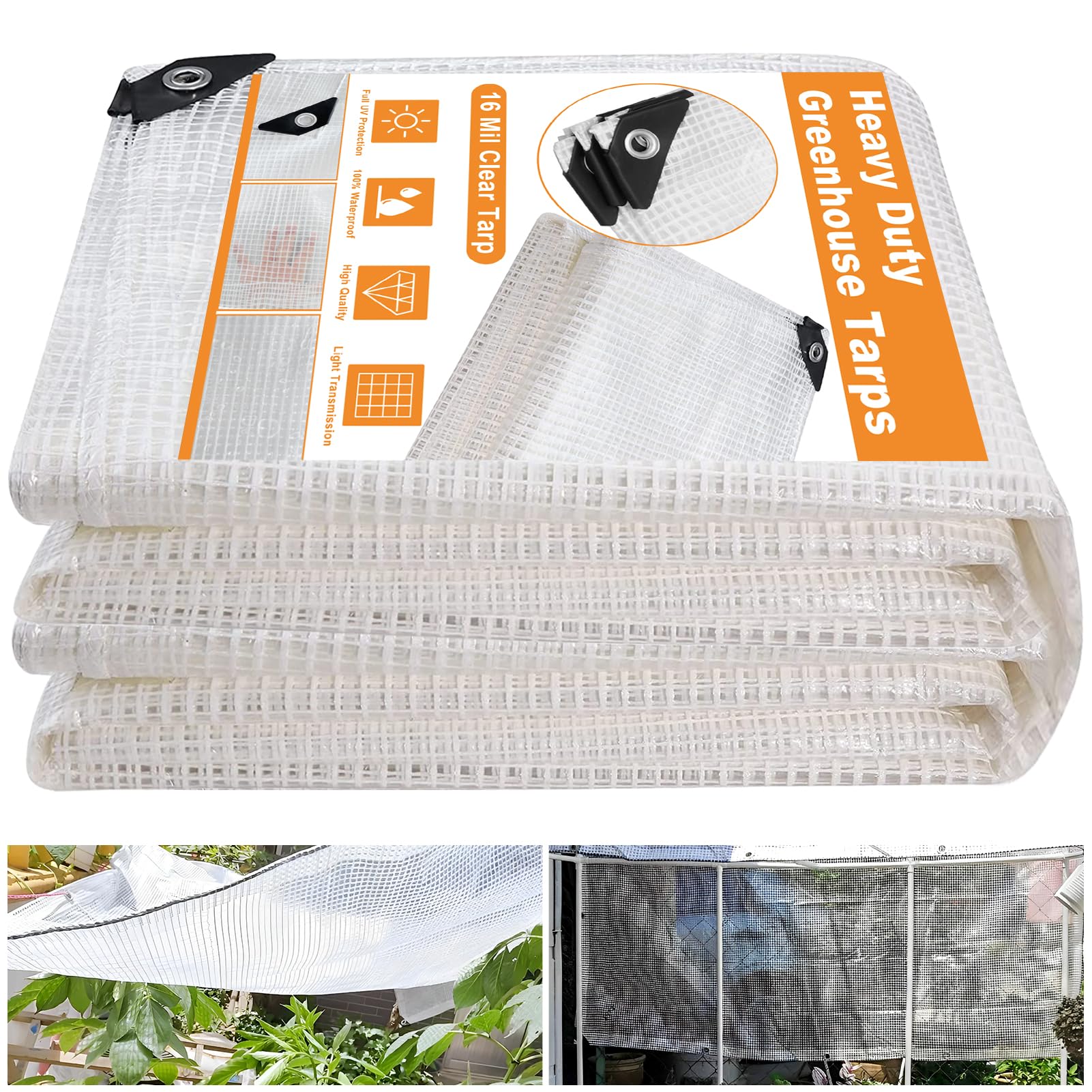
At 16 mils thick with a woven polyethylene construction, this tarp is a different class of material compared to standard 6 mil films. The double-coated three-layer design gives it serious tear resistance across the entire surface, and the reinforced edges include ropes folded into the hem. Every 18 inches there is a rust-proof grommet, which makes tensioning against a frame straightforward and secure — critical for areas that see high winds or heavy snow loads.
User reports confirm the tarp blocks freezing rain and maintains structural integrity through winter storms without developing pinhole leaks. The translucency allows ample daylight for plants while still providing privacy inside the structure. Several reviewers noted the tarp lasted roughly two years of continuous outdoor use before needing replacement, which is a strong lifespan for a film in this price tier.
One consideration is the weight: this is a heavy tarp, not a lightweight film, so installation requires sturdy framing and adequate fastening. The material runs hot in full sun — excellent for greenhouses but potentially too warm for chicken runs or shaded structures. Pay close attention to grommet fastening technique in high winds to avoid pull-out.
Why it’s great
- Triple-layer woven construction resists tearing far better than single-layer films
- Grommets every 18 inches allow secure, even tensioning across the whole sheet
- Survives two years of sun and snow with no reported UV degradation
Good to know
- Heavy material requires strong framing and multiple attachment points
- Traps significant heat; not ideal for applications needing passive ventilation
2. ToLanbbt 16 x 26 ft Clear 6 Mil Greenhouse Plastic Sheeting
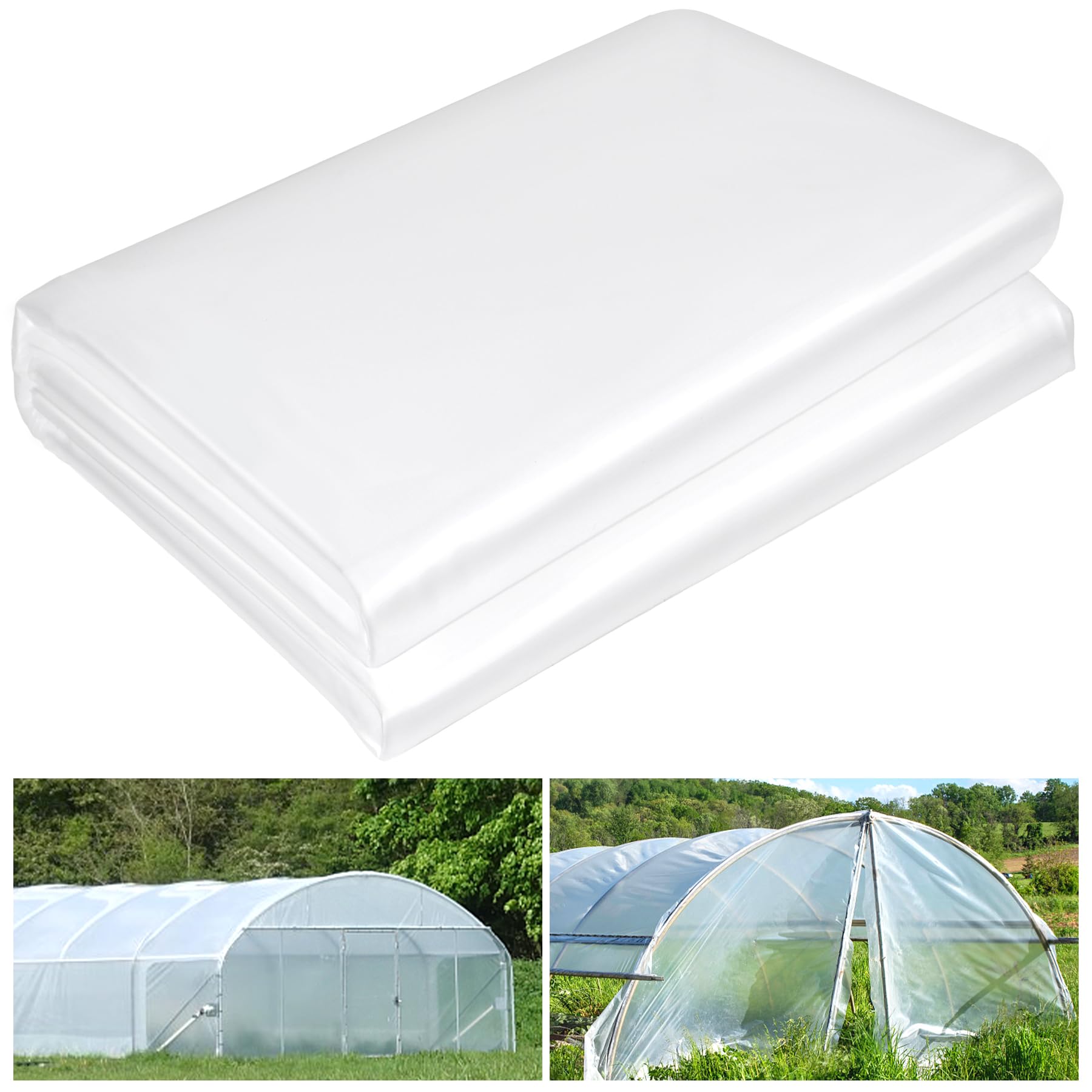
This 6 mil polyethylene sheet covers a generous 16 by 26 feet, making it a strong candidate for large hoop houses or tunnel rows without needing to seam multiple pieces. Longitudinal tensile strength hits 26 MPa and transverse tear strength reaches 150 kN/m, which translates to reliable puncture resistance during installation and wind loading. The clear film delivers up to 90 percent light transmission, supporting vigorous germination even in late winter.
The drip-proof surface treatment is a standout feature for this price bracket — water sheets down the sides instead of dripping onto foliage, reducing leaf burn and fungal pressure on damp days. Users have reported it held up through rain and light snow without tearing, though some noted the clarity is not perfectly transparent, which is common for moderately priced films. It can be cut and folded for custom fits and secured with stones, clamps, or wood battens.
Longevity depends heavily on exposure. If you need a film for permanent year-round use, stepping up to a thicker, UV-rated option is advisable.
Why it’s great
- Large 16 x 26 ft sheet reduces seams and installation time
- Drip-proof coating channels condensation away from plant leaves
- Strong tensile numbers for its thickness category
Good to know
- Film clarity is hazy, not crystal clear for full visibility
- UV resistance is limited; not meant for multi-year installations
3. Chicarry 24 x 25 ft 6 Mil Clear Greenhouse Plastic Sheeting
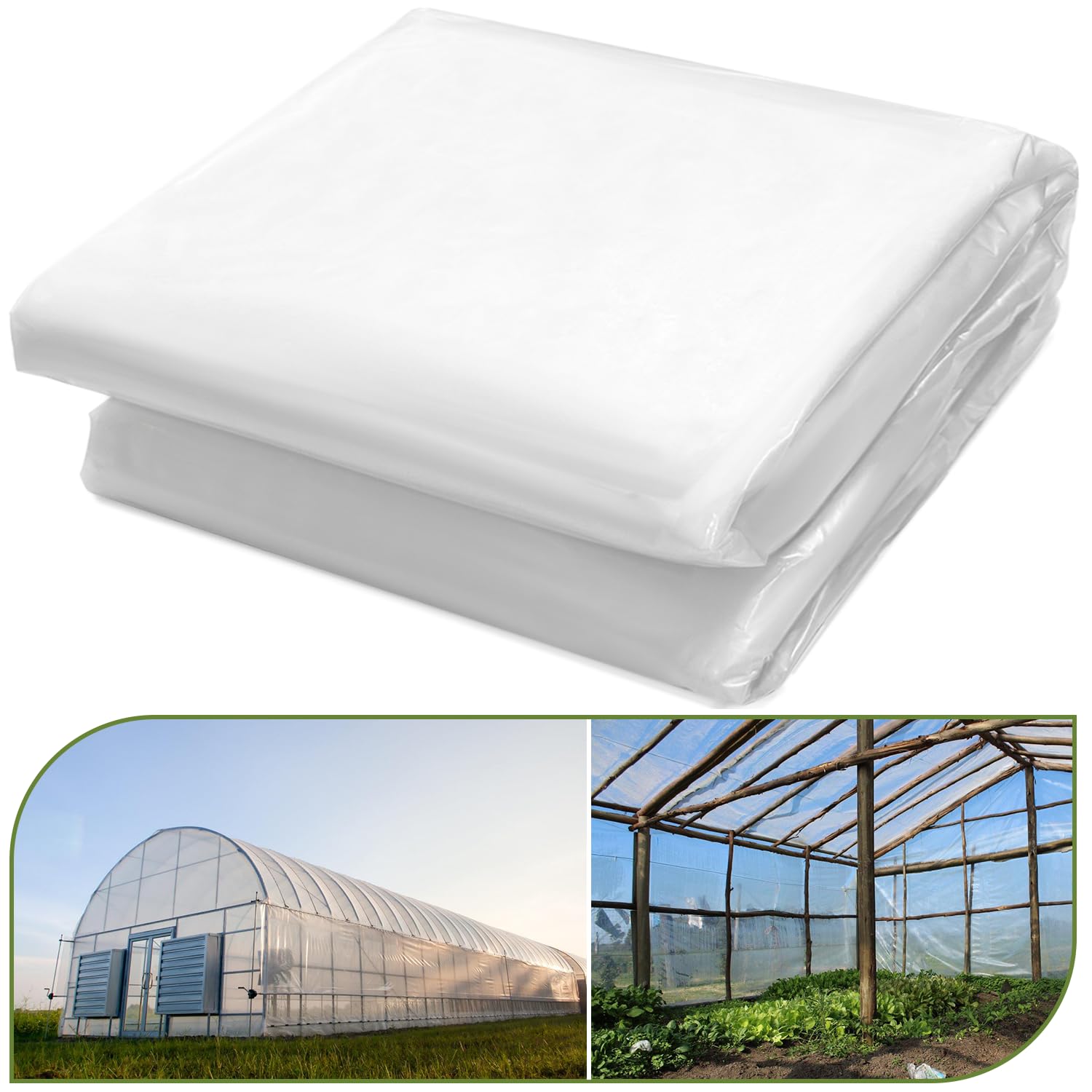
The Chicarry film uses a 5-layer co-extrusion process that bonds distinct functional layers into a single 6 mil sheet. This technique improves tensile strength and flexural fatigue resistance compared to single-layer extrusion, which is why users have reported the film surviving a couple of inches of snow and ice loading without splitting. The clear white material includes a hydrophobic anti-drip layer that forms a continuous sheet of water rather than individual droplets, a major advantage for winter growers battling constant condensation.
At 24 feet wide by 25 feet long, this sheet offers broad coverage for medium to large hoop houses or rigid frames. Reviewers have used it to wrap screened porches during cold snaps and noted a measurable temperature lift inside the structure. The film is slightly stretchy when warm, making it easier to tension smoothly on a warm day — a useful trick for avoiding wrinkles that can collect moisture and debris.
The anti-drip coating comes with a trade-off: the surface appears slightly hazy rather than optically clear. That haze is the hydrophobic layer at work, so do not mistake it for poor quality. Users in high-humidity environments report it dramatically reduces overhead dripping compared to untreated films, which alone justifies the slight loss in transparency.
Why it’s great
- 5-layer co-extrusion delivers superior tear strength for a 6 mil film
- Anti-drip layer prevents leaf burn from condensation droplets
- Handles snow and ice loads without rupture
Good to know
- Hazy finish reduces optical clarity compared to plain films
- Optimally installed on warm days for maximum stretch and fit
4. Film-Gard 6 Mil Construction Plastic Sheeting 10 x 100 ft
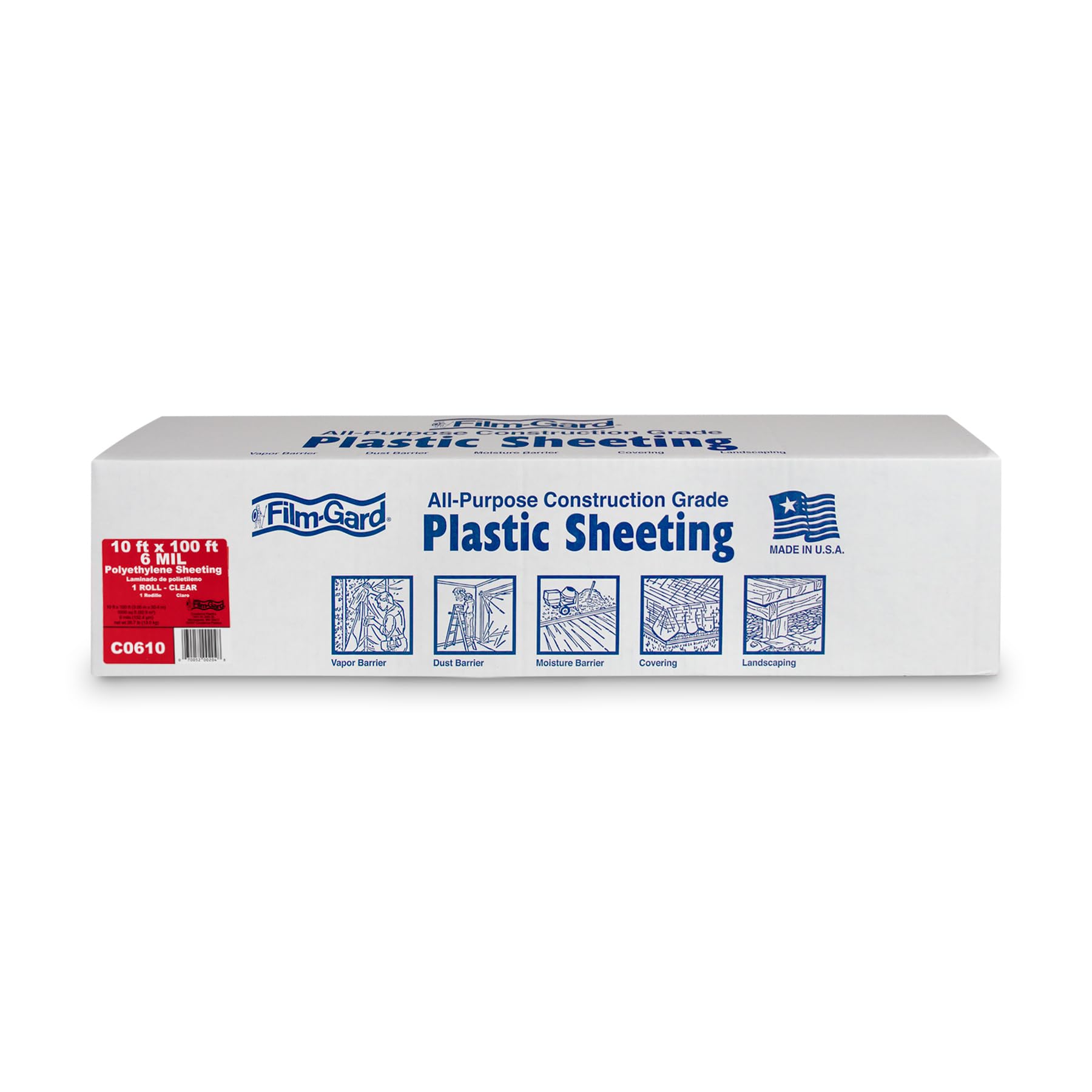
Film-Gard is a construction-grade polyethylene roll that measures 10 feet wide by 100 feet long, giving you a massive 1,000 square feet of material for a modest investment. The 6 mil thickness provides reasonable puncture resistance for overwintering garden beds, chicken runs, and temporary hoop tunnels. Users have noted it keeps interior temperatures roughly 15°F warmer than ambient during snowstorms, making it functional for season extension despite its non-specialized origin.
Because this sheeting is manufactured with recycled content, it has a frosted, opaque appearance rather than clear transparency. Light still passes through, but you cannot see plants clearly from outside. That is less of a concern for ground-level covers or cold frames, but if you rely on full visible light for high-light crops, a clearer film is preferable. The material accepts zip ties without tearing and can be cut easily with a utility knife.
The biggest limitation is UV stability. This is not a greenhouse-grade film, and without UV inhibitors, direct sun exposure will degrade it within weeks to a few months. It is best suited for seasonal use — put it up in late fall and remove it in early spring — or for interior partitioning where sunlight is indirect. For the coverage area per dollar, it is an excellent option for large-scale temporary protection.
Why it’s great
- Massive 100-foot roll covers large areas without seams
- Maintains a 15°F temperature lift inside enclosures during winter
- Accepts zip ties and fasteners without propagating tears
Good to know
- Not UV-stable; degrades quickly in continuous direct sunlight
- Frosted appearance reduces light transmission and visibility
5. TENTOPMIC 56x29x76 Inch PE Replacement Greenhouse Cover

This cover is a drop-in replacement for popular mini greenhouse frames (frame not included). The 56 x 29 x 76 inch dimensions fit 4-tier portable greenhouses, and the reinforced polyethylene material is noticeably thicker than the original covers that ship with budget frames. The roll-up zipper door is a functional upgrade over flimsy hook-and-loop closures, providing easier access and adjustable ventilation that helps manage temperature on sunny days.
Multiple users compared the zipper quality favorably against factory covers, noting the stitching and reinforced webbing felt more robust. The 100-percent waterproof and anti-UV claim holds up in practice, with reports of the cover surviving moderate wind and rain without tearing. The extended edges allow anchoring with stones or soil to keep the cover tensioned, which is essential for preventing flap damage in breezy conditions.
Some reviewers noted only four tie-down points near the base, which can be insufficient in exposed locations. In higher winds, additional anchoring is advisable to prevent the cover from lifting and straining the zipper seam. A few reports mentioned the seam splitting on the first zip, though the majority of feedback indicates the zipper outlasts the original hardware by a wide margin. For the price, this is a solid upgrade for anyone with a 56-inch-wide portable greenhouse frame.
Why it’s great
- Zipper and reinforced stitching are more durable than most stock covers
- Anti-UV and waterproof protection works reliably in wet conditions
- Roll-up door allows adjustable ventilation for temperature control
Good to know
- Only four lower tie-down points require supplemental anchoring in wind
- Some units reported seam splitting on first use at the zipper base
FAQ
Can I use standard construction plastic sheeting for a greenhouse?
What is the difference between 6 mil and 16 mil greenhouse covering?
How long does a greenhouse plastic covering typically last?
Final Thoughts: The Verdict
For most users, the best greenhouse covering winner is the Ansgery 16 Mil Tarp because its woven triple-layer construction delivers unmatched tear resistance and multi-year durability for the price. If you want a large-format film with anti-drip protection for a hoop house, grab the Chicarry 6 Mil Film. And for a budget-friendly temporary wrap that covers massive ground, nothing beats the sheer square footage of the Film-Gard 6 Mil Sheeting.