
Waking up to a frost-covered garden and shriveled plants after a single cold night is a heartbreak every winter gardener knows. A dedicated structure changes that—creating a microclimate that traps heat, blocks wind, and extends your growing season by months. The challenge is choosing one that won’t collapse under snow or rip apart in a January gale.
I’m Mohammad Maruf — the founder and writer behind Drink4Good. I spend my days analyzing greenhouse frame gauges, PE cover densities, and polycarbonate panel ratings to separate winter-worthy builds from fair-weather shells.
After combing through hundreds of real-world winter performance reviews and cross-referencing snow load specs, UV resistance ratings, and frame thickness data, I built this guide to the best greenhouse for winter that actually holds up when temperatures drop and storms roll in.
How To Choose The Best Greenhouse For Winter
A winter greenhouse that fails is worse than no greenhouse at all — collapsed frames kill plants and waste money. Focus on three core elements: frame rigidity, cover insulation properties, and the anchoring system. Thin-walled tubing and single-layer covers are the most common points of failure in freezing climates, so prioritize units with at least 0.7mm steel or aluminum frames and double-wall polycarbonate or high-GSM PE covers.
Frame Material: Galvanized Steel vs Aluminum vs Painted Steel
Galvanized steel offers the best strength-to-weight ratio for large winter structures; the zinc coating prevents rust from condensation and snow melt. Aluminum is lighter and never rusts but can flex under heavy snow loads if the gauge is too thin. Painted steel frames, common on budget-tier models, chip easily and corrode within one or two seasons when exposed to constant moisture and freeze-thaw cycles.
Cover Material: Polycarbonate Twin-Wall vs PE Grid Fabric
Twin-wall polycarbonate panels (4mm or thicker) trap an air pocket between layers, providing significantly better insulation than any single-layer cover. They shatter-proof and block UV while transmitting 80-85% of sunlight. PE grid fabric covers, like 150g/sqm reinforced poly, are lighter and cheaper but lose heat faster; they are acceptable for mild winters or when paired with an interior heater, but you will see wider temperature swings.
Snow Load & Wind Anchoring
A greenhouse built for winter must shed snow rather than collect it. Peak-roof designs shed snow more effectively than flat-top hoop houses. Look for crossbars or reinforced roof supports that prevent sagging under accumulation. Anchoring is non-negotiable: spiral ground stakes, ratchet tie-downs, and the option to bury the cover’s bottom edge into soil or weigh it down with sand buckets separate survivors from flyaways in 40-mph gusts.
Quick Comparison
On smaller screens, swipe sideways to see the full table.
| Model | Category | Best For | Key Spec | Amazon |
|---|---|---|---|---|
| VEIKOU 6’x12’ | Premium | Year-round rigid structure | 4mm twin-wall polycarbonate panels | Amazon |
| Quictent 25x10x6.6 FT | Premium | Large-scale winter growing | 0.7mm galvanized steel + anti-sag top | Amazon |
| WUKHG 6×7.5FT Polycarbonate | Premium | Compact all-season protection | 580g twin-wall PC panels + aluminum | Amazon |
| Sylviera 6x4FT Polycarbonate | Mid-Range | Budget polycarbonate option | 4mm double-wall PC + aluminum frame | Amazon |
| KING BIRD 15x7x7 FT Premium | Premium | Large tunnel with high ventilation | 150g/sqm PE cover + 8 roll-up windows | Amazon |
| ShelterLogic 6’x8′ GrowIT | Mid-Range | Backyard peak-roof growing | 5.5 oz triple-layer ripstop cover | Amazon |
| Yardsight 8.5×7 FT Pop-up | Mid-Range | Quick setup and seasonal use | Steel frame + PE cover + 4 doors | Amazon |
| KING BIRD 10x7x7 FT | Mid-Range | Starter tunnel with reinforced frame | 0.7mm galvanized steel + 150g/sqm cover | Amazon |
| Purlyu Walk-in 4.7×4.7×6.4 FT | Budget | Compact entry-level shelter | Iron frame + PE cover + 14 shelves | Amazon |
In‑Depth Reviews
1. VEIKOU 6’x12’ Greenhouse

The VEIKOU 6’x12’ is the gold standard for winter growers who want a permanent, rigid structure. Its 4mm twin-wall polycarbonate panels provide genuine insulation — the air gaps buffer against sub-zero nights while the powder-coated aluminum frame resists rust and corrosion far better than painted steel. The upgraded roof vent uses a pole-less pulley system that adjusts easily even when the unit is packed with tall plants.
Real-world reports show it surviving 30-mph wind gusts without frame separation, though the manufacturer wisely recommends tie-down kits for anything above 15 mph. The lockable door adds security and prevents wind from swinging the panels open unexpectedly. Assembly requires patience — the manual is decent but the sheer number of parts means a two-person, half-day build is realistic.
The included thermometer is a functional add-on but not a fully-fledged Bluetooth device; the non-connected temperature display works fine for keeping an eye on interior conditions. For growers who want a long-term, low-maintenance winter solution, this frame-and-panel combination is the strongest investment in this lineup.
Why it’s great
- 4mm twin-wall PC provides real winter insulation
- Powder-coated aluminum frame won’t rust
- Lockable door adds security and wind resistance
Good to know
- Assembly is time-consuming with many parts
- Needs supplemental anchoring for high winds
- Pole-less vent may require minor adjustments
2. Quictent 25x10x6.6 FT Premium Greenhouse
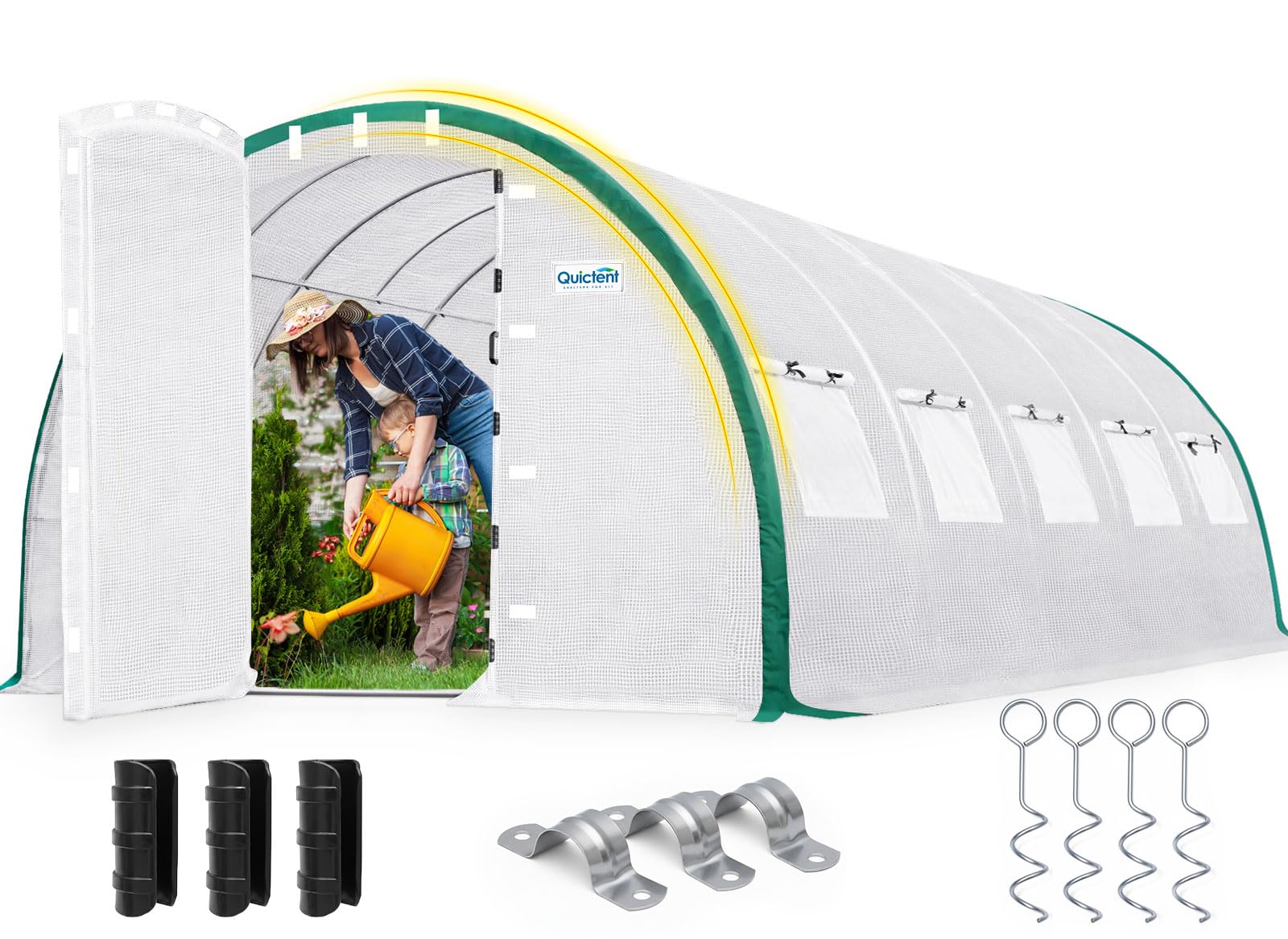
When you need serious square footage for winter growing, the Quictent 25x10x6.6 FT delivers a massive footprint without sacrificing structural integrity. The 0.7mm thickened galvanized steel frame is reinforced with 4-5 crossbars across the roof to prevent snow accumulation — a critical feature for northern climates where a single heavy snowfall can collapse a standard hoop house. The patented dual swing-door frames open 180 degrees, making it easy to wheel in potting benches or harvest bins.
The 150g/sqm PE grid cover includes Oxford seam-reinforcement at stress points and an 8-inch overlong bottom skirt that can be buried in soil for windproof anchoring. Owners report interior temperatures spiking to 140°F in direct sun, which confirms excellent heat retention; you’ll need the 10 mesh screen windows to manage airflow. Assembly is straightforward for a structure of this size, though the instructions could be clearer on the door clamp installation.
The lifetime parts replacement on connectors and stakes, plus the 365-day complimentary component support, makes this a low-risk purchase for serious growers. The weight of the frame alone (over 111 pounds) tells you this is not a fair-weather shell — it’s built to stay put through winter storms.
Why it’s great
- Reinforced anti-sag roof prevents snow collapse
- Patented dual swing doors for easy access
- Buriable 8-inch skirt for wind anchoring
Good to know
- Very heavy frame — requires solid foundation
- Interior can overheat without active ventilation
- Instructions need improvement for first-timers
3. WUKHG 6×7.5FT Polycarbonate Greenhouse
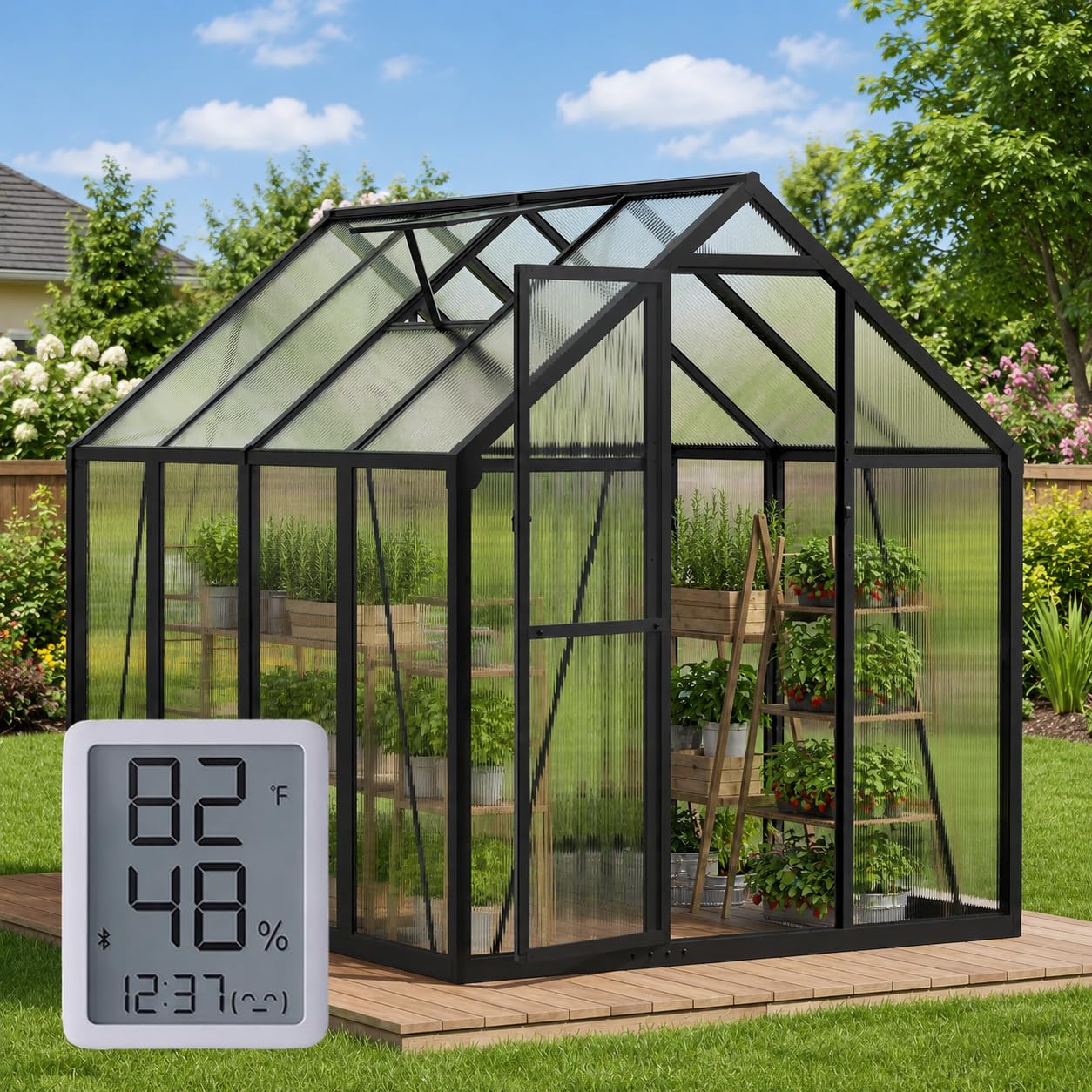
The WUKHG 6×7.5FT strikes an excellent balance between compact footprint and serious winter insulation. The 580g twin-wall polycarbonate panels, combined with a high-quality aluminum alloy frame, create a structure that handles strong winds, heavy rain, and blizzards according to buyer reports. The adjustable ventilation window and lockable door provide good airflow control without compromising security.
Buyers in Colorado and New England report the unit retaining heat remarkably well and protecting plants through freezing conditions, as long as the frame is anchored to a flat, level surface. The assembly process is the biggest hurdle — several owners noted that some parts arrived slightly mislabeled and the manual’s pictures lack detail, making it a 4-5 hour solo project. The included thermometer functions well for basic temperature monitoring but the Bluetooth feature is essentially non-functional for real-time remote use.
One buyer reported failure in 30-50 mph winds, reinforcing the rule that even well-built greenhouses need supplemental anchoring in exposed locations. For those who glue the PC panel gaps and secure the base properly, this unit offers polycarbonate-level insulation at a price that undercuts larger rigid structures.
Why it’s great
- 580g twin-wall panels provide real thermal insulation
- Aluminum frame resists rust permanently
- Compact size fits small backyards and patios
Good to know
- Bluetooth thermometer feature is non-functional
- Assembly can be confusing with mislabeled parts
- Requires strong anchoring for exposed sites
4. Sylviera 6x4FT Polycarbonate Greenhouse
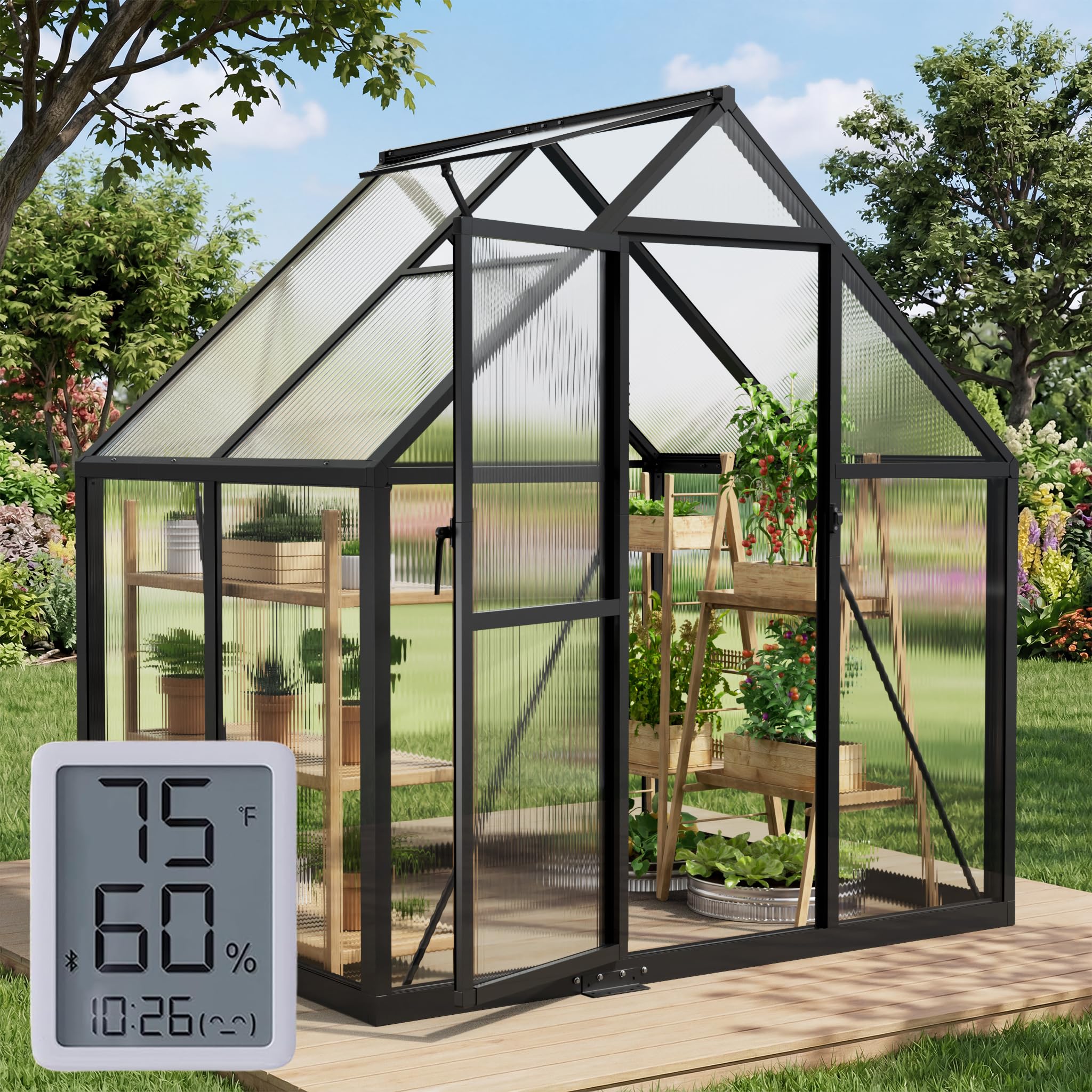
If you want polycarbonate-level insulation on a budget, the Sylviera 6x4FT delivers. The 4mm double-wall PC panels and aluminum frame provide the same insulation principle as premium models — an air pocket between two layers of shatter-resistant plastic — at roughly half the price of larger polycarbonate units. The included hygrometer helps you monitor humidity, which is critical for preventing mold during sealed winter operations.
Buyers confirm the structure retains heat well and withstands moderate wind and rain. The adjustable roof vent and lockable door give you basic climate control. The major complaint involves the assembly instructions: the manual fails to mention that the protective film must be removed from both sides of every polycarbonate panel before installation, and the roof vent hardware may need rubber bands or zip ties to stay firmly attached in wind.
One buyer experienced significant issues with damaged panels and inaccurate dimensions, though this appears to be an outlier; the majority of ratings are 4-5 stars. For the price, this greenhouse offers the best entry point into rigid panel winter growing, as long as you budget extra time for careful assembly and sealing of panel gaps with glass glue.
Why it’s great
- 4mm twin-wall PC at a budget-friendly price
- Hygrometer included for humidity monitoring
- Aluminum frame will not rust
Good to know
- Protective film removal not mentioned in manual
- Roof vent may need reinforcement
- Some units have had fit and damage issues
5. KING BIRD 15x7x7 FT Premium Greenhouse
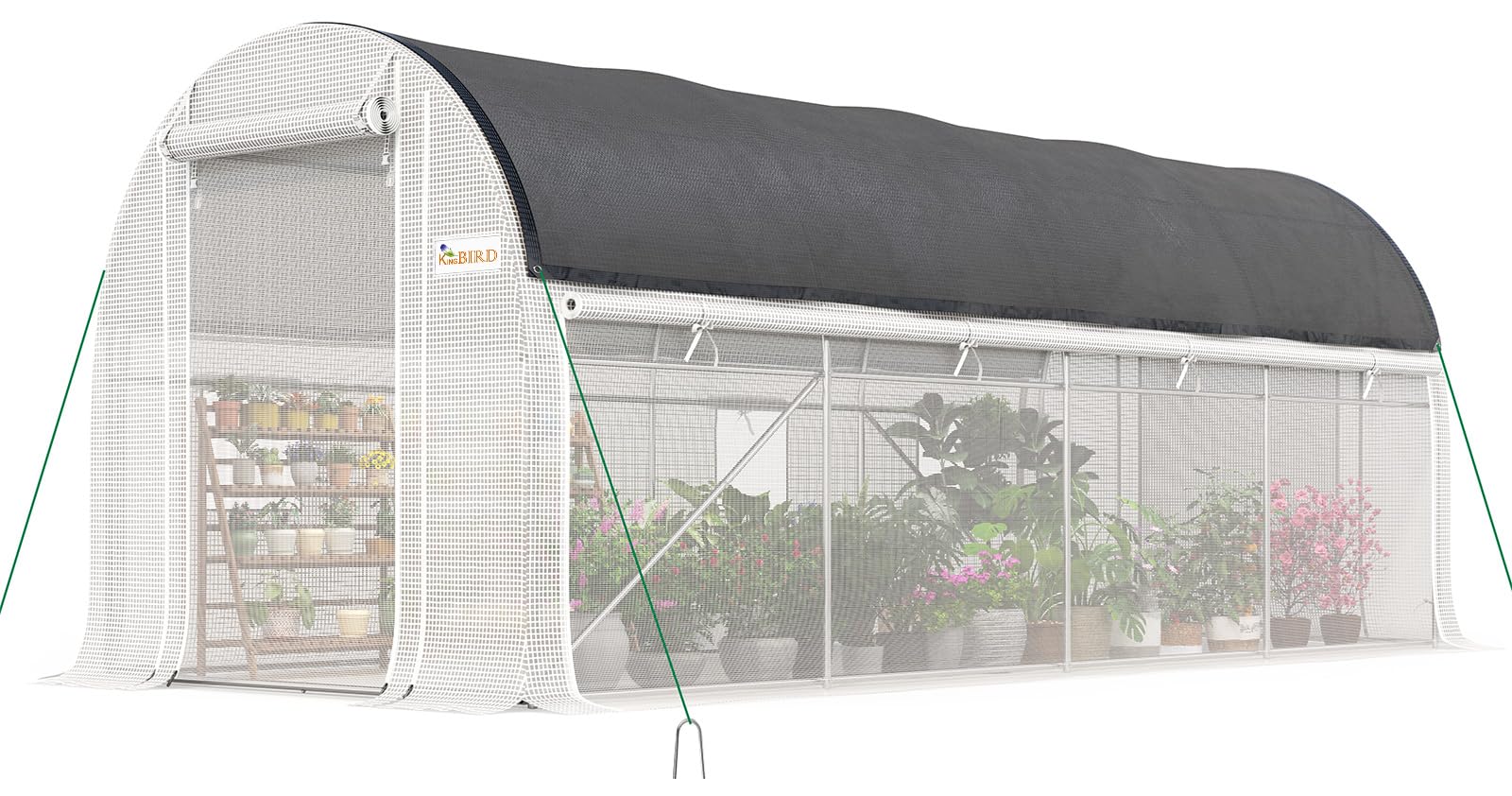
The KING BIRD 15x7x7 FT Premium Tunnel+ is the largest PE-cover model in this guide, designed for growers who need volume without switching to a rigid panel system. The 150g/sqm PE grid cover includes a UV stabilizer that extends service life, and the reinforced galvanized steel frame provides adequate rigidity for a hoop house of this scale. The unique addition of a full side screen plus 8 roll-up windows gives you exceptional ventilation control — crucial for preventing heat buildup on sunny winter days when the interior can exceed 140°F.
The dual-door design (one at each end) with separate PE and mesh layers allows you to regulate airflow without letting in pests. Owners in Texas and New England report the structure surviving well when anchored properly, but note that the included ground stakes are insufficient for exposed locations — upgrading to 2x4s or sand buckets is recommended. The windows and door screens may develop small rips over time, though the KING CARE+ warranty appears responsive with prompt replacement parts.
Assembly is manageable for two people, though getting the cover aligned on a windy day requires patience. This is a strong choice for those who need a large tunnel for winter storage of potted plants or season extension, but who don’t need the insulation performance of polycarbonate.
Why it’s great
- Massive 15-foot length for extensive growing space
- 8 roll-up windows provide superior ventilation
- Dual doors with mesh and PE layers
Good to know
- Screen material may rip in high winds
- Needs upgraded anchoring for exposed sites
- Cover removal recommended in heavy snow zones
6. ShelterLogic 6’x8′ GrowIT Greenhouse
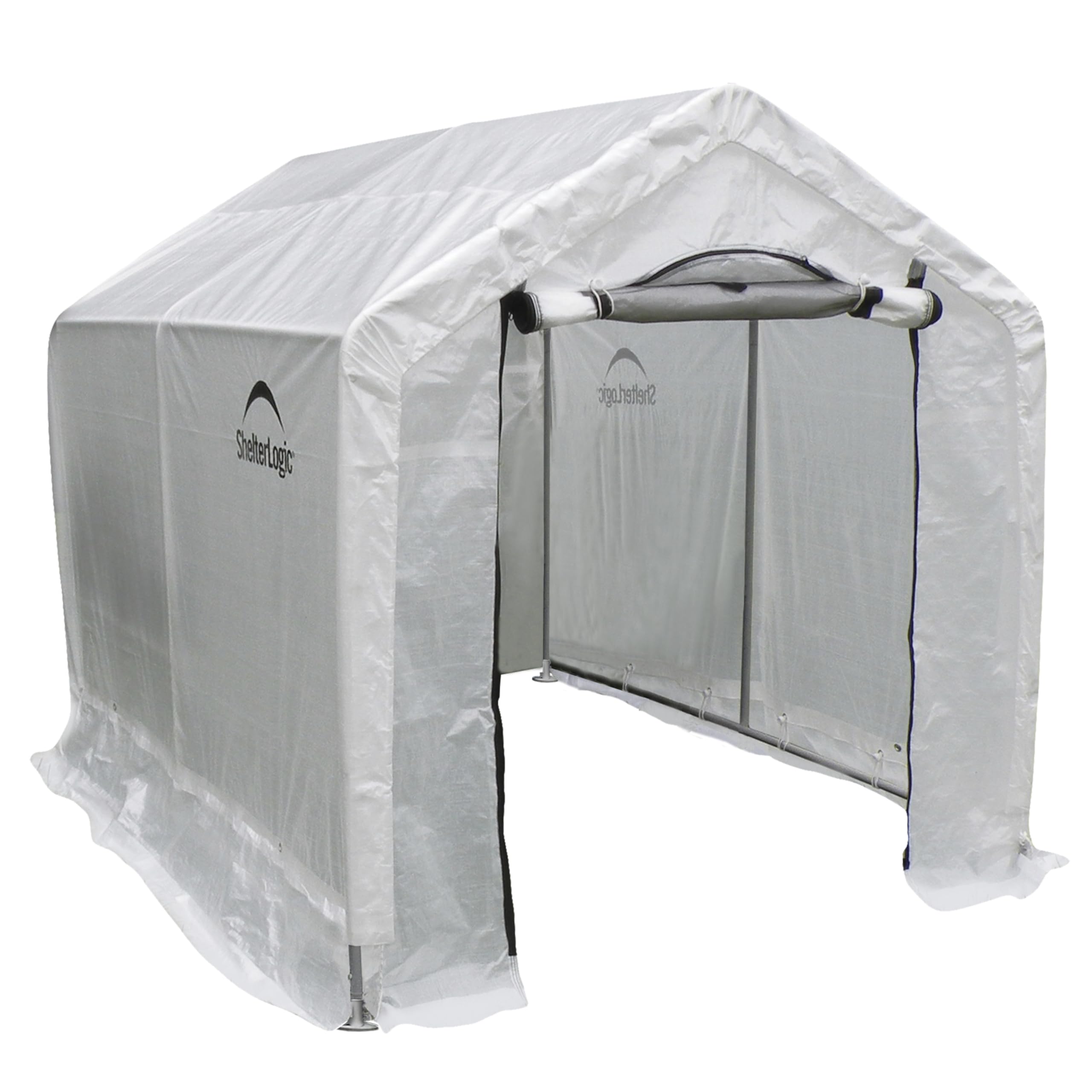
The ShelterLogic GrowIT is the only peak-roof PE cover model in this list, and that geometry matters for winter performance — snow slides off a pitched roof far more effectively than it sheds from a flat-top hoop house. The 5.5-ounce triple-layer ripstop cover is thicker than standard PE covers, providing a decent thermal barrier while its UV treatment inside and out extends the life of the fabric significantly. The 1-inch alloy steel frame is powder-coated for rust resistance and feels noticeably more substantial than budget-tier tubing.
Buyers who braved Vermont winters report the structure holding up well after 3+ years when the cover is maintained and the included ratchet straps and stakes are supplemented with cinder blocks or rebar. The 4-foot integrated metal grid shelving provides excellent drainage and staging space. The biggest complaints center on assembly: the instructions are confusing with unclear part numbers, and a solo builder should expect a 6-8 hour project.
The ends do not seal completely — some owners added tape to close gaps. The ripstop cover is tough but not indestructible; the top can tear after several seasons in intense sun. For mild to moderate winter climates, this is a reliable mid-range option that outperforms standard tunnel greenhouses on snow shedding.
Why it’s great
- Peak roof sheds snow better than flat-top models
- Thick 5.5 oz triple-layer ripstop cover
- Integrated grid shelving for staging
Good to know
- Complex assembly — allow 6-8 hours
- Ends do not seal completely
- Top fabric may tear after 3+ years in sun
7. Yardsight 8.5×7 FT Pop-up Greenhouse
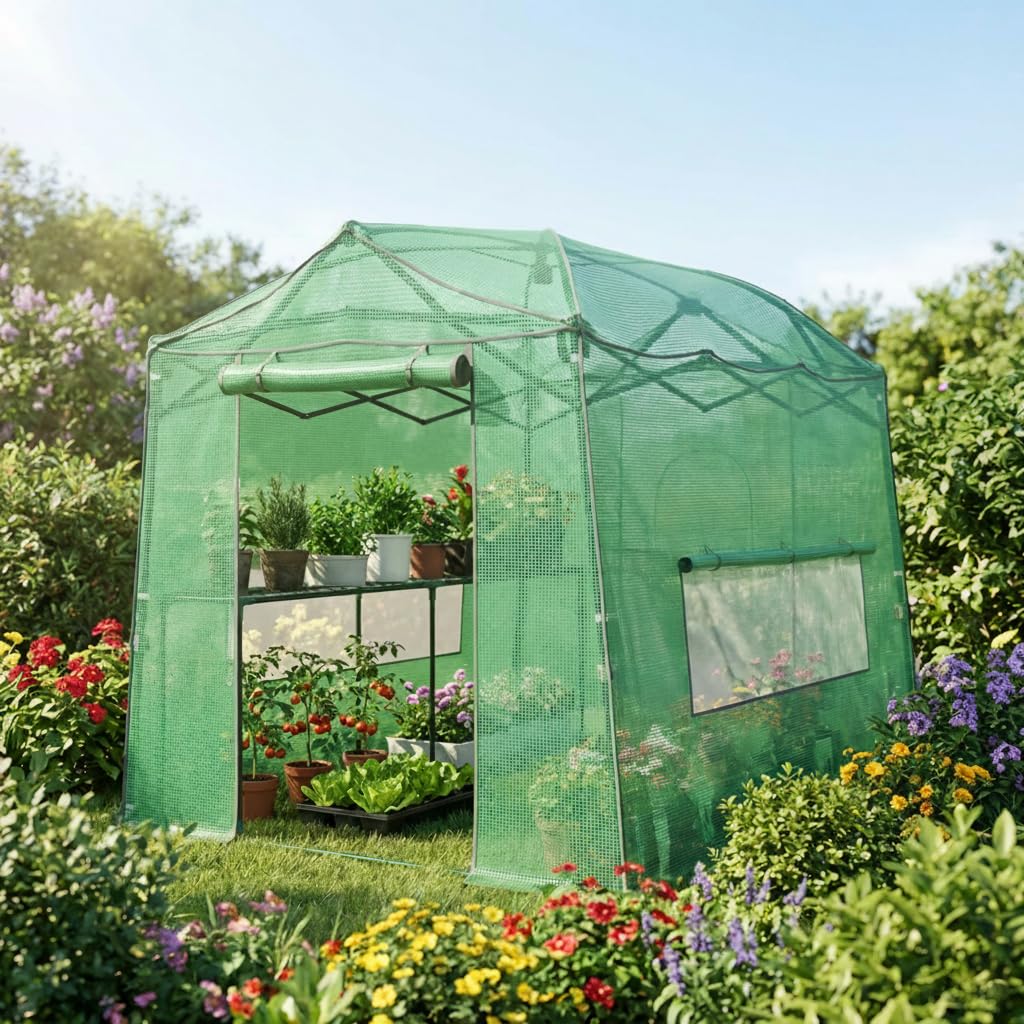
The Yardsight Pop-up Greenhouse is designed for gardeners who want a walk-in shelter without a multi-hour assembly project. The pre-assembled brackets and tool-free design mean you can have this 8.5-foot structure ready in under 30 minutes. The PE cover provides effective heat retention and humidity management — buyers in freezing conditions report roses and lemon trees surviving 25°F nights with the interior staying warm and humid.
The four roll-up doors and two roll-up windows give impressive ventilation flexibility for a pop-up model. However, the frame is the clear weak point: multiple buyers report the roof collapsing under 2 inches of snow, and the side supports buckling under rain-soaked cover weight. This greenhouse is best used as a seasonal frost protector or for early/late season extension, not as a permanent winter structure in heavy snow zones.
The steel frame is rust-resistant but lightweight. The included shelving is functional but the frame lacks sturdiness for heavy pot loads. For mild winter climates or as a temporary shelter that you monitor closely during storms, the ease of setup makes this a practical choice. For northern gardeners expecting regular snowfall, skip this and invest in a rigid frame.
Why it’s great
- Tool-free assembly in under 30 minutes
- 4 doors + 2 windows for excellent ventilation
- Retains heat well in freezing conditions
Good to know
- Frame will collapse under heavy snow load
- Not suitable for permanent winter installation
- Shelf frames lack structural rigidity
8. KING BIRD 10x7x7 FT Greenhouse
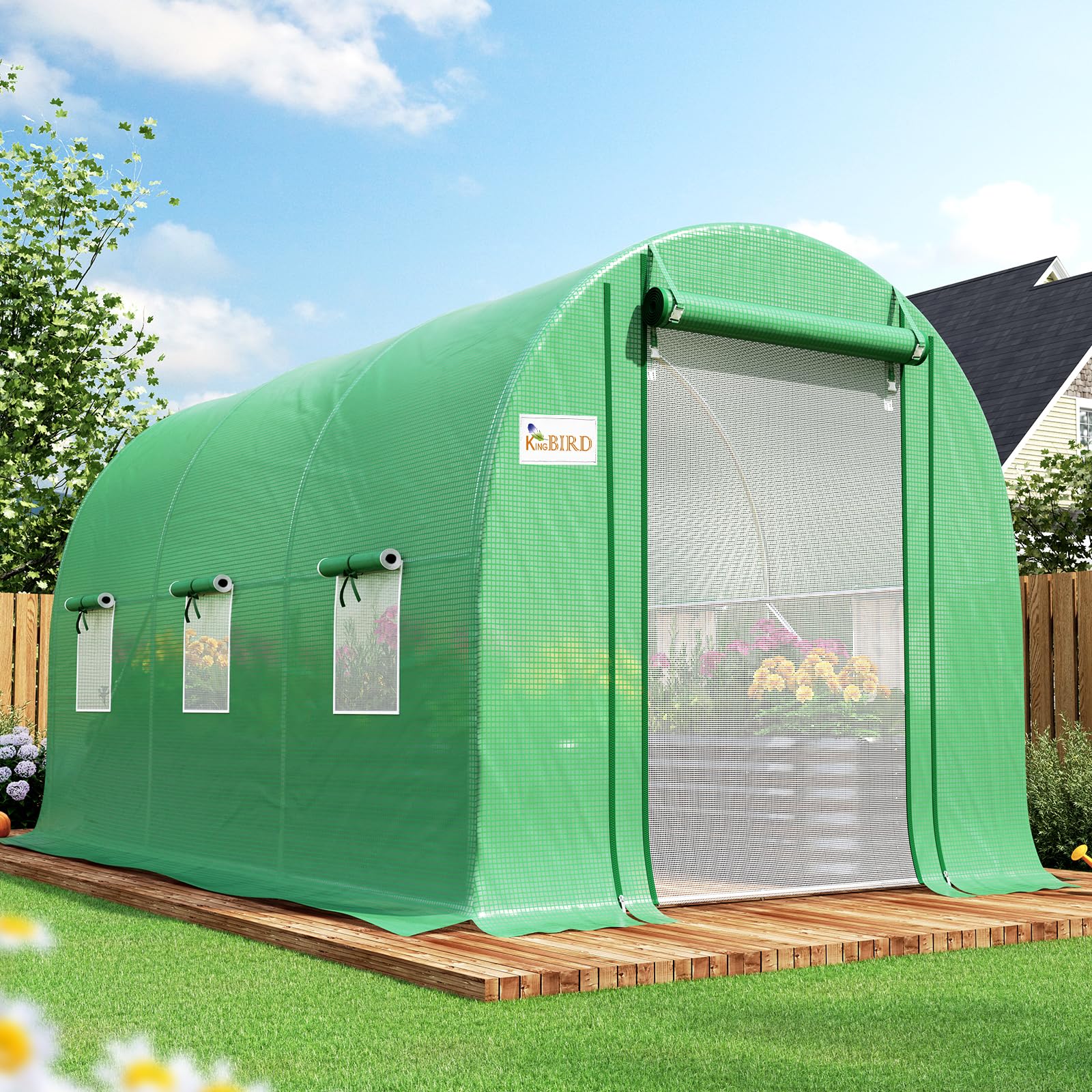
The KING BIRD 10x7x7 FT is a well-engineered mid-range tunnel that addresses the most common weak points of budget greenhouses. The 0.7mm galvanized steel frame is roughly double the thickness of entry-level options, and the UVI 6 protected PE cover is rated to last over a year compared to the 1-6 month lifespan of UVI 1-3 covers. The 6 roll-up screen windows plus a dual-layer mesh and plastic door provide excellent humidity and temperature management for a tunnel shape.
Real-world performance is strong: buyers report the greenhouse surviving extreme winds, keeping plants warm and moist through frost events, and effectively keeping out mice, squirrels, and deer. The interior runs 10-15°F warmer than outside without supplemental heat. The most common failure point is the #10 zippers — several owners experienced zipper separation due to misaligned bolt holes stretching the cover. The good news is that KING BIRD’s customer service reliably replaces covers under warranty.
Assembly is straightforward for two people, though the instructions are printed in Chinglish and require some interpretation. The 10-foot length is ideal for beginners — long enough to be productive, short enough to manage. With proper anchoring and zipper maintenance, this tunnel outperforms many cheaper alternatives in winter conditions.
Why it’s great
- 0.7mm galvanized steel — double the thickness of budget frames
- UVI 6 rated cover lasts significantly longer
- Interior runs 10-15°F warmer than outside
Good to know
- Zippers are a common failure point
- Instructions are difficult to follow
- Needs upgraded stakes for windy locations
9. Purlyu Walk-in Greenhouse 4.7×4.7×6.4 FT
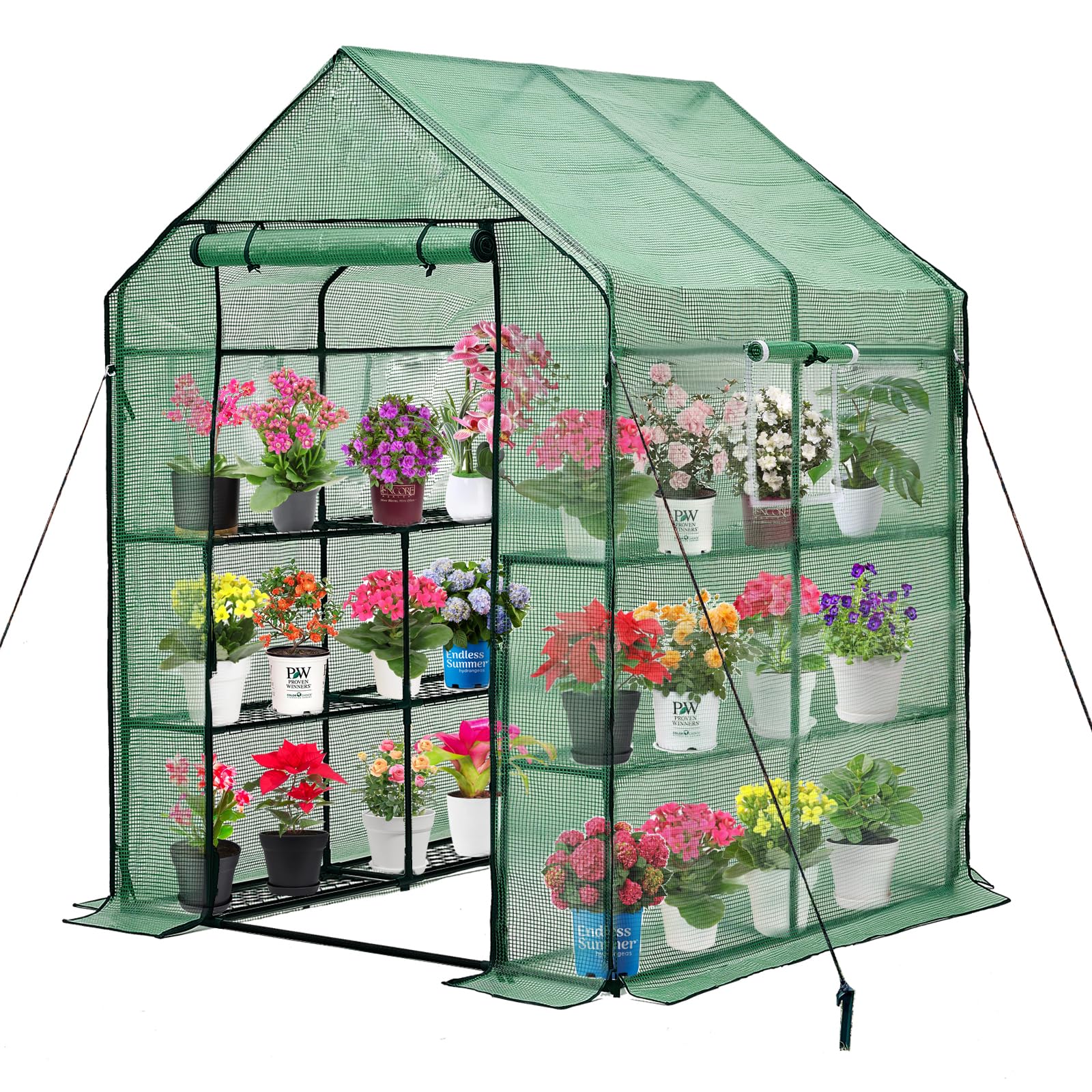
The Purlyu Walk-in is the smallest and most budget-friendly option in this guide, but it punches above its weight for mild winter use. The 14 wire shelves (6 per side) pack impressive vertical growing capacity into a compact footprint — ideal for balconies, patios, or small backyards. The powder-coated iron frame is rust-resistant and the PE cover includes a zippered roll-up door and screened windows for basic ventilation.
Buyers in Georgia report this greenhouse surviving 90 hours below freezing when paired with a small heater, and it has withstood windstorms after being anchored with water jugs. The frame is rated at 33 pounds per shelf, sufficient for seed trays and small pots. Assembly is straightforward with no tools required, and all parts are detachable for seasonal relocation. The zipper quality and cover thickness are adequate for the price point, but the plastic joints are the long-term weak link — one owner who got 10 years from a similar model noted that metal replacements would extend life dramatically.
This greenhouse lacks the frame rigidity for heavy snow zones — the iron tubing is not as strong as galvanized steel or aluminum. It’s best suited for USDA zones 7 and above where winter lows stay above 10°F, or as a frost protection shelter that you can easily bring plants into on cold nights.
Why it’s great
- 14 shelves maximize vertical growing space
- Tool-free assembly and relocation
- Anchored with water jugs — no permanent base needed
Good to know
- Plastic joints degrade faster than metal connectors
- Not suitable for heavy snow loads
- Cover is thin — moderate insulation only
FAQ
How much warmer does a winter greenhouse stay than outside without a heater?
Can I use a PE cover greenhouse in heavy snow regions like New England or Canada?
What is the best floor material for a winter greenhouse?
Should I remove the cover from my greenhouse in winter or leave it on?
How do I prevent zippers from freezing or breaking in winter?
Final Thoughts: The Verdict
For most users, the best greenhouse for winter winner is the VEIKOU 6’x12’ Greenhouse because its 4mm twin-wall polycarbonate panels provide genuine insulation that outperforms any PE cover model, and the powder-coated aluminum frame will not rust or corrode through years of winter exposure. If you need massive growing space and snow load resilience, grab the Quictent 25x10x6.6 FT with its reinforced anti-sag roof and patented dual swing doors. And for a compact entry into rigid panel growing on a budget, the Sylviera 6x4FT Polycarbonate Greenhouse gives you the insulation benefits of polycarbonate at roughly half the cost of larger models.