
Keeping a greenhouse productive through sub-zero nights and heavy snow loads demands more than just a frame and some plastic. The wrong structure loses heat by dawn, cracks under ice weight, or shatters in a winter gale. For northern gardeners, the choice between an early spring harvest and a frozen failure comes down to panel density, frame bracing, and how well the design sheds snow.
I’m Mohammad Maruf — the founder and writer behind Drink4Good. I’ve spent years analyzing greenhouse engineering data, comparing aluminum gauge thicknesses, polycarbonate weights, and snow-load certifications to separate structures that genuinely protect plants from those that only look the part on a sunny day.
After reviewing dozens of models across multiple winters of customer feedback, I’ve narrowed the field to the nine best suited for freezing climates. This guide covers the greenhouses for cold climates that actually hold warmth, resist snow, and let you start seeds weeks earlier without constant worry.
How To Choose The Best Greenhouses For Cold Climates
Buying a greenhouse for a cold climate is a different calculation than picking one for mild zones. The frame must resist twisting, the panels must retain heat during long nights, and the foundation must hold against frost heave. These are the factors that matter most when the temperature drops below freezing.
Polycarbonate Weight and Wall Construction
Twin-wall polycarbonate panels create a dead-air space that insulates far better than single-layer glass or polyethylene. The key metric is panel weight per square meter — 580 g/m² panels provide moderate insulation, while 720 g/m² panels retain significantly more heat. Thicker 6 mm walls also reduce heat loss but require stronger framing to support the extra weight.
Aluminum Frame Gauge and Bracing
Cheap greenhouses use thin, lightweight aluminum that flexes under snow loads. Look for reinforced corner brackets, cross beams, and roof braces. Models that include corner supports and ground stakes resist twisting when snow accumulates on the roof. The best frames use a heavier alloy with multiple connection points at every joint.
Snow Load and Wind Ratings
Manufacturers that provide specific snow load figures (measured in PSF) and wind gust ratings give you a real benchmark. A greenhouse rated for 20 PSF snow load and 35+ mph winds is built for serious winter conditions. Without these numbers, you are gambling on whether the structure will survive a single heavy storm.
Ventilation and Moisture Control
Cold climates create condensation problems because warm, moist air hits cold panels and turns to ice. Adjustable roof vents allow that moisture to escape. Built-in rain gutters prevent water from pooling on the roof and freezing into damaging ice dams. A greenhouse that traps moisture inside will rot plants even if the temperature stays above freezing.
Quick Comparison
On smaller screens, swipe sideways to see the full table.
| Model | Category | Best For | Key Spec | Amazon |
|---|---|---|---|---|
| HOWE 16x12x9.5 FT | Premium Large | Serious winter growing | 6 mm polycarbonate walls | Amazon |
| Palram Canopia 6×14 | Premium Hobby | Snow load durability | 15.4 PSF snow load | Amazon |
| WUKHG 10×12 | Mid-Range Large | Large space with specs | 720 g/m² panels | Amazon |
| FLY BY YAN 8×14 | Mid-Range Large | Quick assembly with stability | 720 g/m² panels | Amazon |
| Jocisland 8×10 | Mid-Range | Tool-free assembly | Triple-lock joints | Amazon |
| Sylviera 8×10 | Mid-Range | Good value with drainage | Drainage channel roof | Amazon |
| Sylviera 6×10 | Mid-Range | Mid-size balance | 4mm twin-wall panels | Amazon |
| Sylviera 6×8 | Entry-Level | Budget cold-weather start | 4mm twin-wall panels | Amazon |
| WUKHG 6×7.5 | Entry-Level | Affordable compact option | 4mm twin-wall panels | Amazon |
In‑Depth Reviews
1. HOWE 16x12x9.5 FT Polycarbonate Greenhouse
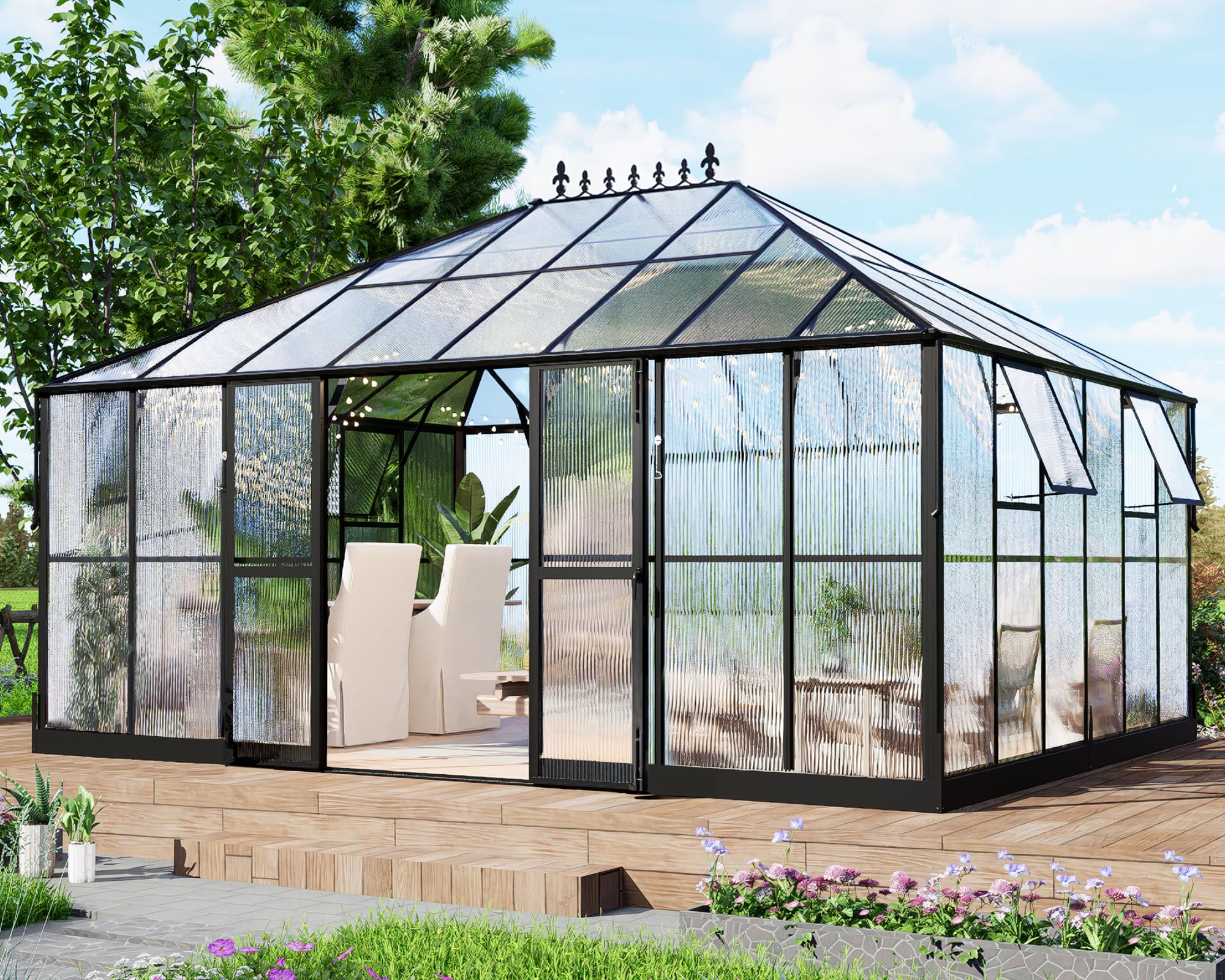
The HOWE 16×12 delivers the thickest polycarbonate walls in this lineup at 6 mm, which translates directly into superior heat retention during freezing nights. Customers in Michigan reported interior temperatures of 81°F on days when outdoor temps hovered at 15°F, a 66-degree differential that proves the insulation capacity of these panels. The 9.5-foot peak height also provides excellent headroom for tall shelves or standing work tables.
Build quality stands apart from budget kits. The frame uses reinforcement screws and ground stakes that, when combined with a proper wood deck foundation, have held firm against Michigan snow and wind. The pavilion design with four vent windows creates cross-breeze options for summer, though the windows themselves are a weak point — reviewers note the locking mechanism feels underbuilt and the gutters have gaps that cannot be sealed.
Assembly is the biggest hurdle. Two people invested about 25 hours, and the picture-only instructions demand careful attention to roof bolt placement and panel orientation. Several units arrived with minor shipping damage that the manufacturer resolved, but the door alignment issues and imprecise part labeling add frustration. Despite these assembly pains, the final structure is the most winter-capable option for serious northern growers who want maximum room.
Why it’s great
- 6 mm polycarbonate walls offer best-in-class insulation for sub-zero climates
- Huge 16×12 footprint with 9.5 ft peak height fits extensive setups
- Proven 66°F temperature lift in winter conditions
Good to know
- Assembly demands 25+ hours and two people with mechanical aptitude
- Picture-only instructions require careful interpretation
- Window locks and gutter seams are weak points
2. Palram Canopia 6×14 Greenhouse Kit

The Palram Canopia is the only greenhouse in this group that publishes specific snow load (15.4 PSF) and wind gust (56 mph) ratings — numbers that give northern buyers real engineering confidence. The rust-resistant aluminum frame paired with a galvanized steel base creates a foundation less prone to frost heave than plastic or wood runners. After five years of use, one reviewer reported zero structural damage from snow, rain, hail, and high winds.
Twin-wall 4 mm polycarbonate panels block 99.9% of UV rays while diffusing light evenly across plants. The 6×14 footprint offers a long, narrow layout that fits tight side-yard spaces while still providing 84 inches of interior height. Built-in rain gutters and two adjustable roof vents manage condensation better than most comparably priced kits, though the vent hinge design has been criticized for poor durability.
Assembly remains the common complaint. The 56-page picture-only instruction booklet lacks written steps, and owners report a 10- to 12-hour build time alone. The door often arrives with diagonal sag that requires a metal cross brace to correct. The base also creates a 4-inch lip at the door, forcing modifications for wheeled carts. Once properly anchored to concrete or a wood frame, however, this greenhouse outlasts almost any mid-range competitor in harsh winter conditions.
Why it’s great
- Rated for 15.4 PSF snow load and 56 mph wind gusts
- Galvanized steel base resists rust and frost damage
- Proven 5-year durability in snow and storms
Good to know
- Picture-only instructions are difficult to follow
- Door assembly often requires corrective bracing
- 4-inch base lip limits wheeled tool access
3. WUKHG 10×12 FT Greenhouse
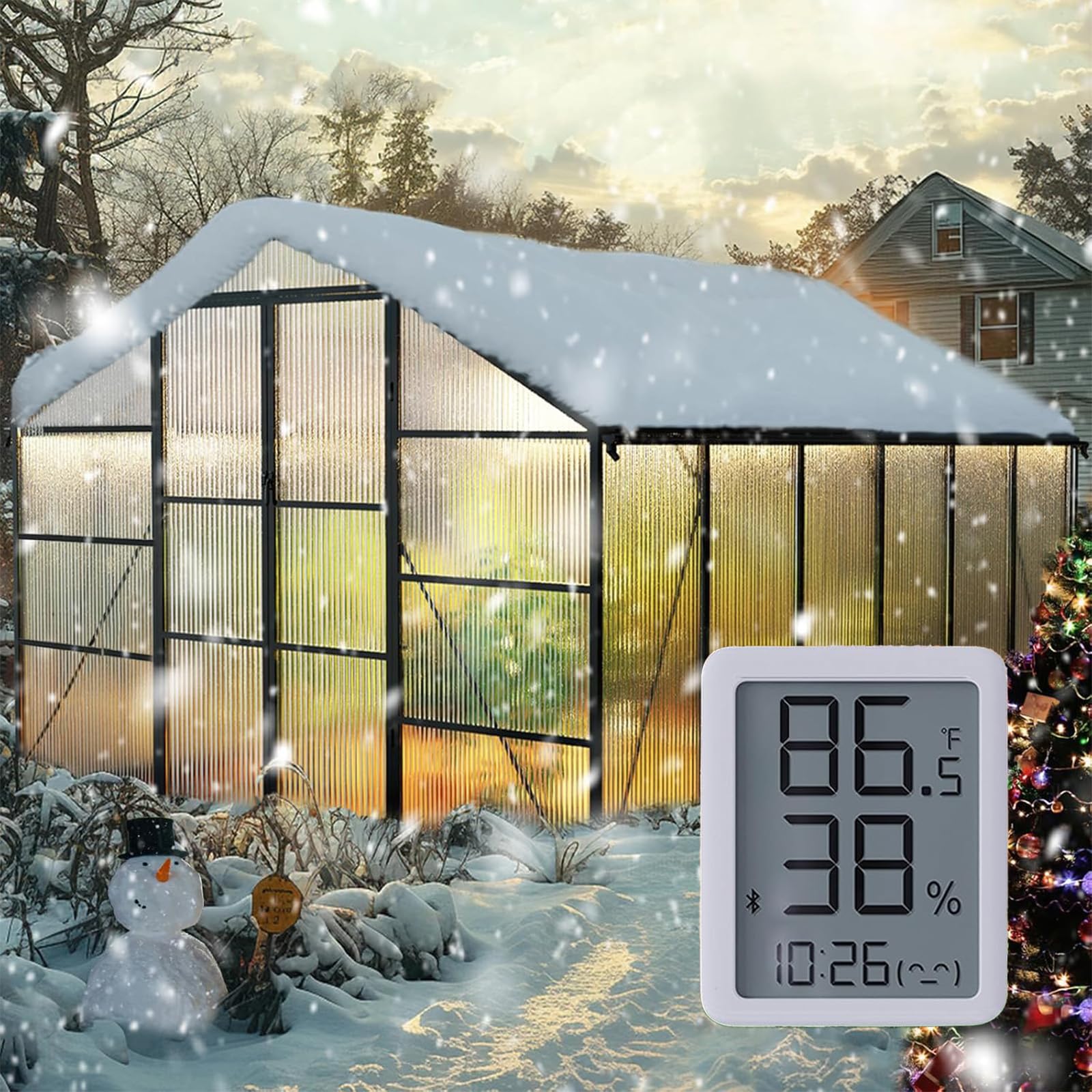
WUKHG steps up the panel density to 720 g/m² for this 10×12 model, matching the premium-tier insulation weight found in the FLY BY YAN unit. The manufacturer rates the frame for 35 mph winds and a 20 PSF snow load, giving it one of the highest published snow capacities in this review. The twin-wall 4 mm polycarbonate blocks UV while diffusing light, and the shatterproof construction eliminates the breakage risk of glass.
This greenhouse includes three roof vents and a built-in gutter system that channels rainwater away from the base, preventing ice buildup around the frame. The double-door configuration provides wide access for moving pots, furniture, or even a small seating area inside. At 100 inches tall, the peak height accommodates tall plants and standing work comfortably.
The parts are marked with symbols for identification, but reviewers note that mislabeled screw packs and unclear manual pictures slow the process. The included Bluetooth thermometer requires manual wake-up every two minutes, making it essentially a non-BT thermometer in practice. One Colorado owner found missing crosspiece length for the door, though the structure held well with supplied braces. A disappointing failure at 50 mph gusts shows that, despite the rating, proper anchoring on a reinforced base is non-negotiable.
Why it’s great
- 720 g/m² panels and 20 PSF snow load rating
- Three roof vents plus gutter system manage condensation
- Double doors with 100-inch peak height for spacious access
Good to know
- Bluetooth thermometer feature is essentially non-functional
- Assembly requires careful sorting of mislabeled parts
- Needs reinforced anchoring for real wind protection
4. FLY BY YAN 8×14 FT Greenhouse
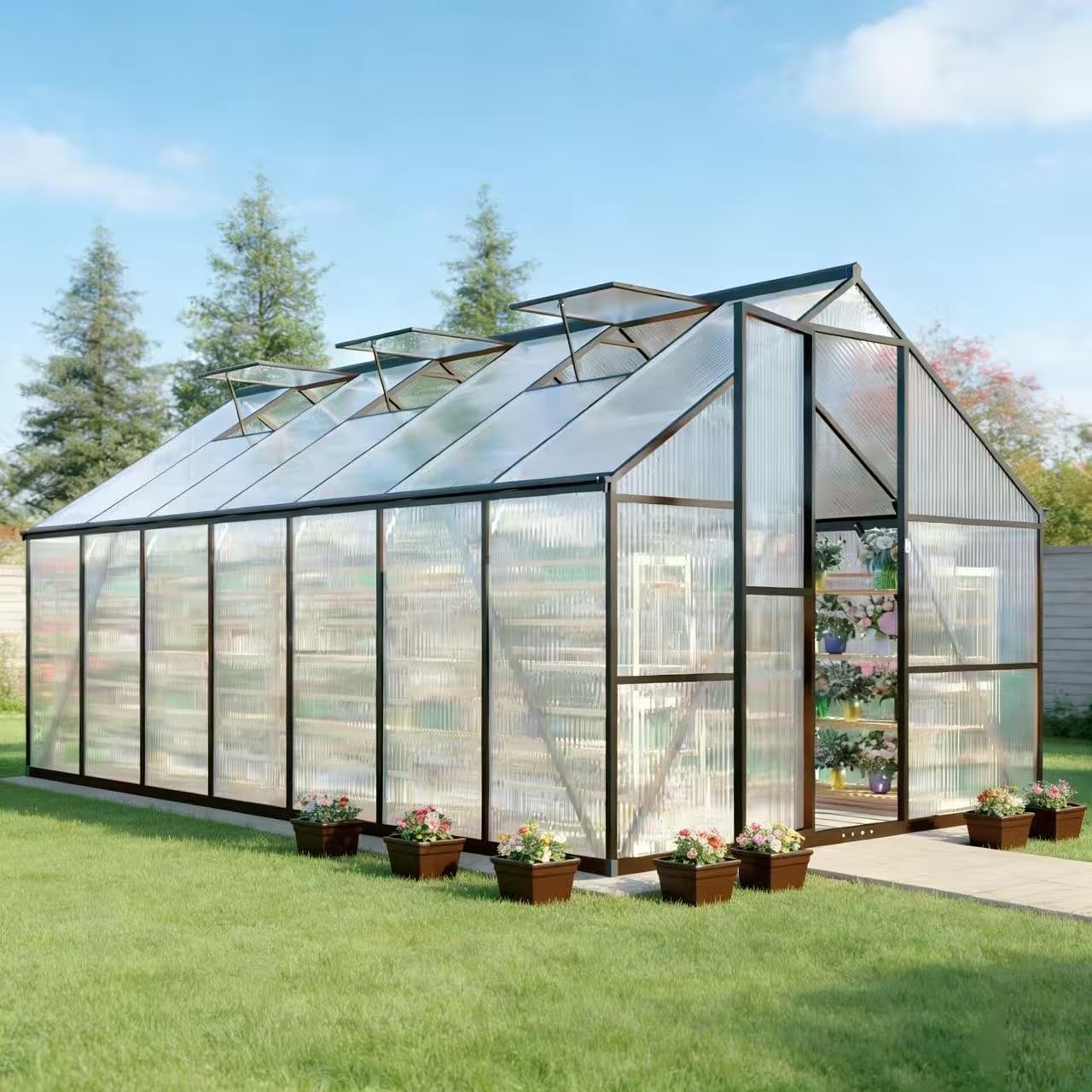
FLY BY YAN designed this 8×14 around a slide-in panel system that skips drilling and cutting — a meaningful advantage when building in cold weather. The manufacturer claims a 40% faster assembly time and 35% better stability compared to standard kits, and multiple reviewers confirm a smoother setup than most, though still requiring 4 to 5 people and about 6 hours. The charcoal black finish resists scratches and rust better than glossy black alternatives.
The 720 g/m² polycarbonate panels provide the same insulation weight as the premium WUKHG unit, and the double-wall construction diffuses light evenly across plants. An integrated rain gutter system channels water away effectively, and three adjustable roof vents allow for moisture escape during winter temperature swings. One owner reported survival through 60 mph winds with only minor damage, a strong indicator of structural integrity.
The assembly process hits a wall at the roof section, where misaligned panels and channel defects have frustrated some builders. The aluminum frame and fittings feel sturdy once fully assembled, but the vents have a tendency to pop open under wind pressure. The 8×14 footprint gives ample growing space, but the lack of published snow load numbers means buyers in heavy-snow zones should plan for manual roof clearing after storms.
Why it’s great
- Slide-in panel system reduces assembly time significantly
- 720 g/m² panels deliver strong winter heat retention
- Withstood 60 mph winds with minimal damage
Good to know
- Roof panel alignment can be problematic during assembly
- Vents may pop open in gusty conditions
- No published snow load rating for heavy snow zones
5. Jocisland 8×10 Ft Polycarbonate Greenhouse
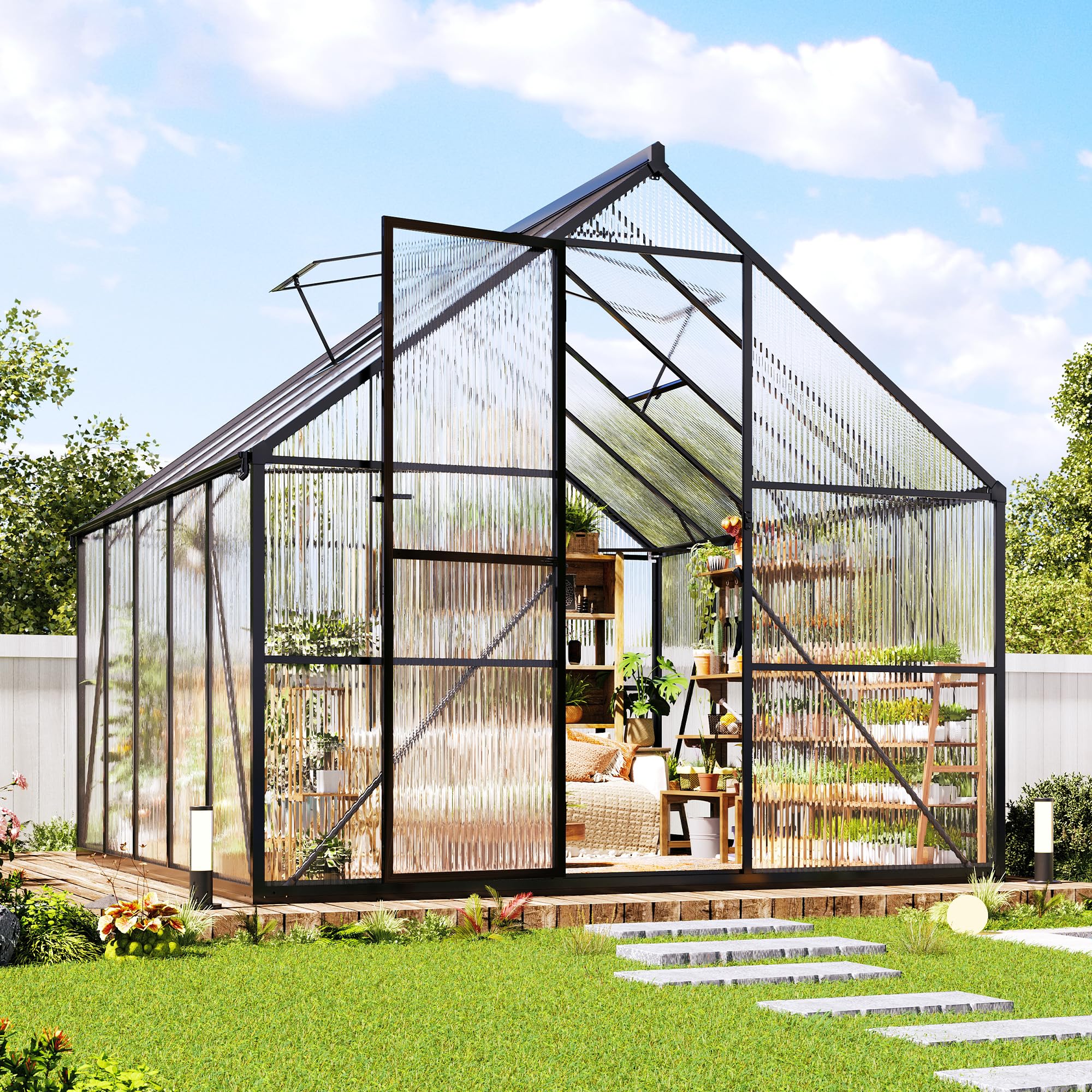
Jocisland differentiates this 8×10 with a tool-free assembly system built around quick connectors and triple-lock joints. Two people can theoretically finish in 2 to 3 hours, though real-world reviews report a full day. The cross beams, top braces, and corner supports provide a bracing pattern that helps the frame resist twisting under wind pressure, and one owner confirmed it held well through high winds without issue.
The 4 mm twin-wall polycarbonate panels block 99.99% of UV rays while admitting plenty of PAR light for plant growth. The gable roof design includes built-in drainage channels that prevent water pooling, and dual roof windows provide cross-ventilation. The 8.12×9.9-foot footprint fits standard raised beds, and the swing door opens wide enough for small wheelbarrows.
Assembly difficulty splits reviewers sharply. Some call it straightforward; others describe missing hardware, mislabeled parts, and vents that cannot stay open without rubber bands. The door opening measures only 25 inches wide, which restricts larger equipment access. Several units arrived with missing door support components that the manufacturer resolved, but the inconsistent quality control makes this a gamble for buyers who want a predictable build experience.
Why it’s great
- Tool-free quick connectors speed the assembly process
- Cross beams and top braces improve wind resistance
- Gable roof with drainage channels prevents ice buildup
Good to know
- Door opening is only 25 inches wide
- Vent windows struggle to stay open without modifications
- Quality control on parts and hardware is inconsistent
6. Sylviera 8×10 FT Greenhouse
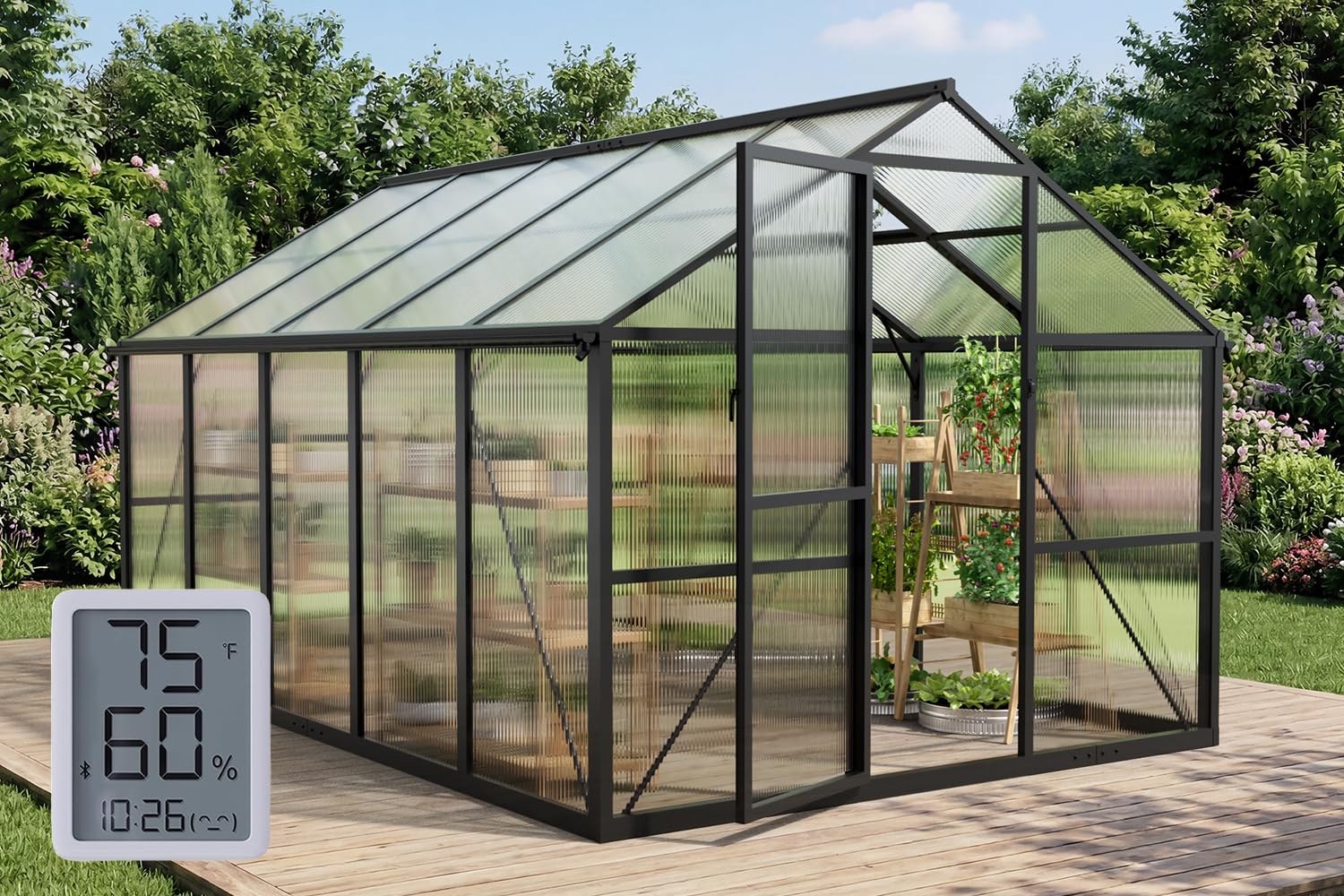
Sylviera’s 8×10 model focuses on moisture management, with a drainage channel roof design that directs water away from the frame and prevents ice dams from forming. The 580 g/m² double-wall polycarbonate panels are lighter than the premium 720 g/m² units, but still provide meaningful insulation for cold climates when sealed properly with silicone at the panel gaps. The reinforced aluminum frame and strengthened corners add stability for snow loads.
The adjustable roof vent and lockable door promote airflow, which is critical for reducing condensation in winter. The 8×10 footprint offers enough space for multiple shelving units or ground beds, and the 80.7-inch height provides comfortable standing room for most gardeners. The included hygrometer helps track interior humidity levels during temperature swings.
The assembly process has a catch about protective film — reviewers stress that removing the film from both sides of every polycarbonate panel is essential, but the instructions do not mention this step. Missing this detail traps heat and causes panel distortion. Some units arrived with poorly fitting roof parts and doors that do not latch securely. Buyers report spending significant time on modifications like adding glass glue and staking to achieve the advertised stability. Without these reinforcements, the structure struggles in sustained wind or heavy snow.
Why it’s great
- Drainage channel roof prevents ice and water buildup
- Aluminum frame with reinforced corners for stability
- Includes hygrometer for monitoring moisture levels
Good to know
- Protective film must be removed from both sides of panels
- Door and roof parts may arrive poorly fitted
- Requires silicone sealing and staking for real stability
7. Sylviera 6×10 FT Greenhouse
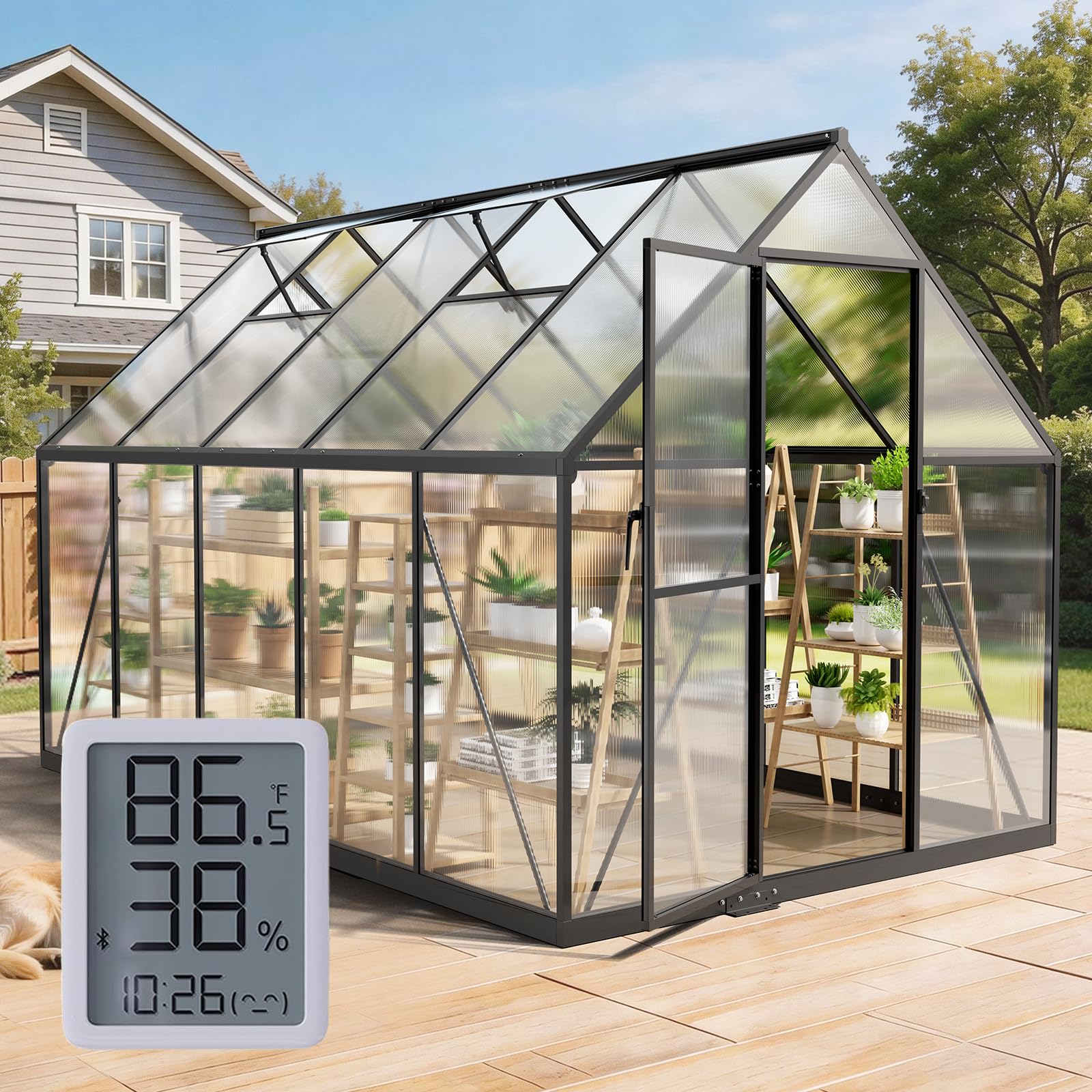
The 6×10 version from Sylviera offers a useful size upgrade over the 6×8 while keeping the same 580 g/m² twin-wall panels and aluminum frame construction. The two roof vents provide better cross-ventilation than single-vent models, which helps regulate the rapid temperature spikes common in small greenhouses on sunny winter days. One reviewer recorded 93°F inside by 10 am on a cold morning, demonstrating strong solar gain but also the need for an exhaust fan.
The reinforced aluminum frame and strengthened corners follow the same design principles as the larger Sylviera models. The 4 mm polycarbonate panels transmit enough light for tomatoes, peppers, and cucumbers while blocking harmful UV rays. The lockable door and vent windows allow secure airflow management during freeze-thaw cycles.
This model shares the same assembly quirks as its siblings — the instruction manuals omit the critical step about removing protective film from both sides of the panels, and the roof vents often require rubber bands or additional hardware to stay propped open. The structure needs silicone sealing at every gap to achieve the claimed weather resistance, and the door frame may not be perfectly square. Buyers who invest the extra time in modifications report a functional greenhouse, but those expecting a ready-to-use product often end up disappointed.
Why it’s great
- Two roof vents improve temperature and moisture control
- 6×10 footprint fits standard garden layouts
- Strong solar gain for winter growing
Good to know
- Roof vents need modifications to stay open
- Protective film removal not mentioned in instructions
- Door frame may require corrective adjustment
8. Sylviera 6×8 FT Greenhouse
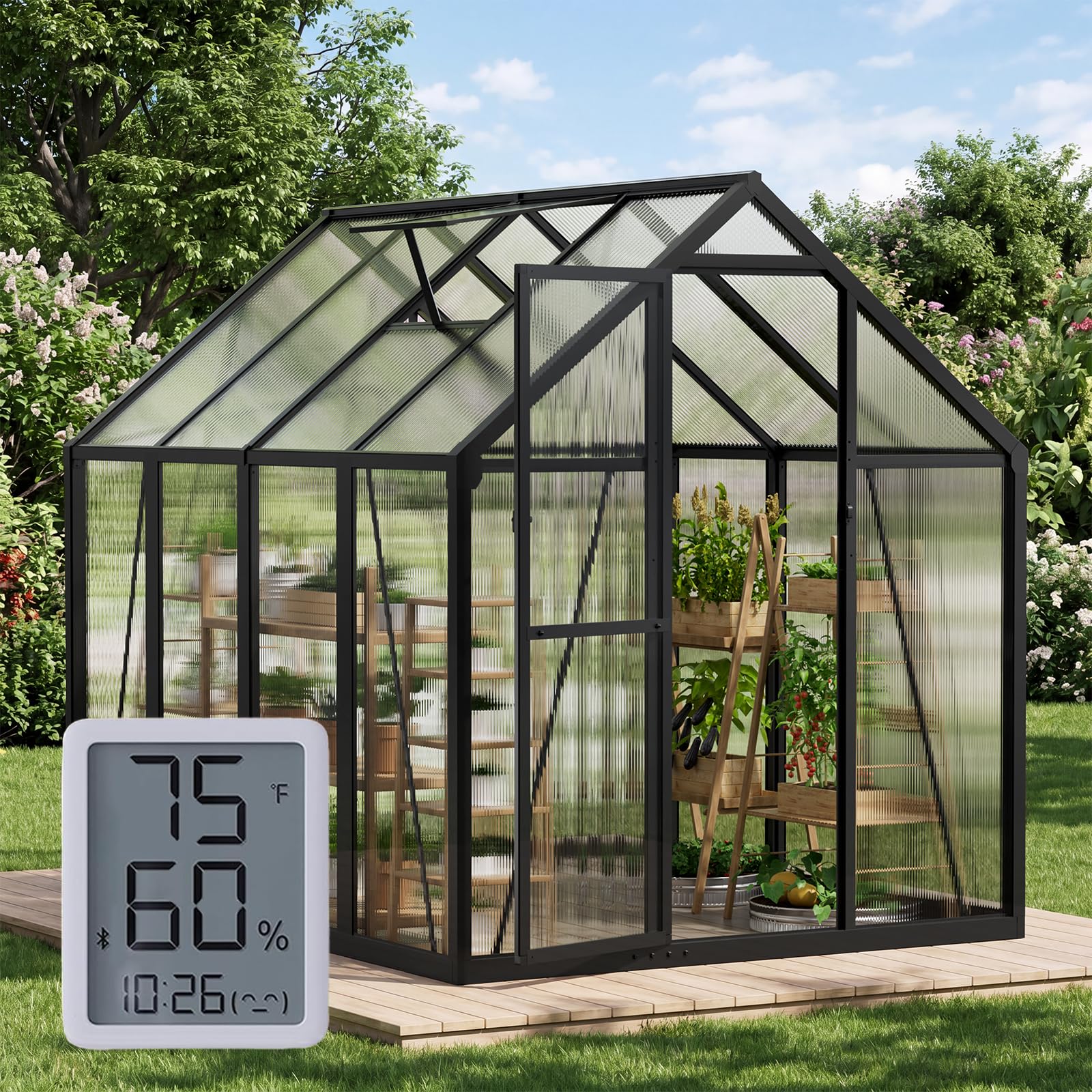
The 6×8 Sylviera serves as an entry point for cold-climate greenhouse gardening without requiring a major financial commitment. The 580 g/m² twin-wall polycarbonate panels and aluminum frame follow the same construction as the larger models, providing a baseline level of winter protection. The 77-inch height allows standing room for most adults, and the 6×8 footprint fits easily into smaller backyards or side lots.
The adjustable roof vent and lockable door offer the same ventilation control found in the more expensive units. The included hygrometer gives instant feedback on humidity, which is especially useful for beginners learning to manage winter condensation. The UV-resistant panels block harmful rays while diffusing light across the growing area, preventing leaf burn during bright winter days.
Assembly mirrors the frustrations of the larger Sylviera greenhouses. The instructions do not mention removing the protective film from both panel sides, a step that affects heat retention and panel clarity. The structure requires silicone sealing and additional staking to achieve advertised stability, and some panels arrive with dimensional inconsistencies. Several reviewers found the door gap too large for secure latching and the overall build too flimsy to withstand a moderate snow load without reinforcement. For the buyer willing to invest in modifications, this is a viable starter greenhouse, but it demands more work than the price tag suggests.
Why it’s great
- Compact 6×8 footprint fits tight urban lots
- Twin-wall panels provide insulation beyond pop-up models
- Included hygrometer helps monitor moisture levels
Good to know
- Requires silicone sealing and staking for weather resistance
- Protective film removal step missing from instructions
- Door and panel fitment may need correction
9. WUKHG 6×7.5 FT Greenhouse
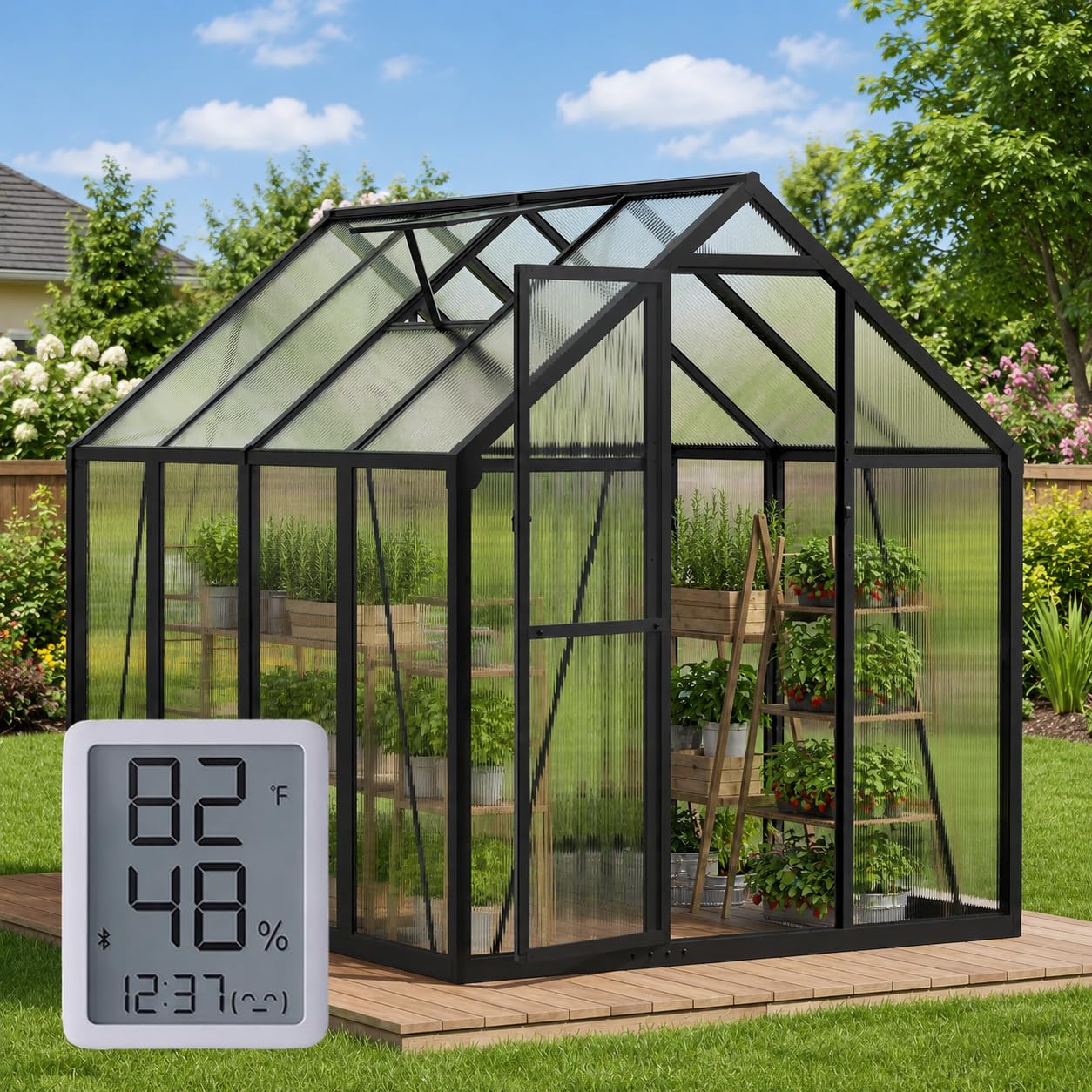
WUKHG’s 6×7.5 greenhouse targets buyers who need a budget-friendly structure for extending the growing season by a few weeks on either end. The 4 mm twin-wall polycarbonate panels and aluminum frame withstood 50 mph gusts in one review but failed structurally in another — a split result that signals inconsistent build quality. The panels do retain heat well enough to accelerate plant growth compared to open beds, but the overall weather resistance depends heavily on how carefully the builder seals every gap.
The single adjustable ventilation window and lockable door provide basic airflow management. The Bluetooth thermometer included with the unit is essentially non-functional in practice, requiring constant manual wake-up. The 580 g/m² panels block UV rays effectively but lack the insulation density of heavier panels, meaning interior temperatures drop faster on long winter nights without supplemental heat.
Assembly is the defining challenge here. Parts come labeled with symbols, but mislabeled screw packs and unclear manual illustrations extend the process to 4 or 5 hours. The roof vent has a flimsy design that may not survive repeated opening and closing. Inconsistent part dimensions mean the door crosspiece may arrive too short, and the overall fit can be slightly out of square. This greenhouse can work for mild cold climates with careful assembly and additional reinforcement, but it lacks the engineering consistency needed for reliable winter performance in deep-freeze zones.
Why it’s great
- Compact size fits small garden areas
- Polycarbonate panels offer better insulation than fabric covers
- Low financial entry point for starting cold-weather growing
Good to know
- Inconsistent build quality between units
- Bluetooth thermometer feature is essentially broken
- Roof vent feels flimsy and may need replacement
FAQ
Do I need to anchor a cold-climate greenhouse to a concrete foundation?
Will a greenhouse stay warm enough without a heater in sub-freezing weather?
Final Thoughts: The Verdict
For most users, the greenhouses for cold climates winner is the HOWE 16x12x9.5 FT because its 6 mm polycarbonate walls deliver proven heat retention and the large footprint supports serious winter growing operations. If you want a structure with published snow load specifications and a galvanized base for long-term durability, grab the Palram Canopia 6×14. And for the best combination of 720 g/m² insulation density and built-in gutter drainage in a medium footprint, nothing beats the WUKHG 10×12.