
The moment your palm slides during a downward dog, the entire practice unravels. You compensate by gripping harder with your toes, your shoulders tense up, and the flow you were chasing evaporates. A grip yoga mat is the single piece of equipment that determines whether your practice feels stable or unstable — and most standard mats fail the moment sweat hits the surface.
I’m Mohammad Maruf — the founder and writer behind Drink4Good. I’ve spent months analyzing the material science behind yoga mat traction, from natural rubber density to PU coating technology, to find which mats actually deliver on their non-slip claims.
Whether you practice hot vinyasa, gentle yin, or sweaty power flow, the right grip yoga mat keeps you rooted and confident in every pose. This guide covers seven top-performing mats with specific breakdowns of their grip technology, durability, and real-world performance.
How To Choose The Best Grip Yoga Mat
Not all non-slip mats are created equal. The term “grip” can mean a textured PVC surface that wears smooth after a few months, or it can mean a sweat-activated polyurethane top layer that actually improves traction as you heat up. Understanding the material options, thickness trade-offs, and size requirements is essential before you spend money on a mat that might fail mid-practice.
Surface Material: The Grip Engine
The top layer of the mat is what your hands and feet contact. Natural rubber offers a tacky, organic grip that performs well when dry but can become slippery with heavy sweating. Polyurethane (PU) coatings, found on premium mats, are sweat-activated — the more you sweat, the grippier they get. Cork surfaces provide a micro-textured grip that improves with moisture but requires breaking in. Avoid standard PVC mats labeled “non-slip” if you practice hot yoga or have naturally sweaty hands.
Thickness and Stability Balance
Thicker mats (6mm to 8mm) provide more cushioning for knees and wrists but can feel spongy during standing balance poses. Thinner mats (3mm to 5mm) offer better ground connection and stability for balancing but provide less joint protection. Most serious practitioners settle in the 4mm to 5mm range, which balances cushioning with stability. If you have sensitive knees, consider a 6mm mat with a dense foam that resists bottoming out.
Size and Portability Considerations
Standard mats measure 68 to 72 inches long and 24 inches wide. Taller practitioners (over 5’10”) should look for extended lengths of 78 to 84 inches. Wider mats (26 to 32 inches) provide extra room for wide-legged poses but add weight. Consider portability if you carry your mat to classes — natural rubber mats often weigh 6 to 8 pounds, while TPE and foam mats can be as light as 2.5 pounds with thinner padding.
Quick Comparison
On smaller screens, swipe sideways to see the full table.
| Model | Category | Best For | Key Spec | Amazon |
|---|---|---|---|---|
| Plyopic Ultra-Grip Pro | PU + Rubber | Hot Yoga & Intense Flow | 72″ x 26″ x 4.3mm | Amazon |
| agoy PRO+ WARRIOR | PU + Rubber | Alignment-Focused Practice | 72″ x 24″ x 4mm | Amazon |
| Vesstra Premium | PU + Rubber | All-Level Daily Practice | 72″ x 27″ x 4mm | Amazon |
| Tatago Natural Rubber | Natural Rubber | Hot Yoga & Sweaty Classes | 72″ x 26″ x 5mm | Amazon |
| Y O Gayo Premium Cork | Cork + Rubber | Eco-Conscious Practitioners | 72″ x 26″ x 5mm | Amazon |
| MRZZATA Extra Long & Wide | TPE | Tall Users & Larger Frames | 84″ x 32″ x 7mm | Amazon |
| Fitvids 1-Inch Thick | Foam | Joint Protection & Recovery | 72″ x 24″ x 1 inch | Amazon |
In‑Depth Reviews
1. Plyopic Ultra-Grip Pro Yoga Mat
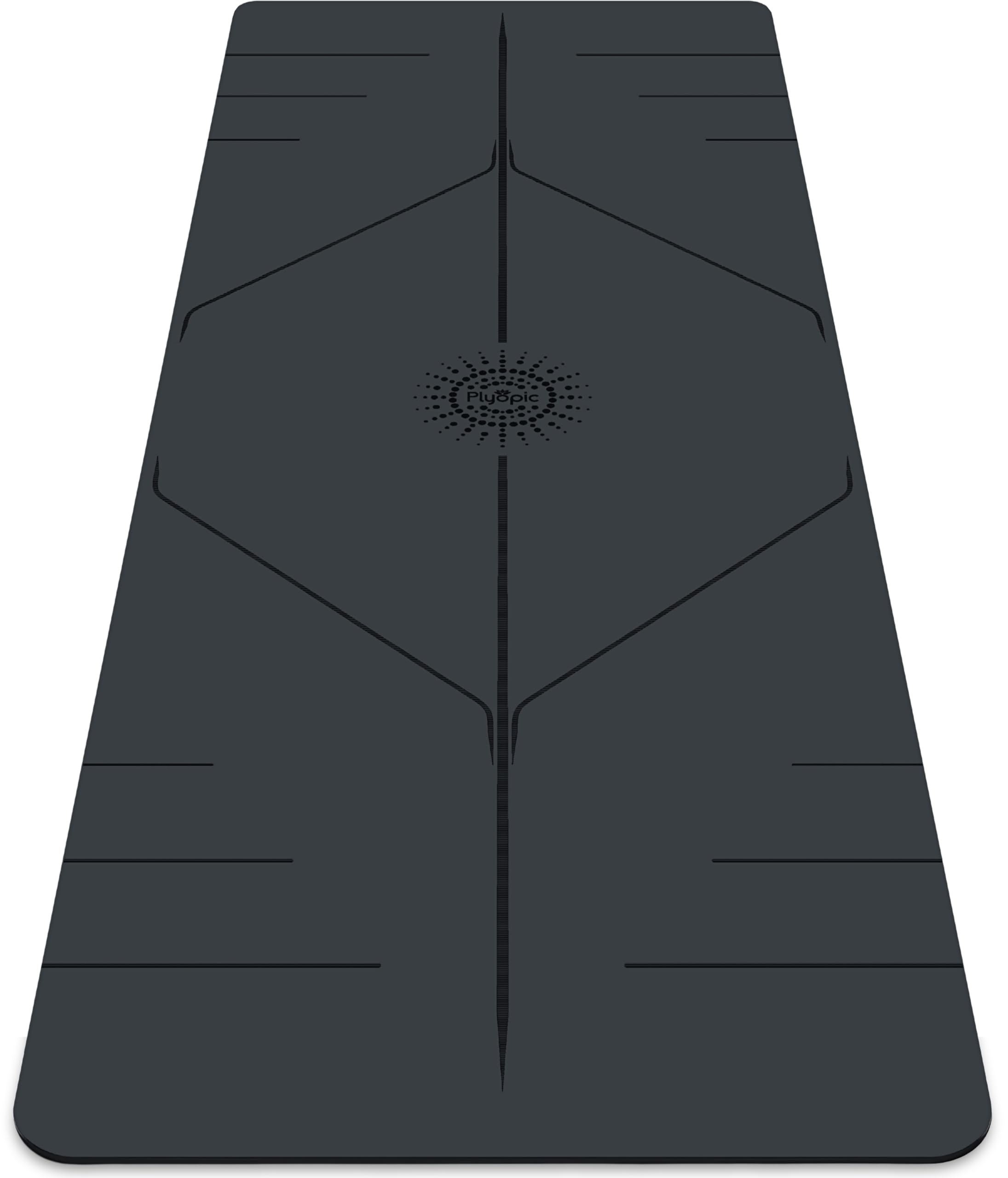
The Plyopic Ultra-Grip Pro uses a sweat-activated polyurethane top layer that actually gets tackier as you perspire. At 72 by 26 inches and 4.3mm thick, it provides enough space for dynamic flows without the spongy feeling that thicker mats create during standing balances. The natural rubber base grips the floor firmly and stays put on tile and wood surfaces.
Reviewers consistently report never needing a towel even during intense hot yoga sessions. The mat comes with embossed alignment lines that run down the center, which help with hip and foot placement without being visually distracting. The surface feels smooth and soft to the touch, not abrasive like some textured mats, making it comfortable for knees and forehead during resting poses.
One trade-off is weight — at over 5 pounds, it’s heavier than foam mats, but that density contributes to its stability. The initial natural rubber odor fades after about ten days of airing out. For the combination of wet and dry grip performance, this mat competes with options costing nearly double the price.
Why it’s great
- Sweat-activated grip gets better with moisture
- Firm, non-spongy support for balance poses
- Embossed alignment lines aid positioning
Good to know
- Heavier than foam mats at over 5 lbs
- Initial rubber smell requires airing out
- Limited to black and grey color options
2. agoy PRO+ WARRIOR Yoga Mat
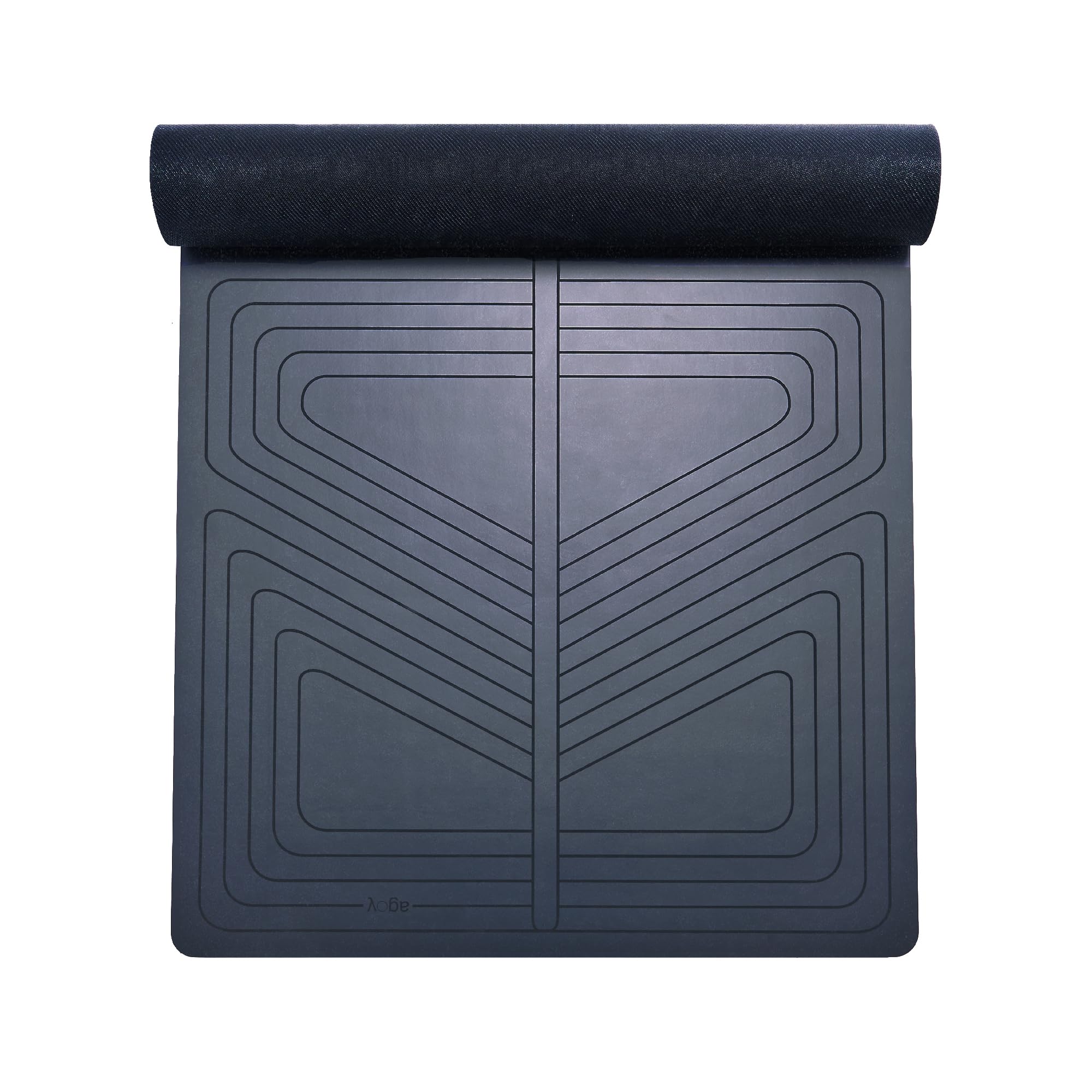
agoy has been refining yoga mats since 1999, and the PRO+ WARRIOR reflects that experience. The PU top layer delivers strong wet and dry grip, while the patent-pending Focus Alignment system uses laser-etched markers on the mat surface to guide hand and foot placement. This is particularly useful for Iyengar and alignment-based practices where precise positioning matters.
At 72 by 24 inches and 4mm thick, this is a standard studio size. The natural tree rubber base provides excellent floor traction and the mat unrolls completely flat out of the box — no curled edges to fight with. Yoga teachers in the reviews praise its durability through regular, intense use, with some reporting no loss of grip after a full year of daily practice.
The mat weighs 5.5 pounds, which is moderate for a rubber mat but noticeable if you carry it to classes. The lighter graphite color shows sweat marks and dirt over time, though cleaning with a damp cloth restores it. This is a mat built for practitioners who value precise alignment and are willing to pay for a proven design.
Why it’s great
- Laser-etched alignment markers for precise foot/hand placement
- Proven durability through a year of daily practice
- Unrolls completely flat with no edge curling
Good to know
- Light color shows sweat marks and dirt
- Heavy for daily travel to classes
- 4mm thickness may feel thin for knee-sensitive users
3. Vesstra Premium Yoga Mat
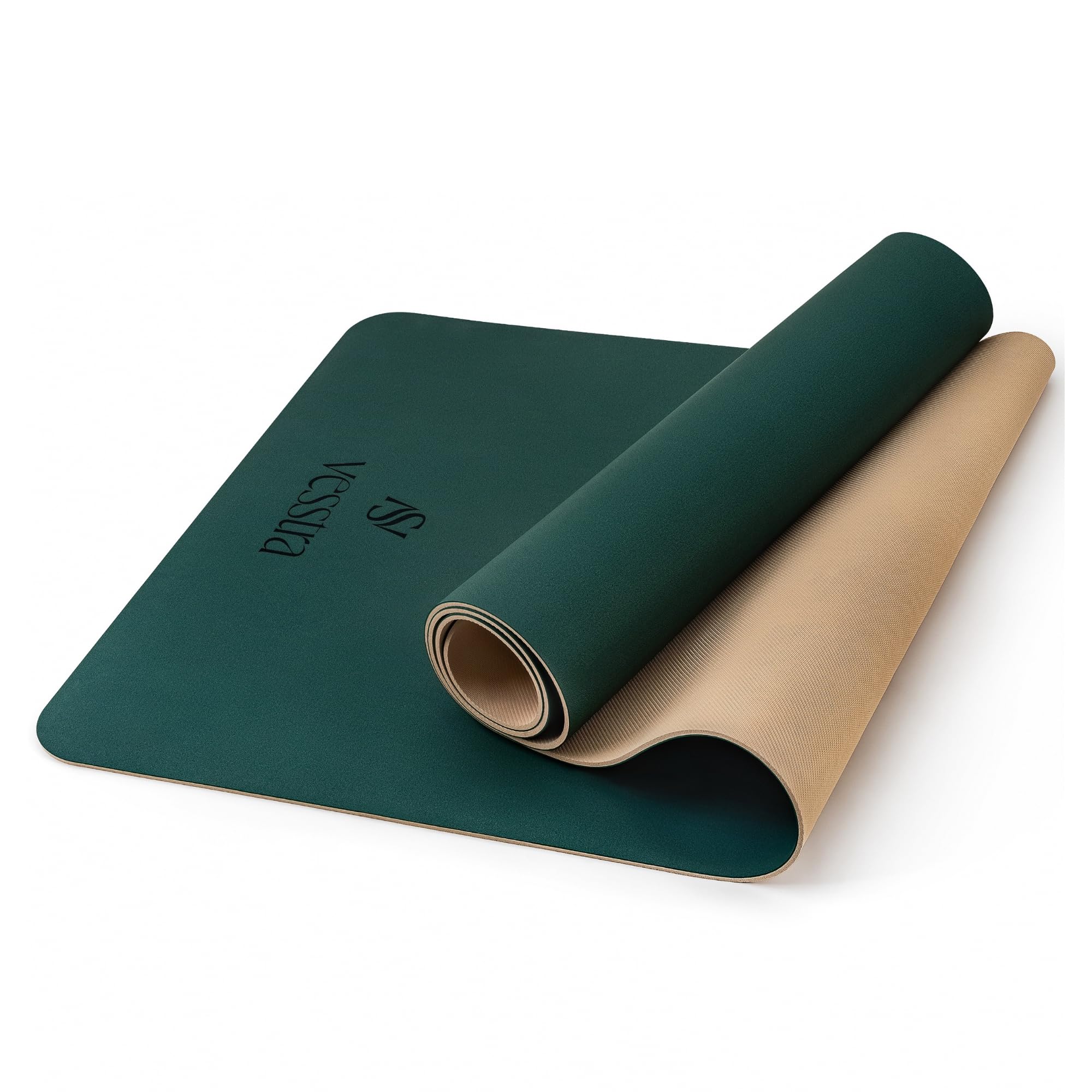
The Vesstra Premium mat combines a sweat-proof PU top layer with a natural rubber base, offering 27 inches of width — slightly wider than standard, which adds welcome room for wide-legged poses and transitions. At 4mm thick, it strikes a balance that works for both standing balances and kneeling postures without feeling either too cushioned or too hard.
Reviewers consistently highlight the grip performance during sweaty sessions, noting no slipping even as palms get damp. The surface is soft to the touch but doesn’t feel fragile, and it wipes clean in seconds with a damp cloth. The dark green color option looks premium and hides dirt better than lighter mats.
The mat weighs 6.17 pounds and includes a matching carry strap for transport. There’s virtually no chemical smell out of the box — a major advantage over many natural rubber mats that require days of off-gassing. The dense construction lies flat immediately and stays put on hardwood and tile floors without sliding.
Why it’s great
- Wider surface at 27 inches for spacious practice
- No chemical odor out of the box
- Easy to clean sweat-resistant PU surface
Good to know
- Heavy at 6+ pounds for carrying to class
- 4mm thickness minimal for very sensitive knees
- PU surface can scratch on rough floors
4. Tatago Natural Rubber Yoga Mat
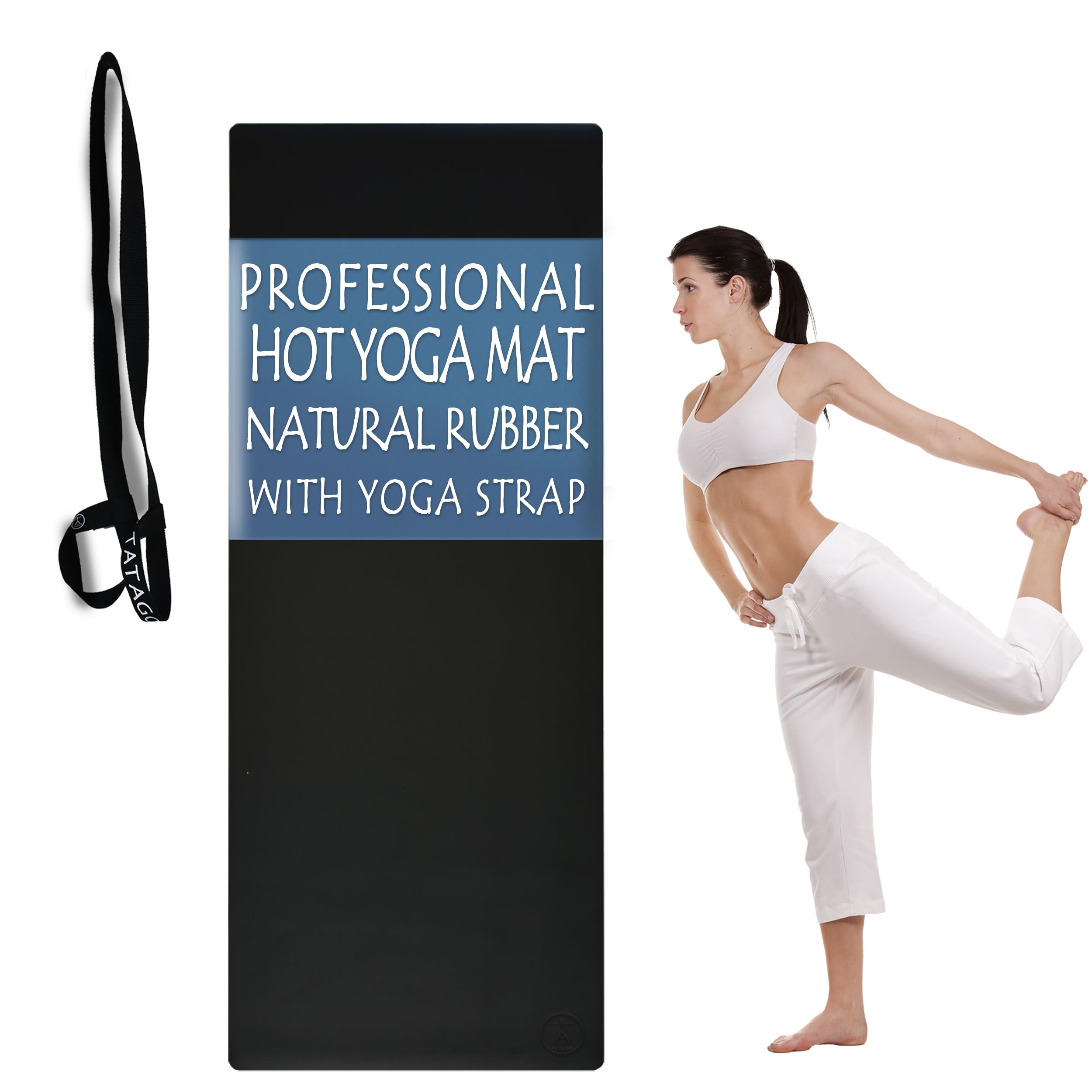
The Tatago mat uses 5mm of natural rubber with a dense, pliable feel that provides substantial cushion without the spongy instability that plagues thicker foam mats. Users report excellent grip even during sweaty Bikram sessions, with the rubber surface maintaining traction throughout practice. The vinyl top layer is easy to wipe down and resists absorbing sweat and odors.
Multiple reviewers mention the generous sizing — while listed as 72 by 26 inches, some customers report receiving mats measuring 80 by 29 inches, providing extra space for taller practitioners. The inclusion of a black carrying strap adds value for studio-goers who need to transport their mat.
The strongest natural rubber smell is the most common complaint, with several users noting it persists for one to two weeks even with regular airing. However, those who stuck with it say it eventually fades and the mat becomes their favorite practice surface. For the price, it offers durability and grip that competes with mats in a higher premium tier.
Why it’s great
- 5mm dense rubber cushions without being spongy
- Excellent wet grip for hot yoga sessions
- Generous sizing with extra length reported
Good to know
- Strong rubber smell that takes 1-2 weeks to fade
- Product dimensions sometimes inaccurate
- Heavy at 7 pounds for daily travel
5. Y O Gayo Premium Cork Yoga Mat

The Y O Gayo mat pairs a natural cork top layer with a natural tree rubber base, creating a biodegradable practice surface that improves grip as it warms up. Cork has a micro-textured surface that provides reliable traction when dry, and the material actually becomes grippier with moisture as the cork fibers swell slightly. The rubber base offers substantial grip on the floor, preventing the mat from sliding during standing poses.
At 72 by 26 inches and 5mm thick, this mat offers a roomy practice surface with moderate cushioning. Embedded alignment lines on the cork help with foot and hand placement without being distracting. The cork top layer is naturally antimicrobial and resists odor buildup, which is a significant advantage for daily practitioners who don’t want to deep-clean their mat weekly.
The mat is heavy at 8.36 pounds due to the dense cork and rubber construction. Some users report the edges curling slightly after a few weeks of use, though this seems inconsistent across units. The cork surface can feel slightly rough against sensitive skin during poses like shoulder stand, but most users find it comfortable after a brief break-in period.
Why it’s great
- Natural cork improves grip with moisture
- Antimicrobial surface resists odors
- Biodegradable materials for eco-conscious users
Good to know
- Heavy at 8+ pounds for transport
- Some reports of edge curling after use
- Cork surface can feel rough on sensitive skin
6. MRZZATA Extra Long & Wide TPE Mat

The MRZZATA mat solves a specific problem for taller practitioners and larger frames with its massive 84 by 32 inch surface area. At 7mm thick, it provides generous cushioning for joint-sensitive users while maintaining enough stability for most balance poses. The TPE material is free from latex, PVC, and heavy metals, making it a non-toxic option for those with chemical sensitivities.
The double-sided non-slip design features a wavy underside that grips the floor well, and a textured top that provides decent traction for dry practice. Users over 6 feet tall consistently praise the extra length, noting that standard mats leave their feet or head hanging off the edge during savasana. The included dual-use strap can function as both a carry strap and a stretching strap.
The grip performance is good but not exceptional in wet conditions — this mat works best for standard yoga and pilates rather than hot or Bikram classes. The TPE material is lighter than rubber at 2.5 pounds, making it the most portable option on this list. Some users note that the surface can feel slippery on tile floors when sweating, so it’s best suited for carpet or dry studio floors.
Why it’s great
- Massive 84″ x 32″ surface for tall users
- Lightweight at 2.5 pounds for easy portability
- TPE material is non-toxic and eco-friendly
Good to know
- Grip decreases when sweating heavily
- 7mm thickness feels spongy for balance poses
- Not ideal for hot yoga or sweaty practice
7. Fitvids 1-Inch Thick Exercise Mat
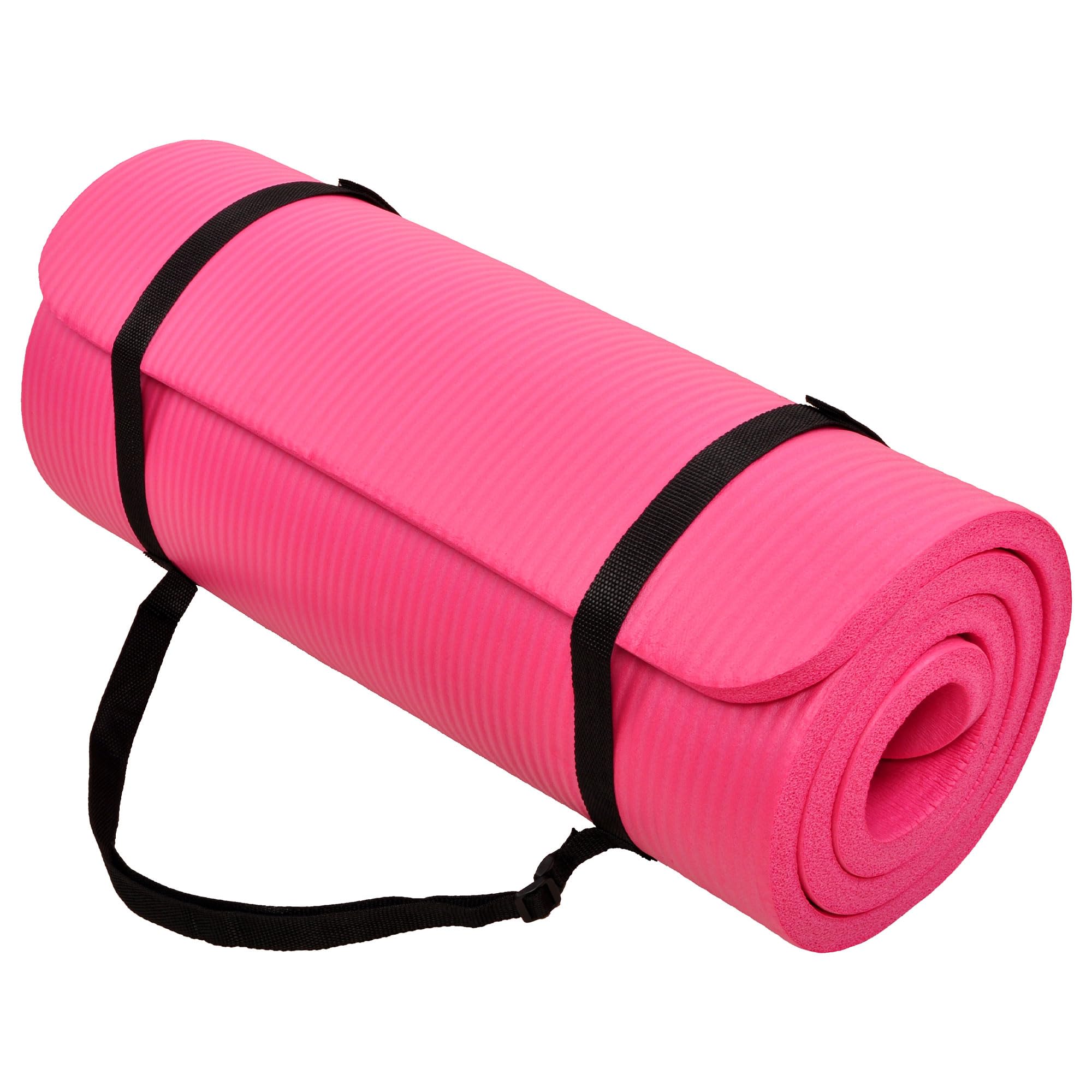
The Fitvids mat prioritizes joint protection above all else with its 1-inch thick high-density foam construction. For practitioners with knee, hip, or spine sensitivities, this level of cushioning makes floor-based poses and supine stretches significantly more comfortable than standard mats. The double-sided non-slip surface provides basic stability for gentle yoga routines and stretching.
The integrated carrying strap and lightweight foam construction make this one of the most portable thick mats available. At 72 by 24 inches, it covers the standard practice area. Users with back problems specifically highlight how the thick padding allows them to practice without pain, which is a legitimate reason to choose this mat over thinner grip-focused options.
The grip limitations are significant for anyone practicing beyond beginner level. The foam surface can feel slippery on tile floors, and the material is not designed for hot yoga or sweat-heavy practice. The foam surface is also prone to tearing from pet claws or hardcore use, so it’s best reserved for gentle practice and recovery work rather than vigorous vinyasa flows.
Why it’s great
- 1-inch thickness provides exceptional joint cushioning
- Lightweight with integrated carrying strap
- Budget-friendly entry into thick mat territory
Good to know
- Foam surface is slippery on tile when sweating
- Prone to tearing from pets or heavy use
- Not suitable for hot yoga or intense practice
FAQ
Do grip yoga mats actually work better when you sweat?
How do I clean a grip yoga mat without damaging the surface?
Why does my new grip yoga mat smell like rubber and how do I fix it?
Final Thoughts: The Verdict
For most users, the grip yoga mat winner is the Plyopic Ultra-Grip Pro because its sweat-activated PU coating delivers consistent traction in every condition without requiring a towel or break-in period. If you want laser-etched alignment guides for precise foot and hand placement, grab the agoy PRO+ WARRIOR. And for a budget-friendly joint protection option that won’t break the bank while still offering adequate grip for gentle practice, nothing beats the Fitvids 1-Inch Thick Mat.