
A gripping primer does one thing that ordinary paint cannot: it chemically or mechanically locks onto a slick, non-porous surface so your topcoat stays put. Whether you are tackling bare metal, glossy laminate, plastic lawn furniture, or ceramic tile, skipping this specific prep layer almost always ends in peeling paint and wasted effort.
I’m Mohammad Maruf — the founder and writer behind Drink4Good. I spent countless hours analyzing forum threads, customer field reports, and spec sheets across automotive and furniture categories to find which gripping primers actually deliver on their adhesion promises.
This guide breaks down five proven formulas—from acid-etch aerosols for metal to water-based clear coats for furniture—so you can pick the right gripping primer for your project without guessing.
How To Choose The Best Gripping Primer
Not every primer claims to grip, and not every gripping primer works on every surface. The chemistry that bonds to bare metal can bead up on plastic, and the water-based formula that sticks to laminate may not survive outdoor moisture. Focus on three factors before you buy.
Surface Compatibility
The single most important question is what you are priming. Acid-etch and self-etching primers use phosphoric acid to bite into bare metal, creating a micro-tooth for paint. Bonding primers designed for plastic, fiberglass, or laminate rely on a different resin chemistry that adheres without etching—they form a physical bond. A clear bonding primer like Country Chic Paint’s is best for furniture, while SEM or Raptor aerosols are built for automotive metal.
Application Method and Dry Time
Aerosol cans offer speed and even coverage for small to medium projects, but they require good ventilation. Brush-on or roll-on primers give you more control over film thickness on irregular furniture surfaces and produce less overspray. Pay attention to the dry time: self-etching primers can be topcoated in under an hour, while water-based bonding primers may need several hours before sanding or painting.
Chemical Composition and VOC Level
Solvent-based etch primers contain strong chemicals that require a respirator and outdoor or well-ventilated application. Water-based bonding primers, such as INSL-X Stix, are low-VOC and safer for indoor furniture projects. If you are painting in a living space or around kids and pets, a water-based formula with low odor is the practical choice.
Quick Comparison
On smaller screens, swipe sideways to see the full table.
| Model | Category | Best For | Key Spec | Amazon |
|---|---|---|---|---|
| SEM 39683 Self Etching Primer | Self-Etching | Automotive bare metal | Dries in 3 hours; 15.5 oz | Amazon |
| INSL-X Stix Waterborne Bonding Primer | Water-Based | Tile, glass & cabinets | Waterproof; 400 sq ft/gal | Amazon |
| Rust-Oleum 209460 Plastic Primer Spray | Aerosol | Plastic & PVC surfaces | 12 oz; bonds to polypropylene | Amazon |
| Country Chic Paint Clear Bonding Primer | Furniture | Laminate & painted furniture | Dries clear; 16–32 sq ft/pt | Amazon |
| Raptor Acid Etch Primer 1K Aerosol | Acid Etch | Galvanized & bare steel | 13.2 oz; 1-hour dry time | Amazon |
In‑Depth Reviews
1. SEM 39683 Grey Self Etching Primer

The SEM 39683 self-etching primer is the gold standard for automotive metal work. Its phosphoric acid formula bites into bare steel, aluminum, and iron to create a micro-porous surface that paint can mechanically lock into. Customers consistently report seamless adhesion on outboard lower units, welded repairs, and sanded body panels—no peeling or lifting even after months of outdoor exposure.
At 15.5 ounces, the can provides excellent coverage for medium-sized jobs like fenders, bumpers, or engine components. The grey finish offers a neutral base that works under most topcoats, and the 3-hour dry time means you can move through your paint schedule without long delays.
This is a solvent-based formula, so proper ventilation and a respirator are non-negotiable. The price point sits in the premium range, but for metal adhesion that you can trust on a restoration or repair, it earns its cost per project.
Why it’s great
- Exceptional chemical bite on bare metal surfaces
- Quick 3-hour dry time allows same-day topcoating
- Reliable corrosion resistance for outdoor use
Good to know
- Strong solvent odor requires good ventilation
- Not suitable for plastic or wood surfaces
2. INSL-X Stix Waterborne Low VOC Bonding Primer

INSL-X Stix is the primer that furniture restorers and DIY cabinet painters turn to when every other product fails. Its waterborne, low-VOC formula includes a latex-polyurethane compound that creates an aggressive mechanical grip on slick surfaces like glazed ceramic tile, glass, glossy laminate, and factory-finished cabinets.
Customer field tests confirm it works where standard primers shrivel or bead up—specifically on engineered wood cabinets and terra cotta tile countertops. The semi-gloss white finish provides a smooth base for topcoats, and it cleans up with soap and water.
Note that it requires a longer cure time—up to four hours before recoating—and the consistency is thinner than some PVA primers. But for an indoor project where low odor and strong adhesion are the priorities, Stix is the clear choice.
Why it’s great
- Bonds to glass, ceramic tile, and glossy laminate
- Low VOC formula is safe for indoor use without a respirator
- Waterproof finish resists moisture in kitchens and baths
Good to know
- Thin consistency may require two coats on porous surfaces
- Full cure takes 4 hours before recoating
3. Country Chic Paint Clear Bonding Primer
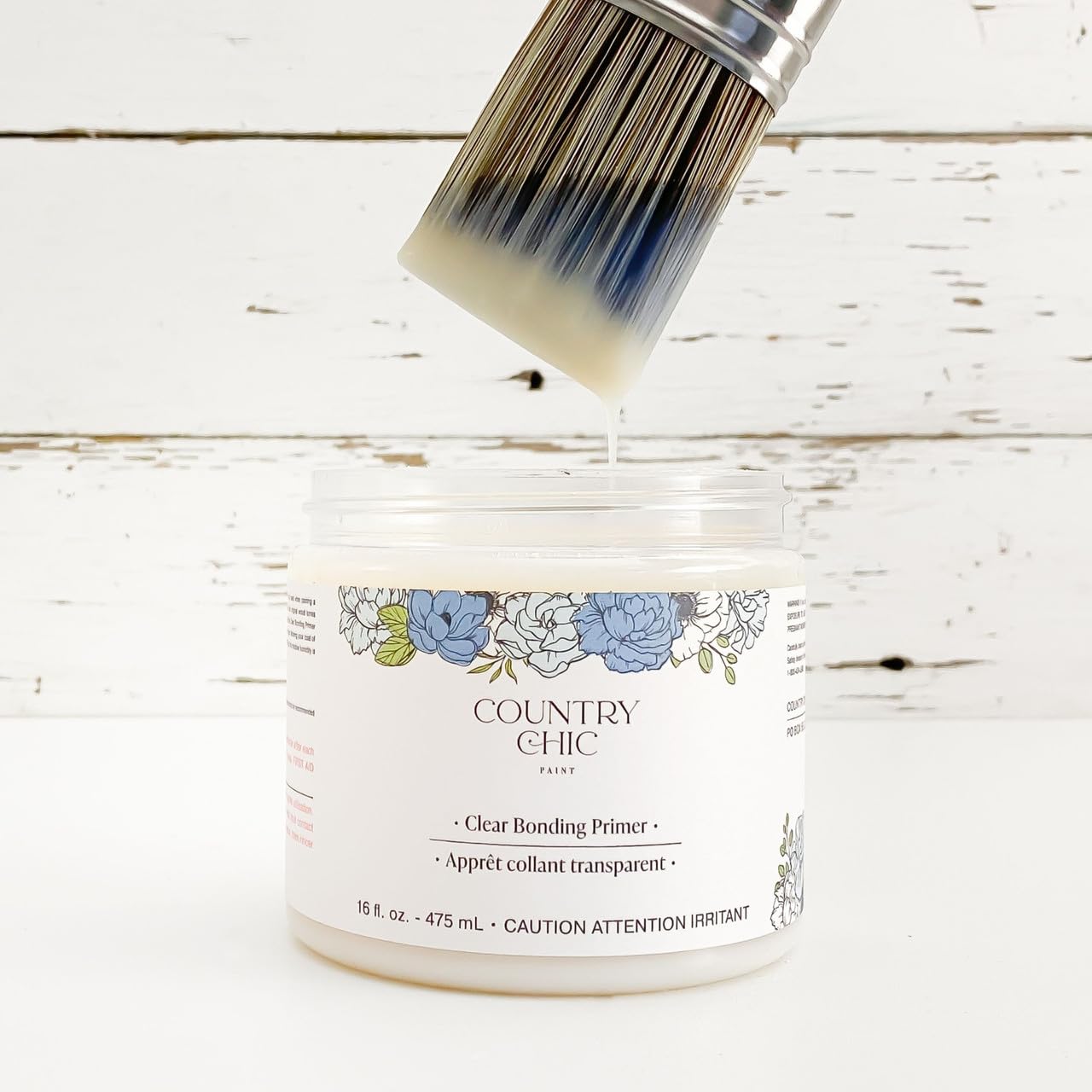
Country Chic Paint’s clear bonding primer solves a specific problem that chalk-paint enthusiasts and furniture flippers face: how to paint over laminate or glossy factory finishes without sanding. The water-based formula uses bonding agents that create a porous film on slick surfaces, allowing subsequent paint layers to lock in.
Its standout feature is the clear finish—when you distress a piece, the original wood tone shows through instead of a white or grey primer layer. The pint can covers 16 to 32 square feet, enough for a dresser or small side table, and it has almost no odor.
Some users note the price per ounce is higher than other bonding primers, and the pint size limits larger projects. But for furniture restoration where a true-to-wood distressed look matters, this primer delivers exactly that.
Why it’s great
- Dries completely clear—ideal for distressed furniture finishes
- Ultra-low VOC with almost no odor for indoor painting
- Green Wise certified with no formaldehyde or heavy metals
Good to know
- Pint size limits coverage to small to medium furniture
- Premium price per ounce compared to bulk options
4. Rust-Oleum 209460 Plastic Primer Spray

Rust-Oleum’s plastic primer is the entry-level option for anyone painting polypropylene, polystyrene, PVC, or fiberglass. The aerosol sprays on with a fine mist that avoids runs and splotching, making it forgiving for beginners. Users report excellent adhesion on sanded PVC pipe and plastic hubcaps, and it works well on wood too.
The 12-ounce can provides enough for two light coats on four hubcaps or a medium-sized plastic project. It is designed as a light bonding layer—not a full-coverage paint—so you still need a topcoat for color and UV protection.
While it handles plastic well, it is not formulated for bare metal or glossy laminate. For plastic mailboxes, lawn chairs, and 3D-printed parts, this is the most cost-effective solution.
Why it’s great
- Specifically formulated for hard-to-paint plastics like polypropylene
- Fine mist spray pattern prevents runs on vertical surfaces
- Works with any Rust-Oleum topcoat for a matched system
Good to know
- Not intended for bare metal or automotive body panels
- Only a light coat needed—using too much can cause drips
5. Raptor Acid Etch Primer 1K Aerosol

Raptor’s acid etch primer uses a phosphoric acid ester formula that chemically etches and primes bare metal in a single step. It is designed specifically for tough surfaces like galvanized steel and aluminum—materials that repel standard primers. Users who paired it with Raptor’s 2K bedliner report that the bedliner remains fully adhered after nearly a year of heavy use.
The 13.2-ounce can features a flat fan nozzle that delivers a large, even spray pattern, cutting application time. No sanding is required before topcoating, and it accepts most paint systems directly after a one-hour dry time.
This is a single-component (1K) primer, so it activates with atmospheric moisture rather than a hardener. It produces a matte grey finish that works well under bedliners, chassis coatings, and automotive paint.
Why it’s great
- Chemical etching eliminates sanding on bare metal
- One-hour dry time allows fast project turnaround
- Works on galvanized steel and aluminum where other primers fail
Good to know
- Solvent-based formula requires respirator and ventilation
- Not effective on plastic, wood, or painted surfaces
FAQ
Can I use an acid etch primer on plastic?
Do I need to sand before applying a bonding primer?
How long should I wait between primer and paint?
Final Thoughts: The Verdict
For most users, the gripping primer winner is the SEM 39683 Self Etching Primer because it delivers reliable chemical adhesion on bare metal with a quick 3-hour dry time at a mid-range price. If you need a water-based option for indoor furniture or tile, grab the INSL-X Stix Bonding Primer. And for plastic projects where other primers peel, nothing beats the Rust-Oleum 209460 Plastic Primer Spray.