
Ground bees, yellow jackets, and carpenter bees turn your property into a no-go zone. Aerosol sprays often miss the mark, failing to reach the colony buried deep in the soil or behind wooden beams. The right approach targets the source, not just the scouts.
I’m Mohammad Maruf — the founder and writer behind Drink4Good. I’ve analyzed hundreds of insecticide labels, comparing active ingredients, application methods, and real-world user outcomes to separate effective colony killers from surface-level solutions.
Whether you face a sprawling underground nest or recurring wood-boring invaders, choosing the right tool matters. This roundup of the best ground bee killer highlights products that deliver lasting control through targeted dust and expanding foam formulations.
How To Choose The Best Ground Bee Killer
Effective ground bee control hinges on two variables: how the insecticide reaches the nest and what active ingredient it carries. A spray that only hits the surface will miss the colony, leaving you with a temporary fix. Dust and foam formulations solve this by traveling deeper into tunnels.
Active Ingredient: Cyfluthrin vs. Permethrin
Cyfluthrin, found in products like Tempo Dust and Atticus Tirade, delivers a potent residual effect that continues killing days after application. Permethrin, used in Bonide Spider and Ground Bee Killer, provides fast knockdown but may require reapplication for severe infestations. For nests deep underground or inside wood cavities, cyfluthrin dust is the superior choice due to its longevity and ability to cling to insect bodies as they move through treated areas.
Application Method: Dust, Foam, or Aerosol
Dust applicators allow you to puff insecticide directly into entry holes, where it coats nesting chambers and foraging tunnels. Foaming aerosols expand to fill cavities, blocking escape routes while delivering a lethal dose on contact. Standard aerosol sprays, while useful for visible wasps, rarely penetrate deep enough to eliminate an established ground nest. For yellow jacket colonies in the soil, foam provides the most thorough coverage; for carpenter bees in wood, dust remains the reliable standard.
Residual Longevity and Coverage Area
A product’s residual life determines how long it remains active after application. Cyfluthrin-based dusts can remain effective for weeks if undisturbed, making them ideal for ongoing control. Check the label for coverage area: a 1-pound container of dust typically covers 1,000 square feet, while a 3-pack of foam aerosol may handle multiple nests in a single season but requires precise targeting.
Quick Comparison
On smaller screens, swipe sideways to see the full table.
| Model | Category | Best For | Key Spec | Amazon |
|---|---|---|---|---|
| Atticus Tirade 1% Cyfluthrin Dust | Dust Insecticide | Broad-spectrum colony elimination | Cyfluthrin 1% / 20 oz. | Amazon |
| Tempo Dust 1% Cyfluthrin | Dust Insecticide | Carpenter bees & large yellow jacket nests | Cyfluthrin 1% / 1.25 lbs. | Amazon |
| Spectracide Carpenter Bee & Yellowjacket Foam | Foam Aerosol | Deep ground nests & wood cavities | Foam expands to 27 ft. | Amazon |
| Bonide 363 Spider & Ground Bee Killer | Dust Insecticide | Budget-friendly ground bee control | Permethrin 0.25% / 2×10 oz. | Amazon |
| Spectracide Wasp & Hornet Aerosol 3-Pack | Aerosol Spray | Immediate contact kills at a distance | 27 ft. spray range | Amazon |
In‑Depth Reviews
1. Atticus Tirade 1% Cyfluthrin Dust Insecticide
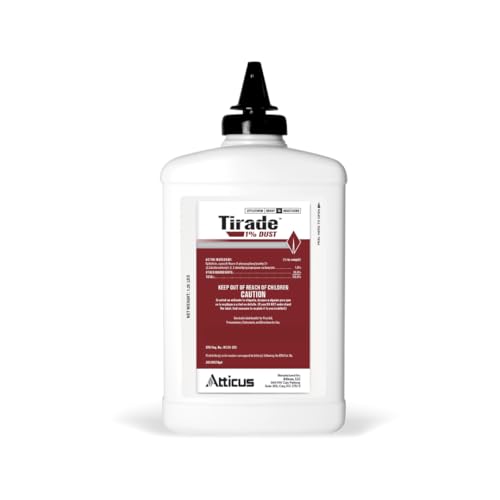
Atticus Tirade pairs cyfluthrin at a full 1% concentration with a fine powder that clings to insect exoskeletons as they traverse treated tunnels. Users report complete elimination of yellow jacket and hornet nests within 72 hours, often using just a fraction of the 20-ounce bottle. The dust formulation resists moisture better than many competitors, maintaining efficacy even in damp underground conditions.
This product’s broad-spectrum label covers over 50 household insect species, including ants, roaches, bed bugs, and spiders, making it a versatile tool for perimeter defense. It requires a separate duster for optimal application; a bulb duster works well for puffing powder directly into entry holes. The low-odor formula leaves no visible staining on surfaces or vegetation.
Some states, including California and Vermont, restrict sale of this insecticide, so verify local regulations before ordering. Users with pets should apply outdoors only and keep animals away from treated areas until dust settles. For deep nests, multiple applications may be needed over several days.
Why it’s great
- 1% cyfluthrin provides weeks of residual activity in soil tunnels
- Non-staining, low-odor powder ideal for sensitive areas
- Eliminates large colonies with minimal product usage
Good to know
- Requires a bulb or hand duster for effective application
- Not available for sale in AK, CA, HI, PR, or VT
2. Tempo Dust Insecticide Powder
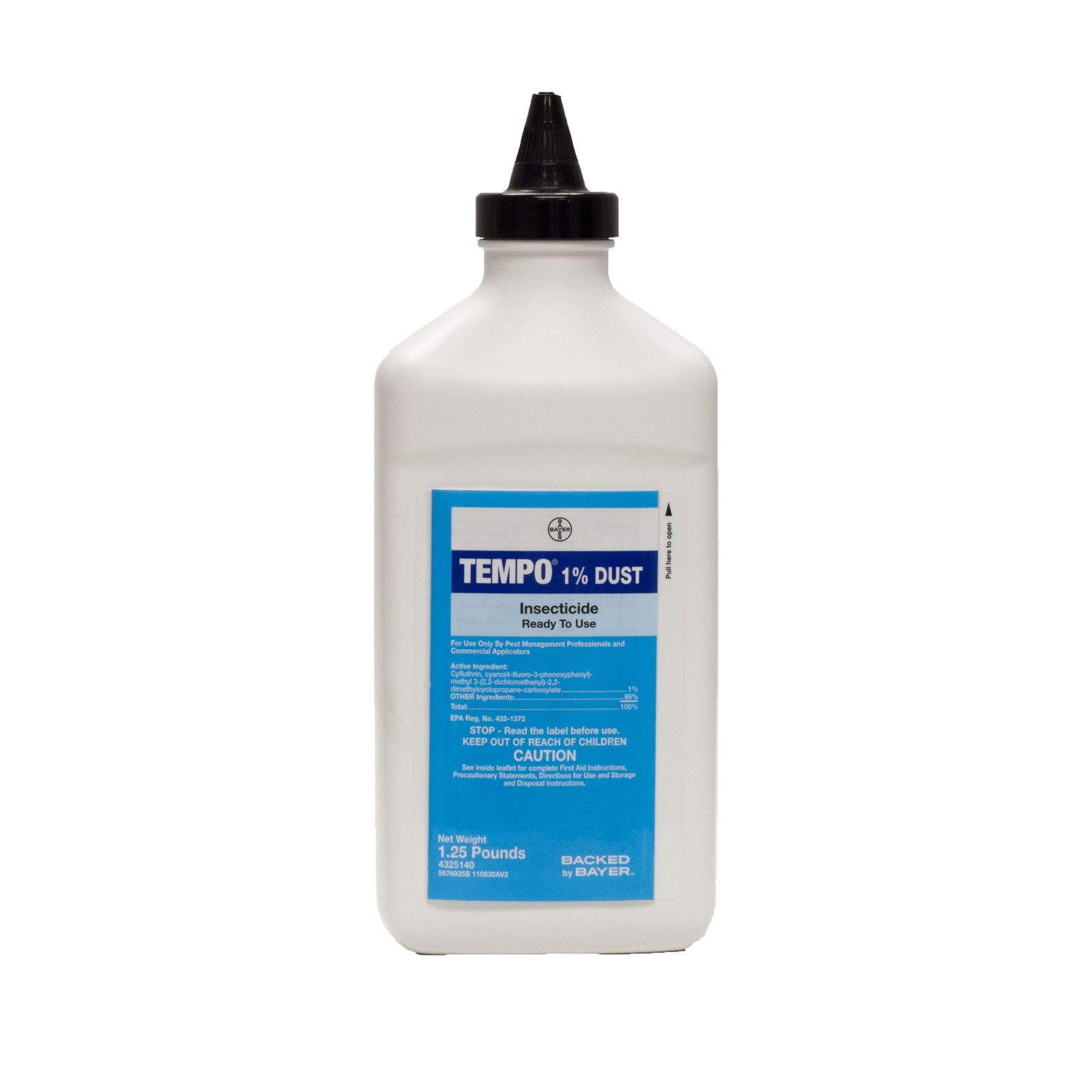
Tempo Dust carries the same active ingredient as Atticus Tirade but in a larger 1.25-pound container that covers roughly 1,000 square feet. This makes it the preferred choice for property owners managing multiple nests or recurring carpenter bee infestations across wooden structures. The fine dust penetrates deep into wood galleries and soil tunnels, adhering to insect bodies and spreading the lethal dose throughout the colony.
Users report near-complete elimination of carpenter bees within several weeks after a single application, with minimal impact on non-target insects when applied directly into cavities. For in-ground yellow jacket nests, mixing Tempo Dust with a bulb duster and applying at dusk significantly improves effectiveness, as the powder settles onto the colony during nighttime inactivity. The product also works well mixed 50/50 with other dusts for aggressive infestations.
Sale restrictions apply in California, New York, South Carolina, and Connecticut, so check eligibility before purchasing. The powder is lightweight and prone to floating in windy conditions, making calm days essential for precise application. A reusable bulb duster is strongly recommended for consistent delivery.
Why it’s great
- Large 1.25-lb container offers exceptional value for extensive treatment
- Long residual activity controls returning bees for weeks
- Highly effective against both carpenter bees and yellow jackets
Good to know
- Restricted in several states; verify local regulations
- Requires a duster; not effective as a liquid spray
3. Spectracide Carpenter Bee & Ground-Nesting Yellowjacket Killer Foaming Aerosol (3-Pack)

Spectracide’s foaming aerosol addresses the fundamental problem of standard sprays: they don’t reach the nest. The foam expands upon contact, filling underground tunnels and wood cavities to coat the colony with a lethal layer. Users report instant knockdown of yellow jackets at the entrance, with the foam continuing to expand deeper into the nest to kill remaining insects.
The extension tube allows precise targeting into small entry holes, which is critical for carpenter bee galleries. A single can empties entirely into one nest, ensuring thorough saturation. The 3-pack provides enough coverage for multiple nests or repeated applications on persistent colonies. Some users note that the foam does not kill on contact as advertised, requiring two or three treatments for full elimination.
Windy conditions can disperse the foam before it enters the hole, reducing effectiveness. Apply during calm evening hours when bees are less active. The foam leaves a visible residue on surfaces, so avoid application near painted wood or decorative stonework.
Why it’s great
- Expanding foam penetrates deep into underground and wood cavities
- Extension tube enables precise application into small holes
- 3-pack provides ample supply for multiple infestations
Good to know
- May require multiple applications for large or established colonies
- Foam is affected by wind; apply on calm evenings
4. Bonide 363 Spider and Ground Bee Killer (2-Pack)

Bonide’s ground bee killer delivers a permethrin-based dust with a snorkel tube applicator that reaches into cracks and crevices without requiring a separate duster. The 0.25% concentration is lower than cyfluthrin-based options, but users still report effective colony elimination within 24 hours for moderate ground bee infestations. The dual-pack provides two 10-ounce bottles, enough for several nest sites.
The snorkel tube is particularly useful for treating gaps under siding, between patio stones, and around foundation cracks where ground bees often establish entry points. Users with allergies report that a single application stopped bee activity entirely, allowing safe outdoor use within a day. The powder works both indoors and outdoors, expanding its utility beyond just bee control to include spiders and crawling insects.
Permethrin degrades faster in wet conditions than cyfluthrin, so reapplication after heavy rain is often necessary. The dust can become clumpy if exposed to moisture, affecting the applicator’s performance. Some users prefer a liquid spray for faster knockdown, noting that the powder acts more slowly on large nests.
Why it’s great
- Snorkel applicator reaches tight spaces without extra tools
- Affordable two-pack covers multiple nests
- Safe for indoor use in crack-and-crevice applications
Good to know
- Lower permethrin concentration requires reapplication after rain
- Dust may clog if exposed to humidity during storage
5. Spectracide Wasp and Hornet Killer Aerosol (3-Pack)

Spectracide’s classic aerosol sprays a concentrated stream up to 27 feet, delivering instant knockdown on contact. This makes it the go-to choice for treating hanging wasp nests or individual ground bees visible at the surface. The 3-pack offers a cost-effective solution for seasonal maintenance, allowing you to keep one can in the garage, shed, and truck without worry.
The aerosol foam coats insects in a toxic film that kills within seconds, providing immediate relief from aggressive swarms. Users consistently praise its effectiveness on yellow jackets and wasps around porches, eaves, and fences. The long-range stream keeps you well outside stinging distance, a critical safety feature when dealing with agitated colonies.
This product is designed for surface-level contact killing, not deep nest treatment. It will not eliminate underground colonies or carpenter bees nesting inside wood. For ground nests, it serves best as a first-aid tool to neutralize visible insects before applying a dust or foam product for complete colony removal. The aerosol has a strong chemical odor that lingers for several minutes after application.
Why it’s great
- 27-foot spray distance keeps you safe from stings
- Instant knockdown on contact for visible insects
- Excellent value for seasonal wasp patrol
Good to know
- Ineffective at reaching deep underground or wood-boring nests
- Strong chemical odor during and shortly after application
FAQ
Will a standard aerosol spray kill a ground bee nest?
How long does cyfluthrin dust remain effective in soil?
Can I use ground bee killer powder around edible plants?
Final Thoughts: The Verdict
For most users, the best ground bee killer winner is the Atticus Tirade 1% Cyfluthrin Dust because it combines potent residual activity, broad-spectrum coverage, and a low-odor powder that works deep in tunnels. If you need a foam solution for yellow jacket nests in the soil, grab the Spectracide Carpenter Bee & Yellowjacket Foaming Aerosol 3-Pack. And for homeowners on a budget managing moderate ground bee activity, nothing beats the value of the Bonide 363 Spider and Ground Bee Killer 2-Pack.