
Standard weed barrier fabrics shred, tear, and pucker under the daily grind of foot traffic, lawn mowers, and gravel shifting. A high-traffic ground cover must handle constant weight without disintegrating while still allowing water and air to pass through to the soil below. The construction weight, tensile strength, and weave density separate a one-season solution from a long-term investment.
I’m Mohammad Maruf — the founder and writer behind Drink4Good. I’ve spent hundreds of hours analyzing landscape fabric specs, reading through verified buyer experiences, and comparing tensile strength ratings and ounce weights to find the toughest ground covers that can withstand continuous use.
After digging through dozens of rolls and thousands of reviews, these are the woven and non-woven sheets that actually survive where you walk. This guide breaks down the seven best options for a ground cover for high traffic areas that won’t tear, bunch up, or fail mid-season.
How To Choose The Best Ground Cover For High Traffic Areas
Not every landscape fabric is built for stomping on. A thin 1oz polypropylene sheet works fine under a 2-inch layer of mulch in a flower bed, but the moment you lay gravel over it and start walking, it tears. The three specs that matter most for high-traffic zones are ounce weight, tensile strength, and weave construction.
Ounce Weight: The Foundation of Durability
Fabric weight is measured in ounces per square yard (oz/sq yd). A 3.2oz fabric is the entry-level for light foot traffic and decorative stone paths. A 5oz fabric is the sweet spot for driveways, play areas, and commercial use. The 8oz non-woven geotextile option sits at the top for pure puncture and tear resistance. Going below 3oz in a high-traffic area is a recipe for pinholes and rips within one season.
Woven vs Non-Woven vs Dual-Layer
Woven polypropylene fabrics are tight, flat, and excellent for drainage under gravel — the weave structure spreads load well. Non-woven needle-punched fabrics feel like thick felt and offer superior puncture resistance and soil separation. Dual-layer designs combine a woven base with a non-woven top to get the best of both worlds: drainage and durability. For pure walking areas, woven or dual-layer is typically the smarter choice.
Tensile Strength and UV Resistance
Tensile strength, measured in pounds (lbs), tells you how much force the fabric can withstand before tearing. Look for a minimum of 300 lbs tensile strength for areas with regular foot or vehicle traffic. UV stabilization prevents the fabric from becoming brittle under direct sunlight, which extends its life by several years even when not fully covered by mulch or stone.
Quick Comparison
On smaller screens, swipe sideways to see the full table.
| Model | Category | Best For | Key Spec | Amazon |
|---|---|---|---|---|
| VIVOSUN 4ft x 250ft | Dual-Layer | Heavy foot traffic & raised beds | 5oz dual-layer woven + non-woven | Amazon |
| Snail 4ft x 250ft | Woven | Driveways & stone pathways | 5oz woven polypropylene | Amazon |
| VEVOR 6ft x 100ft | Non-Woven | Drainage ditches & French drains | 8oz needle-punched geotextile | Amazon |
| Vanver 4ft x 300ft | Woven | Pathways between garden beds | 3.2oz woven polypropylene | Amazon |
| DWALE 6.5ft x 330ft | Woven | Gravel pads & commercial driveways | 3.5oz with 800 lbs tensile strength | Amazon |
| Agfabric 6.5ft x 300ft | Woven | Long-term vegetable gardens | Heavy-duty woven polypropylene | Amazon |
| Farm Plastic Supply 6ft x 300ft | Woven | Sun-exposed paths & orchards | 3.2oz UV-resistant woven PP | Amazon |
In‑Depth Reviews
1. VIVOSUN Premium Weed Barrier Landscape Fabric 4ft x 250ft

The VIVOSUN dual-layer construction is the standout feature here — it combines a woven polypropylene base with a needle-punched non-woven top layer. That means you get the tear resistance of a 5oz woven fabric with the water permeability of a non-woven, and the fuzzy underside grips the soil so the fabric stays put without constant re-staking. Users consistently report walking on it daily around raised beds without any sign of breakdown.
The molecular attraction water-draw design is not marketing fluff: the non-woven fibers actively pull water downward, which prevents pooling on top of the fabric. The green line guides spaced every foot make plant alignment straightforward, and the cut edges fray less than standard woven fabric because of the needle-punch bonding.
You will want to overlap seams by at least 6 inches and use quality landscape staples every 12 inches to keep the fabric locked down. For the price per square foot, this is the most versatile high-traffic option available.
Why it’s great
- Dual-layer weave handles foot traffic without tearing
- Fuzzy backside grips soil to prevent shifting
- Water permeability rated 6x higher than standard ground covers
Good to know
- Cut edges fray more than heat-sealed alternatives
- Requires ample stapling to stay flat in windy areas
2. Snail Weed Barrier Landscape Fabric 4ft x 250ft

At 5oz per square yard, the Snail fabric sits at the heavier end of the woven spectrum, and the difference is immediate when you unroll it. This is not a flimsy felt — it feels like a flexible plastic sheet, and users describe cutting it with scissors as requiring some effort. The tight weave blocks sunlight completely while still allowing water and air exchange for soil health.
The green alignment stripes are printed rather than woven in, which helps with straight-line planting. Users report that after one full season under rock and gravel, the fabric shows zero signs of UV degradation or tearing even in full-sun conditions. It is also one of the few options in this category that comes with a one-year warranty and free replacement policy if the roll arrives damaged.
A few users note the fabric is stiff enough that it does not conform tightly to uneven ground without extra weighting. You will need a solid layer of gravel or mulch on top to keep it from lifting in high wind. For straight driveway runs or commercial-grade pathways, this is a top contender.
Why it’s great
- Dense 5oz weave resists punctures from sharp gravel
- UV stabilization prevents brittleness in full sun
- One-year warranty and free replacement coverage
Good to know
- Stiff material requires heavy top cover to stay in place
- Harder to cut cleanly with standard scissors
3. VEVOR 6ft x 100ft Non-Woven Geotextile Fabric

The VEVOR 8oz non-woven geotextile is the thickest fabric in this lineup by weight, and it serves a different purpose than the woven options. The needle-punched construction creates a felt-like mat with 350N tensile strength (roughly 78 lbs of force) that excels at filtration and soil separation. For French drains, drainage ditches, and gravel underlayment where water flow is critical, this fabric outperforms woven sheets.
Users specifically praise how it keeps clay and silt out of drainage stone while allowing water to pass freely. The 6ft width covers wide areas without needing to tape or overlap multiple strips, and the material lays flat immediately with no curling at the edges. One reviewer noted it was easy to install with two people despite the 27-pound roll weight.
The non-woven construction does not have the same walking surface integrity as a woven fabric — under constant foot traffic, the fibers can mat down over time. This is a specialist fabric best used as a drainage layer beneath a proper walking surface, not as a standalone ground cover for barefoot paths.
Why it’s great
- 8oz density provides maximum puncture resistance
- Excellent water permeability for drainage applications
- 6ft width minimizes seams in wide installations
Good to know
- Fibers can mat down under repeated foot traffic
- Heavier and bulkier roll to transport and position
4. Vanver 4ft x 300ft Landscape Fabric
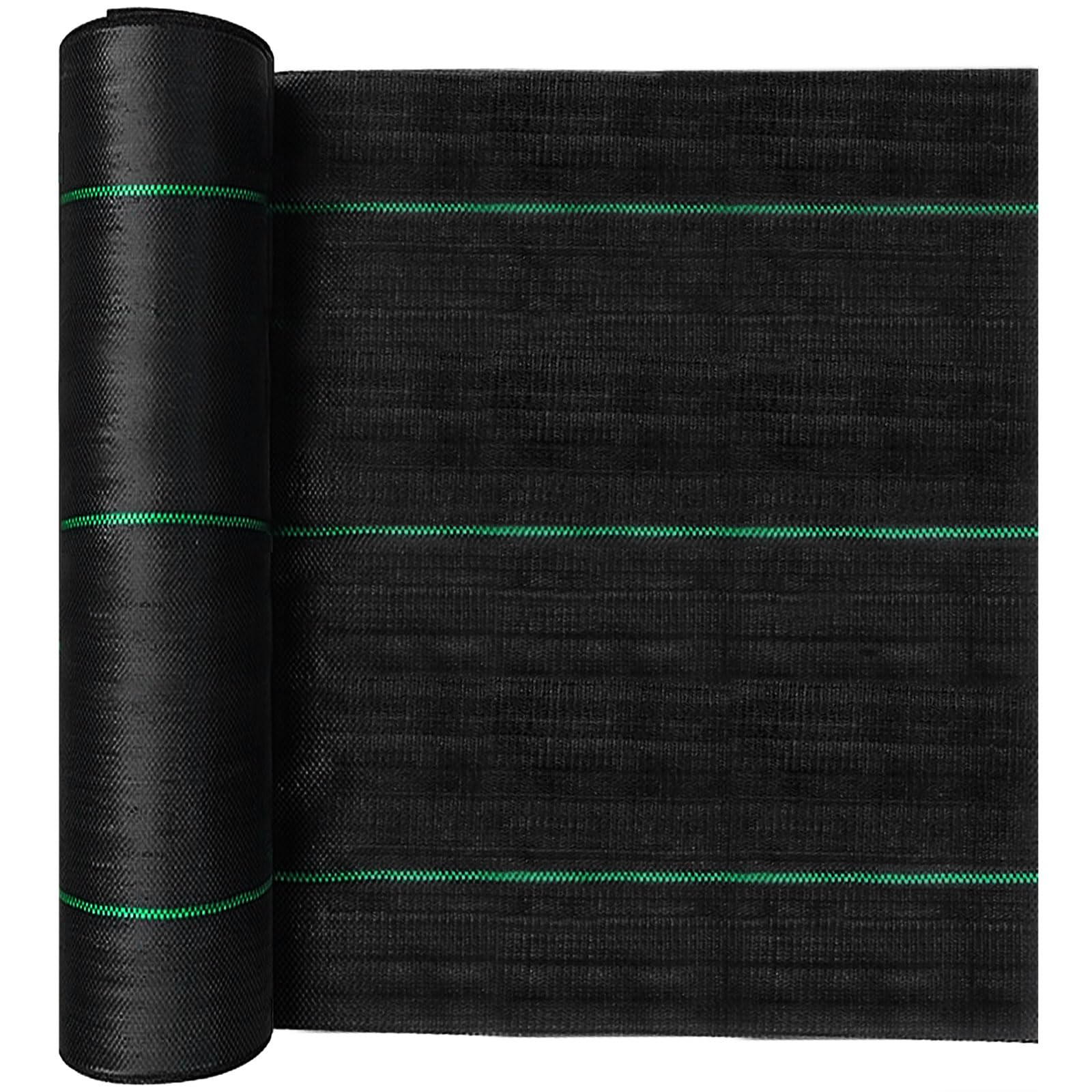
For the price per square foot, the Vanver fabric is hard to beat. The 3.2oz woven polypropylene construction is light enough to handle easily but still dense enough to block weed growth under decomposed granite and small stone paths. Users mention the fabric holds up well to walking between raised beds without tearing — the woven warp and weft structure spreads load effectively even at this weight.
The inclusion of anti-aging material is a practical touch: it slows UV degradation, which is important for areas where the fabric remains partially exposed at the edges of a stone path. The roll size at 300ft gives you significant coverage for large projects, and the 4ft width is manageable for a single person to unroll and position.
The main drawback is the cut-edge unraveling. Because it is a standard woven polypropylene, the ends where you cut will start to separate unless you tuck them under a stone border or secure them with staples. One user specifically noted that the fabric began unweaving at the cut ends when used as a walking path between beds.
Why it’s great
- Low cost per square foot for large coverage areas
- Anti-aging additive extends lifespan in partial sun
- Easy to cut and install for DIY homeowners
Good to know
- Cut ends unravel if not properly anchored
- 3.2oz weight is less durable under heavy gravel
5. DWALE Driveway Fabric 6.5ft x 330ft

The DWALE fabric is built specifically for driveway underlayment, and the 800 lbs tensile strength rating confirms it. Made from high-density polyethylene rather than standard polypropylene, this material has a different feel — slicker, more plastic-like, and extremely resistant to tearing when heavy gravel is spread on top. The 6.5ft width unfolds to provide broad single-sheet coverage for driveway pads.
A professional landscaper actually recommended this product to one reviewer, which speaks to its commercial viability. The fabric is highly permeable — water drains through quickly without pooling — and the 3.5oz weight keeps the roll manageable despite the 330ft length. Users note that it works well for gravel stabilization, retaining walls, and erosion control projects where load-bearing capacity is critical.
Like most woven materials in this category, the cut edges do shed loose threads. Several reviewers mention that while the fabric itself is strong, the woven structure can fray at the ends if not cleanly cut with a hot knife or heavy-duty shears. The roll ships folded in half, which means you get two 3.25ft-wide layers that must be separated before installation.
Why it’s great
- 800 lbs tensile strength handles vehicle-weight loads
- Polyethylene construction resists chemical degradation
- Drains water quickly without surface pooling
Good to know
- Frayed edges require clean cutting techniques
- Folded packaging means separating layers before use
6. Agfabric Landscape Fabric 6.5ft x 300ft

The Agfabric woven polypropylene sheet has a strong following among homesteaders and serious gardeners, with one reviewer reporting it performed without mechanical breakdown after five continuous years of use. The heavier PP weave is noticeably thicker than standard home improvement store fabric, and users recommend cutting it with a hot knife or torch to melt the edges and prevent fraying entirely.
The 6.5ft width provides wide coverage for driveways and pathways, and the fabric folds in half for shipping — once opened, it spreads to its full width. Water permeability is rated by users as good, though one reviewer noted the woven structure is slightly less breathable than non-woven geotextile fabrics. The material works well under white gravel, bark, and stone, keeping the surface weed-free while allowing moisture to reach tree and shrub roots below.
The primary downside is the weight: at 40.4 pounds, this is the heaviest roll in the lineup, and maneuvering it into position alone is difficult. The fabric also tends to trap more moisture underneath than lighter alternatives, which could be an issue in areas with poor drainage or heavy clay soil.
Why it’s great
- Proven 5-year lifespan under continuous outdoor use
- Hot-knife cutting creates permanent fray-free edges
- Wide 6.5ft coverage for fewer overlapping seams
Good to know
- 40-pound roll is difficult to handle solo
- Lower water permeability than non-woven options
7. Farm Plastic Supply 3.2oz Landscape Fabric 6ft x 300ft

Farm Plastic Supply’s 3.2oz fabric has one of the most impressive long-term verification reports in this category: one user installed it in 2023 under full sun with no mulch cover, and it was still in great shape three years later in 2026. That kind of UV resistance is rare at the 3.2oz weight level, and it comes from the woven polypropylene construction with added weather-proofing additives.
The fabric includes printed alignment stripes to guide plant spacing, and users report that it cuts easily with scissors while maintaining its weave integrity at the cut edges better than many competitors. It works well for pumpkin patches, orchard rows, and gravel paths where moderate foot traffic occurs but heavy vehicle loads are not expected. The 6ft width gives good coverage for standard garden beds and pathway widths.
At 3.2oz, this is not a heavy-duty fabric — it will not hold up to repeated vehicle traffic or sharp gravel that is driven over. One user noted that while it blocks organic growth underneath, the fabric needs heavy rock or mulch anchoring because it can blow away in strong wind if not secured. Best suited for foot traffic areas with a covering layer of stone or bark.
Why it’s great
- Exceptional UV resistance for uncovered applications
- Holds weave structure well at cut edges
- Lightweight roll is easy for one person to install
Good to know
- 3.2oz weight limits use to foot traffic only
- Requires heavy top cover to prevent wind lift
FAQ
Can I drive a car over these ground cover fabrics?
How do I prevent the woven edges from unraveling?
Should I use landscape staples or rocks to secure the fabric?
What is the difference between woven and non-woven for high-traffic areas?
How long does landscape fabric last in direct sunlight?
Final Thoughts: The Verdict
For most users, the ground cover for high traffic areas winner is the VIVOSUN 4ft x 250ft because the dual-layer construction handles daily foot traffic while maintaining excellent water permeability and soil grip. If you need pure puncture resistance for a driveway or French drain project, grab the VEVOR 8oz Non-Woven. And for large-scale vegetable garden pathways where budget matters, nothing beats the value of the Vanver 3.2oz Woven.