
A dead trolling motor at the far end of the lake or a tripped inverter during a blackout isn’t an inconvenience — it’s a failure of planning. Group 24 deep cycle batteries bridge the gap between compact size and real energy capacity, but the chemistry you choose determines whether that power is reliable or fleeting.
I’m Mohammad Maruf — the founder and writer behind Drink4Good. I’ve spent years analyzing lithium-iron-phosphate chemistries, BMS topologies, and cycle-life data to help buyers avoid the costly mistake of choosing a battery that looks right on paper but fails under real loads.
In this guide, I break down nine of the most compelling options on the market, covering everything from lightweight LiFePO4 drops-ins to self-heating units for cold-weather campers, so you can confidently select the best group 24 deep cycle battery for your RV, boat, or off-grid setup.
How To Choose The Best Group 24 Deep Cycle Battery
Group 24 is one of the most common BCI sizes in RVs and marine applications. But fitting the box doesn’t mean the battery fits your use. The chemistry — lead-acid versus lithium — is the primary fork in the road. Lithium iron phosphate (LiFePO4) batteries dominate this list because they deliver four times the usable capacity at half the weight. Below are the specific factors that separate a smart buy from a mistake.
Usable Capacity and Depth of Discharge
Lead-acid Group 24 batteries typically offer 70-80 amp-hours of rating but only 50% is usable without damaging the plates. A LiFePO4 battery rated at 100 amp-hours delivers 100% usable capacity. That difference — 35Ah vs. 100Ah — is the single largest performance gap in this category. Always compare usable watt-hours (voltage × Ah × DoD) not just the printed amp-hour number.
BMS Quality and Protection Layers
The Battery Management System is the brain that prevents overcharge, over-discharge, short circuits, and thermal runaway. A 100A BMS is the baseline for Group 24 LiFePO4 batteries. Look for units with low-temperature charging cut-off (below freezing protection) if you store your battery in unheated garages or camp in winter. A BMS with a history of reliable balancing — not just protection — extends pack life by keeping cells within 0.05V of each other.
Weight and Physical Dimensions
Group 24 boxes are standardized at roughly 10.2 x 6.6 x 8.2 inches. Lead-acid AGM batteries in this size weigh 44-50 pounds. A LiFePO4 Group 24 battery weighs 20-24 pounds — a difference that matters when installing in a boat hatch or lifting into an RV compartment. Verify the terminal type (M8 is standard for lithium) and the exact height — some tall-cased lithium batteries protrude above the box lid.
Quick Comparison
On smaller screens, swipe sideways to see the full table.
| Model | Category | Best For | Key Spec | Amazon |
|---|---|---|---|---|
| GRENERPOWER 100Ah | Mid-Range | Best Overall / Solar Storage | 15000 cycles at 60% DoD | Amazon |
| GRNOE 100Ah | Mid-Range | Expandable Bank / Versatile | 4S4P expansion 20.48kWh | Amazon |
| SUPER EMPOWER 100Ah | Mid-Range | Cold Weather / Low-Temp Cutoff | Charging disabled below 32°F | Amazon |
| Dyness Mini TM 100Ah | Premium | Trolling Motor / IP65 Rated | IP65 waterproof, 20.9 lbs | Amazon |
| DC HOUSE Bluetooth 100Ah | Premium | Bluetooth Monitoring | Built-in Bluetooth 5.0 | Amazon |
| Power Queen 100Ah | Premium | Trusted Brand / Long Warranty | 4000 cycles at 100% DoD | Amazon |
| Redodo Group 24 100Ah | Premium | High Energy Density | 2.5X energy vs 70Ah AGM | Amazon |
| Interstate 24M-AGM | Premium | Dual Purpose / Cranking + Deep Cycle | 750CCA, 70Ah, 44.6 lbs | Amazon |
| Litime Self Heating 100Ah | Premium | Arctic / Freezing Climates | 2-mode self-heating, Bluetooth | Amazon |
In‑Depth Reviews
1. GRENERPOWER 12V 100Ah LiFePO4 Battery
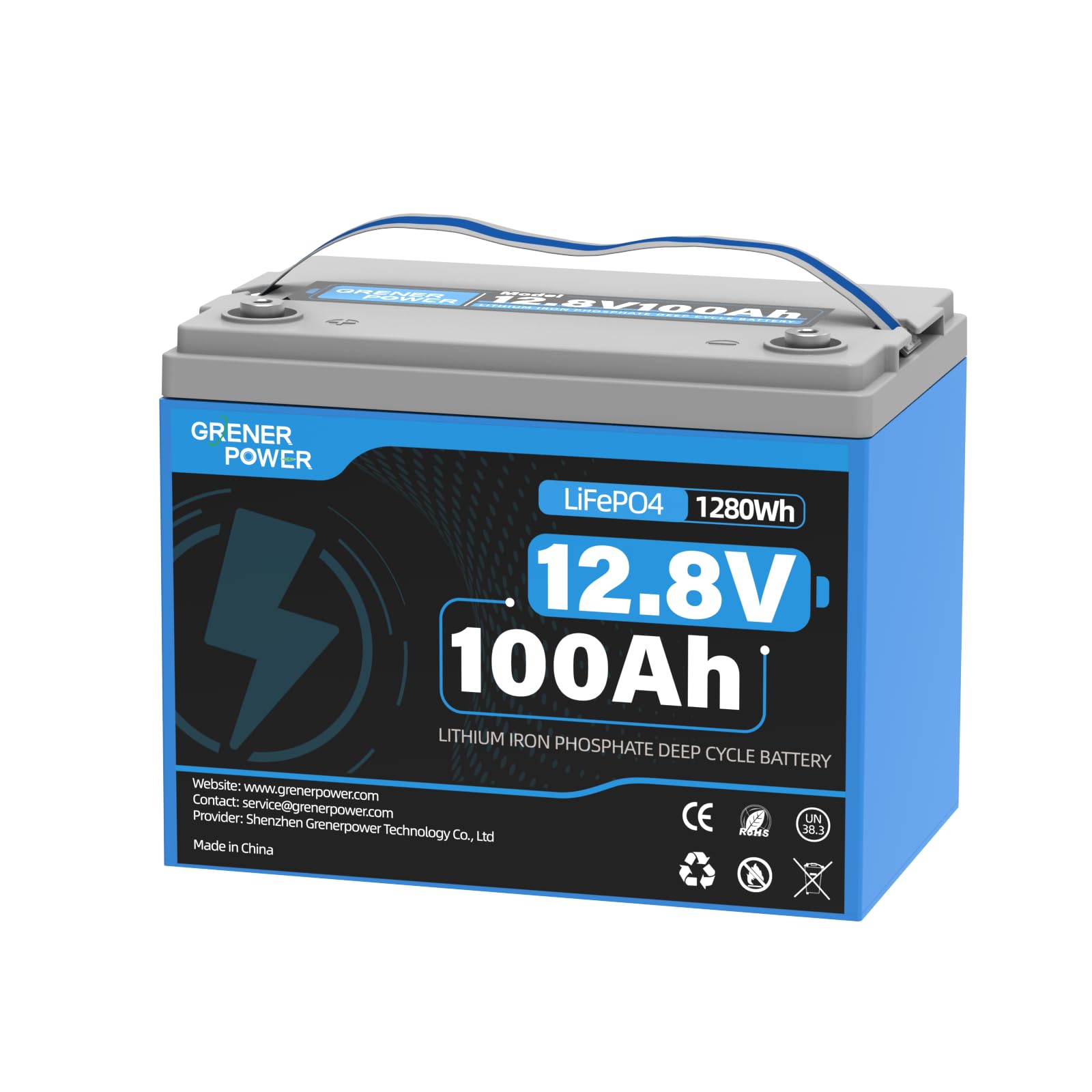
The GRENERPOWER 100Ah LiFePO4 battery is the most balanced option in the Group 24 category, delivering 1280Wh of usable energy from a 22.57-pound package. The cylindrical Grade A+ cells paired with a 100A BMS provide five-layer protection — overcharge, over-discharge, short-circuit, overcurrent, and overheat — making it a safe choice for RV compartments and home energy storage setups. Users report real-world testing showing voltage drop only to 12.8V after discharging 60Ah at a 40A load, confirming the capacity holds to spec.
This battery supports up to 4S4P expansion, allowing you to build a 20.48kWh bank with 16 units — ideal for solar arrays or whole-RV power upgrades. The BCI Group 24 footprint (10.23 x 6.61 x 8.3 inches) means it drops directly into existing lead-acid boxes without modification. The M8 terminals and included hardware simplify installation. Note that this unit is designed as an energy storage battery, not for engine starting or golf cart use.
Buyers report excellent build quality and fast shipping. After initial balancing (some units ship slightly out of balance), all four cells in the test packs stabilized above 14V after a full charge cycle, with capacity measuring between 101-105Ah. The 5-year warranty backs the 15,000-cycle rating at 60% depth of discharge, giving long-term confidence for daily cycling in solar or marine applications.
Why it’s great
- True 100Ah usable capacity in a compact Group 24 size
- Cylindrical Grade A+ cells offer reliable cycle life
- 4S4P expansion capability for large energy banks
Good to know
- Requires a LiFePO4-compatible charger for optimal performance
- Some units may need an initial balancing charge
2. GRNOE 12V 100Ah LiFePO4 Battery
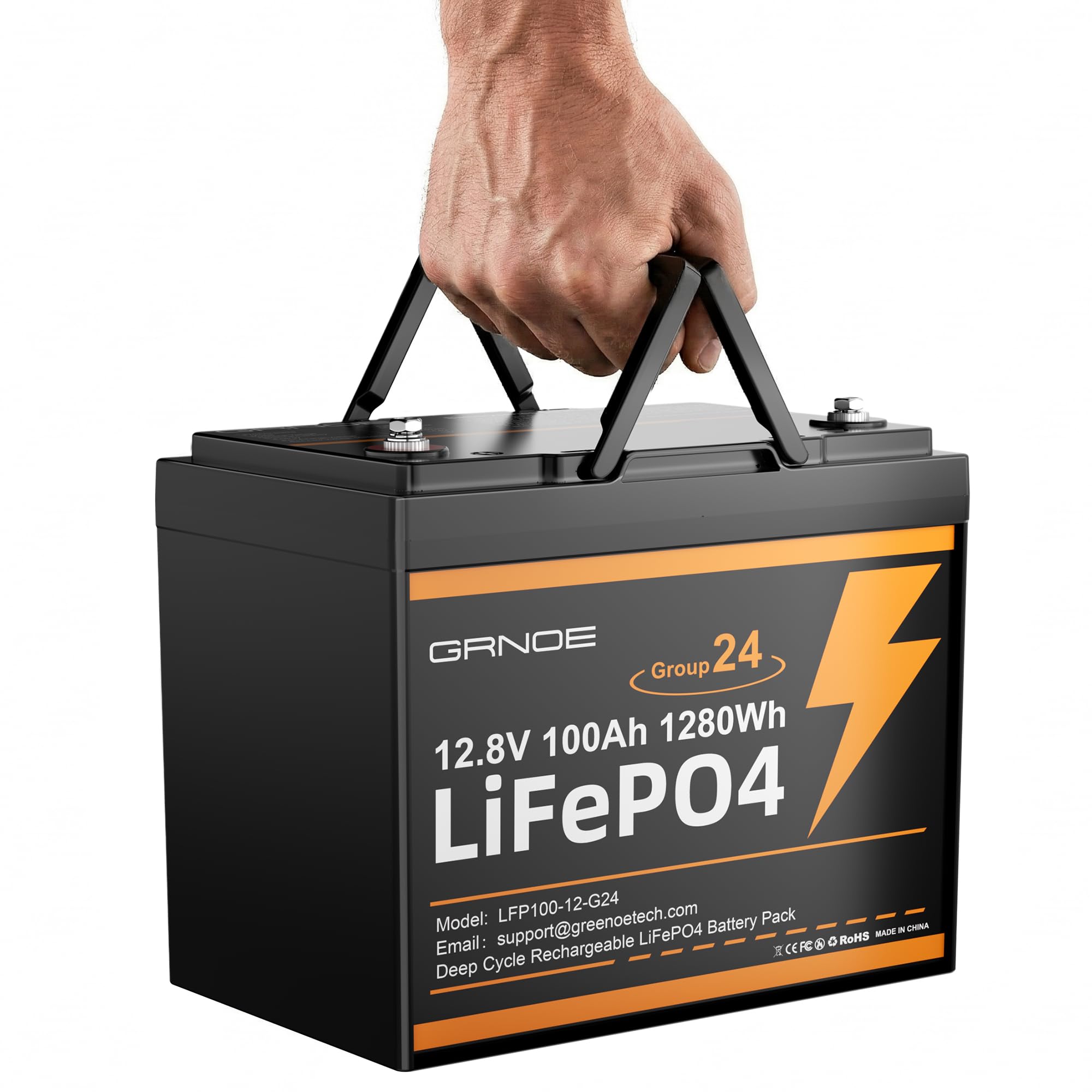
The GRNOE 100Ah LiFePO4 battery combines a compact 21.9-pound chassis with a 100A smart BMS that provides protection against overcharge, over-discharge, overcurrent, short circuit, and high voltage. The BMS also includes moisture, dust, and salt-spray resistance, making this a viable option for boats and marine environments where corrosion is a concern. Users report using it to power a 1000W inverter for cooking rice over a week and topping off lead-acid batteries on a travel trailer without issues.
Expansion is a key strength here: the battery supports up to 4S4P configuration, enabling a 51.2V 400Ah / 20.48kWh system. Each unit ships in 0V protection mode and requires a 14.6V LiFePO4 activation charger for first use — something to remember if you’re swapping out an old AGM. The battery works well as a drop-in replacement for Group 24 boxes, but you should avoid using lead-acid chargers with desulfation or pulse modes that can interfere with the BMS.
Real-world feedback shows solid performance: one user initially had a ground issue that caused low voltage readings, but after correcting the ground and load testing, the battery held 100A under load and delivered over 100Ah capacity. The manufacturer offered replacement and tech support. Despite its mid-range price, the GRNOE delivers 15,000 cycles at 60% DoD and comes with a 5-year warranty.
Why it’s great
- 4S4P expansion up to 20.48kWh
- Salt-spray and moisture-resistant BMS
- Lightweight at 21.9 lbs
Good to know
- Requires a LiFePO4 activation charger for first use
- Not compatible with lead-acid desulfation chargers
3. SUPER EMPOWER 12V 100Ah LiFePO4 Battery
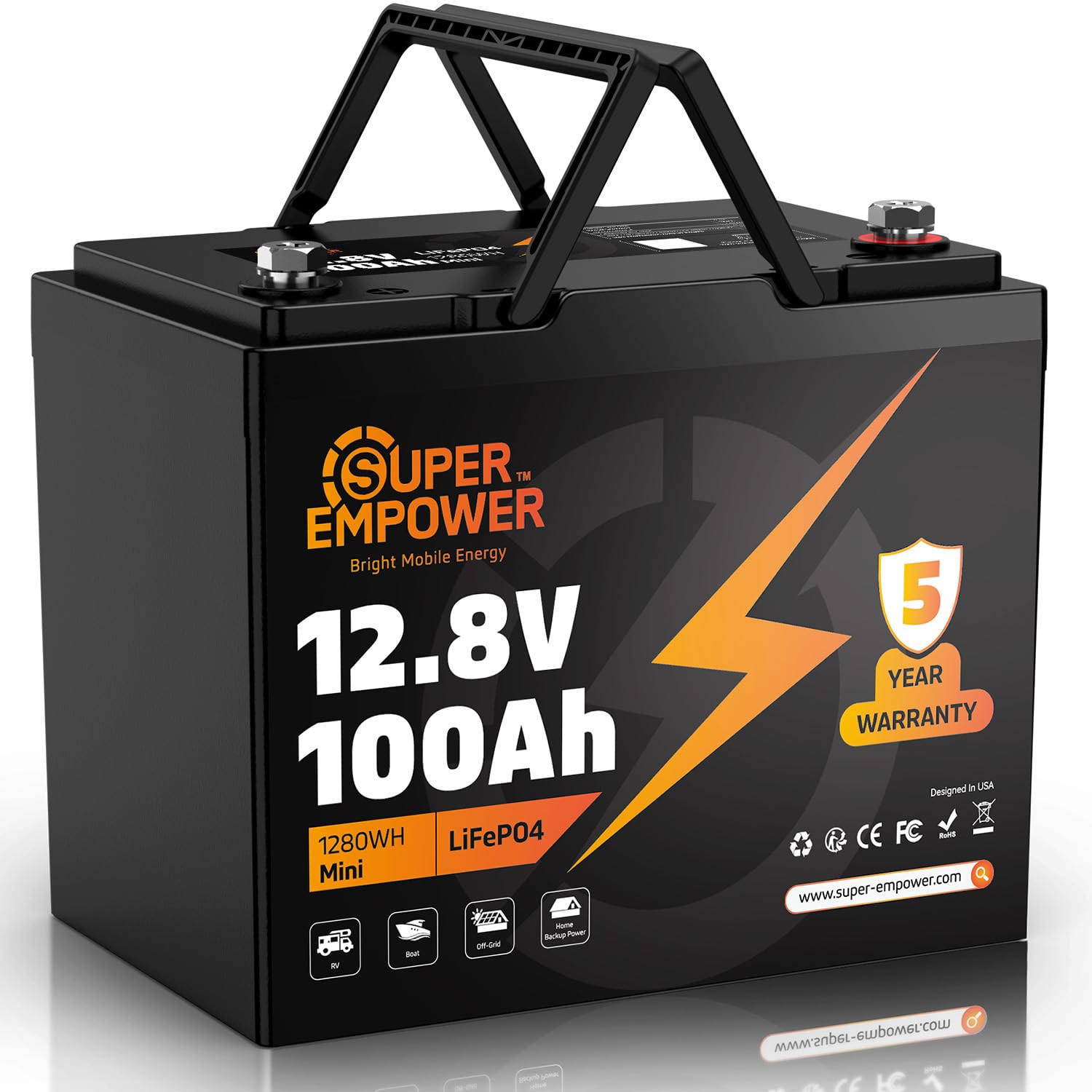
For those who camp or fish in freezing conditions, the SUPER EMPOWER 100Ah LiFePO4 battery stands out with its built-in low-temperature charging cutoff. The BMS automatically pauses charging below 32°F (0°C) and stops discharge at -4°F (-20°C), resuming only above 41°F (5°C). This feature protects the cells from irreversible damage that occurs when charging lithium batteries in sub-freezing temperatures — a common killer of LiFePO4 packs in winter.
The battery uses Grade A+ cells and supports approximately 5000 cycles at 100% depth of discharge, 6000 at 80%, and 15,000 at 60% DoD. Dimensions measure 6.49 x 10.24 x 8.98 inches with M8 terminals, fitting standard Group 24 boxes. The 21.6-pound weight is manageable for single-person installation in RV compartments or boat hatches. It also supports up to 4S4P expansion for a 51.2V 400Ah system.
User reports are generally positive: fast shipping from California, easy charging with a 20A smart charger reaching full in 6-7 hours from 50% state of charge. One user experienced a BMS failure after 30 days (voltage dropped to 9V and wouldn’t charge), but the company honored the 5-year warranty after the user contacted support outside Amazon. The ruggedness of the low-temp function makes this a strong pick for boondocking in cold climates.
Why it’s great
- BMS cuts off charging below freezing to protect cells
- 5000 cycles at 100% DoD
- Lightweight at 21.6 lbs
Good to know
- Reported BMS failure in a small number of units
- Requires LiFePO4-specific charger only
4. Dyness 12V 100Ah LiFePO4 Mini TM Battery
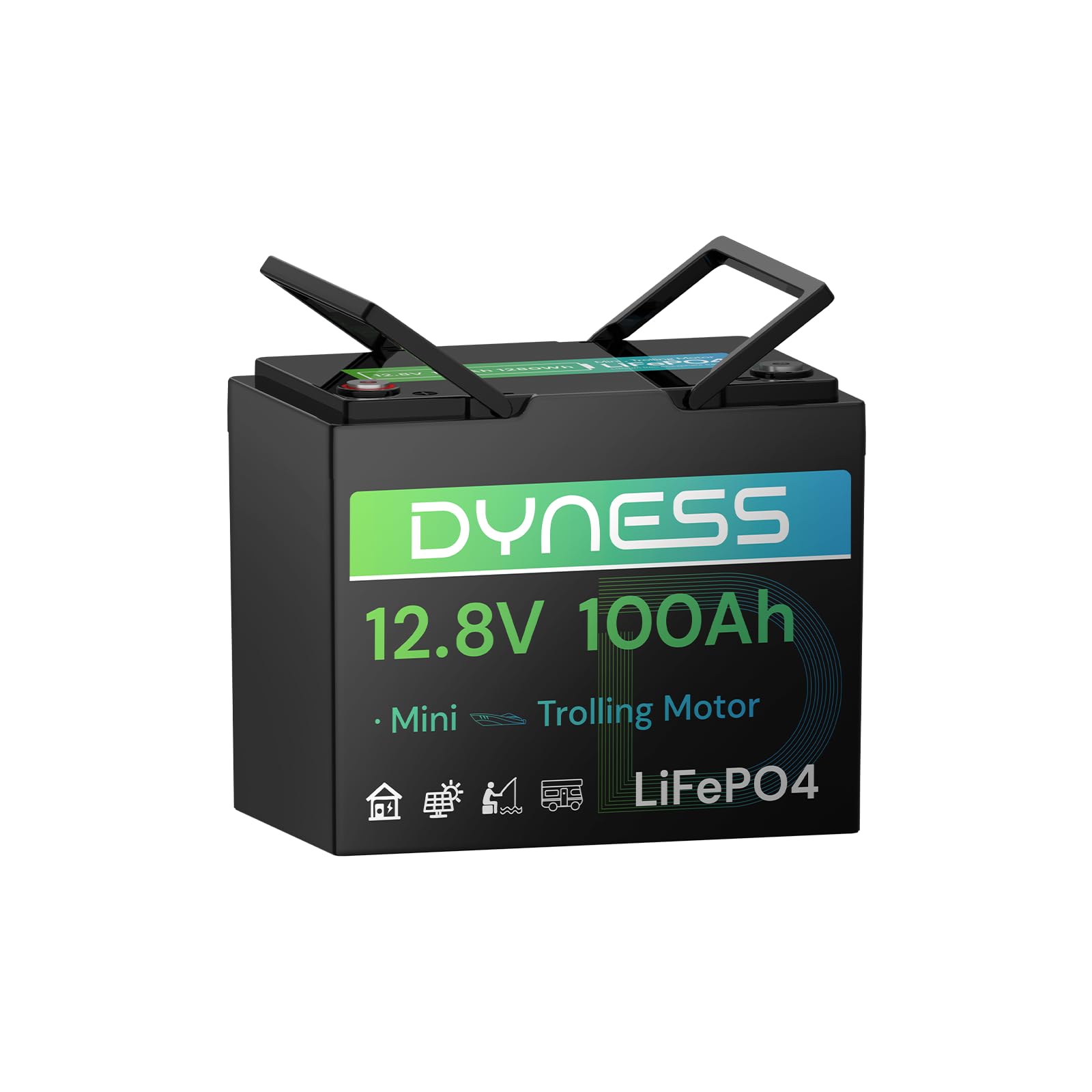
The Dyness Mini TM is purpose-built for trolling motors in the 30-68 pound thrust range, and its IP65 waterproof and dustproof rating is the differentiating spec here. Most lithium batteries in this category are not waterproof — the Dyness casing shrugs off splashes, rain, and corrosion, making it the safest choice for kayaks, open fishing boats, and any deck where water exposure is inevitable. At 20.9 pounds and measuring 10.23 x 6.61 x 8.22 inches, it’s 25% smaller than Group 31 batteries, freeing deck space for gear.
Inside, the Dyness uses A-grade LiFePO4 cells with a 10-year lifespan (up to 6 times longer than lead-acid). The 100A BMS includes low-temperature charging protection that cuts off below 32°F and shuts down entirely at -4°F. It supports up to 4S4P expansion with 16 batteries for a 20.48kWh system. For trolling motor users, the real-world test shows the 20.9-pound battery running a 38-pound thrust Minn Kota all day without running out — one reviewer reported it lasts longer than their fishing stamina.
Charging is optimized with a LiFePO4-specific charger (recommended 0.2C rate for battery health). The battery arrives with initial voltage around 13.7V, ready for immediate use in most setups. The 5-year warranty and 24-hour customer service response add peace of mind. The only trade-off is that the compact footprint means slightly less internal volume than standard Group 24 units, but for marine applications, the IP65 rating outweighs that concern.
Why it’s great
- IP65 waterproof/dustproof for marine environments
- Ultra-compact and lightweight at 20.9 lbs
- 10-year lifespan with low-temp protection
Good to know
- Not for use as a starting battery
- Requires LiFePO4-specific charger for best results
5. DC HOUSE 12V 100Ah LiFePO4 Battery with Bluetooth
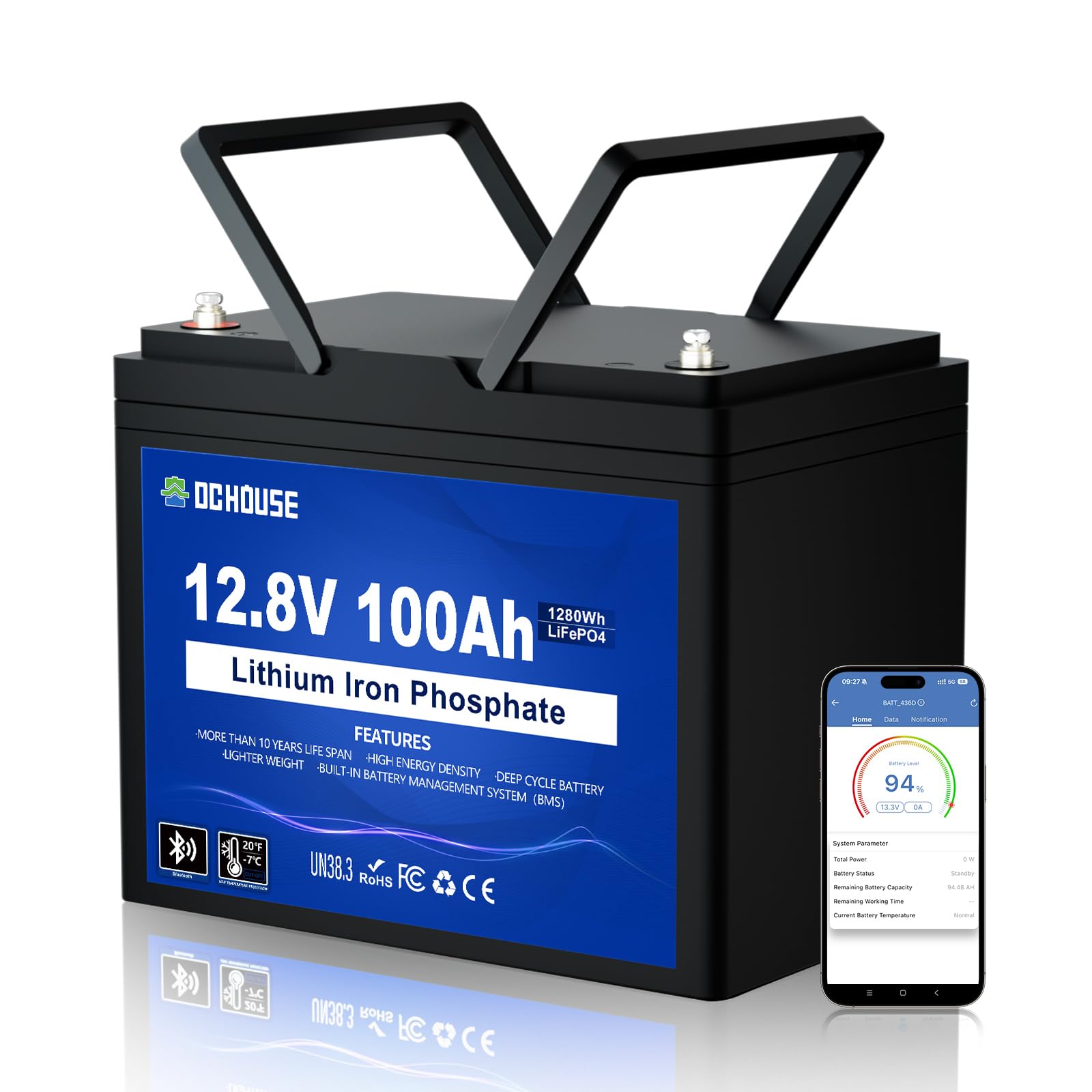
The DC HOUSE 100Ah LiFePO4 battery adds a significant differentiator to the Group 24 market: Bluetooth 5.0 monitoring through the DC HOUSE app, which provides real-time data on state of charge, voltage, current, and per-cell balance. The Bluetooth range reaches 5-10 meters, and the app includes a dedicated fault display page that helps troubleshoot issues without pulling the battery from its compartment. For RVers who want to know exactly how much juice is left before firing up the inverter, this feature alone justifies the step up.
Beyond the smart features, the battery packs a 100A BMS with low-temperature cutoff — charging stops below 19.4°F and discharge cuts off at -4°F, with automatic recovery at 32°F. It uses Class A LiFePO4 cells certified to UL and UN38.3 standards. The dimensions (10.2 x 6.6 x 9.2 inches) are slightly taller than standard Group 24 by about 0.32 inches, so check your battery box height before buying. It supports up to 4 batteries in series or parallel (8 total, no 4P4S).
User reviews are overwhelmingly positive: one reviewer used it to run a CPAP machine (via 750W inverter) for camping, consuming only 25-30% of capacity per night. Another noted the Bluetooth feature makes monitoring effortless. One complaint: the Bluetooth pairing failed on a single unit, though the company offered a refund. The 3-year warranty and lightweight 23.8-pound design make this a strong mid-range option for users who want data at their fingertips.
Why it’s great
- Bluetooth app shows SOC, voltage, and per-cell data
- Low-temp charging cutoff at 19.4°F
- UL/UN38.3 certified cells
Good to know
- 0.32 inches taller than standard Group 24
- Bluetooth pairing issues reported on some units
6. Power Queen 12V 100Ah LiFePO4 Battery
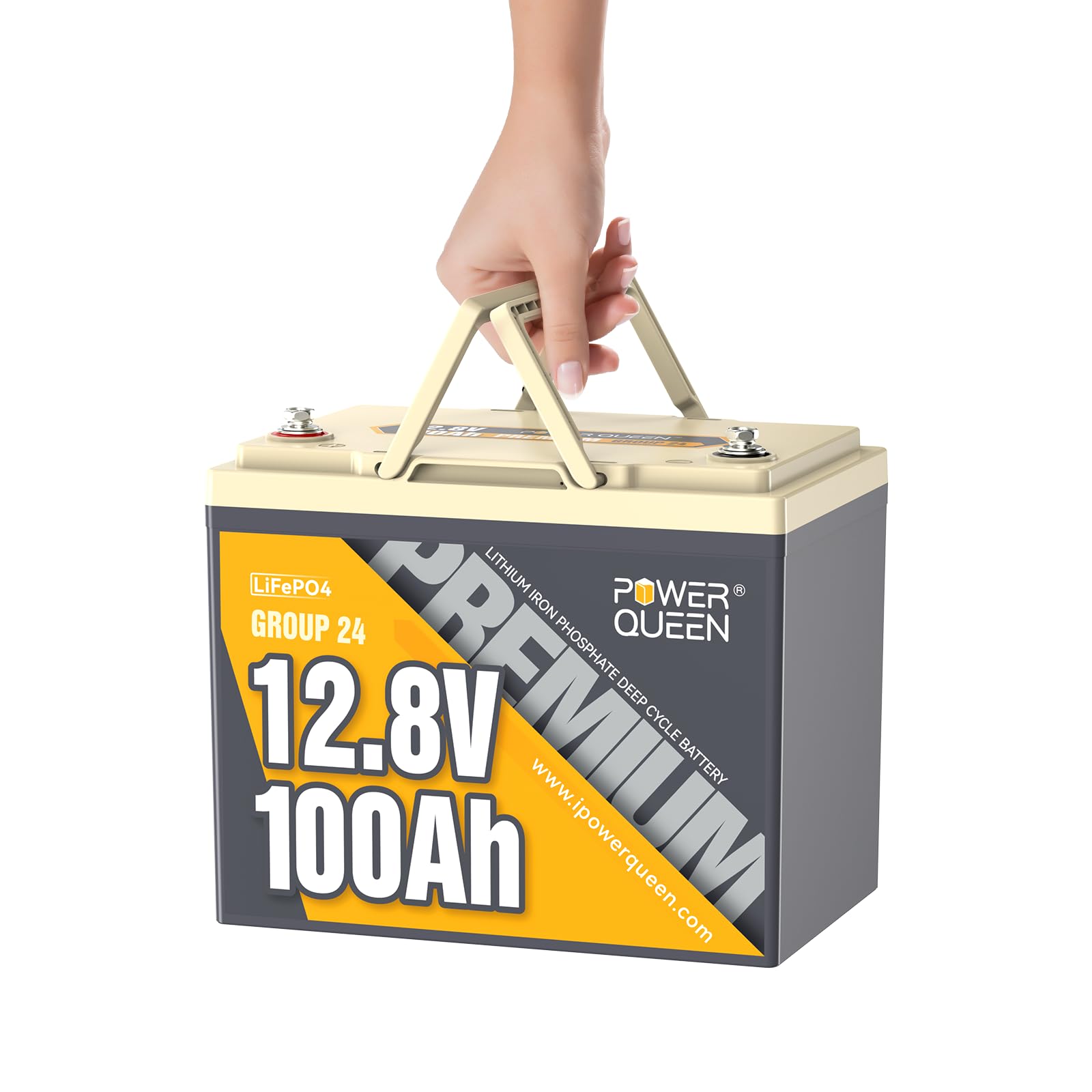
Power Queen has earned a loyal following in the lithium battery space, and their BCI Group 24 100Ah model demonstrates why. It uses EV-grade LiFePO4 cells with a 20+ protection-layer BMS and is rated for 4000 cycles at 100% depth of discharge — which translates to roughly 10 years of daily cycling. The battery delivers 1280Wh of 100% usable energy, compared to just 500Wh from a 70Ah AGM at 50% DoD. That 2.5x energy advantage is tangible when running a fridge overnight or powering a CPAP machine.
The drop-in design fits standard Group 24 boxes perfectly at 21 pounds — one-third the weight of an equivalent AGM battery. The M8 terminals and included insulating caps make installation straightforward. Expansion goes up to 16 units in a 4P4S configuration for a max 20.48kWh system. One reviewer successfully replaced a dead AGM in their 2004 Roadtrek and found the battery still at 80% charge after running the fan for 8 hours overnight.
Customer service is a strong suit here: when one user’s new battery had a BMS issue, Power Queen honored the 5-year warranty with a fast replacement. Another received a unit with a dented box (FedEx damage) but the battery worked perfectly, and the seller offered a coupon for keeping it. The battery is recommended for trolling motors, solar storage, and HAM radio field use due to the built-in carry handles. Not for engine starting or golf cart use.
Why it’s great
- 4000 cycles at 100% DoD for long lifespan
- 2.5X usable energy vs same-size AGM
- Reliable 5-year warranty and customer support
Good to know
- Not for engine starting or golf cart use
- Use gaskets with screws under 2mm to prevent loosening
7. Redodo 12V 100Ah LiFePO4 Battery Group 24
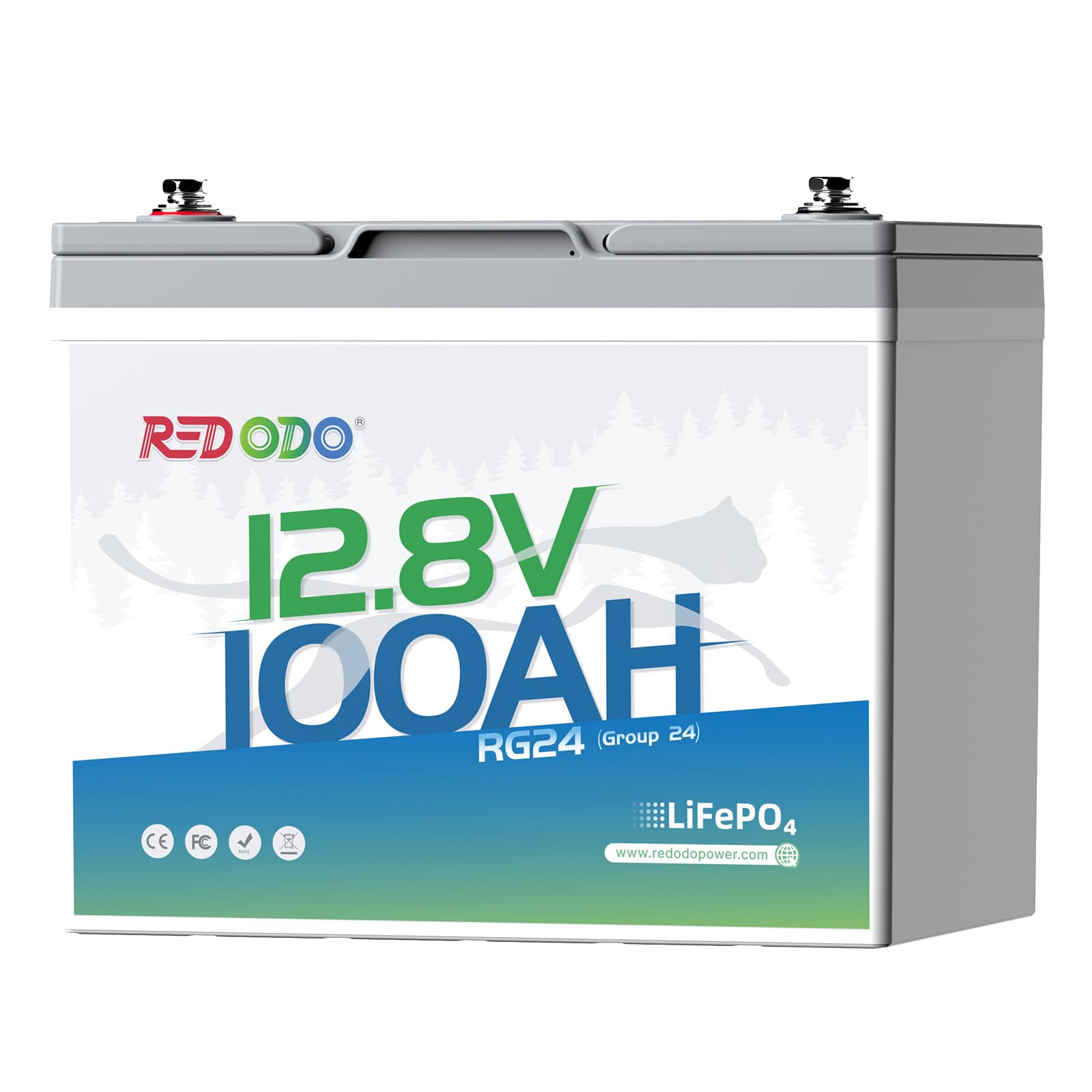
Redodo’s Group 24 100Ah battery achieves a 40% higher energy density than their older 100Ah model while shrinking the volume by 25%. This means 1280Wh of usable energy in a package that fits Group 24, 27, and 31 battery boxes — the most versatile fit in this category. The 21.6-pound weight is 1/3 of a comparable AGM battery, and the energy output is equivalent to 2.5 standard 70Ah AGM batteries wired together. For RVers with limited compartment space, this density advantage is critical.
The battery is built with automotive-grade A cells and a 100A BMS that prevents overcharge, over-discharge, short circuit, high temperature, and overcurrent. It delivers 4000 cycles at 100% DoD, 6000 at 80%, and 15,000 at 60% DoD — backed by a 5-year warranty. Charging to full with a 14.6V / 20A LiFePO4 charger takes about 5 hours. Users report excellent real-world performance: one reviewer powers a Ghost Controls gate opener, WiFi bridge, and driveway camera 24/7 off a single 100W solar panel with zero complaints.
One user ran two in parallel for a year in a motorhome to replace Trojan T-105s, reporting great performance and recommending them to other LiFePO4 buyers. The only note of caution: customer service was described as “unreliable” by one reviewer, though the batteries themselves functioned perfectly. The compact design with M8 terminals makes installation easy, and the 10-year lifespan means fewer replacements over time.
Why it’s great
- 40% higher energy density in compact Group 24 size
- Fits Group 24/27/31 boxes
- 15,000 cycles at 60% DoD
Good to know
- Customer service feedback is mixed
- Requires LiFePO4 charger for optimal performance
8. Interstate Batteries 24M-AGM Marine/RV Battery
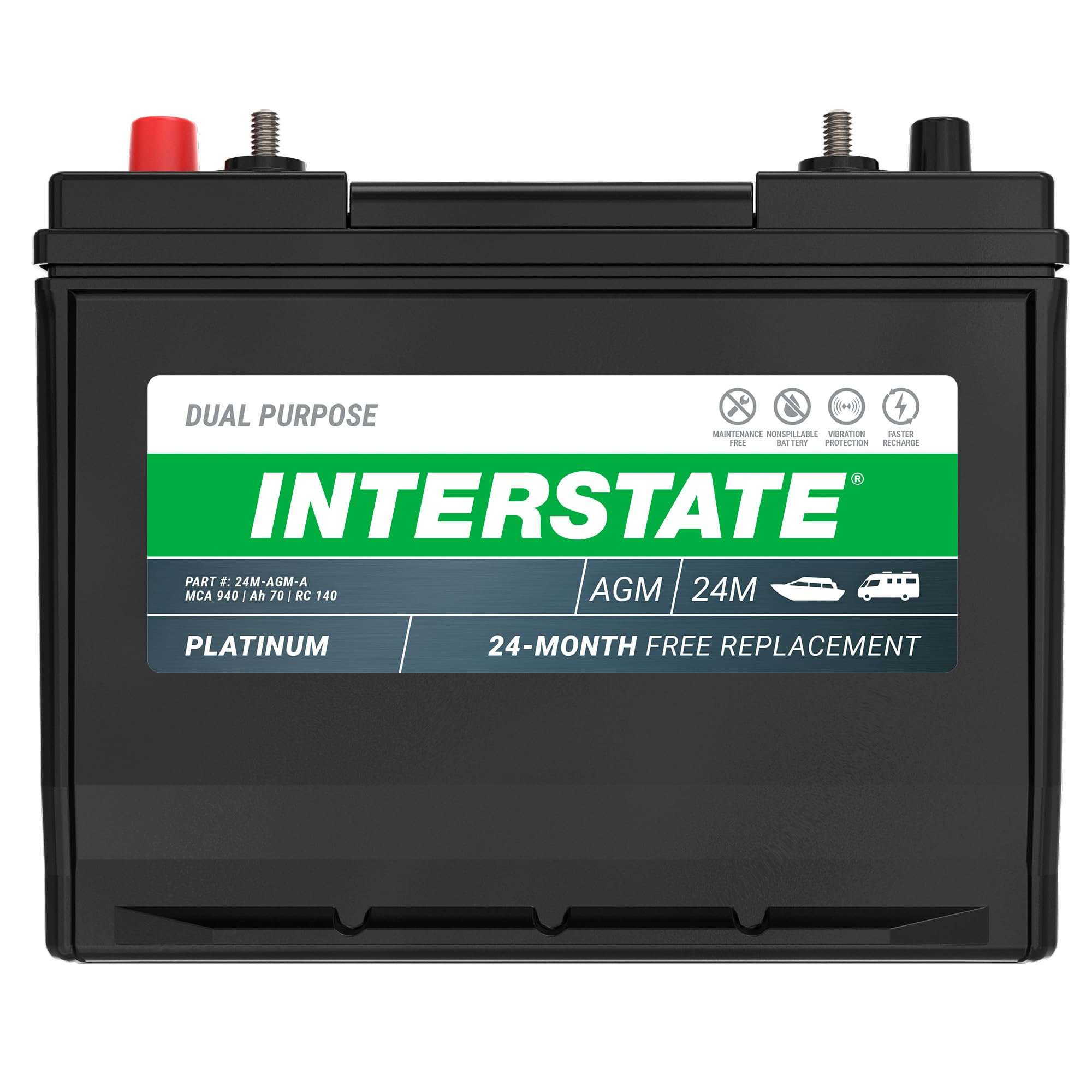
The Interstate 24M-AGM occupies a unique position in this list: it’s the only pure lead AGM battery here, and it’s the only one built for dual-purpose use — cranking your boat’s motor AND running deep-cycle accessories. With 750 cold cranking amps and a 70Ah capacity, it serves as a starting battery that can also handle trolling motors, lights, and pumps. The pure non-alloy lead construction delivers 2-3 times the lifespan of conventional alloy AGM or flooded batteries, with faster recharging characteristics.
At 44.6 pounds, this is the heaviest battery in the roundup — more than double the weight of the LiFePO4 options. It fits standard Group 24M boxes (6.81 x 11 x 8.98 inches) with marine terminals. The 2-year free replacement warranty from Interstate is shorter than lithium options, but the brand’s 70-year reputation and nationwide service network provide peace of mind for boaters who need a battery that cranks reliably. Users report receiving the battery in perfect packaging within 2 days, with flawless performance in marine starting applications.
The key trade-off is usable capacity: at 50% depth of discharge (the safe limit for AGM), you get only 35Ah — compared to 100Ah from a LiFePO4 battery. This battery is ideal for boaters who need a single battery that can start the outboard AND run electronics, and who prioritize brand trust and dual-purpose functionality over weight savings and energy capacity. Not suitable as a pure deep-cycle battery for solar or off-grid systems where daily cycling to 80%+ DoD is required.
Why it’s great
- Dual-purpose: cranking (750CCA) and deep cycle
- 2-3x longer life than conventional lead-acid
- Interstate brand trust and nationwide service
Good to know
- Only 70Ah rating with 35Ah usable (50% DoD)
- Heavy at 44.6 pounds
9. Litime 12V 100Ah Self Heating Battery

The Litime Self Heating 100Ah LiFePO4 battery is the only Group 24 battery on this list that actively warms its own cells before allowing charging. It features two heating modes: a Regular mode that activates when internal temperature drops below 41°F (5°C) and an Energy-Efficient mode that uses less power. The heater stops at 50°F and then normal charging begins. This technology means you can charge this battery in sub-freezing temperatures without the BMS simply cutting off power — a critical advantage for winter RVers, ice fishermen, and remote cabin owners.
Beyond the self-heating, the battery includes Bluetooth 5.0 monitoring through the LiTime app, giving real-time SOC, voltage, current, and fault diagnostics. The 100A BMS provides 20+ safety protections including overload auto-recovery within 30 seconds. IP65 dust and water resistance means it can handle rain, saltwater spray, and humidity. The 21.8-pound weight makes it manageable for installation, and the Group 24 footprint (10.24 x 6.61 x 8.27 inches) fits standard boxes.
Cycle life is rated at 4000+ deep cycles at 100% DoD, and expansion up to 16 units in 4P4S creates a 51.2V 400Ah / 20.48kWh system. One user reported that the battery required a hard charge (holding the mode button until a solid red light appeared) to wake it from a completely dead state, using a Noco 10A charger for about 10 hours. Another user replaced a 6-year-old Optima AGM and found the Litime one-third the weight and less, fitting into a tight boat compartment with better performance on a 112-pound thrust trolling motor.
Why it’s great
- Self-heating enables charging below freezing
- Bluetooth app for real-time monitoring
- IP65 water/dust resistance
Good to know
- May require a hard-charge activation if fully depleted
- Not for engine starting or golf cart use
FAQ
Why can’t I use a standard lead-acid charger on a LiFePO4 Group 24 battery?
Can I connect a LiFePO4 Group 24 battery in parallel with my old AGM battery?
What does the 100A BMS rating mean for my trolling motor or inverter?
Does a lithium Group 24 battery require a special battery box or ventilation?
Final Thoughts: The Verdict
For most users, the best group 24 deep cycle battery winner is the GRENERPOWER 100Ah LiFePO4 because it combines a true 100Ah usable capacity, 15,000-cycle rating, 4S4P expansion, and a 5-year warranty at a compelling price point. If you want Bluetooth monitoring for real-time capacity tracking, grab the DC HOUSE Bluetooth 100Ah. And for cold-weather charging where sub-freezing temperatures are the norm, nothing beats the Litime Self Heating 100Ah.