
Wrestling with a diamond or carbide grout removal blade that dulls three tiles in is the kind of frustration that turns a weekend renovation into a full-blown headache. The wrong blade not only wastes your time but risks chipping expensive tile and leaving a rough channel that needs hand-scraping. Getting the right match between material and grit geometry is what separates a clean, fast grout line from a disaster.
I’m Mohammad Maruf — the founder and writer behind Drink4Good. I spend my time deep in market comparison data and hardware-layer specs for home renovation consumables, analyzing customer feedback loops on blade substrate bonding and interface compatibility across every oscillating tool platform.
This guide breaks down the top carbide and diamond contenders currently available. Here is everything you need to know before buying a new grout removal blade for oscillating tool that actually holds an edge through a full backsplash.
How To Choose The Best Grout Removal Blade For Oscillating Tool
Picking the right blade means matching material, shape, and thickness to your specific tile and grout type. A one-size approach never works across shower walls, floor joints, and backsplash repairs because eroding grit and interface compatibility dictate results.
Diamond vs Carbide Grit
Diamond grit blades handle the hardest sanded grout and thinset residue with less heat buildup, lasting several times longer than basic carbide in heavy use. Carbide grit blades are more affordable per piece and cut softer unsanded grout quickly, but they wear down faster on porcelain or cement-based mortar. For dense grout lines, diamond is the longer-wearing choice; for occasional spot removal, carbide lowers upfront cost.
Blade Shape and Kerf
Half-moon or straight rectangular designs dictate how deep you can cut into a joint without hitting the tile edge. Straight blades offer better control on narrow 1/8-inch lines, while teardrop or semicircle shapes provide an aggressive rasp edge that clears the channel faster on wider joints. Thickness (kerf) usually falls between 0.06 and 0.09 inches — stay under 0.08 inches for standard residential tile gaps to avoid damaging adjacent ceramic edges.
Quick Comparison
On smaller screens, swipe sideways to see the full table.
| Model | Category | Best For | Key Spec | Amazon |
|---|---|---|---|---|
| EZARC Diamond Set | Diamond | Long-lasting removal | Three kerf choices: 0.06–0.09″ | Amazon |
| Bosch OSL234HG | Hybrid | Dual function grind/rasp | 2-3/4″ Starlock interface | Amazon |
| HEMUNC 3-pc 1/8″ Carbide | Carbide | Thicker grout joints | 1/8″ carbide grit thickness | Amazon |
| HEMUNC 5-pc Mixed Carbide | Carbide | Variety of shapes | Includes pointed tongue blade | Amazon |
| HEMUNC 4-pc Diamond | Diamond | Budget multi-pack | Straight thin design 1.38″ | Amazon |
In‑Depth Reviews
1. EZARC Diamond Oscillating Tool Blade Set, 4-Pack

The EZARC set gives you three distinct kerf sizes—0.06, 0.07, and 0.09 inches—so you can match the blade exactly to your grout line width without making unnecessary contact with tile edges. Real reviewers note the diamond coating outlasts Milwaukee’s own diamond blade by a factor of three in continuous floor-grout removal, which is impressive for a non-OEM accessory.
Because diamond grit bonds harder than carbide, this set handles tough sanded grout and thinset under tile without chipping the ceramic surfaces when you keep the tool at medium speed. The straight blade works precisely in tight door frames, while the half-moon shape clears wide shower joints faster than a straight edge can. Some users recommend switching blades every five minutes of heavy use to avoid overheating the bond, so having four blades in rotation extends overall working life.
The universal quick-release interface fits Dewalt, Milwaukee, Makita, Fein, and Bosch oscillating tools without wobble. Diamond dust from dry cutting is significant, but a light water spray solves the airborne grit problem. For a serious DIYer or contractor who needs a blade set that covers narrow, medium, and wide lines, this is the most versatile diamond option in this guide.
Why it’s great
- Three kerf choices let you fine-tune contact with tile edges
- Diamond coating lasts several times longer than standard carbide
- Set covers narrow, medium, and wide grout joints
Good to know
- Straight blade less effective on very wide grout channels
- Needs rotation every 5 minutes to prevent overheating
2. Bosch OSL234HG 2-3/4 in. Starlock Hybrid Grout Blade
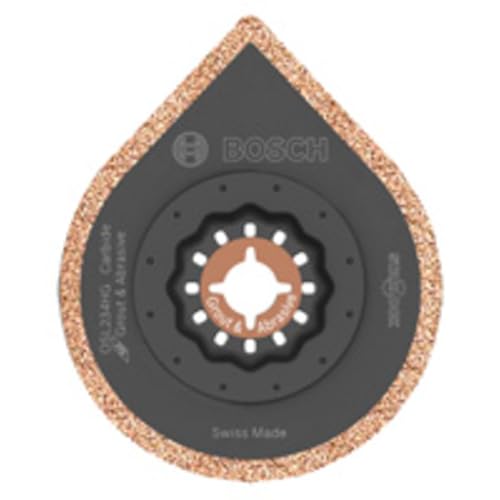
What sets the Bosch OSL234HG apart is its hybrid teardrop design—the pointed end grinds out grout while the rounded side rasps tile edges for fitting adjustments. This reduces blade changes when you need to both clear a joint and refine a cut. The Starlock interface ensures zero lateral play at higher oscillating speeds, which directly translates to cleaner grout lines and less chipping on rectified porcelain tile.
Precision Swiss manufacturing means the tungsten carbide grit sits in a uniform layer across the full blade profile, so you don’t get a patchy cut after a few passes. Real-world feedback from kitchen and bathroom remodels confirms the blade removes sanded grout from ceramic floor tile with minimal effort, especially when used with a light water spray for dust control. The laser-etched identification makes it fast to grab the right blade from a crowded tool bag.
It is a single-blade solution rather than a multi-pack, so if you are covering a large floor area you may want two for rotation. That said, the build quality and material-grade interface justify the investment for professionals who cannot afford a blade throwing sparks or losing grit halfway through a tile job. If your tool uses a Starlock or OIS mount, this is the most precise single grout blade available.
Why it’s great
- Dual function design (grind tip + rasp side)
- Zero-wobble Starlock interface for cleaner cuts
- Uniform carbide layer wears evenly across the blade
Good to know
- Only one blade per pack—consider a second for large projects
- Premier price tier for a consumable accessory
3. HEMUNC 3-pc 1/8″ Carbide Grout Removal Blades

At 0.13 inches of carbide grit, this 3-pack is built specifically for thicker grout joints—think floor tile lines or heavy shower seams where a standard 0.06-inch blade would rattle uselessly inside the gap. The half-moon semicircle design presents a broad grinding face that removes mortar, thinset, and stone quickly without requiring aggressive pressure that could snap the mounting flange.
HEMUNC uses a bonding method that claims up to double the carbide retention of comparable blades, and customer reports confirm the edges hold up through entire backsplash removal jobs without shedding grit. However, a few users experienced the mounting plate snapping after extended use on very hard concrete, which suggests tightening to spec and avoiding sideways leverage is crucial. The universal backing fits Dewalt, Milwaukee, Bosch, Dremel, and Ryobi oscillating tools.
The thicker kerf is not ideal for narrow 1/8-inch grout lines because it will contact the tile faces and cause chipping. Stick with this set when you know your joint spacing is 3/16 inch or wider. For the money, it delivers aggressive material removal speed that beats thinner blades for deep floor joints.
Why it’s great
- Thick carbide mass removes mortar and stone quickly
- Half-moon shape beneficial for broad joint coverage
- Good compatibility with most oscillating tool brands
Good to know
- Not suited for narrow grout lines (1/8″ or less)
- Mounting plate can snap if twisted sideways
4. HEMUNC 5-pc Mixed Universal Carbide Blade Set

HEMUNC includes a semicircle, a triangular finger, and a full carbide tongue blade in one 5-piece kit, which means you get one shape for broad surface grinding, one for tight corner detail, and one for scraping mortar out of brick courses. The pointed tongue blade is consistently praised on customer threads for reaching into the narrow spaces where larger heads cannot fit without scraping the adjacent tile or brick.
Made from a carbide material blend rather than bonded diamond, these blades work best on softer grouts, plaster, and wood-rasping tasks. Several users report reshaping wood pieces and removing epoxy blobs with the pointed blade, saving sandpaper costs. The universal quick-release interface clips onto Fein, Ryobi, Milwaukee, and Dewalt tools without an adapter wobble, though some users note the non-Starlock fit can shift slightly at max speed.
Because you get five blades at an entry-level price, this kit is ideal for someone starting out who is not sure which shape they need most. Wear is faster on hard cement grout than diamond options, but for mixed material jobs—wood, grout, drywall—the assortment is hard to beat. Reorder the individual shape you use most once you identify your primary application.
Why it’s great
- Five different shapes for mixed-material projects
- Pointed tongue blade excellent for tight corners
- Budget-friendly entry into carbide blades
Good to know
- Wears faster than diamond on hard cement grout
- Non-Starlock fit may shift at highest oscillator speed
5. HEMUNC 4-pc Diamond Grout Removal Blades

For the lowest diamond price point in this guide, you get four flush-cutting diamond blades with a straight, narrow profile measuring just 1.38 inches wide. The thin design slips into tight spaces where oval blades cannot reach, such as around door frames or behind outlet boxes encountered during tile repair. The diamond coating handles thinset and concrete cleaning tasks where carbide would chip immediately.
Customer reviews note that five to ten cuts through subway tile with tape and water leave the blade still functional, but the edge wears noticeably on longer runs of hard grout. A user reported needing two blades to complete only about 12 inches of heavy grout line, which confirms these are best for small patch jobs rather than a full-room renovation. The universal interface fits most major oscillating tool brands but does not lock as securely as Starlock-based designs.
These blades are good to know about if you want a low-cost diamond option for occasional spot repairs or cleaning mortar drips off slab floors. For a full bathroom floor, step up to the EZARC diamond set which has better wear resistance. The key advantage here is the pack quantity—four blades mean you can afford to burn through one on a tight spot and still have spares.
Why it’s great
- Ultra-thin 1.38″ width fits into very tight gaps
- Four blades per pack for spare availability
- Diamond coating works where carbide cannot
Good to know
- Edge wears quickly on dense, hard grout
- Best suited for small repairs, not whole rooms
FAQ
Can a grout removal blade for oscillating tool also cut tile?
Why do my carbide grout blades wear out fast on floor tile?
How do I know if a universal blade fits my oscillating tool?
Final Thoughts: The Verdict
For most users, the grout removal blade for oscillating tool winner is the EZARC Diamond 4-Pack because its three kerf options and long-wearing diamond coating handle narrow and wide joints without chipping tile edges. If you want a professional-grade single blade with zero-wobble interface, grab the Bosch OSL234HG. And for budget-friendly thick-joint removal in a multi-pack, nothing beats the HEMUNC 1/8-inch carbide set.