
Switching from plastic pots to fabric grow bags is one of the smartest moves a vegetable gardener can make, but not all bags handle the heat, the weight of wet soil, or the relentless summer sun the same way. A flimsy bag that flops over or tears mid-season turns a promising harvest into a muddy mess. The key is finding a bag with the right fabric weight, stitch quality, and handle reinforcement to support everything from sprawling tomato roots to heavy potato yields.
I’m Mohammad Maruf — the founder and writer behind Drink4Good. I’ve spent years analyzing outdoor gear and gardening hardware, cross-referencing material specs and real-world customer feedback to separate the season-long performers from the single-use disappointments.
A great set of bags makes planting, moving, and harvesting your crops noticeably easier. After reviewing fabric density, handle construction, and drainage performance across multiple tiers, I’ve assembled the definitive list of the best grow bags for vegetables to help you pick the right one for your garden setup.
How To Choose The Best Grow Bags For Vegetables
Choosing the right bag comes down to three things: how long you want it to last, how easy it is to move, and how well it drains. Flimsy bags save money upfront but often tear by the second season, while a well-made bag pays for itself over multiple growing cycles. Focus on the material weight, handle construction, and size relative to what you plan to grow.
Fabric Thickness and Weave Density
The single most important spec is the fabric weight, typically listed in grams (such as 300G). Standard lightweight grow bags use a thinner material that dries out fast and starts fraying after one season. Thicker 300G non-woven fabric resists tearing, holds its shape better when filled with damp soil, and insulates roots from temperature swings. If you want bags that last three or more seasons, prioritize 300G fabric over unlabeled thin material.
Handle Design and Stitching Quality
Moving a fully saturated 7-gallon bag without a handle failure is the real test. Look for reinforced handles made from polypropylene webbing rather than a simple fabric loop. The best bags use X-shaped stitching or serger stitches to anchor the handle to the side of the bag. Surround handles that wrap around the entire circumference distribute weight more evenly and make lifting a full bag far less awkward.
Size and Volume Considerations
Five-gallon bags work well for peppers, lettuce, and herbs, while 7 to 10-gallon bags are better for tomatoes, potatoes, and larger root vegetables. A common mistake is buying bags that are too small, which leads to stunted root growth and the need for constant watering. Think about the mature size of the vegetable and choose a bag volume that gives the roots room to spread without hitting the fabric walls too soon.
Quick Comparison
On smaller screens, swipe sideways to see the full table.
| Model | Category | Best For | Key Spec | Amazon |
|---|---|---|---|---|
| MEKOLIFE 10 Gal | Premium | Potato & root crop growers | 300G fabric + viewing window | Amazon |
| ADORMA 20-Pack | Premium | Large-scale gardeners | 300G fabric with X-stitch handles | Amazon |
| Cavisoo 24-Pack | Mid-Range | High volume on a budget | 300G fabric, 3-year warranty | Amazon |
| iPower 10-Pack | Mid-Range | Tomatoes & peppers | Serge-stitched nylon handles | Amazon |
| NACHLYNN 7 Gal | Budget | Entry-level & seasonal use | Lightweight nonwoven fabric | Amazon |
In‑Depth Reviews
1. MEKOLIFE 10 Gallon Potato Grow Bags (6-Pack)

The MEKOLIFE bags stand apart because of the transparent viewing window, a feature that eliminates the guesswork of potato harvesting. Instead of digging around and potentially damaging tubers, you simply peel back the soil-retention flap to check size and readiness. The 300G thickened nonwoven fabric is heavy enough to resist tearing from rough handling and holds up well under direct sun exposure over multiple seasons.
The 3D surround handles are a practical upgrade over simple side loops. They wrap around the entire circumference of the bag, distributing the weight of wet soil and mature plants more evenly. Customers report moving fully loaded bags without handle failure, and the reinforced serger stitching adds confidence when relocating plants to catch sunlight or shelter from storms.
At 10 gallons, each bag gives potatoes like Russet or Yukon Gold enough vertical depth to develop properly. The same volume works well for tomatoes and carrots, making this a versatile multi-crop solution. The bags collapse flat for off-season storage, and the washable fabric means you can clean them thoroughly before the next planting cycle.
Why it’s great
- Viewing window lets you monitor root crop growth without disturbing the plant.
- 300G fabric is tear-resistant and holds shape even when fully saturated.
- Surround handles make moving heavy, soil-filled bags significantly easier.
Good to know
- The viewing window flap requires careful closure to prevent soil leakage.
- Fabric dries out faster than plastic pots, so consistent watering is essential.
2. ADORMA 20-Pack 7 Gallon Grow Bags
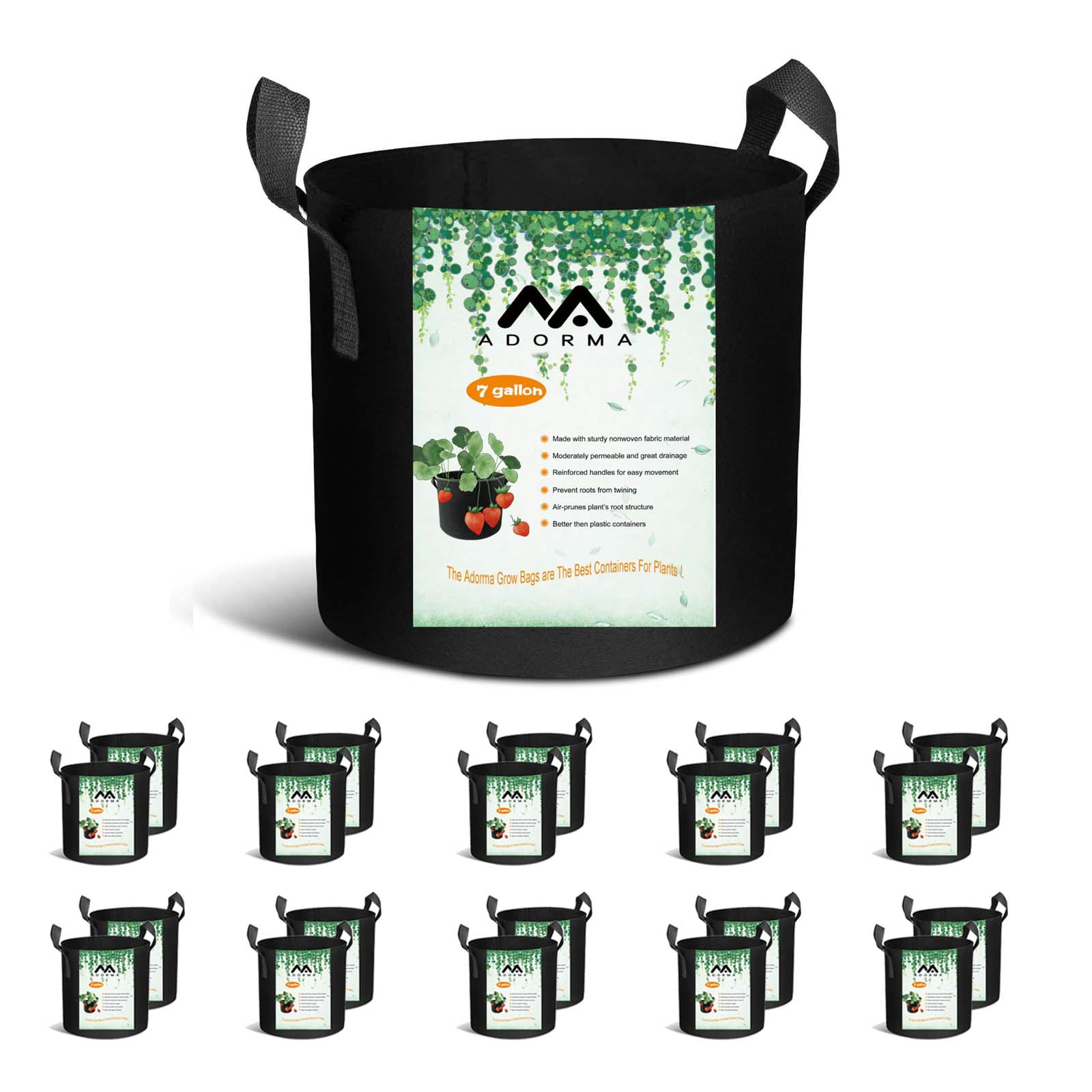
The ADORMA 20-pack delivers a high bag count without sacrificing material quality. Each bag is built from 300G thick nonwoven fabric, and the five-line edging on the top combined with double sewing on the sides means the rims hold their shape rather than collapsing into a wrinkled mess after the first watering. The 7-gallon size hits a sweet spot for tomatoes, peppers, and medium-root vegetables.
Handle reinforcement is a standout detail here. The polypropylene webbing handles use X-shaped stitching where they attach to the bag, which customers report can handle ten times more weight than standard fabric loops. This makes lifting and moving the bags around the patio or garden bed a secure operation, even when the soil is fully saturated after a heavy rain.
Breathability is excellent, with the fabric promoting air pruning that prevents root circling. The quick drainage means you are unlikely to deal with waterlogged soil, but the same feature means you need to water more frequently during hot, dry spells. Overall, the ADORMA bags offer a strong balance of durability and quantity for gardeners looking to scale up their container garden.
Why it’s great
- High-quality 300G fabric with reinforced edging prevents rim collapse.
- X-shaped handle stitching provides reliable support for heavy, wet soil loads.
- 20 bags per pack offers excellent coverage for large planting projects.
Good to know
- Requires more frequent watering compared to plastic or ceramic containers.
- Fabric may show signs of wear after three seasons of continuous use.
3. Cavisoo 24-Pack 5 Gallon Grow Bags

The Cavisoo pack is a volume play for gardeners who need a large number of mid-size bags without breaking the bank. Each bag uses 300G nonwoven fabric, which puts it on par with more expensive options in terms of material thickness. The reinforced polypropylene handles with X-shaped stitching add stability, though the handles are not as robust as the surround-style found on premium models.
The 5-gallon capacity is ideal for peppers, eggplants, cucumbers, and herbs. It is a manageable size for balcony gardeners who need to move plants around frequently, and the bags are light enough to reposition even when filled with moist soil. Customers note that the bags hold up well for a full growing season and can be washed and stored flat for reuse the following year.
One detail that sets this pack apart is the included 3-year warranty, which signals manufacturer confidence in the stitching and fabric longevity. Some users report minor soil leakage through the bottom seam during the first season, but this does not appear to affect structural integrity. For the price per bag, the Cavisoo set delivers reliable performance for seasonal vegetable growing.
Why it’s great
- 24 bags per pack gives you plenty of capacity for a diverse vegetable garden.
- 300G fabric offers good durability at a budget-conscious price point.
- 3-year warranty provides extra peace of mind for long-term reuse.
Good to know
- Some seam inconsistencies reported in bottom stitching of individual bags.
- 5-gallon size limits larger vegetables like sprawling tomatoes or potatoes.
4. iPower 5-Gallon 10-Pack Grow Bags
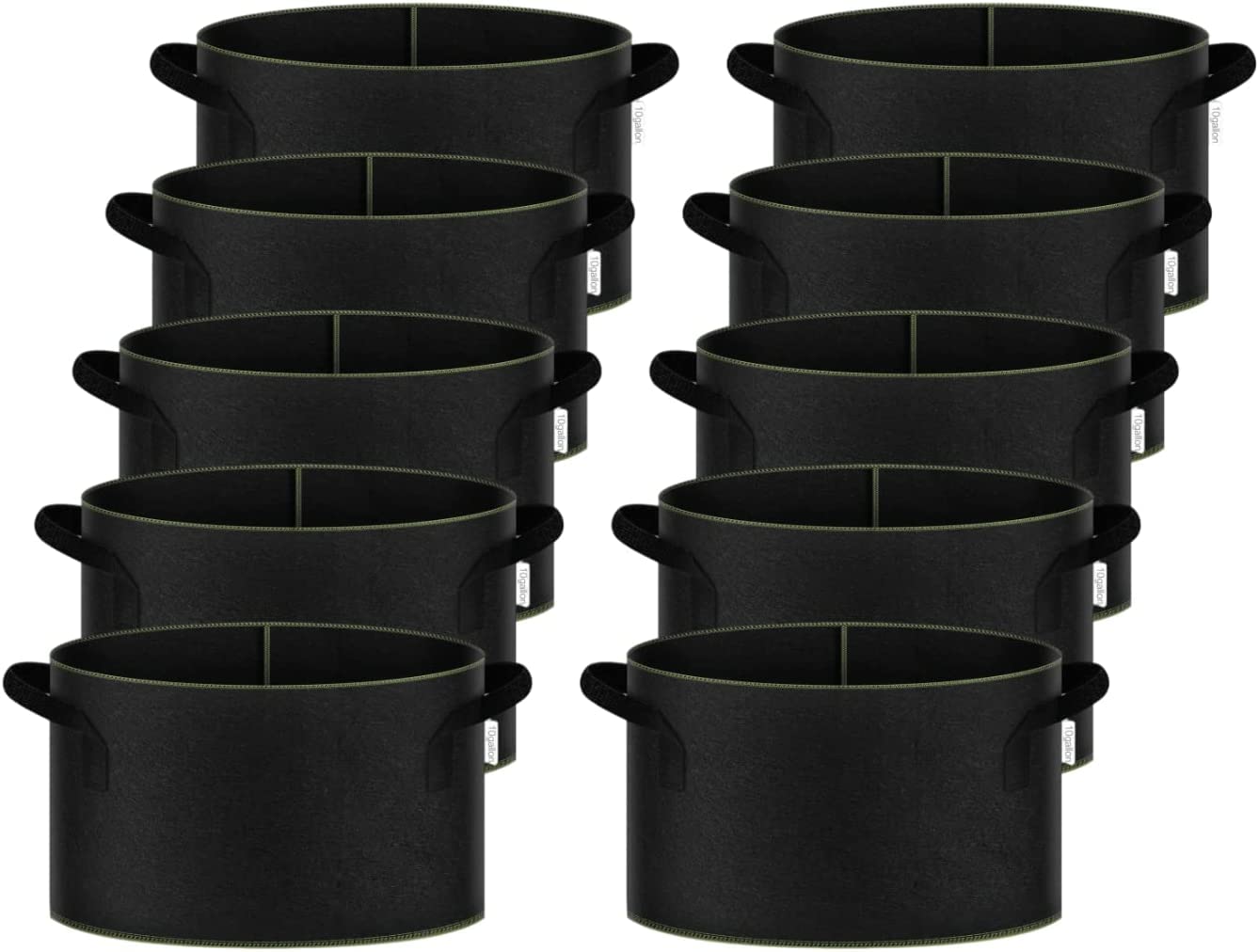
The iPower 5-gallon bags have built a reputation for longevity, with multiple customers reporting they are still using bags purchased four years ago. The key is the serge stitching used on the nylon handles and side seams, which resists unraveling better than basic lock stitching. The fabric is moderately permeable, providing good drainage without dumping water too quickly.
At 5 gallons, these bags are compact enough for balcony railings or tight patios while still giving tomatoes and peppers enough room to develop strong root systems. The green stitching adds a touch of visual contrast that makes the bags easy to spot among foliage. The handles are stitched directly into the side seams rather than glued or heat-pressed, which explains the durability customers praise.
One practical consideration is that the bags do not have the thickest fabric on this list, so they may show wear faster in high-UV environments. However, the BPA-free material and the ability to wash and reuse them season after season make this a solid mid-range choice for gardeners who want dependable performance without paying a premium.
Why it’s great
- Serge stitching on handles and seams resists fraying and extends bag life.
- Proven longevity with many users reporting 3 to 4 years of reuse.
- BPA-free fabric is safe for growing edible vegetables.
Good to know
- Fabric is thinner than 300G premium options, may degrade faster in full sun.
- 5-gallon size requires more frequent watering in hot weather.
5. NACHLYNN 5-Pack 7 Gallon Grow Bags
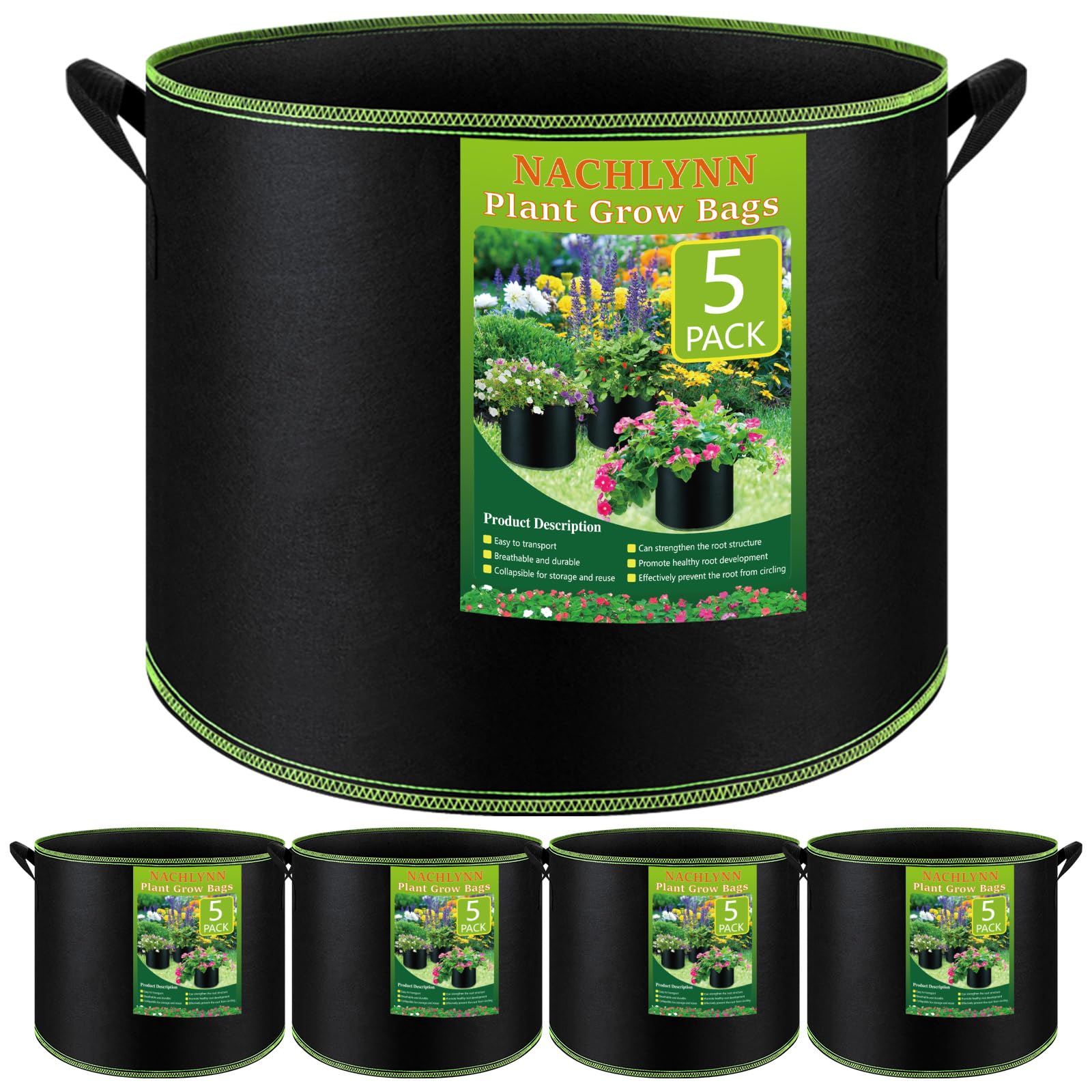
The NACHLYNN 7-gallon pack is a straightforward entry-level option for gardeners trying fabric pots for the first time. The nonwoven fabric is lighter than the 300G material found on premium bags, which keeps the cost low but means the bags are less resistant to tearing and UV degradation over multiple seasons. The handles are reinforced and sewn into the bag, providing adequate support for moving filled containers.
Customers report that tomatoes and strawberries thrive in these bags, with the aeration promoting healthy root development and preventing the spiral growth common in plastic pots. The lightweight construction makes them easy to fold and store when not in use. Some users noted that the actual dimensions run slightly smaller than advertised, so the 7-gallon volume may be closer to 6 gallons in practice.
For seasonal or experimental gardening, these bags deliver good value. They are not built to withstand years of heavy use, but for a single growing season or for gardeners on a tight budget, they provide all the basic benefits of fabric aeration and drainage. If you plan to reuse bags for three or more seasons, investing in a thicker fabric option will save money in the long run.
Why it’s great
- Very low cost for getting started with fabric pot vegetable gardening.
- Lightweight and easy to fold for compact off-season storage.
- Handles are reinforced and sewn securely to the bag body.
Good to know
- Fabric is thinner and less UV-resistant than mid-range or premium options.
- Some dimensional variance reported; actual volume may be slightly less than 7 gallons.
FAQ
How often should I water vegetables in grow bags compared to plastic pots?
Can I reuse grow bags for multiple years, or do they need to be replaced each season?
What size grow bag is best for growing tomatoes and peppers?
Final Thoughts: The Verdict
For most users, the best grow bags for vegetables winner is the MEKOLIFE 10 Gallon 6-Pack because its viewing window and 300G fabric solve two core problems — knowing when to harvest and ensuring the bag lasts multiple seasons. If you need maximum quantity for a large garden, grab the ADORMA 20-Pack. And for budget-minded seasonal planting, nothing beats the low entry cost of the NACHLYNN 5-Pack.