
A plastic pot’s biggest failure is the root spiral: roots hit the wall, circle until they choke the plant, and stunt every fruit or flower that could have been. Fabric grow bags solve this by forcing air pruning — when roots reach the bag’s edge, the fabric desiccates the tip, forcing the plant to branch into a dense, fibrous root system that feeds far more aggressively. The difference isn’t subtle: a tomato in a fabric bag can out-yield the same variety in a plastic pot by a significant margin.
I’m Mohammad Maruf — the founder and writer behind Drink4Good. I’ve spent years researching container gardening hardware, analyzing non-woven fabric densities from 200GSM to 300GSM, handle stitching patterns, grommet durability, and how each spec translates into real-world root health over a full growing season.
Whether you are potting potatoes on a patio or running a deck full of peppers, the right fabric container is the single most impactful upgrade you can make. This guide breaks down the five best grow bags on the market, ranked by fabric weight, drainage performance, and long-term reusability.
How To Choose The Best Grow Bags
Not all fabric pots are equal. A cheap, low-GSM bag will sag, shed fibers, and fall apart by mid-season. To get real value, you need to match the bag’s construction to what you are growing and where you are growing it.
Fabric Weight (GSM) Is Everything
GSM — grams per square meter — tells you how dense the non-woven fabric is. Budget bags hover around 200GSM; they work for one season but often thin out under UV exposure. Mid-range options hit 260–270GSM, striking a balance between breathability and durability. Premium bags use 300GSM fabric, which holds its shape even when empty and withstands three or more growing seasons without collapsing.
Handle Construction — The Hidden Weak Point
A full 7-gallon bag of moist soil can weigh 50 pounds. If the handles are single-stitched into the fabric, they will rip out the first time you drag the bag across a deck. Look for X-shape stitching or polypropylene webbing handles that distribute the load across a wider surface area. Reinforced handles are the difference between a bag you move and a bag you drag.
Capacity and Drainage
Grow bags naturally drain through the entire fabric surface, but some designs include bottom drainage holes or stainless steel grommets on the upper edge for low-stress training. For root vegetables like potatoes and carrots, deeper bags (17+ inches) allow more tuber development. For tomatoes and peppers, a standard 5–7 gallon bag with good aeration is sufficient.
Quick Comparison
On smaller screens, swipe sideways to see the full table.
| Model | Category | Best For | Key Spec | Amazon |
|---|---|---|---|---|
| Cavisoo 24-Pack 7 Gal | Premium | High-volume growers needing durability | 300GSM fabric, polypropylene handles | Amazon |
| ADORMA 20-Pack 7 Gal | Premium | Perennial gardeners wanting thick fabric | 300GSM, five-line edging | Amazon |
| HORTIPOTS 5 Gal (10-Pack) | Mid-Range | All-purpose indoor/outdoor growing | 270GSM, UV-resistant fabric | Amazon |
| Molgoc 5 Gal (5-Pack) | Mid-Range | LST training with grommets | 260GSM, stainless steel eyelets | Amazon |
| BIJOKETTEN 10 Gal (6-Pack) | Budget | Potato and root vegetable growers | Double-layer non-woven, flap window | Amazon |
In‑Depth Reviews
1. Cavisoo 24-Pack 7 Gallon Grow Bags
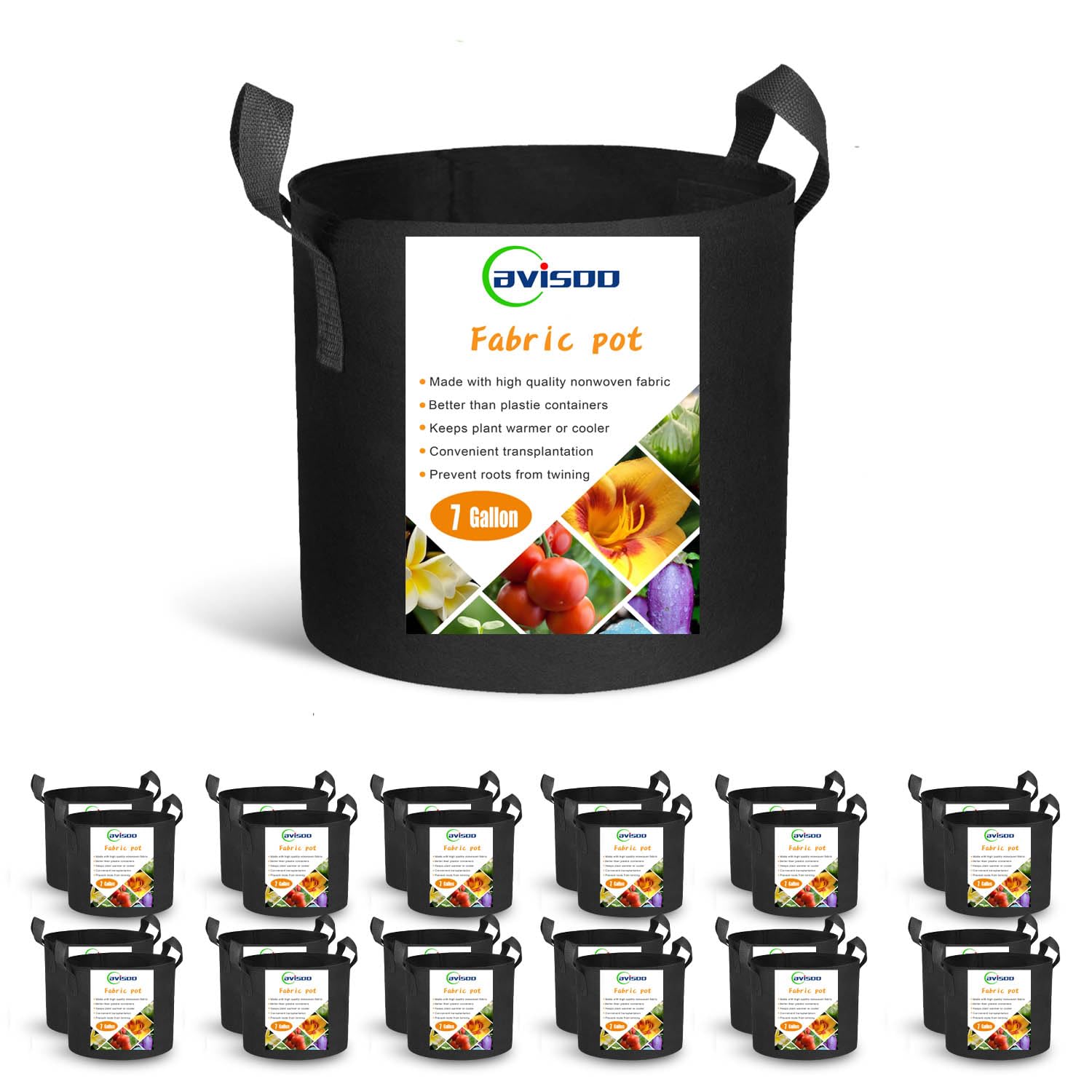
Cavisoo’s 24-pack delivers 300GSM non-woven fabric at a per-bag cost that undercuts most premium brands. The polypropylene webbing handles are stitched in an X-shape pattern, capable of bearing the full weight of a waterlogged 7-gallon bag without tearing. The 14 by 12-inch dimensions provide a wide base that resists tipping on windy decks.
Ventilation is aggressive: roots air-prune cleanly, and water drains through every surface wall, preventing any standing moisture. Multiple users reported using these for a full season and reusing them the next spring with no structural degradation. The 300GSM density holds the bag’s shape even when empty, which makes filling and moving them far less frustrating than floppy budget alternatives.
The only practical trade-off is the drying rate — in 80-90°F weather, 7-gallon bags may need watering twice daily for moisture-sensitive crops. Setting them in a tray to bottom-water helps. For the volume and build quality, this is the strongest value in the premium tier.
Why it’s great
- Thick 300GSM fabric stands up on its own
- Reinforced X-stitch handles handle 50+ lbs
- 24 bags at a competitive per-unit cost
Good to know
- Dries fast in hot weather — monitor moisture daily
- Some reports of small seam gaps in isolated units
2. ADORMA 20-Pack 7 Gallon Grow Bags
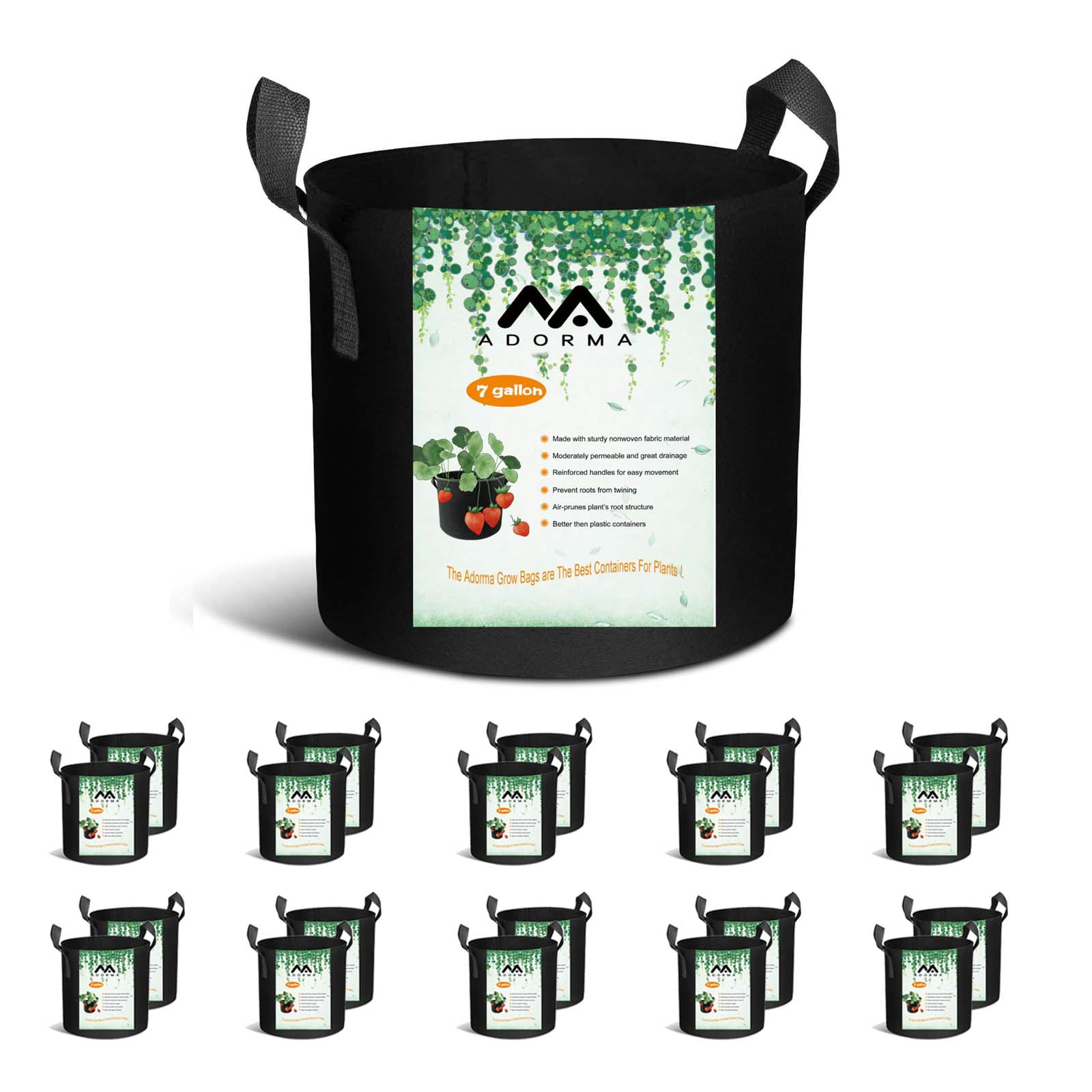
ADORMA’s 20-pack uses the same 300GSM fabric weight as the Cavisoo set but adds five-line edging along the top rim and double stitching on the side seams. The result is a bag that resists fraying longer and maintains its structural integrity through repeated washing and folding between seasons.
The 14-inch diameter provides a wide footprint that works well for sprawling plants like squash or cucumber. Users consistently praise the handles: the polypropylene webbing with X-shape stitching offers reliable grip even when the bag is heavy with moist soil. The bag’s fabric is thick enough to prevent roots from poking through the side walls, unlike lower-GSM alternatives where roots can sometimes emerge mid-season.
One common observation is that the thick fabric reduces airflow slightly compared to 260GSM bags, but this is a trade-off most long-term growers accept for the added durability. For those planning to reuse grow bags for three seasons or more, the ADORMA build quality justifies the step up in investment.
Why it’s great
- Five-line top edging prevents fraying
- Double-stitched side seams last multiple seasons
- Wide 14-inch base for stable placement
Good to know
- Heavy fabric is less breathable than mid-weight bags
- 20-pack may be too few for large gardens
3. HORTIPOTS Fabric Pots 5 Gallon (10-Pack)

HORTIPOTS hits the sweet spot between cost and construction. At 270GSM, the fabric is thick enough to hold its shape without sagging, yet breathable enough to promote aggressive air pruning. The gray-and-black color scheme is a minor detail, but it helps moderate soil temperature compared to solid black bags under direct sun.
The 11.75 by 10.5-inch dimensions make these bags slightly taller than wide, which can be an advantage for deep-rooted plants like tomatoes and peppers. Several users noted that the bags fit neatly inside standard 5-gallon bucket frames for a pot-in-pot growing setup. The included plant labels are a small but appreciated bonus for organizing multiple varieties.
UV resistance is built into the fabric, allowing these bags to stay outdoors for full seasons without the material degrading. The one caution: because these are taller and narrower, they can be less stable when filled with light potting mix. Folding the top edge down stabilizes the structure slightly, and setting them on a saucer prevents tipping on uneven surfaces.
Why it’s great
- 270GSM strikes strong balance of durability and breathability
- UV-resistant for full-season outdoor use
- 10-pack with free labels — ready to organize
Good to know
- Tall profile can tip on windy days
- Not as wide as 7-gallon alternatives
4. Molgoc 5 Gallon Grow Bags (5-Pack)

Molgoc differentiates itself with integrated stainless steel eyelets along the upper edge. These eliminate the need to cut holes in the fabric for low-stress training (LST) — you simply thread chenille stems or garden wire through the eyelets to anchor branches without damaging the bag’s structure. For growers who train plants horizontally, this is a genuine time-saver.
The 260GSM fabric is mid-weight, offering adequate breathability for air pruning while being light enough to fold flat for off-season storage. The base includes drainage holes in addition to the fabric’s natural porosity, providing extra insurance against waterlogging for overwaterers. The 11.8 by 9.8-inch dimensions keep the profile compact, suitable for tight balcony or indoor setups.
Some users noted that the eyelets, while convenient, are best used with softer tie materials to avoid scratching stems. The bag’s lighter fabric means it may show wear faster than 300GSM alternatives, but at this tier, the trade-off for the training-friendly design is well worth it for the hands-on gardener.
Why it’s great
- Stainless steel grommets simplify LST training
- Base drainage holes add extra water protection
- Compact size fits indoor shelves and balconies
Good to know
- 260GSM fabric is less durable than heavier options
- Only 5 bags per pack — limited for large gardens
5. BIJOKETTEN 6-Pack 10 Gallon Potato Grow Bags

BIJOKETTEN’s 10-gallon bags are built specifically for root vegetables. The key feature is the large harvest window — a fabric flap on the side that opens to let you check tuber development or harvest potatoes without dumping the entire bag. This is a practical time-saver for gardeners who want to monitor growth mid-season without disturbing the root system.
The double-layer non-woven fabric construction adds thickness, making the bag sturdy enough to hold 10 gallons of soil without ballooning out. At 13.8 by 17.7 inches, these bags are significantly taller than standard options, providing the deep soil column that potatoes, carrots, and onions need to develop full-size tubers. The X-shape stitched handles hold up well when lifting a fully loaded bag.
The main drawback is occasional leakage — some users reported water seeping through the side walls rather than draining from the bottom. This is a characteristic of double-layer fabric holding moisture longer, which can be managed by placing the bags on a slightly elevated surface. For the price, the sheer volume and harvest convenience make these a solid entry-level pick for root crop growers.
Why it’s great
- Side harvest flap avoids disturbing roots
- 10-gallon capacity for deep-rooted vegetables
- Double-layer fabric adds durability
Good to know
- Side seepage reported in some units
- Tall design can be top-heavy on windy days
FAQ
How often should I water plants in fabric grow bags compared to plastic pots?
Can I reuse fabric grow bags from last season?
What size grow bag do I need for potatoes versus tomatoes?
Final Thoughts: The Verdict
For most users, the grow bags winner is the Cavisoo 24-Pack 7 Gallon because it delivers premium 300GSM fabric at a volume that covers a full garden without breaking the budget. If you want superior seam construction and slight-edge durability for multi-year reuse, grab the ADORMA 20-Pack. And for root vegetable growers who need depth and a harvest window, nothing beats the BIJOKETTEN 10-Gallon with Flap.