
The quality of your microgreen harvest is decided before the first seed hits the tray. A medium that compacts, stays too wet, or carries unknown salts turns a seven-day grow cycle into a lesson in frustration. The right texture traps enough moisture for rapid germination while leaving the air pockets roots need to stretch — and it must arrive clean enough that your seedlings get nutrients, not sodium.
I’m Mohammad Maruf — the founder and writer behind Drink4Good. I analyze dozens of lab reports, customer feedback patterns, and manufacturer claims each year to separate the growing media that actually deliver consistent microgreen results from those that just fill a bag.
A buyer should understand why the growing medium for microgreens matters more than the seed variety in many cases, because the texture, salt load, and hydration curve of coco coir directly control germination speed and stem strength in a shallow tray environment.
How To Choose The Best Growing Medium For Microgreens
Coco coir dominates the microgreen space for good reason: it holds 8 to 10 times its weight in water while maintaining 30 percent air porosity. But not every brick delivers the same finish. Three specs separate a medium that propels your microgreens from one that stalls them.
Salt Content and Electrical Conductivity
Unwashed coir carries residual sodium from the coconut husk processing. An EC reading above 0.5 mS/cm can stunt germination in the first 48 hours and cause tip burn on tender microgreen stems. Look for advertised “low EC” or “triple-washed” on the label — those terms signal the manufacturer flushed the salts before compression.
Expansion Yield Per Brick
A 10-pound brick that expands to 18 to 20 gallons will fill roughly six standard 1020 trays at a two-inch depth. If the description lists a smaller volume per pound, the brick contains more compression filler and less usable coir. Calculate your tray count before buying to avoid coming up short mid-season.
pH Neutrality and Buffering
Raw coir can swing acidic. A buffered brick sits in the 5.5–6.5 range, which matches the preferred pH for nearly every microgreen variety. Unbuffered coir requires you to test and amend each batch, adding an extra variable to a process that should be repeatable. Skip the guesswork by choosing pre-buffered blocks.
Quick Comparison
On smaller screens, swipe sideways to see the full table.
| Model | Category | Best For | Key Spec | Amazon |
|---|---|---|---|---|
| MODELLOR 10 lb | Pure Coir | High-volume tray filling | 18 to 20 gallon expansion | Amazon |
| MagJo Naturals 11 lb | Pure Coir | Organic-certified bulk growing | OMRI Listed, 17 gallon yield | Amazon |
| Vivlly Coco Coir 10 lb | Pure Coir | Low-salt hydroponic trays | EC < 0.5, 75 quarts yield | Amazon |
| Minute Soil 3-Brick | Coir Brick | Small-scale & trial runs | 1.5 gallon per brick | Amazon |
| Plantonix Coco Bliss 6-Pack | Pure Coir | Pre-screened & portioned batches | Multi-filtered, 12.5 gallon total | Amazon |
In‑Depth Reviews
1. MODELLOR 10 lb Premium Super Washed Coco Coir Brick
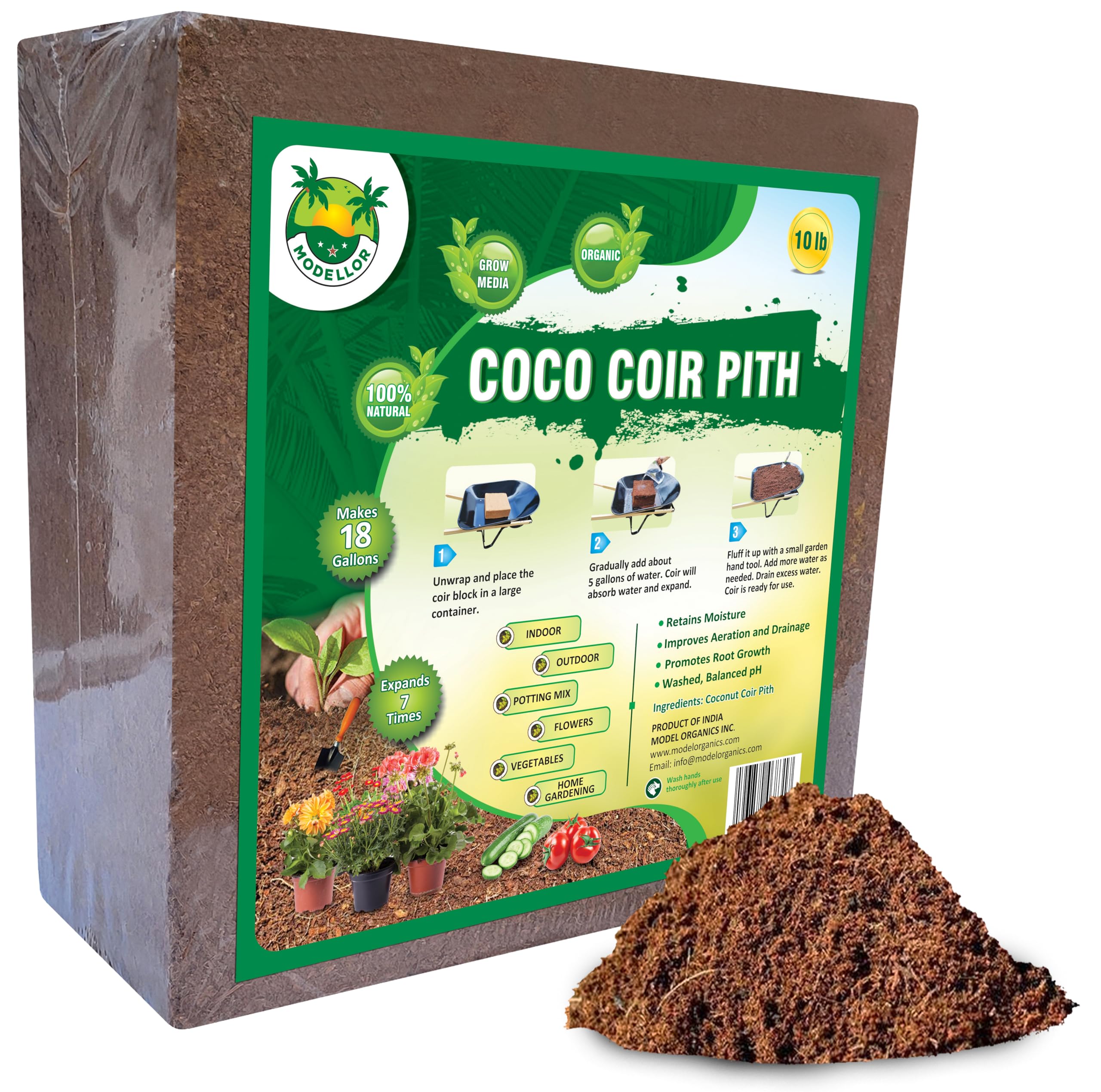
This 10-pound brick delivers a massive 18 to 20 gallons of fluffy coir, enough to fill five or six standard 1020 trays at a healthy depth. The triple-wash process strips salts down to a level where you can seed directly without pre-rinsing — a real time-saver when you are running multiple trays per week.
The texture lands in a sweet spot for microgreens: fine enough to let radicle tips push through easily, yet structured enough to hold air pockets that prevent damping-off. Multiple growers in the feedback thread noted that seeds sprouted faster compared to denser soil blends, which aligns with the open structure this brick produces.
One full block requires a large bucket — a 5-gallon container barely fits the hydrated volume. Plan your rehydration vessel ahead of time. For the yield per dollar and the measurable reduction in germination lag, this brick earns the top slot for serious microgreen growers.
Why it’s great
- Expands to the largest usable volume in this tier
- Low salt content eliminates the pre-rinse step
- Fluffy texture supports strong root aeration
Good to know
- Requires a very large container for hydration
- Not certified organic, though the material is natural
2. MagJo Naturals 100% Pure Coco Coir 11 lb Block

MagJo holds an OMRI listing for organic production, a layer of verification that matters if you plan to market your microgreens as certified organic. The 11-pound block hydrates to roughly 17 gallons, placing it slightly behind the MODELLOR in yield but still roomy enough for four to five full trays.
The manufacturer emphasizes salt washing, and independent tester reviews back that claim — measured TDS readings between 40 and 200 ppm after hydration. That range sits well inside the safe zone for sensitive microgreen varieties like amaranth or basil that brown at the tips when sodium climbs.
One quirk: reviewers report a faint tea-tree-like aroma after hydration, which fades within a few hours and does not transfer to the crop. The block is dense and requires a full soak — do not try to break it into pieces. For growers who prioritize organic certification without sacrificing water retention, this block delivers.
Why it’s great
- OMRI Listed for certified organic operations
- Thoroughly washed to keep salt levels low
- Retains moisture well, reducing watering frequency
Good to know
- Subtle natural aroma after hydration
- Difficult to portion — soak the whole block at once
3. Vivlly Coco Coir Brick 10 lb (Low Salt Triple Washed)

Vivlly takes the low-salt commitment further than most by quoting a specific EC ceiling — under 0.5 mS/cm — and backing it with 18-plus months of aging before compression. That extended curing cycle helps stabilize the pH and further leach residual salts, resulting in a medium that microgreen roots accept without stress.
The expansion claim of 75 quarts (roughly 2.5 cubic feet) is the highest per-pound ratio in this lineup, meaning fewer bricks to buy per season. The finished coir is light and fluffy, and several hydroponic reviewers noted it integrates seamlessly into recirculating systems without clogging lines or spiking nutrient conductivity.
Hydration takes patience: reviewers recommend adding 3.5 gallons of warm water slowly, scraping the brick as it softens to avoid dry pockets. A small deduction goes to the powdery dust released during the initial soak, but the final product is clean. For growers running sensitive microgreen varieties, this is the most predictable option on the list.
Why it’s great
- Guaranteed low EC protects delicate seedlings
- Highest expansion ratio reduces per-tray cost
- Aged processing ensures pH stability
Good to know
- Hydrates slowly if not done carefully
- Some powdery dust during first mixing
4. Minute Soil Compressed Coco Coir Fiber 3-Brick Pack

Minute Soil offers the lowest entry point in this group — three compressed bricks that each yield about 1.5 gallons of rehydrated coir. That small per-brick volume makes this pack ideal for testing microgreen production before committing to bulk blocks, or for growers running only one or two trays at a time.
The material is raw and non-amended, meaning it contains no added fertilizers or pH adjusters. That is a plus if you prefer to control every variable in your nutrient mix, but it also means you need to buffer the pH yourself for repeatable results. The OMRI listing confirms the base coir is clean for organic use.
Hot water speeds the hydration dramatically — several reviewers noted the bricks puff up in seconds with warm water versus minutes with cold. The main limitation is scale: three bricks together produce only 4.5 total gallons, so filling a full rack of trays requires multiple packs. For a cautious trial run or small kitchen setup, this is a smart starting point.
Why it’s great
- Low commitment pack size for first-time growers
- OMRI listed and completely peat-free
- Hydrates very fast with hot water
Good to know
- Small total yield limits large tray runs
- Raw coir requires your own pH management
5. Plantonix Coco Bliss 650gm Bricks (6-Pack)

Plantonix built Coco Bliss around filtration — each brick passes through an extremely fine screen that removes sand, rocks, and long fibers that can clog tray drainage holes. The result is a uniform, almost powder-like texture when fully hydrated, which microgreen roots penetrate evenly across the entire tray surface.
The six-brick format gives you 12.5 total gallons of medium, and each 650-gram brick is small enough to hydrate in a standard kitchen pitcher. That modularity matters for growers who want to start trays on different days without committing a whole 10-pound block at once.
One reviewer found a single plastic piece in a whole box, but the rest of the feedback reports exceptional cleanliness. The material is pre-rinsed and organic, so you can hydrate and seed immediately. The per-ounce cost is higher than the bulk blocks, but the convenience of portioned bricks and the fine texture make this a strong choice for growers who prioritize consistency over total volume.
Why it’s great
- Exceptionally fine and consistent texture
- Individual brick size allows staggered tray starts
- Pre-rinsed and pre-screened for immediate use
Good to know
- Higher cost per ounce than large single blocks
- Very fine texture may compact if over-watered
FAQ
Do I need to wash coco coir before using it for microgreens?
How much coco coir do I need for a standard 1020 tray?
Final Thoughts: The Verdict
For most users, the growing medium for microgreens winner is the MODELLOR 10 lb brick because it delivers the highest usable volume with a low-salt, pH-balanced finish that eliminates the pre-wash step. If you need OMRI certification for organic sales, grab the MagJo Naturals 11 lb block. And for the lowest possible salt load in sensitive hydroponic setups, nothing beats the Vivlly 10 lb brick with its guaranteed EC under 0.5.