
Finding an amplifier that actually delivers tight, percussive low-end and a saturated lead tone without turning into a muddy mess is the single greatest challenge for any metal guitarist. The wrong amp can make a high-end guitar sound like a toy, while the right one turns a budget axe into a rhythm machine.
I’m Mohammad Maruf — the founder and writer behind Drink4Good. I built this guide after spending weeks analyzing the gain staging, power sections, and cabinet designs of over a dozen models across multiple price tiers to find the ones that truly serve the metal player.
Whether you practice at home, record in a studio, or need to cut through a live mix, these recommendations are built around the single most important question you need answered: which guitar amp for metal actually delivers the brutal, articulate distortion you hear in your head.
How To Choose The Best Guitar Amp For Metal
Metal demands more from an amplifier than any other genre. The distortion must be tight, the low-end must be punchy without flubbing out, and the amplifier must handle fast, chugging palm-mutes and screaming leads equally well. You are not just buying power — you are buying a specific kind of voicing and dynamic response.
Gain Architecture: Voicing Is Everything
Not all distortion is created equal. A blues amp breaks up softly and compresses; a metal amp must clip hard and fast, preserving the attack of each note. Look for preamp designs with multiple cascading gain stages — the more stages, the more saturation you can push into the signal without it turning to mush. Amps with a dedicated high-gain channel or a built-in boost are often more reliable for metal than clean amps paired with external pedals, because the voicing is baked into the circuit.
Speaker Selection: The Foundation of Your Tone
A great preamp running through a poor speaker sounds small and boxy. Metal players should prioritize a 12-inch speaker with a high wattage rating (at least 60W or more) to handle the low-end thump without breaking up. Celestion Vintage 30 and G12H speakers are industry standards for a reason — they deliver the aggressive mid-range push and tight bass response that makes palm-mutes sound percussive.
Power Section and Headroom
Wattage matters differently for metal compared to clean playing. A high-headroom power section (50W to 100W) keeps the amp clean and responsive even when you drive the preamp hard. Lower-wattage amps (under 30W) may compress too early, sucking the life out of your riffs. If you play in a band or plan to gig, aim for 60W minimum in a solid-state or 50W in a tube platform to maintain clean power delivery at stage volumes.
Effects and Connectivity
Built-in effects like noise gates, reverb, and delay can be incredibly useful for metal players, especially when playing live. A quality noise gate is almost mandatory for high-gain setups to eliminate string hiss between riffs. Also check for an effects loop — this allows you to place time-based effects (delay, reverb) after the preamp rather than before it, keeping your core distortion sound intact.
Quick Comparison
On smaller screens, swipe sideways to see the full table.
| Model | Category | Best For | Key Spec | Amazon |
|---|---|---|---|---|
| BOSS Katana Head Gen 3 | Hybrid Head | Versatile Stage & Studio | 100W, 5″ built-in speaker | Amazon |
| Orange Super Crush 100 Combo | Solid State Combo | High-Gain Stage Work | 100W, Celestion G12H-150 | Amazon |
| Orange Crush 60 Combo | Solid State Combo | Classic Rockerverb Voicing | 60W, 1×12″ speaker | Amazon |
| BOSS Katana-100 Gen 3 Combo | Digital Modeling Combo | Deep Tone Customization | 100W, custom 12″ speaker | Amazon |
| VOX VT100X Combo | Hybrid Modeling | Budget-Friendly Modeling | 100W, 1×12″ speaker | Amazon |
| Marshall CODE50 Combo | Digital Modeling Combo | Marshall Voicings on a Budget | 50W, 1×12″ speaker | Amazon |
| Laney IRF-LOUDPEDAL | Pedal Amp | Ultra-Portable Rig | 60W RMS, XLR DI out | Amazon |
| Marshall MG30GFX Combo | Solid State Combo | Beginner Practice Amp | 30W, 10″ speaker | Amazon |
| Vox MV50BM Brian May Head | Tube Micro Head | Signature Treble Boost Tone | 50W Nutube, 1 kg | Amazon |
In‑Depth Reviews
1. BOSS Katana Head Gen 3

The third-generation Katana Head is the most complete metal platform in this price range. Its 100-watt hybrid design uses digital preamp modeling to deliver twelve amp characters — including a new Pushed voicing that excels at edge-of-breakup rhythms and a dedicated Brown channel that absolutely nails high-gain saturation. The built-in 5-inch practice speaker is a game-changer for silent home practice, yet the head easily drives a 4×12 cabinet for stage volume.
Five independent effects sections (Booster, Mod, FX, Delay, Reverb) give you all the tools you need without external pedals, and the USB-C audio interface connects directly to your DAW for recording. The Tube Logic engine updates the power amp simulation to respond dynamically to your playing, making palm-mutes feel punchy and leads sing without digital artifacts.
Where this amp really shines for metal is in the Tone Studio software — you can dial in a noise gate, adjust the cab resonance, and save presets per song. It is the most versatile metal amp head on the market, capable of covering everything from classic thrash to modern djent tones.
Why it’s great
- Twelve amp characters with Brown channel for saturated metal
- Built-in 5-inch speaker for quiet practice
- USB-C audio interface included
Good to know
- Clean tones require some tweaking through software
- Bluetooth module sold separately
2. Orange Super Crush 100 Combo

The Super Crush 100 takes everything that made the Orange Rockerverb famous and packages it into a lightweight, all-analog solid-state design. The dirty channel features four cascading gain stages that produce that signature Orange high-gain roar — thick, saturated, and incredibly musical. It is loud enough to compete with a hard-hitting drummer without any power amp distortion muddying the preamp tone.
The Celestion G12H-150 speaker is a major upgrade over standard budget speakers. It handles the full 100 watts without flinching and delivers a tight, focused low-end that makes drop-tuned riffs sound massive. The clean channel is bright and vintage-flavored, perfect for taking pedals, and the balanced XLR output with CabSim works well for direct recording into a console.
For metal players who want a traditional amp experience without modeling menus or software, this is the most straightforward path to a premium stage tone. It feels and responds like a tube amp but weighs significantly less and never requires a bias adjustment.
Why it’s great
- Four cascading gain stages for rich, saturated metal tones
- Celestion G12H-150 handles high output without breakup
- Balanced XLR with built-in cab simulation
Good to know
- Onboard reverb is basic — plan for external reverb
- No built-in effects beyond reverb
3. Orange Crush 60 Combo
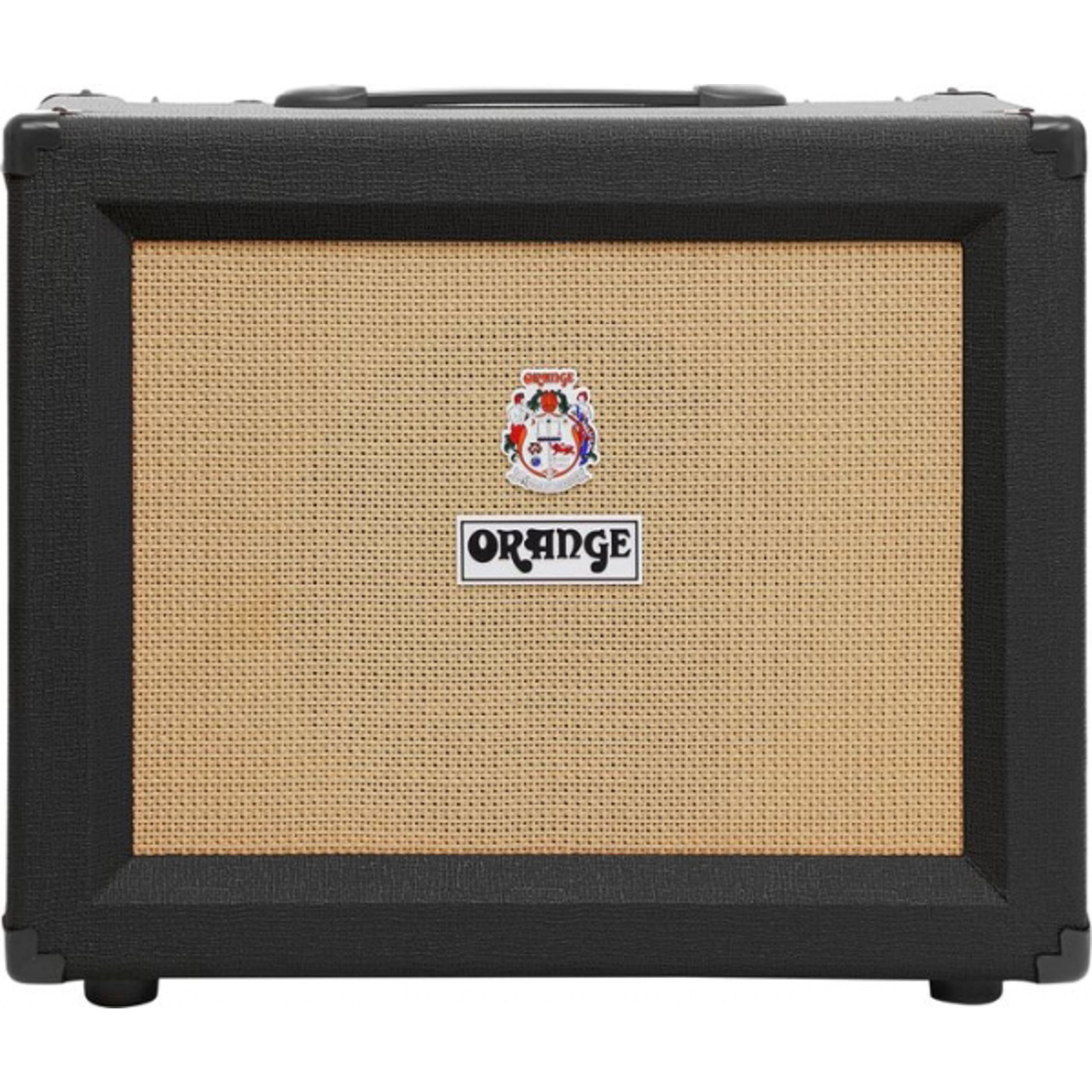
The Crush 60 is a direct descendant of Orange’s legendary Rockerverb line, translated into an affordable, all-analog solid-state combo. Its two-channel design gives you a clean channel based on a two-stage, two-band EQ preamp and a dirty channel that delivers the classic Orange high-gain saturation. The built-in digital reverb provides natural-sounding spring, hall, and plate settings that are genuinely useful for lead work.
At 60 watts through a single 12-inch speaker, this amp has enough headroom for rehearsals and smaller gigs. The dirty channel is voiced to be aggressive without being overly compressed — palm-mutes feel punchy and articulate, not mushy. The mid-range response is particularly strong, helping your guitar cut through a dense mix with ease.
This is an excellent choice for players who want Rockerverb-style high-gain voicing without the weight, cost, or maintenance of a tube amp. It pairs beautifully with a boost pedal to push the front end even harder for modern metal applications.
Why it’s great
- Borrows circuit design from the Rockerverb tube platform
- Three reverb modes: spring, hall, and plate
- Punchy mid-range helps cut through live mixes
Good to know
- Some players find gain not saturated enough for modern djent without a boost
- No built-in effects loop
4. BOSS Katana-100 Gen 3 Combo
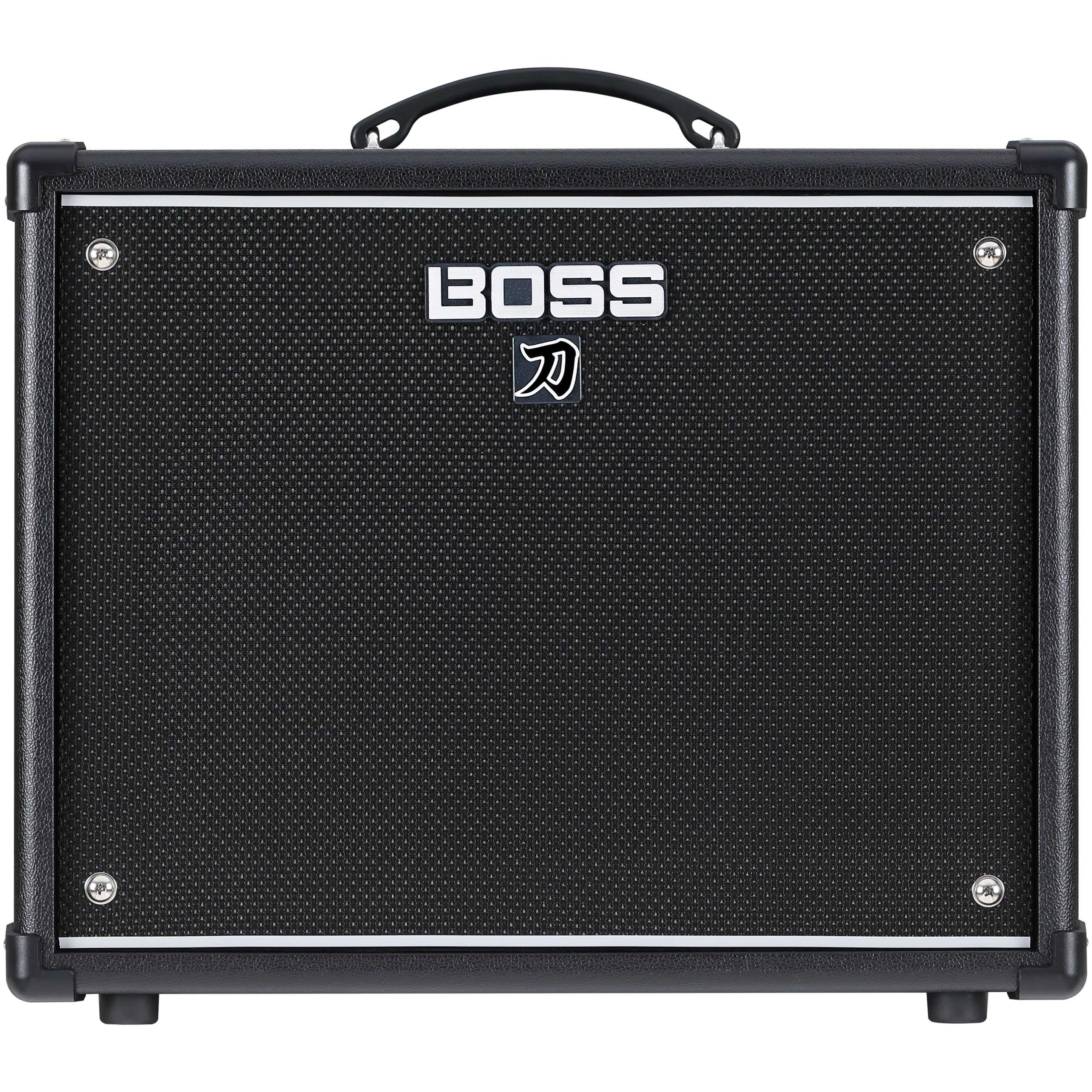
The combo version of the BOSS Katana Gen 3 platform offers the same twelve amp characters and five effects sections as the head, but with a purpose-built 12-inch speaker designed to deliver the full frequency range of high-gain playing. The new Pushed and Brown amp types are specifically voiced for metal rhythm and lead work, and the Tube Logic engine makes the power section feel more responsive than typical digital modeling amps.
BOSS Tone Studio is where this amp becomes a metal powerhouse. You can assign a noise gate with adjustable threshold, dial in specific EQ curves for each channel, and load user-created presets from the online community. The four-voice EQ system allows you to fine-tune the bass response for drop-tuned guitars without flubbing out — a critical feature many modeling amps lack.
Unlike the head version, this combo comes into its own as a stand-alone gigging solution. The 100-watt power section drives the speaker with authority, and the onboard effects are high enough quality that you can leave your entire pedalboard at home for most club shows. The USB-C connectivity simplifies recording directly to a computer.
Why it’s great
- Six amp characters with Brown channel for modern high-gain
- USB-C interface for direct DAW recording
- Custom 12-inch speaker handles low-end well
Good to know
- Bluetooth adapter and GA-FC foot controller sold separately
- Some users report reliability issues after extended use
5. Vox VT100X 1×12 Combo

The VT100X combines a genuine multi-stage tube preamp with digital modeling, giving you the warmth of analog circuitry with the flexibility of digital signal processing. It offers 11 amp models (expandable to 20 via Vox Tone Room software), including high-gain voicings that can handle metal. The Virtual Element Technology (VET) provides remarkably accurate cabinet simulation, making the amp sound larger than its single 12-inch speaker would suggest.
The power level control is a standout feature — you can drop from 100 watts down to 1 watt or even 0.5 watts for bedroom-level playing without losing the character of the preamp. This makes it incredibly versatile for players who need one amp for practice and the occasional gig. The built-in tuner is a practical addition that eliminates the need for an external pedal.
For the price, this is one of the most feature-rich metal-viable options on the market. The presets are surprisingly usable out of the box, and the tube preamp gives the distortion a natural compression that solid-state models often lack. It is slightly less refined than the BOSS Katana platform in terms of deep editing, but it costs significantly less.
Why it’s great
- Multi-stage tube preamp for natural distortion feel
- Power level control from 100W down to 0.5W
- 20 amp models available via Vox Tone Room software
Good to know
- No built-in audio interface for DAW recording
- Preset switching can cause a volume spike
6. Marshall CODE50 Combo
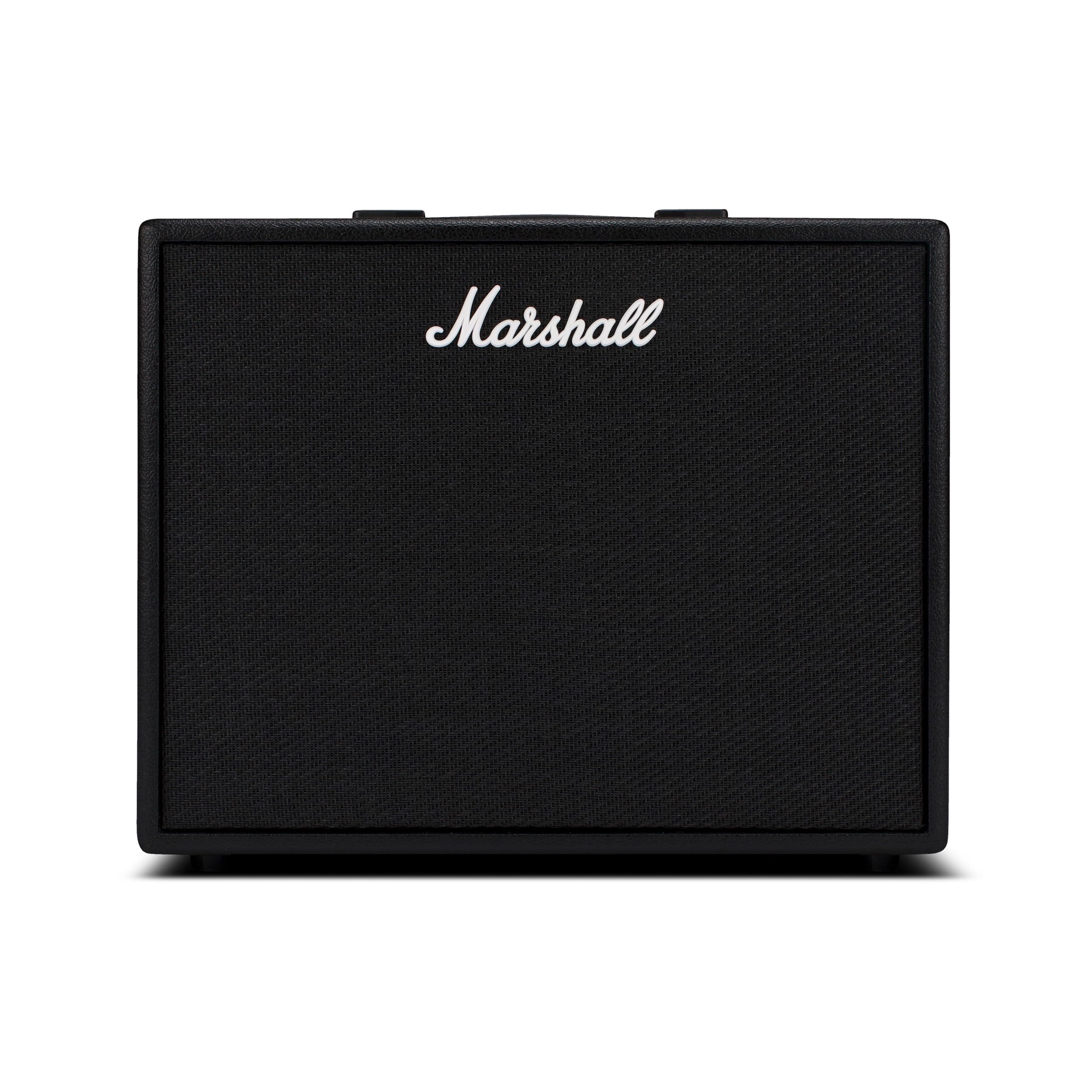
The CODE50 delivers the classic Marshall sound through a modern digital modeling platform. It features 14 preamp models based on iconic circuits like the Plexi, JVM, DSL, and Silver Jubilee — all of which are foundational to metal tone history. The digital effects section includes 24 effects, including distortion, delay, reverb, and modulation, giving you a complete signal chain without external pedals.
The 100+ editable presets are a mixed bag — many factory presets sound thin or overly bright out of the box, but the app-based editing via Bluetooth makes it easy to dial in your own tones. Turning off the cabinet simulation in the preset menu dramatically improves the overall sound quality, and modeling a Plexi or 100W Marshall amp through the power amp section provides the foundational high-gain tone many metal players crave.
At 50 watts through a single 12-inch speaker, this amp is best suited for home practice and small rehearsals rather than large stage work. The Bluetooth control is genuinely convenient for tweaking settings from across the room, and the 4-way footswitch (sold separately) makes live preset changes practical.
Why it’s great
- 14 preamp models including Plexi, JVM, and Silver Jubilee
- Bluetooth app for easy preset editing
- 100+ editable presets for broad tonal variety
Good to know
- Factory presets require significant tweaking
- Reliability issues reported by some users over time
7. Laney IRF-LOUDPEDAL

The IRF-LOUDPEDAL is a 60-watt amplifier built inside a standard pedal enclosure. It works as a preamp pedal, a direct recording interface, or a full amplifier head when connected to a speaker cabinet. The twin-channel design offers CH1 with clean, rhythm, and lead gain modes, and CH2 with bright, natural, and dark voicings — giving you six distinct tones from a pedal-sized unit.
The input pre-boost level and footswitch with LED indicator make it stage-functional without complex menus. The balanced XLR DI output with switchable analog speaker emulation is a major advantage for direct recording or plugging into a PA system without needing an external cabinet. The headphone output lets you practice silently with the full preamp character intact.
For metal players building a minimalist rig, this is an incredibly efficient solution. It fits on a standard pedalboard, runs on standard 9V power (9mA), and delivers genuine Laney Ironheart gain architecture. The DI quality is the weakest link — some users report the cab sim sounds muddy — but as a head into a quality 1×12 or 4×12 cabinet, it rivals dedicated amp heads in the same price tier.
Why it’s great
- Six gain modes across two channels in a pedal-sized unit
- Balanced XLR DI with analog cab simulation
- 60W RMS into any 8-ohm cabinet
Good to know
- DI output quality may not meet recording standards
- Limited to basic controls — no deep EQ shaping
8. Marshall MG30GFX Combo

The MG30GFX is Marshall’s entry-level combo amp designed for practice and home use. It features four channels — clean, crunch, OD1, and OD2 — giving beginners access to a range of gain levels from pristine clean to high-gain saturation. The OD2 channel is voiced to deliver a compressed, singing lead tone that works well for classic metal riffs.
The 10-inch custom 30W speaker provides adequate volume for bedroom practice and small jam sessions. The built-in digital effects (chorus, phaser, flanger, delay, and octave) are basic but functional, and the headphone output with MP3/line-in allows you to play along with backing tracks silently. The 3.5mm input also lets you practice with your phone or laptop.
This is a pure beginner tool — the 30W power limits headroom for gigging, the small speaker lacks the low-end punch of a 12-inch driver, and the preamp is relatively simple compared to more advanced modeling platforms. It delivers the classic Marshall voicing at an accessible entry point, but serious metal players will outgrow it quickly.
Why it’s great
- Four channels including OD2 for high-gain lead tones
- Built-in digital effects: chorus, phaser, flanger, delay
- Headphone out with MP3 input for silent practice
Good to know
- 30W limits headroom for band practice or gigging
- 10-inch speaker lacks low-end definition for modern metal
9. Vox MV50BM Brian May Head

The MV50BM is a collaboration between Vox and Queen’s Brian May, but its architecture makes it surprisingly versatile for high-gain applications. Based on the MV50 AC platform, it adds a dedicated treble booster circuit that pushes the front end of the amp into saturation. The 50-watt Nutube power section delivers real tube character in a micro-sized head that weighs just over two pounds.
The treble Booster switch is the key feature for metal players. When engaged, it increases gain and presence, giving the amplifier a cutting, aggressive edge that works well for lead playing and riffing. The headphone/line output with cabinet simulation allows you to practice or record directly without a cabinet, making it a viable travel companion for songwriting.
This is not a traditional metal amp — it lacks a dedicated high-gain channel, effects loop, or deep EQ shaping. It excels as a specialized tool for players who want the Brian May treble-boosted tone, or as a lightweight backup head for a larger rig. For pure metal chugging, the preamp section is voiced too brightly and lacks the low-end saturation most metal players require.
Why it’s great
- Incredibly lightweight (1 kg) for a 50W tube head
- Treble booster circuit pre-installed for cutting tone
- Headphone output with cab simulation
Good to know
- No effects loop for external pedals
- Voiced for treble-boosted classic rock, not modern metal
FAQ
Can I use a solid-state amp for high-gain metal playing?
How many watts do I need for a metal band practice or small gig?
What is the difference between a combo amp and a head and cabinet setup for metal?
Why does my high-gain amp sound muddy when I play drop-tuned riffs?
Do I need an effects loop for metal pedals?
Final Thoughts: The Verdict
For most users, the guitar amp for metal winner is the BOSS Katana Head Gen 3 because its Brown channel delivers authentic high-gain saturation, the built-in 5-inch speaker enables silent practice, and the USB-C interface simplifies studio recording. If you want the authentic, all-analog Orange high-gain roar for serious stage work, grab the Orange Super Crush 100 Combo. And for the most versatile modeling platform with deep tone customization, nothing beats the BOSS Katana-100 Gen 3 Combo.