
A guitar without a proper case is like a touring musician without insurance. The right shell absorbs the bumps of a crowded van, the humidity swings of a storage unit, and the inevitable drop on the way to the stage. Choosing between a padded gig bag and a rigid hardshell is the first decision, but the real challenge lies in matching the internal geometry to your specific body shape. A Stratocaster rattling around a Les Paul case can still snap a headstock.
I’m Mohammad Maruf — the founder and writer behind Drink4Good. After analyzing material densities, latch metallurgy, and neck-cradle tolerances across dozens of models, I’ve distilled the market into the protectors that actually do their job.
Whether you need airline-grade security for a long tour or a humidity-sealed vault for a prized collection, this guide to the best guitar cases breaks down the real specs that separate a coffin from a catastrophe.
How To Choose The Best Guitar Cases
Before you pull the trigger, you need to match three things: your guitar’s body shape, your travel environment, and your storage conditions. A case that fits perfectly but uses thin plywood will get crushed in a cargo hold. A military-grade shell that doesn’t cradle your neck correctly won’t save it from a drop. Here are the factors that actually matter.
Shell Construction: Plywood vs. ABS vs. Molded Polyethylene
Plywood cases, covered in tolex or vinyl, offer the best stiffness-to-weight ratio for home storage and local gigs. They dent rather than crack, and they absorb sharp impacts well. ABS and military-grade polyethylene shells are lighter, weather-sealed, and preferred for air travel because they resist warping under pressure changes. Molded polycarbonate is the lightest option but sacrifices some rigidity — fine for daily commuting, not for checked luggage.
Interior Foam Density and Neck Cradle Design
The plush lining everyone talks about is just the surface. What matters is the foam underneath — should be at least 1.5 to 2 mm of closed-cell foam around the body cavity. A dedicated neck cradle (a raised, contoured block at the headstock) prevents the neck from shifting during a fall. Without one, a hard knock can transfer force straight to the neck joint. Cases that rely on generic flat foam blocks allow far too much movement for a 335 or a Telecaster with a volute.
Latch Quality and Locking Mechanisms
Plastic latches on a hardshell case are a dealbreaker. Look for chrome-plated or stainless steel hasps that close with a clean snap, not a plastic click. A locking center latch is essential for air travel — TSA-approved locks are ideal for US travel, while a simple key lock suffices for storage. Latches should be through-bolted into the wood or plastic shell, not just screwed into a thin layer. Cases with only two latches risk popping open on rough surfaces; four is the safe minimum for full-size electrics.
Quick Comparison
On smaller screens, swipe sideways to see the full table.
| Model | Category | Best For | Key Spec | Amazon |
|---|---|---|---|---|
| Fender Deluxe Molded | Hardshell | Air travel & Strat/Tele owners | Military-grade polyethylene shell | Amazon |
| Crossrock CRW620-00012TW | Wooden Hardshell | 000/OM acoustic owners | FSC-certified plywood core | Amazon |
| Gator Transit Series Gig Bag | Gig Bag | Lightweight commuting | Weather-resistant covering | Amazon |
| Epiphone Les Paul Case | Hardshell | Epiphone LP owners | Custom-molded Les Paul cavity | Amazon |
| AW Bass Guitar Case | Hardshell | Bass guitar owners | 48″ interior length | Amazon |
| Gator 3/4 Acoustic Case | Hardshell | 3/4-scale acoustic guitars | 37.5″ total interior length | Amazon |
| Glarry ST Deluxe | Hardshell | Budget ST/TL storage | Thickened plush lining | Amazon |
In‑Depth Reviews
1. Fender Deluxe Molded Guitar Case for Stratocaster and Telecaster

The Fender Deluxe Molded case is the gold standard for electric guitarists who fly. Its military-grade polyethylene shell shrugs off baggage-handler abuse and resists the warping that plywood cases suffer in cargo holds. The molded foam interior is custom-contoured for Stratocaster and Telecaster bodies — no shifting, no rattling, no neck movement. The TSA-approved center latch means you can lock it without airport security needing to break it open.
Weighing just over six pounds, this case feels surprisingly light for its protection level. The handle is offset to distribute weight evenly, and the case balances well when carried. The interior compartment is modest but holds cables, picks, and a tuner without forcing the body off the foam cradle. Users report that even 1970s headstock shapes fit without resistance, a detail many budget cases get wrong.
Compared to a traditional G&G hardshell, the Fender Deluxe offers better impact dispersion and lower weight. The trade-off is less interior storage and a less breathable environment for long-term storage — you’ll want a humidity pack inside. For touring and air travel, this is the most reliable production case on the market for Strats and Teles.
Why it’s great
- Military-grade polyethylene won’t crack like plywood under pressure
- Custom foam cradle fits Strat/Tele bodies with zero slop
- TSA-approved lock secures against theft and inspection damage
Good to know
- Low interior storage capacity — no room for bulky pedals
- Not ideal for Les Paul or offset body shapes without modification
2. Crossrock Wooden Guitar Case for 12-Frets 000/OM Acoustic Guitars

The Crossrock CRW620 is a return to traditional guitar case construction with modern hardware. Its multi-layer FSC-certified plywood core is covered in a stylish vinyl tweed that looks like a vintage piece but weighs a fraction of a true vintage box. The reinforced arched top is a deliberate engineering choice — flat-top cases compress under weight, while an arch distributes force outward, preventing string pressure from contacting the lid.
Inside, the thickened sponge lining handles the 000/OM acoustic shape beautifully. The neck cradle centers a 12-fret headstock perfectly, and the body cavity grips the lower bout without squeezing the shoulders. Users with Martin OM replicas and Yamaha FSC-TA models report a tailored fit with no lateral movement. The hidden storage compartment under the neck is a clever touch for picks, slides, and a capo.
The stainless steel latches, hinges, and feet resist corrosion that would rust a chrome-plated set within a year. The lockable center latch provides adequate security for home and studio use. For the price, this case outperforms many OEM-branded wooden cases in hardware quality and protection design. It is not airline-rated for checked luggage, but for car travel and storage, it looks and performs like a case twice its cost.
Why it’s great
- Reinforced arched top resists crushing better than flat plywood
- FSC-certified wood frame with stainless steel hardware
- Hidden storage compartment for small accessories
Good to know
- Not designed for air travel — plywood can warp under cargo pressure
- Sponge lining is adequate but not ATA-grade impact foam
3. Gator Cases Transit Series Electric Guitar Gig Bag

Not every situation requires a hardshell. The Gator Transit Series gig bag delivers hard-case levels of padding in a backpack-friendly form factor. The shell uses a thick, dense foam core that stands up to bumps and drops better than a standard gig bag’s thin padding. The weather-resistant outer layer sheds light rain, and the rubberized base resists the scuffs that come from setting the bag on concrete or gravel.
The bag includes backpack straps that tuck away into a hidden zippered compartment when you want a hand-carry look. Two web handles give you options for lifting from tight spaces. Metal D-rings on the straps let you clip on a strap lock bag or a small pedal case. The interior end-pin padding is a detail many gig bags skip — it prevents the bottom edge of your guitar from poking through after repeated use.
Users report that this bag fits a Schecter Evil Twin snugly and a Chet Atkins CEC without slop. The front accessory pocket is roomy but lacks internal organization — expect to dump cables and picks into one space. The neck support at the top is slightly short for some headstock shapes; a strap under the neck helps secure the instrument. This is the best lightweight option for subway, motorcycle, or short car trips where a hardshell is overkill but a basic soft case is too risky.
Why it’s great
- Thick dense foam padding rivals entry-level hardshell protection
- Hideaway backpack straps balance weight for comfortable commuting
- Weather-resistant outer fabric and rubberized base add durability
Good to know
- Not acceptable for checked airline luggage — no rigid shell
- Front pocket lacks dividers for organized accessory storage
4. Epiphone Case for Les Paul Standard & Custom
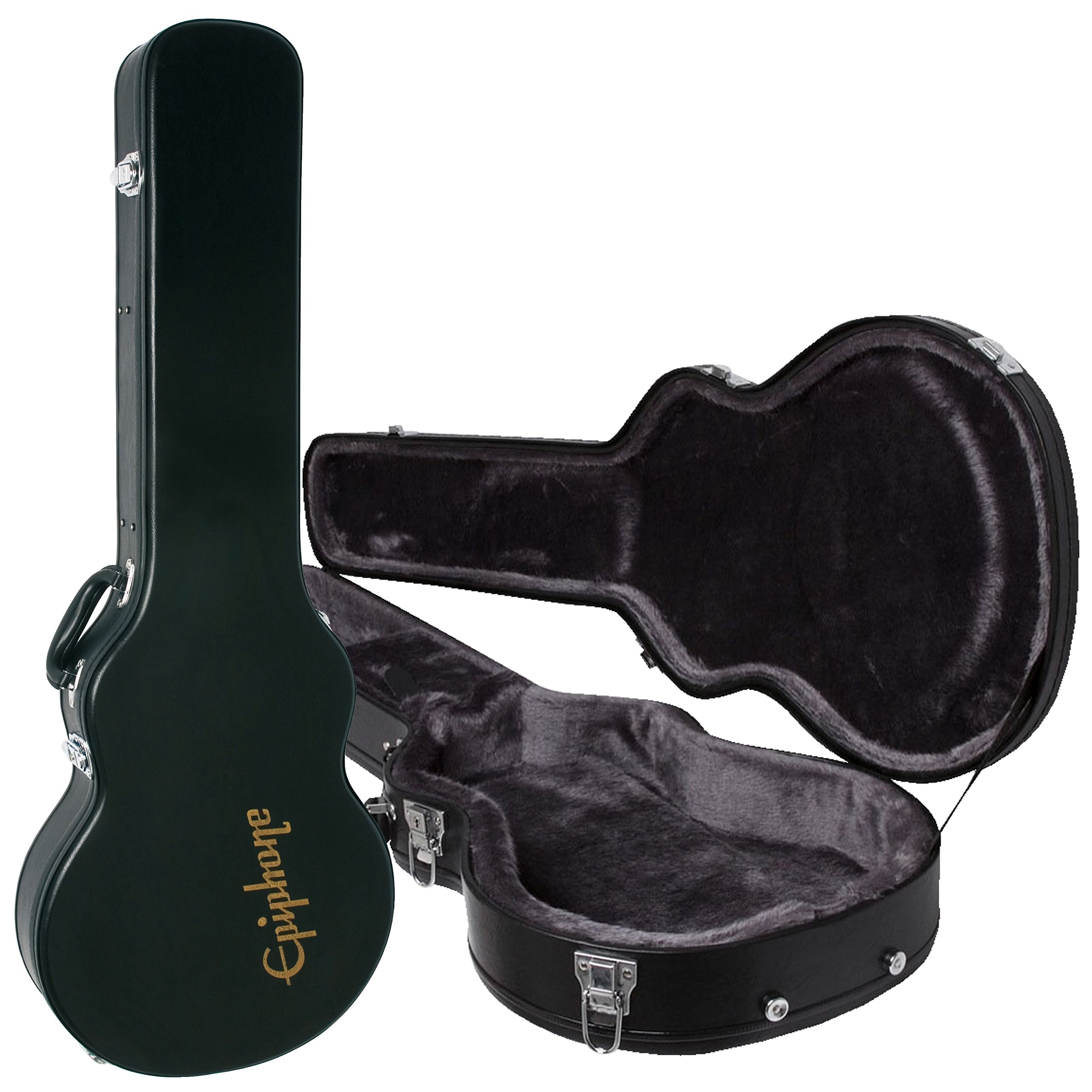
If you own an Epiphone Les Paul, this is the case that will protect it. The interior cavity is molded specifically for the body contours of a Les Paul Standard, Custom, or Studio — the deep cutaways and arched top fit with zero tolerance. The grey plush lining is thick enough to prevent finish swirls, and the neck cradle locks the headstock in place so the neck never shifts during transit.
The exterior uses a sturdy plywood core wrapped in black tolex. The chrome latches include a locking center hasp and three non-locking toggle latches. The soft-grip handle is one of the most comfortable on the market — it reduces hand strain when carrying a nine-pound Les Paul across a parking lot. The accessory compartment is small but deep enough for a strap, cable, and a few picks.
Users consistently report that this case fits better than the equivalent Gibson-branded case for a Les Paul. The interior dimensions are tighter, which means less movement, which means fewer headstock breaks. The only complaint is that the lock key sometimes works inconsistently, but the latch still holds securely. For home storage, studio use, and local gigs, this is the most reliable Les Paul case in its price tier.
Why it’s great
- Custom-molded interior fits Epiphone Les Paul bodies with no slop
- Soft-grip handle minimizes hand fatigue during carry
- Sturdy plywood tolex exterior with locking center latch
Good to know
- Lock mechanism can be finicky on some units
- Not suitable for non-Les Paul shapes like SG or 335
5. AW Bass Guitar Case Hard Electric Bass Wooden Hardshell
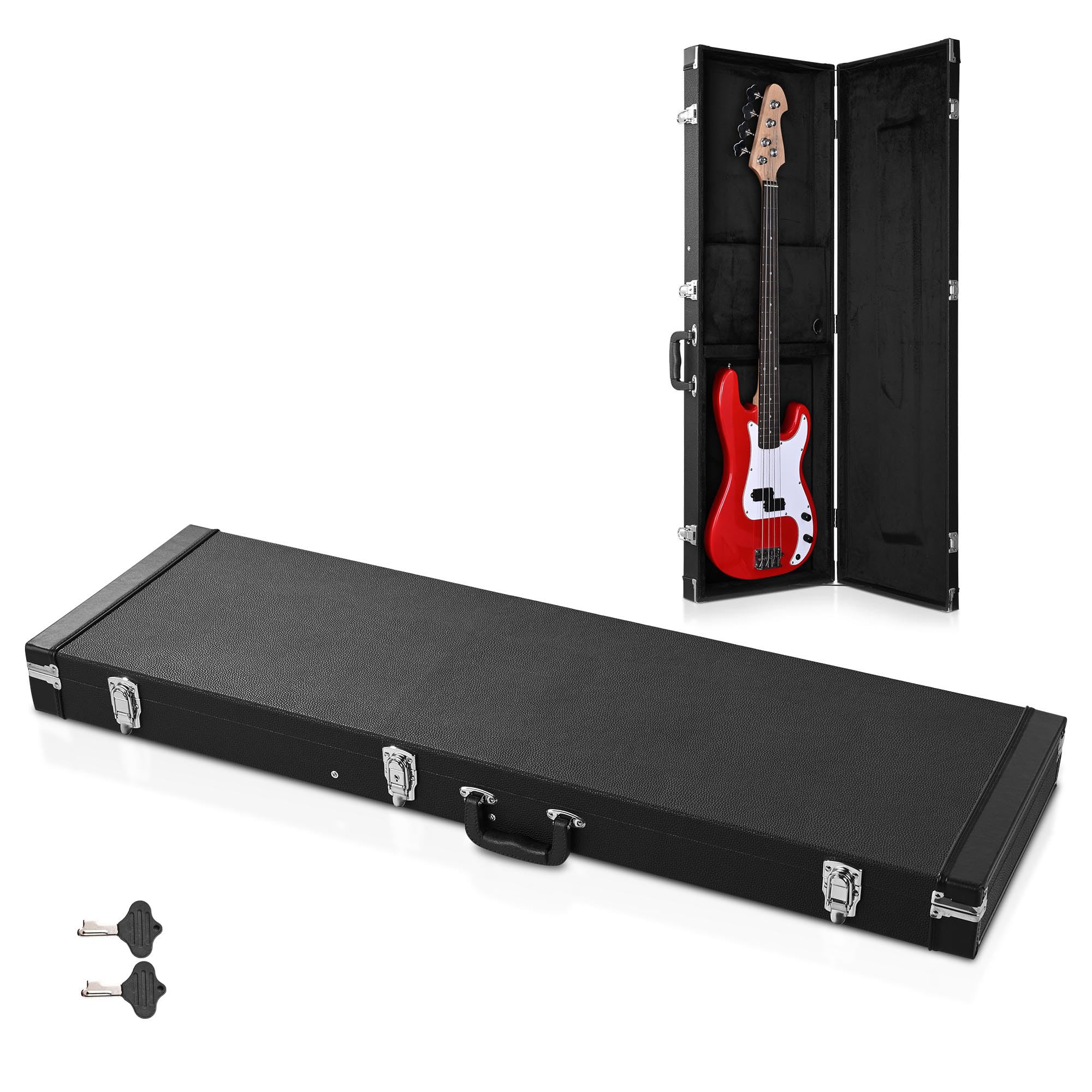
Bass guitars present a unique challenge — their longer scale length requires a case that’s both longer and structurally sound to protect the extended neck. The AW Bass Guitar case delivers a 48-inch interior length with a plywood shell wrapped in PU leather. The molded handle on top is ergonomically shaped and balances the 13-pound weight well enough to carry comfortably for short distances.
The interior uses molded foam lined with plush suede. The neck cradle is adequate, though some users report that P-bass and Jazz-bass shapes sit with a bit of lateral play that requires packing material to eliminate. The chrome hasp latches are functional but not premium — they close with a solid click but feel thin compared to the stainless hardware on higher-end cases. The large center compartment fits a strap, cable pack, and tuner without crowding.
The shell thickness is moderate; it won’t survive being thrown onto a conveyor belt without damage, but it protects well in a car trunk or van. For bass players on a budget who need a hard shell for basic storage and local transport, this case solves the fundamental problem: fitting the instrument. It is not flight-certified, but for the price, it provides the structural protection that no gig bag can match.
Why it’s great
- 48-inch interior fits most P-bass and Jazz-bass scale lengths
- PU leather wrap resists scuffs and moisture better than bare tolex
- Large accessory compartment accommodates cables and straps
Good to know
- Neck cradle allows some lateral movement for certain bass shapes
- Hasp latches feel less robust than premium cast-metal alternatives
6. Gator Cases Traditional Series Hard-Shell Case for 3/4 Acoustic Guitars
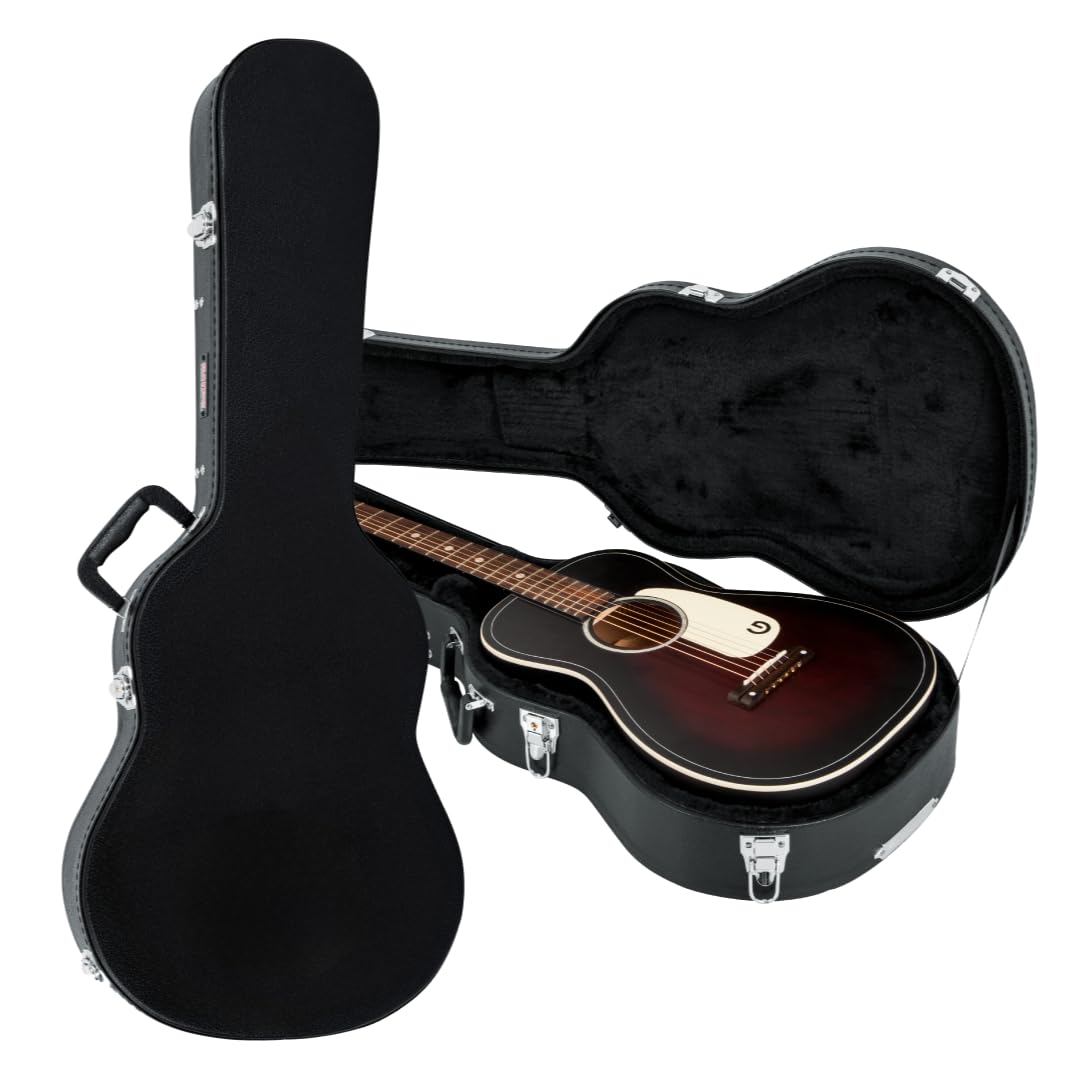
Smaller acoustic guitars often get squeezed into oversized cases or inadequate gig bags. The Gator Traditional Series 3/4 case solves this with a precise 37.5-inch interior length and carefully measured bout widths of 13.5 inches at the lower bout and 10.25 inches at the upper. This is not a universal “travel” case — it matches the geometry of 3/4-scale acoustics like Yamaha JR1, Cordoba Requinto, and D’Angelico Utica Travel Guitar.
The construction is classic Gator: plywood core, black tolex PVC covering, and chrome-plated toggle latches. One of the four latches locks with a key, giving you basic security for home and studio. The swivel handle is mounted securely and balances the 7-pound case well. Inside, the plush lining cushions the body, and a strap under the neck secures the headstock against vertical movement.
Users report about 5 to 6 inches of headstock clearance for most 3/4 acoustics — enough for a capo to stay on the headstock without pressing against the lid. The accessory compartment is modest but fits a tuner and picks. The case is heavy enough to provide real protection but light enough to carry to a lesson. For owners of travel, 1/2, or 3/4-scale acoustics, this is the most reliable hardshell option available.
Why it’s great
- Precise interior measurements match 3/4-scale acoustic body shapes
- Four chrome toggle latches with one locking latch for security
- Swivel handle balances well for comfortable carrying
Good to know
- Some 3/4 acoustics with unusual bout shapes may not fit perfectly
- Plywood construction not ideal for air travel cargo storage
7. Glarry ST Deluxe Electric Guitar Hard Shell Case

The Glarry ST Deluxe case is the budget entry point that doesn’t cut corners on the basics. The plywood shell is wrapped in black leatherette and lined with over 2mm of foam padding — thicker than many cases at twice the price. The extra neck and bridge padding included in the box lets you customize the fit, which is important because this is a universal ST/TL cavity, not a custom mold.
The chrome toggle latches and bumpers on the bottom and sides provide the fundamental protection needed for storage. The large interior compartment is big enough for a strap, cable pack, and a set of strings. At 41.34 inches long, 14.37 inches wide, and 4.53 inches deep, the case accommodates most Strat and Tele copies but will feel tight on some Telecasters with wider bodies at the lower bout.
Owners report that fit varies — a 2018 MIM Telecaster sits with about half an inch of movement top to bottom, while a G&L fits snugly. The latches and wood thickness are adequate for home storage and short local trips but not for regular gigging. For the price, this is a functional hard case that keeps dust, humidity, and minor bumps away from your instrument. It is a storage solution first, a travel case second.
Why it’s great
- Thickened plush lining protects against scratches and minor impacts
- Extra neck and bridge padding allows custom fit adjustments
- Sturdy lockable latches and bumpers for stable storage
Good to know
- Universal ST/TL cavity may leave some Telecaster shapes with movement
- Thin plywood and flimsy latches not suitable for frequent gigging
FAQ
Should I buy a hardshell case or a quality gig bag for my electric guitar?
Can I fit a Gibson Les Paul into a Stratocaster hardshell case?
What does TSA-approved mean for a guitar case lock?
Will a 3/4-size acoustic guitar case fit a travel-sized guitar?
Final Thoughts: The Verdict
For most users, the best guitar cases winner is the Fender Deluxe Molded because its military-grade polyethylene shell offers unmatched impact protection for air travel while keeping weight low. If you need a custom-fit hardshell for a 000/OM acoustic with classic looks, grab the Crossrock CRW620. And for lightweight daily commuting where a backpack bag makes sense, nothing beats the Gator Transit Series gig bag.