
Guitar finish is more fragile than you think. A spray that strips nitrocellulose lacquer, a fretboard oil that turns rosewood into a greasy sponge, or a cloth that leaves lint in every saddle notch — the wrong cleaner costs you hours of setup work. The right one makes your instrument feel like the day you brought it home.
I’m Mohammad Maruf — the founder and writer behind Drink4Good. I’ve spent over a decade analyzing musical instrument care chemistry, from pH-balanced polymer sprays to conditioners that penetrate open-pore fretboard wood without swelling the grain.
Whether you are restoring a vintage acoustic or just scrubbing baked-on sweat from a gigging electric, finding the best guitar cleaner means matching solvent type and applicator method to your finish and fretboard material — a decision that directly affects your instrument’s resonance, playability, and long-term wood stability.
How To Choose The Best Guitar Cleaner
Choose a cleaner based on your guitar’s topcoat chemistry, fretboard wood type, and how often you play. A finish-safe polymer spray works for most glossy solid-body electrics, while unfinished fretboards demand a dedicated oil that nourishes without leaving a tacky residue. Beginners often use a generic furniture polish that contains silicone — that creates a buildup that repels any future refinishing work.
Finish Compatibility
Nitrocellulose lacquer, polyurethane, and satin finishes each react differently to solvents. A spray formulated for polyurethane gloss is safe on polyester but may cloud a satin matte topcoat. Always check whether a cleaner explicitly states it is safe for satin finishes — products that do not carry this warning often contain waxes or oils that create unwanted sheen on flat surfaces.
Fretboard Material
Rosewood, ebony, pau ferro, and maple need different treatments. Open-pore woods like rosewood benefit from conditioning oils that prevent drying and cracking. Maple fretboards, which are often sealed with a clear finish, should only receive a light cleaner — never oil — because oil cannot penetrate the sealed surface and will only attract grime. Products labeled “fretboard kit” or “unfinished fretboard care” are formulated for open-pore woods specifically.
Application Method
Sprays offer even coverage for large body surfaces and require a separate microfiber cloth to wipe. Pump bottles allow controlled drops for spot-cleaning fretboards. Kits that include a dedicated brush give you precision around fret edges where grime accumulates most. The applicator tool is as important as the liquid itself — a poorly designed brush or rough cloth can scratch the finish.
Quick Comparison
On smaller screens, swipe sideways to see the full table.
| Model | Category | Best For | Key Spec | Amazon |
|---|---|---|---|---|
| MARTIN Guitar Polish and Cleaner | Spray | Gloss acoustic & electric bodies | 6 fl oz; safe on nitro & poly | Amazon |
| MusicNomad F-ONE Fretboard Care Kit | Kit | Unfinished rosewood & ebony | Includes brush & 2-in-1 cloth | Amazon |
| Premium Guitar Cleaning Kit 120ML | All-in-One | Full maintenance at home | 120ml polish + 120ml lemon oil | Amazon |
| Jim Dunlop System 65 Fingerboard Kit | Fretboard Kit | Rosewood fingerboard restoration | Includes 800-grit polishing cloth | Amazon |
| Hricane 8-Pack Guitar Cloths | Microfiber | Daily dusting & fingerprint removal | Ultrafine suede; lint-free | Amazon |
In‑Depth Reviews
1. MARTIN Guitar Polish and Cleaner

This spray from C. F. Martin & Co. is the same formula used on their own factory builds. It is safe on both nitrocellulose lacquer and polyurethane finishes — a rare claim that eliminates the biggest anxiety when cleaning a high-value instrument. The 6-ounce bottle lasts through months of weekly wipe-downs, and the spray nozzle delivers a fine mist that prevents over-saturation on delicate topwood.
Users report that it removes fingerprint smudges and droplet stains from solid redwood and sitka spruce tops without leaving the micro-scratches that aggressive polishes cause. The mild citrus scent is pleasant without being cloying, and the formula dries to a hard, streak-free shine rather than a greasy film. It is explicitly not recommended for satin-finished instruments, so satin owners need an alternative.
Veteran players with fifty-plus years of playing experience consistently rank this above other brands because it never causes buildup or residue — a critical factor when you plan to sell the guitar later. The one caveat is that a single bottle may feel pricier per ounce than bulk alternatives, but the finish safety justifies the premium for anyone with a Martin, Gibson, Taylor, or similar lacquered instrument.
Why it’s great
- Factory-recommended formula safe on nitro and poly finishes
- Fine-mist spray prevents over-application on thin topcoats
- Dries streak-free with no silicone or wax buildup
Good to know
- Not safe for satin-finished guitars
- Higher per-ounce cost than multi-packs
2. MusicNomad F-ONE Unfinished Fretboard Care Kit

The MusicNomad F-ONE kit is built around a single oil that cleans, conditions, and protects unfinished fretboards in one pass. Unlike lemon oil products that can evaporate quickly or leave a petroleum residue, F-ONE uses a polymer blend that penetrates open-pore rosewood and ebony without darkening the wood unevenly. The kit includes a specially shaped nylon brush that reaches between fret wires where grime packs hardest.
The included 2-in-1 microfiber cloth has a rough side for scrubbing and a smooth side for buffing. Users who revived an old Stratocaster and a worn Epiphone Les Paul noted that the oil eliminated fret buzz caused by dried-out wood that had shrunk below the fret tangs. The product is formulated in the USA and specifically labeled for unfinished fretboards — it will discolor painted or stained maple, so check your fretboard type before buying.
For players who change strings every three to four weeks, this kit turns fretboard maintenance into a five-minute job. The brush and cloth pair together better than any generic rag and toothbrush combination. The bottle size is moderate, but each application uses only a few drops, making it an efficient choice for multiple guitars over several years.
Why it’s great
- Polymer formula penetrates deep without leaving greasy residue
- Dedicated fret brush reaches between frets precisely
- Two-sided cloth scrubs and buffs in one tool
Good to know
- Not for use on painted or stained fretboards
- Smaller bottle volume than multi-step kits
3. Premium Guitar Cleaning Kit 120ML
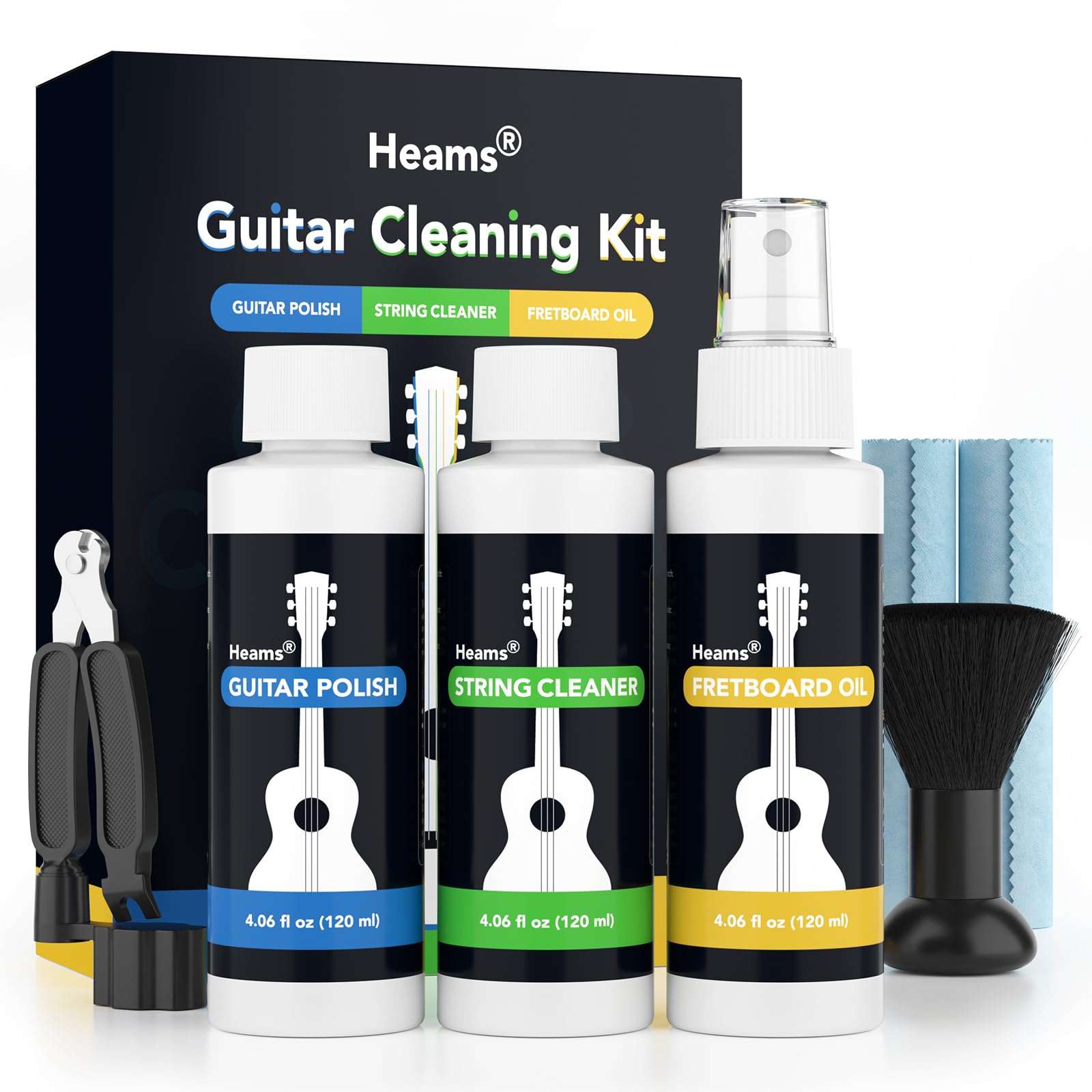
This kit bundles three separate 120-milliliter bottles — guitar polish, fretboard lemon oil, and string cleaner — plus a string winder, a cleaning brush, and two microfiber cloths. That volume is roughly double what most single-bottle brands offer, making it the most economical choice for players who maintain multiple instruments or gig frequently. The polish dries quickly without the hazy bloom that cheap spray waxes produce.
The lemon oil has a lighter viscosity than some vintage-style formulas, which means it absorbs into rosewood without pooling on the surface. Users confirm that the polish blends well and does not leave the overcoating issues seen with budget kits. The string cleaner extends the life of a fresh set by at least a few sessions because it removes the acidic sweat that accelerates winding corrosion.
The included string winder is plastic but functional, cutting restringing time by roughly half. The brush bristles are medium-soft — firm enough to dislodge fretboard dust but not so stiff that they scratch the wood. The only trade-off is that the bundle does not have the brand cachet of Martin or Dunlop, but the actual cleaning performance consistently exceeds expectations for the price.
Why it’s great
- Three full-size 120ml bottles cover body, fretboard, and strings
- Lemon oil absorbs quickly without sticky residue
- Includes winder, brush, and two cloths — ready to use
Good to know
- No brand-level finish safety certification
- Lemon oil may not nourish as deeply as polymer-based conditioners
4. Jim Dunlop System 65 Fingerboard Kit

Dunlop’s System 65 is a three-piece fretboard kit that includes a cleaner, a conditioner, and a 100-percent cotton polishing cloth. What sets it apart is the inclusion of an 800-grit abrasive cloth that lets you polish fret edges and remove light oxidation from the frets themselves. This is a restoration tool, not just a maintenance spray — players report that it strips heavy grime from neglected rosewood fingerboards on electric guitars.
The cleaner lifts decades of sweat and dirt without alcohol-based stripping, and the conditioner restores the natural dark luster that rosewood loses when it dries out. Users confirm that after treating an Epiphone Les Paul fretboard, the fret buzz disappeared because the wood swelled back to its proper dimension. The kit explicitly warns against use on maple fretboards — the abrasive cloth will cut through a sealed maple finish.
The conditioner bottle in some packs arrives less full than expected, but a few drops per string change make the bottle last through half a dozen applications. The polishing cloth is basic but works well with the included liquids. For a guitar tech or a player buying a vintage instrument with a grimy board, this kit delivers a deeper clean than all-in-one sprays can achieve.
Why it’s great
- 800-grit cloth polishes frets and removes oxidation
- Strong cleaner lifts heavy grime from neglected rosewood
- Conditioner restores natural luster
Good to know
- Not suitable for maple or sealed fretboards
- Conditioner bottle may contain less liquid than expected
5. Hricane 8-Pack Guitar Cloths

Microfiber suede cloths are a category of their own within guitar care — they physically trap dust and oils that cotton pushes around. This eight-pack from Hricane uses continuous ultrafine fibers that pick up dirt rather than redistributing it, and the bundle includes four colors so you can assign one cloth per guitar or per task. Each cloth measures 12 by 12 inches, which is large enough to fold into a thick pad for pressure-free wiping.
Users note that one side of each cloth has a printed design that feels slightly rougher than the plain side. The rougher side works well on strings and chrome hardware, while the smooth side is best for the polished body surface. Professional pianists in humid climates report using these with Cory piano polish and achieving a streak-free, glossy shine with no lint shedding — a strong indicator that the fiber bonding is tighter than bargain-bin microfiber towels.
These cloths are not a cleaner themselves, but they are the required partner to any liquid cleaner on this list. A high-quality microfiber cloth prevents micro-scratches that paper towels or old T-shirts cause. For the price, this pack gives you dedicated cloths for each of your instruments plus spares for quick passes after each playing session.
Why it’s great
- Continuous ultrafine fibers trap dirt instead of moving it
- Lint-free even after multiple washes
- Multiple colors help keep one cloth per instrument
Good to know
- Printed side is slightly rougher than plain side
- Not a cleaning solution — used with a separate cleaner
FAQ
Can I use the same cleaner on my acoustic and electric guitar?
How often should I condition my rosewood fretboard?
Will a guitar cleaner remove stickers or adhesive residue from the body?
Final Thoughts: The Verdict
For most users, the guitar cleaner winner is the MARTIN Guitar Polish and Cleaner because it is factory-tested on both nitro and poly finishes and leaves zero residue. If you want a dedicated fretboard conditioning system, grab the MusicNomad F-ONE Care Kit. And for the best value on a full maintenance routine, nothing beats the Premium Guitar Cleaning Kit 120ML which bundles three full-size bottles with all the tools you need.