
An expression pedal that fights your foot, feels loose in the rocker, or introduces noise at the heel position defeats the entire purpose of having one. The right unit disappears under your shoe, translating subtle ankle shifts into precise volume swells, filter sweeps, and parameter modulation without thought.
I’m Mohammad Maruf — the founder and writer behind Drink4Good. My buying guides are built on hours of market analysis and cross-referencing component-level specifications, from potentiometer tolerances and die-cast alloy weight to minimum impedance curves and stereo TRS compatibility.
This guide breaks down seven distinct designs to help you find the best guitar expression pedal for your board, whether you need dual outputs for a synth rig or a compact passive unit that won’t crowd your Wah.
How To Choose The Best Guitar Expression Pedal
Selecting an expression pedal goes beyond picking something that fits your board. You need to match the pedal’s electrical design — passive vs. active, impedance rating, and connector wiring — to the specific device you intend to control. A pedal that works perfectly with a BOSS GT-100 may behave erratically with a Line 6 Helix or a Korg synthesizer.
Wiring Type: TRS vs. Mono TS
The vast majority of expression pedals use a stereo TRS (tip-ring-sleeve) 1/4-inch jack. The tip carries the wiper signal, the ring connects to the positive voltage reference, and the sleeve is ground. Some older or specialized devices, however, expect a mono TS plug with a simple variable resistor. Using the wrong cable type sends the voltage reference to ground, causing the pedal to output a constant maximum value. Always verify your target device’s expression input wiring before buying.
Potentiometer Taper and Sweep Feel
Linear taper pots are standard in expression pedals because they produce a consistent voltage change per degree of rotation. Audio taper pots are normally used in volume pedals to match the human ear’s logarithmic response to loudness. Using an audio-taper pedal for expression duties often leads to a dead zone at the heel where most of the resistance change happens in the first ten degrees of travel. Check the manufacturer’s spec sheet — if it says “linear,” you’re clear for wah, filter, and parameter control.
Construction and Footprint
Heavy-duty aluminum die-cast bodies (like those used by BOSS and KORG) resist cracking after repeated stomping and keep the pedal planted on carpeted stages. Plastic housings keep weight down but can flex over time, creating pivot-point wobble that telegraphs as jittery parameter jumps. Measure your board’s real estate: a full-size pedal like the BOSS FV-500L occupies roughly 11 by 4.5 inches, while compact units like the Zoom FP-02M fit into tight corners.
Quick Comparison
On smaller screens, swipe sideways to see the full table.
| Model | Category | Best For | Key Spec | Amazon |
|---|---|---|---|---|
| BOSS EV-30 | Dual Expression | Controlling two pedals at once | Isolated dual 10 kΩ outputs | Amazon |
| BOSS FV-500L | Low-Impedance Volume/Expression | Keyboard rigs & active instruments | Aluminum die-cast, 2.83″ height | Amazon |
| KORG XVP-20 | Stereo Volume/Expression | Stereo synths & dual-input setups | Stereo TRS, torque adjustment screw | Amazon |
| Hotone Soul Press II | 4-in-1 Wah/Volume/Expression | Space-saving multi-function | True bypass, LED position indicator | Amazon |
| Ernie Ball VP JR 250K | Passive Volume Pedal | Passive guitar signal swells | 250 kΩ audio taper, 2.5 lbs | Amazon |
| Roland EV-5 | Compact Expression | Budget-friendly multi-fx control | Side potentiometer sensitivity | Amazon |
| Zoom FP-02M | Zoom Multi-Effects | Zoom G3n, B3n, G5n users | Designed for Zoom processors | Amazon |
In‑Depth Reviews
1. BOSS EV-30 Dual Expression Pedal

The BOSS EV-30 stands out because it packs two isolated 10 kΩ potentiometers into a single rugged die-cast aluminum chassis. You can plug a stereo TRS cable into each output and independently map, say, wah depth to output one and modulation rate to output two, all with one foot movement. The dual independent range adjustment screws let you set minimum values per channel without affecting the opposite side.
Users consistently report that the EV-30 solved ghost MIDI and jumpy parameter issues they experienced with cheaper plastic pedals. The sweep is smooth across the entire arc, and the included stereo TRS cable mates correctly with BOSS multi-fx units, Arturia Keylabs, and Fender Tone Master Pro rigs. At 2.19 pounds, the pedal stays planted on stage floors without sliding.
Reviewers note that the pedal’s range of motion feels longer than expected, which actually improves fine control over parameters like filter cutoff. The only minor gripe is that the included TRS cable feels a bit flimsy compared to the pedal itself — replace it with a braided TRS cable if you gig hard. The blue-gray color scheme is an aesthetic preference, but the textured foot surface provides reliable grip even in humid conditions.
Why it’s great
- Two isolated expression outputs from a single pedal save board space and afford dual-parameter control
- Rugged die-cast aluminum construction eliminates pivot wobble over years of use
- Independent range trimmers on each output allow precise heel-toe calibration per device
Good to know
- You must use stereo TRS cables — mono TS cables will not work
- The foot surface has minimal traction pattern; some users prefer additional grip tape
2. BOSS FV-500L Low-Impedance Volume/Expression Pedal

The FV-500L is designed specifically for low-impedance signals — think active pickups, keyboard outputs, and synthesizers. Unlike the passive FV-500H variant, this model uses a low-impedance circuit that preserves high-frequency clarity when patched into balanced stereo inputs. The body is a single-piece aluminum die-casting that weighs 3.3 pounds, making it the heaviest and most stable pedal in this guide for carpeted stages.
Expression functionality is built in alongside stereo volume and a tuner output. The minimum volume knob on the side lets you set a floor level so the signal never fully cuts out — useful for keyboardists who need a consistent bed sound while swelling leads. Users with 8-plus years of gigging experience report that the pivot pin eventually wears, but the pedal remains functional far longer than any plastic competitor.
One ergonomic consideration: the pedal’s front frame is tapered, which can cause right-angle 1/4-inch plugs to pop out if the cable is pulled sideways. A simple zip-tie securing the cable to the chassis solves this. The pedal requires no external power, and the stereo input/output jacks allow true stereo routing through a single foot controller.
Why it’s great
- Stereo balanced inputs and outputs for keyboard and synth rigs without signal degradation
- Passive design — no batteries or wall wart needed
- Adjustable tension rod lets you customize heel-to-toe resistance
Good to know
- Large footprint (11.38 x 4.33 inches) may not fit cramped pedalboards
- Tapered front frame can eject right-angle TS plugs under tension
3. KORG XVP-20 Stereo Volume/Expression Pedal
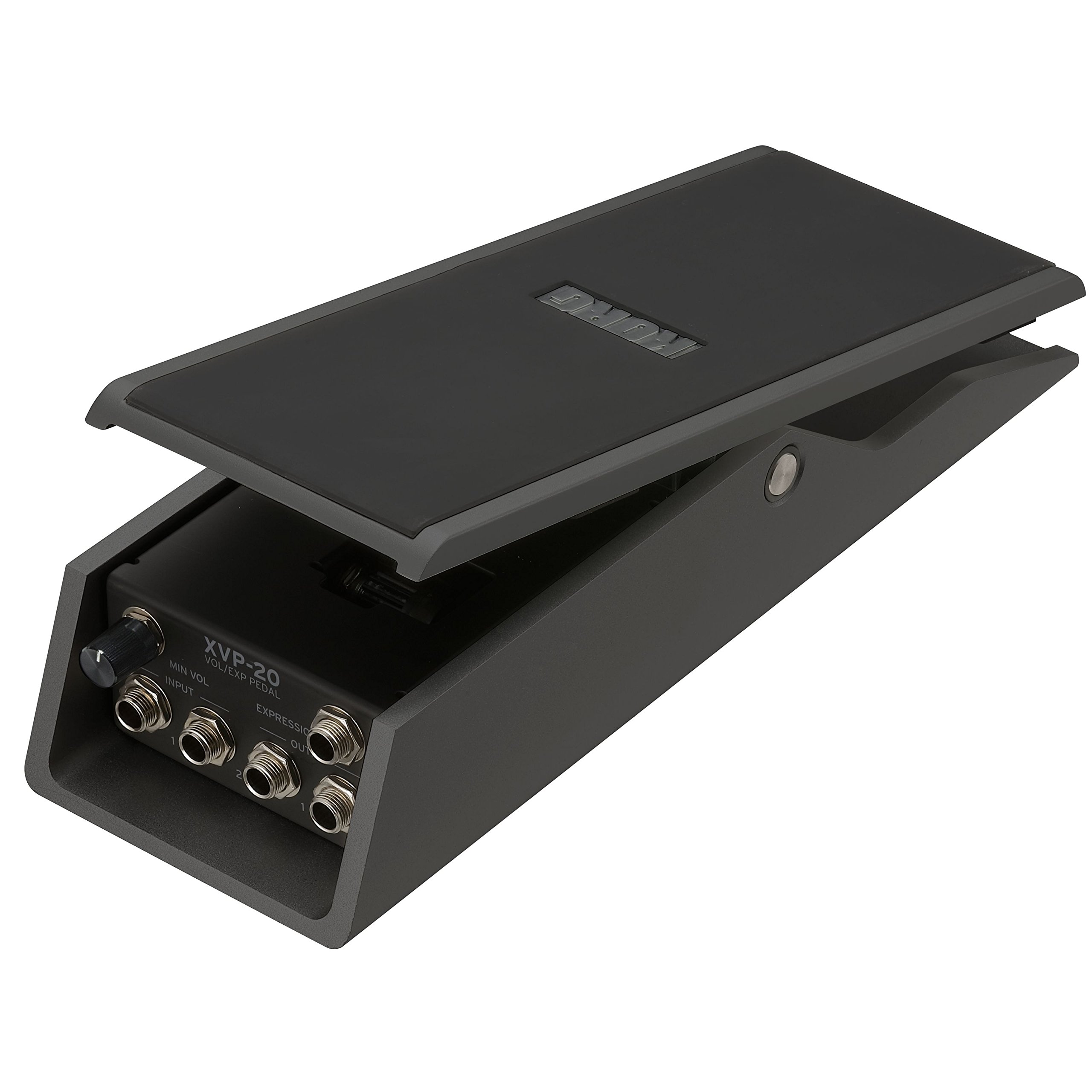
The KORG XVP-20 bridges the gap between a dedicated volume pedal and a precision expression controller. It offers true stereo inputs and outputs via 1/4-inch TRS jacks, plus a separate expression output jack that sends a standard TRS signal to your multi-fx or synth. The torque adjustment screw on the bottom lets you dial in exactly the amount of foot resistance you prefer — from featherlight to stiff — a feature absent from most other pedals at any tier.
The metal chassis and improved gearing mechanism eliminate the cable-fragility issues common on older Ernie Ball designs. Users report that the pedal stays planted thanks to its 2.86-pound weight and rubberized base. The minimum volume control is a dedicated knob on the side, allowing you to set a hard floor for volume swells without ever going silent. This pedal works seamlessly with Godin multi-output guitars and Fractal Audio systems.
At the premium end of the price spectrum, the XVP-20 is best justified when you need stereo routing and expression control from a single pedal. A small number of users reported units that didn’t function as expected out of the box, so test it immediately upon arrival. For mono guitar rigs, the dual-output BOSS EV-30 may offer better value.
Why it’s great
- Torque adjustment screw allows fine-tuning of foot resistance to your playing style
- Stereo volume and dedicated expression output in one compact unit
- Solid metal construction prevents the flex and wear of plastic pedals
Good to know
- Premium price point is overkill for simple mono guitar expression tasks
- Design prioritizes keyboard and synth users over guitar pedalboards
4. Hotone Soul Press II

The Soul Press II combines wah, active volume, passive expression, and a switchable volume/wah mode into a chassis that measures only 6.38 by 3.19 inches. The LED bar along the side shows the current pedal position at a glance — useful on dark stages when you need to know whether your filter is fully open or parked at the heel. True bypass keeps your dry signal uncontaminated when the wah circuit is disengaged.
The wah voicing is inspired by classic ’60s vocal-like sweeps, and internal DIP switches let you adjust the wah’s frequency range and width. Expression mode works beautifully with modelers like the Line 6 HX Stomp and BOSS GT-1000. Users praise the one-click mode toggle that cycles through wah, volume, and expression without needing to bend down and flip physical switches.
The most common criticism is that the volume sweep ramps up too quickly from the heel position, making smooth swells tricky. Some units also exhibit a slight dead zone at the very heel of the expression throw. For players who prioritize wah and expression over volume pedal duties, this is a board-friendly winner. For volume-centric swells, a dedicated pedal like the Ernie Ball VP JR may serve better.
Why it’s great
- Four functions (wah, volume, expression, volume/wah) in a footprint smaller than most wah pedals
- Real-time LED position indicator shows pedal angle at a glance
- Adjustable wah frequency range via internal DIP switches
Good to know
- Volume taper jumps from zero too fast near the heel, limiting swell control
- Plastic housing may not survive heavy tour use as long as die-cast alternatives
5. Ernie Ball VP JR 250K

The VP JR 250K is primarily a volume pedal for passive guitar signals, but its 250 kΩ audio-taper pot and built-in expression functionality (via stereo TRS output) make it a capable expression controller for effects processors that expect a passive resistive load. The brushed aluminum body weighs 2.5 pounds and features a compact profile that sits naturally underfoot without raising your heel uncomfortably high.
The taper switch underneath lets you choose between two different swell rates — a slower, more gradual curve for violin-like swells or a faster ramp for rhythmic volume changes. Users who have been playing pedal steel for decades confirm that the low-profile design doesn’t fatigue the ankle during long sets. The string-driven potentiometer mechanism is easy to service if a string breaks; replacement strings are cheap and the fix takes minutes.
Expression mode requires a stereo TRS cable and works with devices expecting a 250 kΩ pot. The main limitation for expression duties is the audio taper — if your device expects a linear pot for wah or filter control, the sweep will feel uneven. Also, the taper switch is located under the footplate, so you can’t adjust it mid-song without lifting the pedal.
Why it’s great
- Silky-smooth string-driven mechanism with two configurable swell curves
- Compact design fits pedalboards that can’t accommodate full-size volume pedals
- User-serviceable string replacement extends usable lifespan indefinitely
Good to know
- Audio taper pot is not ideal for linear-expression tasks like wah or filter control
- Taper switch located under footplate is inconvenient to change during performance
6. Roland EV-5 Expression Pedal

The Roland EV-5 has been a staple in keyboard and guitar rigs for decades, and its longevity is a testament to the value it delivers. The plastic body keeps the weight down to 1.2 pounds, and the side-mounted sensitivity potentiometer lets you adjust the heel-to-toe voltage range to match your device’s input tolerance. This is critical for achieving full sweep — many users report that the pedal only sends the full 0–127 range when the side knob is set to zero.
Compatibility is broad: the EV-5 works with Roland, BOSS, Kurzweil, and many desktop MIDI controllers via stereo TRS. The included dual TRS cables give you two connection options out of the box. For its placement in the budget-friendly tier, the EV-5 does not require a polarity switch, which some devices need if they expect the wiper on the ring instead of the tip.
The plastic construction is the primary trade-off. Several long-term users report that after years of gigging the pedal finally wore out and needed replacement — a lifespan they still considered excellent value. The volume curve with low-impedance devices like Kurzweil synths feels slightly inferior to premium offerings like the BOSS FV-500L. For home studios and lighter use, however, the EV-5 remains a reliable entry-level choice.
Why it’s great
- Adjustable sensitivity knob lets you fine-tune the sweep range for different devices
- Extremely lightweight design is ideal for fly-in gigs and portable rigs
- Broad compatibility with Roland, BOSS, and many third-party multi-fx units
Good to know
- Plastic housing lacks the rigidity of die-cast metal pedals for heavy touring
- No polarity switch — some devices require custom TRS wiring to function correctly
7. Zoom FP-02M Expression Pedal
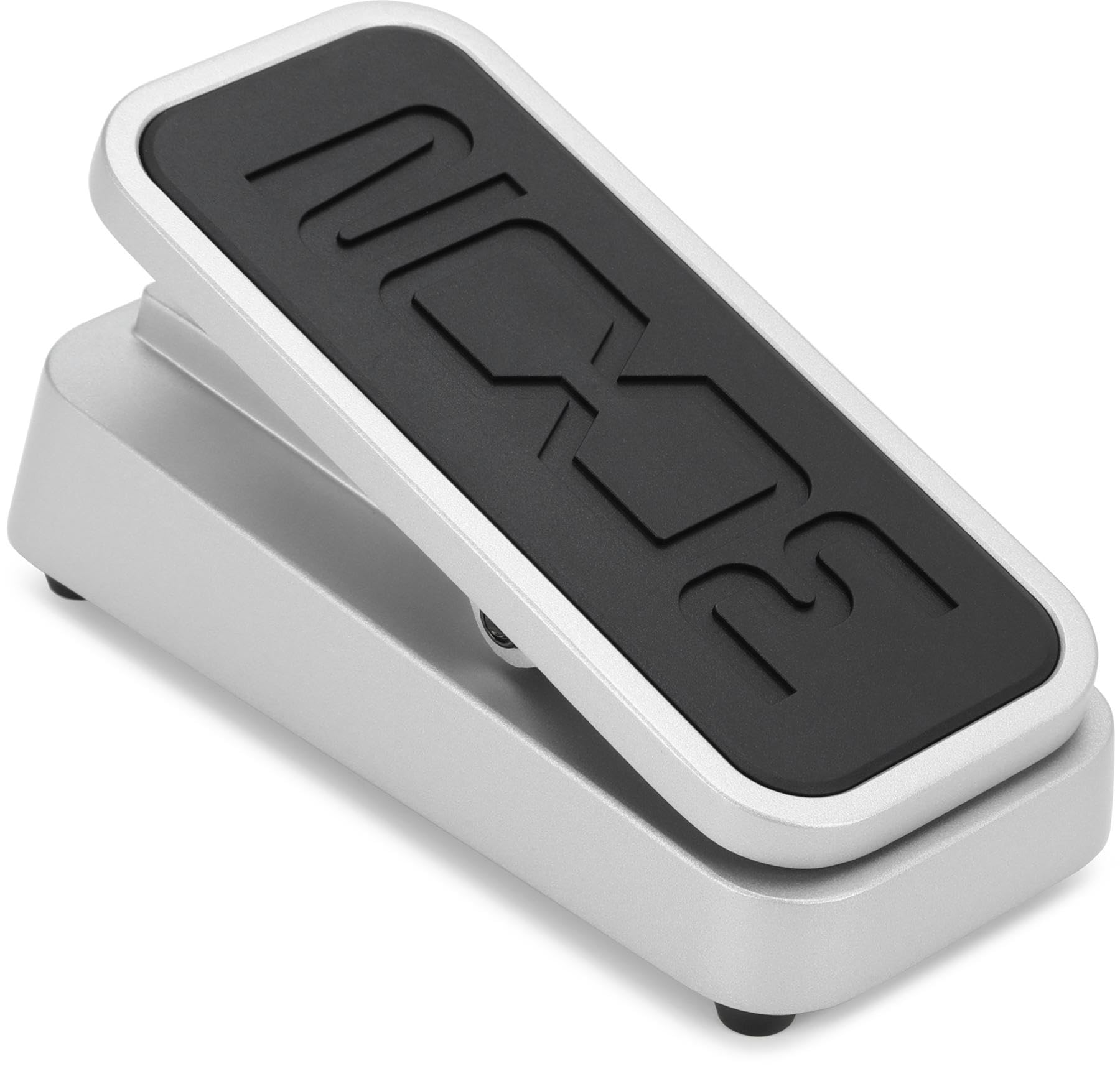
The FP-02M is engineered specifically for Zoom multi-effects processors like the G3n, G3Xn, G5n, B3n, and older units from the 500 and 2000 series. The second revision upgrades the chassis from plastic to metal, which adds noticeable rigidity over the original FP-02. The pedal uses a stereo patch cable (included) to connect to the Zoom’s expression input, and it doesn’t require batteries or external power.
Users confirm it pairs well with the B3N for wah and parameter modulation, and the anti-slip surface keeps your foot planted during active playing. The pedal is smaller and lighter than a Dunlop CryBaby, which helps it fit into crowded board layouts. The included stereo cable is key — using a mono TS cable will not work and may cause erratic behavior.
There are two notable caveats. First, the pedal has no spring-loading or engage/disengage switch — it’s purely a continuous controller, so your Zoom unit must handle auto-engage via firmware threshold settings. Second, the FP-02M is only compatible with Zoom devices; it will not work with BOSS Katana amplifiers or other brand’s expression inputs. If you’re locked into the Zoom ecosystem, this is the seamless choice. If you own mixed-brand gear, consider a universal pedal instead.
Why it’s great
- Plug-and-play compatibility with a wide range of Zoom multi-effects processors
- Metal construction offers better durability than the original plastic FP-02
- Compact footprint saves space on crowded pedalboards
Good to know
- Not compatible with BOSS, Line 6, or other non-Zoom expression inputs
- No spring-loaded return or engage switch — purely a continuous controller
FAQ
Can I use a volume pedal as an expression pedal?
Why does my expression pedal only output maximum value?
How do I fix a dead zone at the heel of my expression pedal?
Final Thoughts: The Verdict
For most users, the best guitar expression pedal winner is the BOSS EV-30 because its dual isolated outputs let you control two parameters simultaneously from a single die-cast unit that will survive years of touring. If you need stereo volume and expression from one pedal, grab the KORG XVP-20. And for a space-saving board where wah, volume, and expression rotate through a compact footprint, nothing beats the Hotone Soul Press II.