
A child’s first guitar needs to match their physical reality — small hands, shorter arm spans, and a developing sense of finger strength. A full-size 40-inch dreadnought overwhelms a seven-year-old, forcing bad posture and discouraging practice. The right guitar for kids cuts the scale length, lowers the string action, and uses lighter-gauge strings that don’t crush tiny fingertips before they build calluses.
I’m Mohammad Maruf — the founder and writer behind Drink4Good. I sort through dozens of kids’ guitar specs each month, comparing body dimensions, nut widths, string gauges, and fret accessibility to isolate the models that actually support a young beginner’s learning curve.
This buying guide covers seven carefully selected models ranging from pint-sized acoustics to rock-ready electric starter kits. Whether your child is three or twelve, you’ll find a guitar for kids that fits their hands, fuels their interest, and won’t need replacement before their first chord progression.
How To Choose The Best Guitar For Kids
Kids outgrow guitars in two dimensions: physically and motivationally. A model that fits today will feel cramped next year, and one that sounds too thin will kill enthusiasm within weeks. Focus on three decisive criteria — body size versus the child’s torso length, string type versus finger sensitivity, and whether the included accessories are actually usable or will frustrate the first tuning session. Acoustic guitars force better finger strength early on, while electric starter kits keep kids engaged with a headphone practice option that spares the household from repetitive open-string strumming.
Scale Length and Body Depth
The scale length — the distance from the nut to the bridge — determines how far apart the frets are. A 30-inch kids’ guitar typically has a 22-to-23-inch scale length, which places frets closer together so small fingers don’t have to stretch. Body depth matters equally: a thick dreadnought body pushes the fretboard away from a child’s chest, forcing their shoulder to hunch forward. Look for a body depth under 3.5 inches for children under eight. The ideal setup lets the child sit upright with the guitar resting on their thigh and their fretting hand falling naturally onto the first position without raising the elbow above shoulder height.
String Type and Action Height
Steel strings deliver brighter tone and require more finger pressure. Nylon strings are gentler on fingertips but produce a softer, thumpier sound that might not match what the child hears in their favorite songs. For beginners under age seven, nylon or light-gauge steel strings (0.010-inch or thinner) are the practical choice — they reduce the pain that typically causes kids to quit after two weeks. Action height — the distance between strings and frets — should sit around 2mm at the 12th fret for steel strings and slightly higher for nylon. Any kit that arrives with buzzing across multiple frets needs a truss rod adjustment; a surprising number of budget kids’ guitars ship with no adjustable truss rod at all, which limits long-term playability as humidity changes.
Included Accessories and Upgrade Path
Starter kits bundle a gig bag, strap, picks, tuner, and sometimes an amplifier. The tuner is the most critical item: an inaccurate tuner makes a child believe they are playing the wrong notes, which destroys confidence before technique can develop. Most bundled tuners are functional at best — a standalone clip-on tuner upgrade costs a few dollars and makes a massive difference. Avoid kits that include a flimsy nylon strap that slips off the strap button; a padded 2-inch strap stays put during standing practice sessions. For electric kits, the practice amp is usually the weakest component — check whether it has a headphone jack for silent practice, because that single feature often determines whether the guitar gets daily use or collects dust after a week.
Quick Comparison
On smaller screens, swipe sideways to see the full table.
| Model | Category | Best For | Key Spec | Amazon |
|---|---|---|---|---|
| Donner DSJ-100 | Electric | Electric starter with full bundle | 30-inch, 5.97 lbs, S pickup | Amazon |
| WINZZ EGM100 | Electric | Wide color choice for young rockers | 30-inch, C-shape maple neck | Amazon |
| ZENY 30-inch Pink | Electric | Complete electric kit for small children | 30-inch, poplar body, 5W amp | Amazon |
| Pyle 34-inch | Acoustic | Larger acoustic for older kids | 34-inch, 20 frets, matte finish | Amazon |
| BESYOU 30-inch Black | Acoustic | Budget starter pack with accessories | 30-inch, laminated basswood | Amazon |
| CB SKY 30-inch Natural | Acoustic | Entry-level acoustic for ages 3-8 | 30-inch, engineered wood body | Amazon |
| Hape 26-inch Blue | Toy Acoustic | Toddler introduction to strumming | 26-inch, 4 tunable strings | Amazon |
In‑Depth Reviews
1. Donner DSJ-100 30-Inch Electric Guitar Kit

The Donner DSJ-100 stands apart from typical kids’ electric guitars because it does not sound like a toy. The single-coil pickup delivers a clear, full tone that matches a standard full-size electric — the reduced body size does not thin out the midrange. Weighing under six pounds, it reduces shoulder fatigue during standing practice sessions that can last thirty minutes or more. The 35cm neck length and 4.3cm fingerboard width are the outcome of Donner’s research into average hand spans for children ages six to twelve, and the matte lacquer surface prevents the inner forearm skin irritation that glossy finishes often cause during extended play.
Out of the box, expect to spend one to two hours on setup. The fixed hardtail bridge lacks adjustable saddles, so intonation correction requires careful tuning to D-standard or one to two notes above standard EADGBE — Donner explicitly recommends this workaround in the manual. Level frets and a straight neck are consistent across units, but many arrive with scratchy fret edges that need a light file pass. The practice amplifier is the kit’s weakest link: it has a usable clean channel and a USB-C rechargeable battery, but the speaker distorts early. The headphone jack solves this — plugging in bypasses the speaker entirely and eliminates the noise that makes parents dread guitar practice.
The bundled gig bag is a 600-denier Oxford material that protects against bumps and drizzle, though the strap included with the bag is thin. The clip-on tuner is inaccurate; most buyers replace it with a smartphone app within a day. For the child who wants to sound like their favorite rock band without fighting a guitar that fights back, the DSJ-100 is the most musically honest option at this price tier. The learning curve is real, but the instrument itself is not the obstacle.
Why it’s great
- Full, clear single-coil tone that inspires practice
- Lightweight poplar body reduces shoulder strain
- Matte finish prevents forearm skin irritation
- Included amp has headphone jack for silent practice
Good to know
- Requires significant setup: fret filing, intonation workaround
- No adjustable truss rod limits future adjustments
- Bundled tuner is inaccurate; use a phone app
- Practice amp distorts at moderate volume levels
2. WINZZ EGM100 30-Inch Electric Guitar Kit
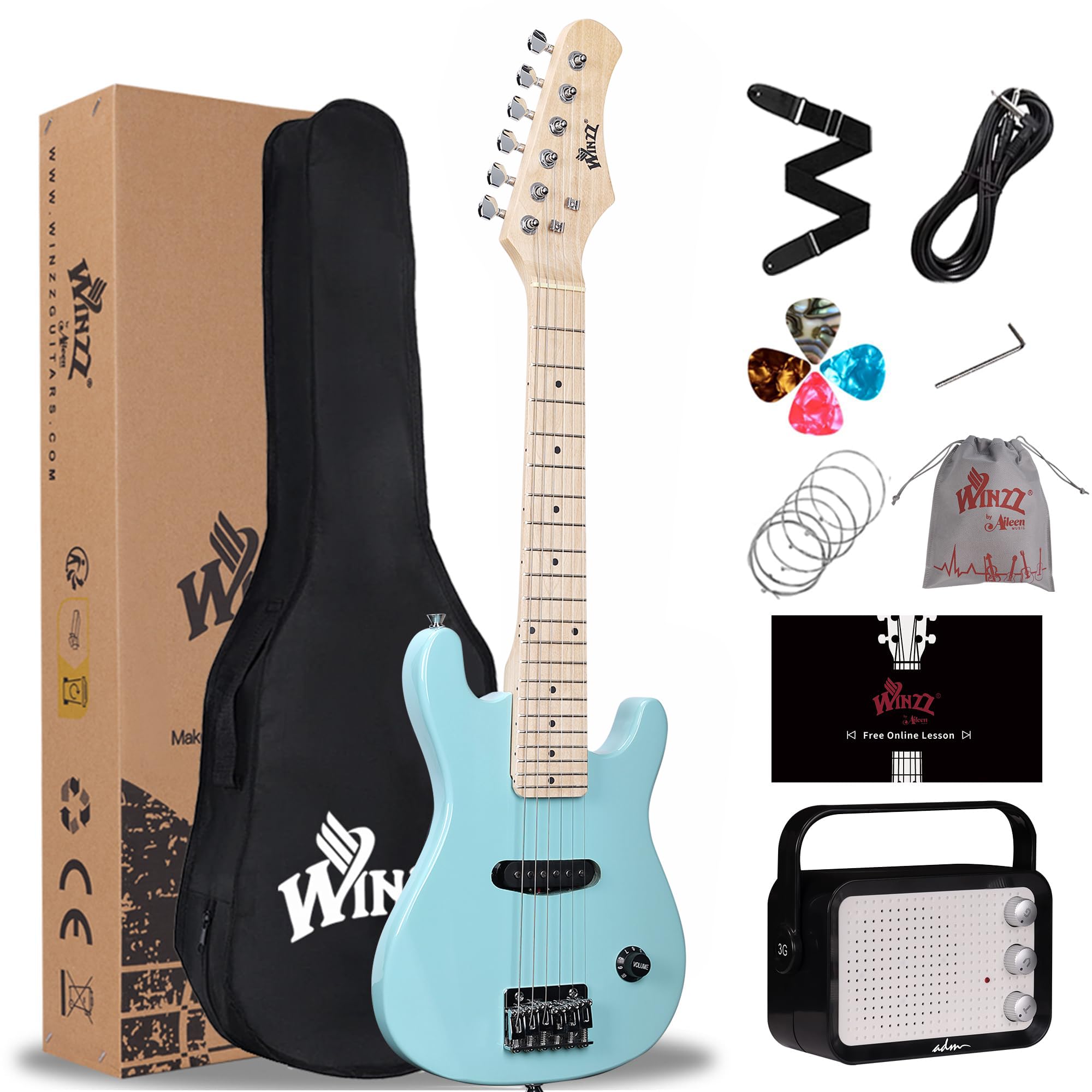
The WINZZ EGM100 targets the kid who wants an electric guitar that looks like a real instrument, not a plastic toy. The C-shape maple neck fits the natural curve of a child’s palm, and the 30-inch scale keeps fret stretches manageable for an eight-year-old. The closed machine heads are a noticeable upgrade over the open-gear tuners found on most budget kits — they hold tune longer and resist slipping when a child aggressively bends strings while learning power chords. The fixed bridge improves pitch accuracy over floating bridge designs that frustrate beginners with constant detuning after aggressive strumming.
Customer feedback consistently praises the color and varnish quality, with multiple users noting the light green finish remains vibrant without chipping even after a year of daily use. The included Cute amplifier has sufficient volume for bedroom practice, and the headphone output prevents the shrill tones that adults associate with children’s first electric guitar experiments. The strap is the clear weak point — multiple reviews describe it as flimsy and recommend replacing it with a 2-inch padded strap before the guitar is used standing up. The gig bag is a 600D Oxford model with double shoulder straps that distributes weight well for school-age children carrying the kit to lessons.
Several guitar shop technicians have examined the EGM100 and confirmed that the fretwork is clean with no sharp edges, the action sits at a reasonable height out of the box, and the neck relief does not require immediate adjustment. The kit lacks a clip-on tuner, which is actually a hidden advantage — it forces the parent to acquire a decent tuner rather than relying on the typical inaccurate bundled unit. The extra pack of strings and the Allen wrench for basic setup add practical value. For the child who dreams of playing rock music and needs an instrument that looks as serious as their ambition, the WINZZ delivers that experience at an accessible price point.
Why it’s great
- Closed tuning machines hold tune reliably
- Smooth fretwork with no sharp edges confirmed by techs
- Vibrant finish resists chipping over long use
- Includes padded gig bag with double shoulder straps
Good to know
- Included strap is thin and needs replacement
- No clip-on tuner in the kit
- Amplifier sound quality is basic, not studio-grade
- Not suitable for children over 10 due to scale size
3. ZENY 30-Inch Electric Guitar with Amp Kit
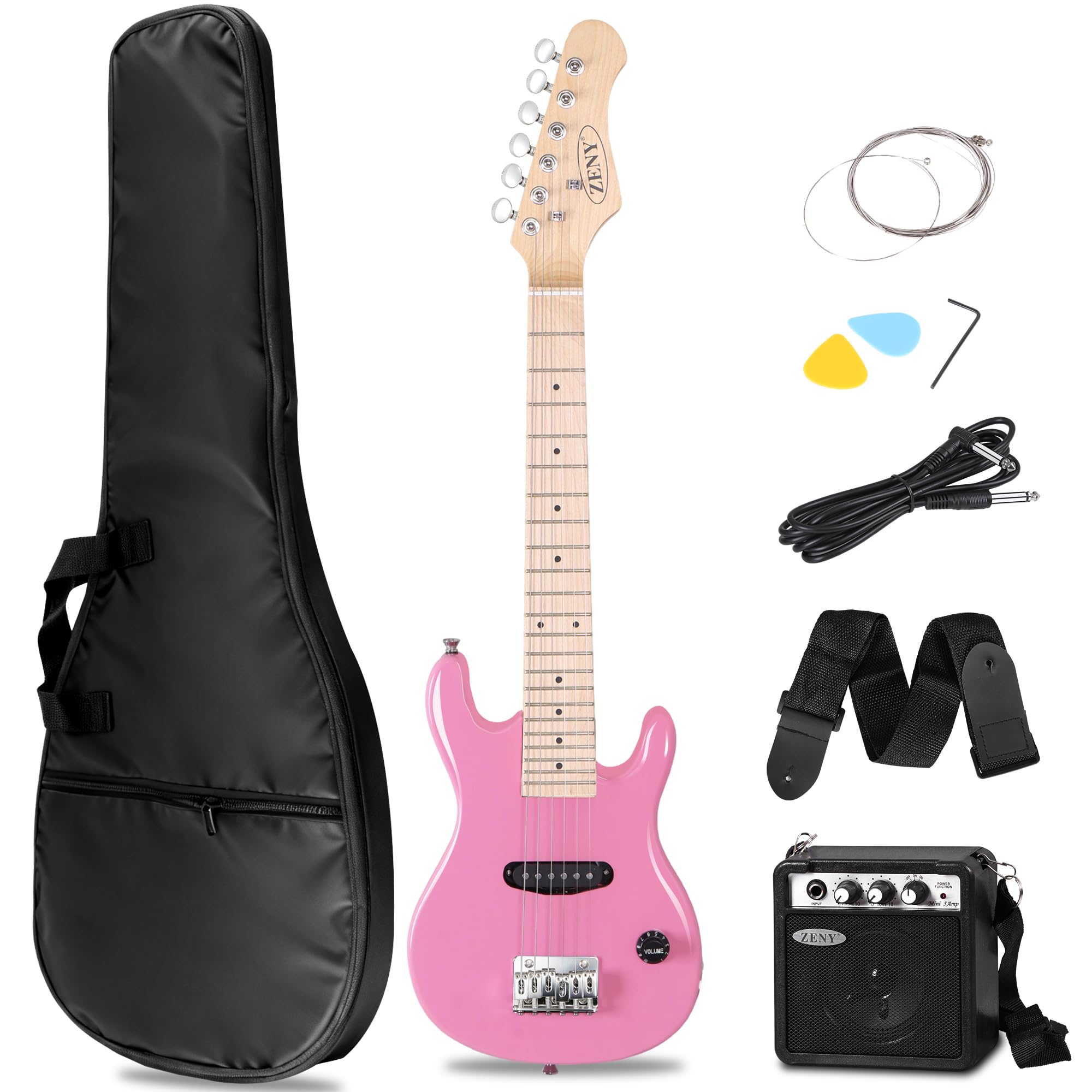
The ZENY 30-inch electric guitar is the pink guitar that shows up in the most birthday party photos for a reason — it is a complete kit that works immediately. The poplar body with a maple neck and rosewood fretboard provides a tonal foundation that sounds warmer than the typical basswood budget build. The adjustable bridge system allows parents to lower the action as the child develops finger strength, a feature missing from many fixed-bridge kids’ guitars. The 5W amplifier includes separate volume, tone, and gain controls, giving the child real control over their sound rather than a single on-off knob.
The kit includes everything: guitar, amplifier, padded gig bag, extra strings, two picks, audio cable, adjustable strap, and a tuning wrench. The gig bag is padded enough to protect the guitar during transport to a friend’s house or a lesson, though it is not rigid enough for checked airline travel. The amplifier’s headphone jack is the most important feature for parents of children under eight — it allows the child to practice while others watch television or read in the same room. Multiple reviews from grandparents report that their seven-year-old grandchildren play daily because the headphone option removes the social friction of loud practicing.
Build quality varies between units. Some arrive with excellent fretwork and stable tuning, while others require a trip to a local guitar shop for a basic setup to eliminate fret buzz at the third and fourth frets. The tuners are functional but feel loose; a drop of thread-locker on the screw threads improves stability. The pink finish is high-gloss and has held up well in user reports spanning two years. For parents seeking a self-contained starter kit that eliminates the need for separate accessory purchases, the ZENY delivers the most complete out-of-box experience in this tier.
Why it’s great
- Complete kit, no extra purchases needed
- Adjustable bridge allows action customization
- Amp has volume, tone, and gain controls
- Headphone jack enables silent practice
Good to know
- Build quality varies; some units need professional setup
- Tuners feel loose; thread-locker may be needed
- Gig bag padding is sufficient but not heavy-duty
- Strap quality is basic; upgrade recommended
4. Pyle 34-Inch Acoustic Guitar Kit

The Pyle 34-inch acoustic bridges the gap between a kids’ 30-inch model and a full-size adult guitar, making it ideal for children ages eight to twelve who have outgrown the smallest scale but are not ready for a 40-inch dreadnought. The 22.9-inch scale length places frets close enough for comfortable chording while providing enough string tension for clear note articulation. The hand-rubbed matte finish on the linden plywood top reduces glare during outdoor practice, and the diecast chrome-plated tuning pegs hold tune far better than the plastic pegs common on sub- acoustics.
The all-in-one kit includes a storage gig bag, six spare strings, a detachable nylon shoulder strap, a cleaning cloth, and picks. The gig bag is a step up from the thin nylon sacks that ship with cheaper models — it has enough padding to protect against bumps during transport to a lesson. The included tuner is basic but functional, though several buyers recommend cross-checking it against a phone app for the first few tuning sessions. The 20 frets provide enough range for a beginner to explore melodies up the neck without running out of notes within the first month of practice.
Steel strings on a 34-inch body generate noticeable finger pressure — younger beginners with soft fingertips may experience discomfort during the first week. Lowering the tuning by a half-step reduces string tension and eases the transition without sacrificing sound quality. Several users noted initial fret buzz at the second fret that resolved with a minor truss rod adjustment using the included Allen key. The brown burst matte finish has a unique textured appearance that some describe as slightly pixelated up close, but it does not affect playability. For the growing child who needs a genuine acoustic instrument rather than a toy, this Pyle delivers a proper playing experience that supports progression into intermediate techniques.
Why it’s great
- 34-inch size provides a bridge between kids’ and adult guitars
- 22.9-inch scale length balances comfort and string tension
- Diecast tuners hold pitch reliably
- Includes spare strings, strap, picks, and cleaning cloth
Good to know
- Steel strings may be painful for very young beginners
- Included tuner is only moderately accurate
- Fret buzz at second fret reported by multiple buyers
- Not an acoustic-electric model
5. BESYOU 30-Inch Acoustic Starter Package
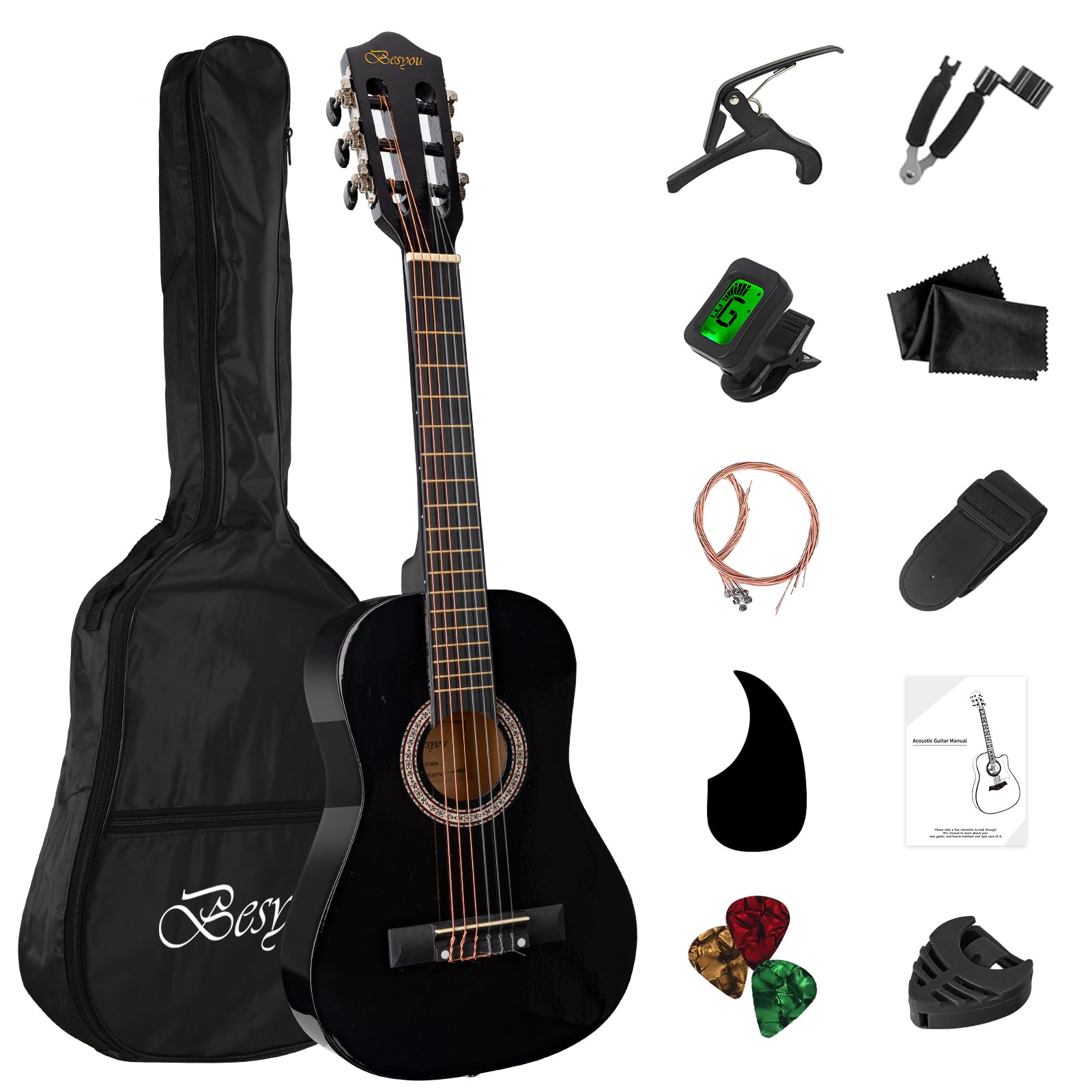
The BESYOU acoustic starter pack packs the most accessories per dollar spent. The 30-inch guitar itself is built from laminated basswood, a common tonewood in the budget tier that produces a warm, balanced sound with decent projection for a small body. The 18 smooth frets and easy-to-hold neck profile suit children age six and up who are ready to move beyond a toy guitar. The high-gloss finish adds a layer of protection against the inevitable drops and bumps that come with beginner practice.
The starter kit includes a digital tuner, capo, three-in-one string winder, nylon bag, three picks, shoulder strap, extra set of strings, pick guards, cleaning cloths, and an instructional sheet. The tuner is the weakest component — multiple reviews report inaccurate readings that caused the child to practice with poorly tuned strings, which trains the ear incorrectly. The capo is functional for basic chord changes but lacks the spring tension of higher-end models. The nylon bag is thin; it protects against dust but offers minimal impact protection.
Customer feedback consistently praises the guitar’s appearance and feel while noting that the accessories are clearly low-cost additions. Several buyers reported that the guitar itself required frequent retuning during the first week as the new strings stretched. The fretboard is made from basswood, which is softer than the rosewood or maple found on premium models, meaning it may show wear faster if the child practices multiple hours daily. For parents who want to test whether their child is genuinely interested in guitar before investing in a higher-end instrument, this kit provides a complete setup that works well enough to build that first spark of enthusiasm.
Why it’s great
- Exceptional accessory count for a budget price
- Laminated basswood produces a warm, balanced tone
- High-gloss finish protects against daily wear
- Includes capo, tuner, and extra strings
Good to know
- Included tuner is inaccurate; use a smartphone app
- Nylon gig bag offers minimal impact protection
- Softwood fretboard may wear faster with heavy practice
- Accessories are clearly budget-tier quality
6. CB SKY 30-Inch Wooden Acoustic Guitar

The CB SKY 30-inch acoustic is the most straightforward entry point for children ages three to eight. The engineered wood body is durable enough to survive drops from a child’s height, and the child-safe paint finish eliminates concerns about toxic coatings during the mouthing phase that some toddlers still exhibit. The medium-size neck and comfortable body dimensions place the guitar at a natural playing position for a seated child, with the fretboard sitting at chest height rather than chin height.
The steel strings are the same material used on adult guitars, but the accurate fret spacing and low string height reduce the finger pressure required to produce a clean note. New strings have elasticity that causes them to go out of tune repeatedly during the first week; this is a characteristic of all steel-string guitars rather than a defect of this specific model. Parents should plan to tune the guitar before every practice session for the first ten playing hours until the strings stretch and stabilize. The carbon fretboard material resists wear better than the basswood fretboards found on similarly priced competitors.
Customer reviews consistently note that the guitar tunes well and plays in tune once the settling period passes. The 31.3-inch total length is smaller than many 30-inch models because the body is proportionally compact. This smaller body works well for children under five who have short torsos but can cause a four-year-old to outgrow the guitar within a year. The traditional steel strings produce a bright, ringing tone that excites young children hearing their first clear chords. For families with a younger child showing interest in music, this is a low-risk investment that confirms whether the interest is genuine before upgrading.
Why it’s great
- Durable engineered wood survives drops and bumps
- Child-safe paint finish for young children
- Bright, ringing tone that motivates practice
- Accurate fret spacing and low string height
Good to know
- New strings require frequent retuning for first week
- Small body may be outgrown quickly by active four-year-olds
- No included accessories — standalone guitar only
- Steel strings may be too firm for very small hands
7. Hape 26-Inch Kids Guitar Toy

The Hape 26-inch guitar is designed specifically for the preschool crowd — ages three to five who are not yet ready for a full six-string instrument but want to imitate older siblings or parents. The four tunable strings are gentler on tiny fingers than steel strings, and the reduced string count simplifies the early learning process by eliminating the low E and A strings that often buzz when a toddler’s finger pressure is inconsistent. The blue lagoon finish is vibrant and the wood construction feels solid in small hands.
The instrument produces a sound closer to a ukulele than a full acoustic guitar due to the smaller body and four-string configuration. This is not a flaw — the higher, brighter pitch matches the vocal range of young children and makes their own strumming sound pleasant rather than intimidating. The 26-inch length fits a three-year-old perfectly, with the body resting comfortably on a lap without the neck extending past the child’s shoulder. Multiple customer reviews mention the guitar surviving being used as a step stool, which speaks to the build durability expected from the Hape brand.
The primary complaint involves the string pegs: one of the four strings tends to pop out of its tuning peg slot during enthusiastic playing. This is a design limitation of the toy-style tuning mechanism rather than user error — applying a tiny drop of wood glue to the peg slot reduces the frequency of this issue. The guitar does not include a strap, which is disappointing for active toddlers who want to stand and march while playing. For introducing the concept of strumming, finger placement, and musical cause-and-effect to a very young child, the Hape is a safe, well-constructed starting point that bridges the gap between a rattle and a real instrument.
Why it’s great
- Four tunable strings are gentle on small fingertips
- 26-inch size fits toddlers aged three to five
- Durable wood construction survives rough play
- Bright pitch matches young children’s vocal range
Good to know
- Strings pop out of tuning pegs during vigorous play
- No included strap for standing practice
- Sounds more like a ukulele than a guitar
- Not suitable for children over age six
FAQ
What age is appropriate for a 30-inch kids’ guitar?
Should a beginner child start with nylon or steel strings?
How often do you need to tune a kids’ acoustic guitar?
Is an electric or acoustic guitar better for a child’s first instrument?
Final Thoughts: The Verdict
For most users, the guitar for kids winner is the Donner DSJ-100 because it offers a legitimate single-coil electric tone in a child-sized body with a headphone jack that makes daily practice possible without parental interference. If you want a colorful electric starter that works out of the box with zero extra purchases, grab the ZENY 30-inch Electric Kit. And for the toddler who needs a gentle first instrument before transitioning to a six-string, nothing beats the Hape 26-inch for durability and age-appropriate sizing.