
Finding the guitar pedal that finally makes your amp and playing style click is the holy grail for any guitarist. The wrong overdrive can turn a pristine tube amp into a muddy mess, while the right one can unlock a lifetime of tonal exploration. This guide cuts through the noise to match seven top contenders to specific rigs and budgets.
I’m Mohammad Maruf — the founder and writer behind Drink4Good. I’ve spent years dissecting schematics, comparing op-amps, and analyzing how clipping circuits interact with different amplifier topologies to separate the true workhorses from the hype.
Whether you’re dialing in a transparent boost for a Fender Twin or shaping chugging high-gain for a 5150, this roundup will help you find your next guitar pedal with confidence and clarity.
How To Choose The Best Guitar Pedal
Not all guitar pedals are created equal. The right choice depends on how the pedal’s clipping circuit, headroom, and frequency response interact with your guitar’s pickups and your amp’s preamp stage. A pedal that sounds glorious through a Vox AC15 can sound thin or harsh through a high-headroom solid-state combo. Here’s what matters most.
Clipping Circuit Topology
The type of diodes used for clipping defines the pedal’s breakup character. Symmetrical silicon clipping (classic Tube Screamer) produces a compressed, mid-humped bark. Asymmetrical clipping (Blues Driver) yields a more open, amp-like sag. MOSFET clipping (Fulltone OCD) delivers higher headroom and a grittier, less compressed feel. Always check the clipping type if you want predictable dynamics.
Headroom and Voltage Rails
Standard 9V operation works for most pedals, but units that run on higher internal voltage rails (like the EHX Soul Food with boosted rails) offer more clean headroom before breakup. This is critical if you use the pedal as a clean boost rather than a distortion source. More headroom equals more definition under heavy picking.
True Bypass vs. Buffered Bypass
True bypass removes the pedal from your signal path entirely when disengaged, preserving your dry tone. Buffered bypass maintains signal strength through long cable runs. If you run many pedals in your chain, a mix of both is ideal. The EarthQuaker Plumes uses true bypass, while the Boss DD-8 uses a high-quality buffer to preserve signal integrity.
Quick Comparison
On smaller screens, swipe sideways to see the full table.
| Model | Category | Best For | Key Spec | Amazon |
|---|---|---|---|---|
| EarthQuaker Plumes | Overdrive | Versatile clean boost + 3 clipping modes | 3 clipping voices / 10mA draw | Amazon |
| Fulltone OCD | Overdrive | Amp-like feel with MOSFET clipping | HP/LP toggle / MOSFET circuit | Amazon |
| Boss DD-8 | Delay | 11 delay modes with built-in looper | 40-second looper / 10s delay | Amazon |
| MXR Carbon Copy | Delay | Warm analog delay with modulation | 600ms analog / MOD switch | Amazon |
| Boss MT-2 | Distortion | High-gain metal with sculpted EQ | Dual-stage gain / 3-band EQ | Amazon |
| EHX Soul Food | Overdrive | Transparent clean boost / Klon clone | Boosted rails / 40mA draw | Amazon |
| Ibanez TS Mini | Overdrive | Classic mid-hump in compact size | 3.5″L / 100mA draw | Amazon |
In‑Depth Reviews
1. EarthQuaker Devices Plumes Small Signal Shredder

The Plumes is an all-analog overdrive with a reimagined tone circuit that delivers three distinct clipping voices via a toggle switch. Mode 1 gives a crunchy amp-like breakup reminiscent of a cranked tube rectifier, Mode 2 is a pure clean boost that preserves your amp’s natural character, and Mode 3 emulates a classic Tube Screamer 808 with full low-end and chime on top. The tone control is unusually usable across its entire sweep, allowing you to sculpt low end without losing clarity.
At only 10mA of current draw and a compact enclosure, it’s pedalboard-friendly and quiet even in high-gain stacks. Customer reports confirm that Mode 2 (the clean boost) works wonders for pushing a Fender Twin or Vox AC30 into natural breakup without adding harshness. The soft-footswitch mechanism also eliminates the mechanical pop common in older designs.
This pedal excels as both a standalone overdrive and a gain-staging tool. The three clipping modes make it exceptionally versatile — you can dial in a smooth blues tone, a transparent volume lift for solos, or a mid-forward rock punch without swapping pedals. It’s a strong contender for the most flexible overdrive in its tier.
Why it’s great
- Three distinct clipping voices cover clean boost, crunch, and Tube Screamer territory
- Superb clarity and dynamics at all gain levels
- Low current draw and true bypass preserve signal integrity
Good to know
- May be too bright for very dark amps or single-coil pickups
- No battery clip included — requires 9V adapter
2. Fulltone OCD Guitar Overdrive Pedal
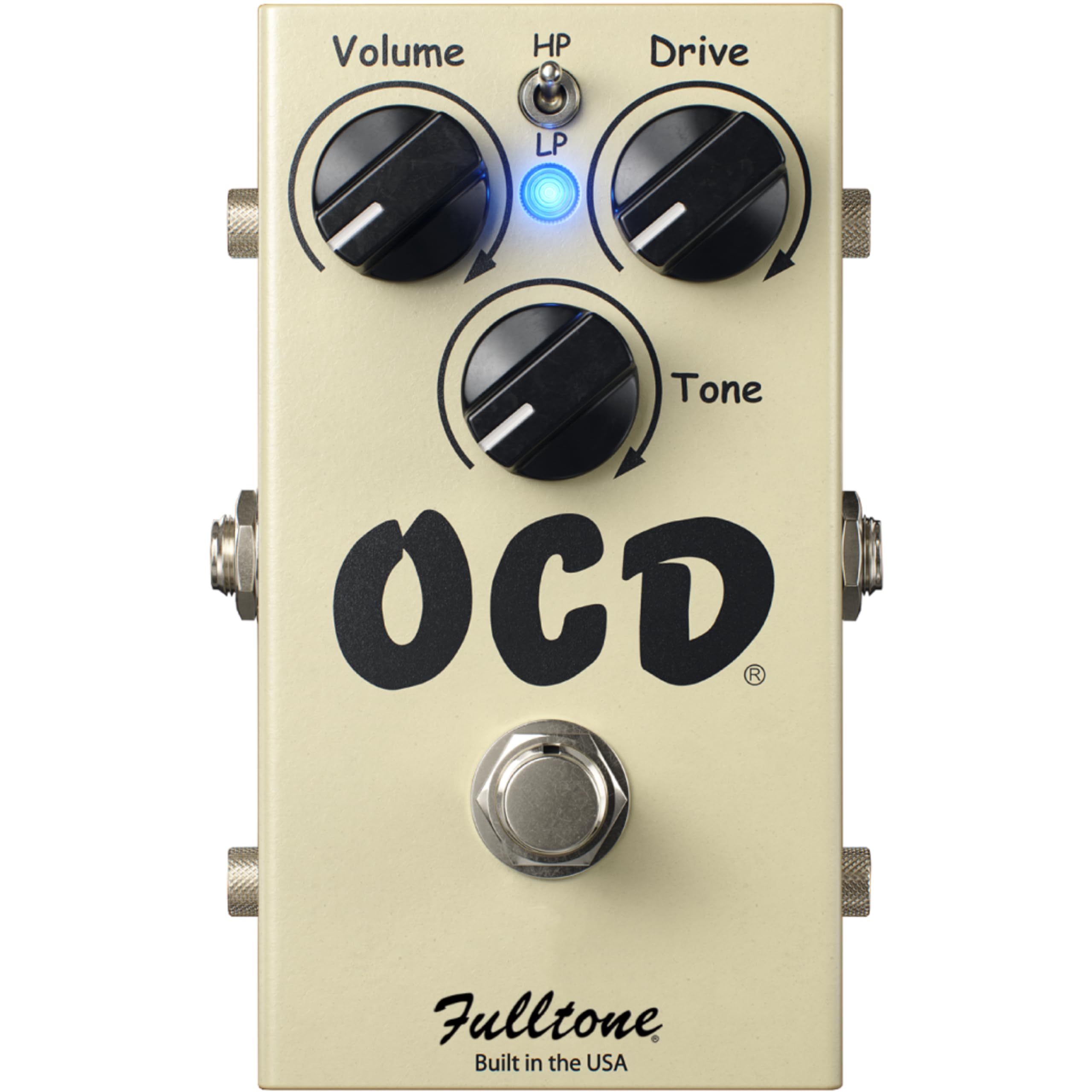
The Fulltone OCD is a legendary overdrive that uses a MOSFET clipping circuit to deliver amp-like compression and dynamic response. The HP (High Peak) mode delivers a more aggressive, British-style upper-mid presence ideal for pushing a Vox or Marshall into percussive grind, while LP (Low Peak) mode offers a smoother, more transparent American voicing that pairs beautifully with Fender or Orange platforms. The Drive control ranges from subtle edge-of-breakup to thick, saturated distortion.
Players report that the OCD reacts naturally to guitar volume adjustments — rolling back your guitar’s volume cleans up the gain without losing punch, similar to how a tube amp responds. The buffered bypass output ensures strong signal delivery through long cable runs, but note that the pedal does not include a power supply. The enclosure is road-ready metal, and the compact footprint fits comfortably on most boards.
For those who want true amp-like feel with MOSFET headroom, the OCD is a benchmark. Customer reviews consistently highlight its synergy with Orange amps and Les Pauls for a tight, Marshall-esque percussive response. The HP/LP toggle makes it one of the most versatile single-drive pedals available for players who own multiple amps.
Why it’s great
- MOSFET clipping provides high headroom and amp-like dynamics
- HP/LP toggle adapts from British bite to American smoothness
- Excellent construction quality — built in the USA
Good to know
- No AC adapter included — must purchase separately
- Can sound harsh through Fender combos without careful EQ dialing
3. BOSS Digital Delay DD-8

The BOSS DD-8 is the most feature-packed compact delay in BOSS history. It offers eleven delay modes including pristine Digital, warm Analog (which mimics bucket-brigade character), Tape, Reverse, Shim, Mod, and the new +RV mode that blends delay with reverb. It can deliver up to 10 seconds of delay time via tap tempo, and the built-in looper records up to 40 seconds with overdub capability. The external footswitch input allows three-pedal control for live loop transitions.
Customer feedback consistently praises the DD-8 for its flawless construction and clean signal path — there is no noticeable volume drop when engaged. The Warm mode is particularly useful for guitarists who prefer analog texture without needing a dedicated analog delay pedal. The looper, while limited to 40 seconds, is musical and intuitive for building layers during practice or live performance.
If you need one delay pedal to handle everything from subtle slapback to ambient soundscapes, the DD-8 is the most versatile option in this price tier. Its buffer ensures your tone remains strong even when used at the end of a long chain, and the compact enclosure frees up valuable board space for other effects. This is a pedal you buy once and rely on for years.
Why it’s great
- Eleven modes cover digital, analog, shim, reverse, and shimmer delays
- Built-in 40-second looper with overdub for live layering
- Boss build quality — road-ready and reliable
Good to know
- Looper is short (40 seconds) compared to dedicated loopers
- 300mA draw is higher than many single-function pedals
4. MXR Carbon Copy Analog Delay

The MXR Carbon Copy is a warm, all-analog delay built around bucket-brigade technology. It delivers up to 600 milliseconds of delay time — more than enough for slapback, rockabilly, and ambient textures. The MOD switch engages an internal modulation circuit that emulates tape echo warble, adding a subtle, organic chorus-like movement to the repeats. The Analog/Dry signal path remains pure, with no digital processing coloring the tone.
Users report that the Carbon Copy sounds rich and lush without the hiss or noise that plagued early analog delays. The repeats naturally darken with each iteration, creating a vintage character that works beautifully for fattening chords and creating dreamy soundscapes. The self-oscillation effect at maximum repeats is musical and controllable, making it useful for experimental players. The true bypass footswitch is silent and rugged.
For guitarists who value warm analog decay over pristine digital clarity, the Carbon Copy is a timeless choice. Its simple three-knob layout (Delay, Mix, Regen) plus a dedicated MOD button makes it intuitive to dial in on stage, and the compact housing fits easily on any board. This is a delay pedal that enhances your playing without needing menu diving.
Why it’s great
- Warm, organic bucket-brigade analog delay with zero digital artifacts
- MOD switch adds tape-like modulation for richer textures
- Silent true bypass and rugged construction
Good to know
- 600ms maximum delay is shorter than most digital delays
- Minor background hiss on long repeat settings
5. Boss MT-2 Metal Zone Distortion
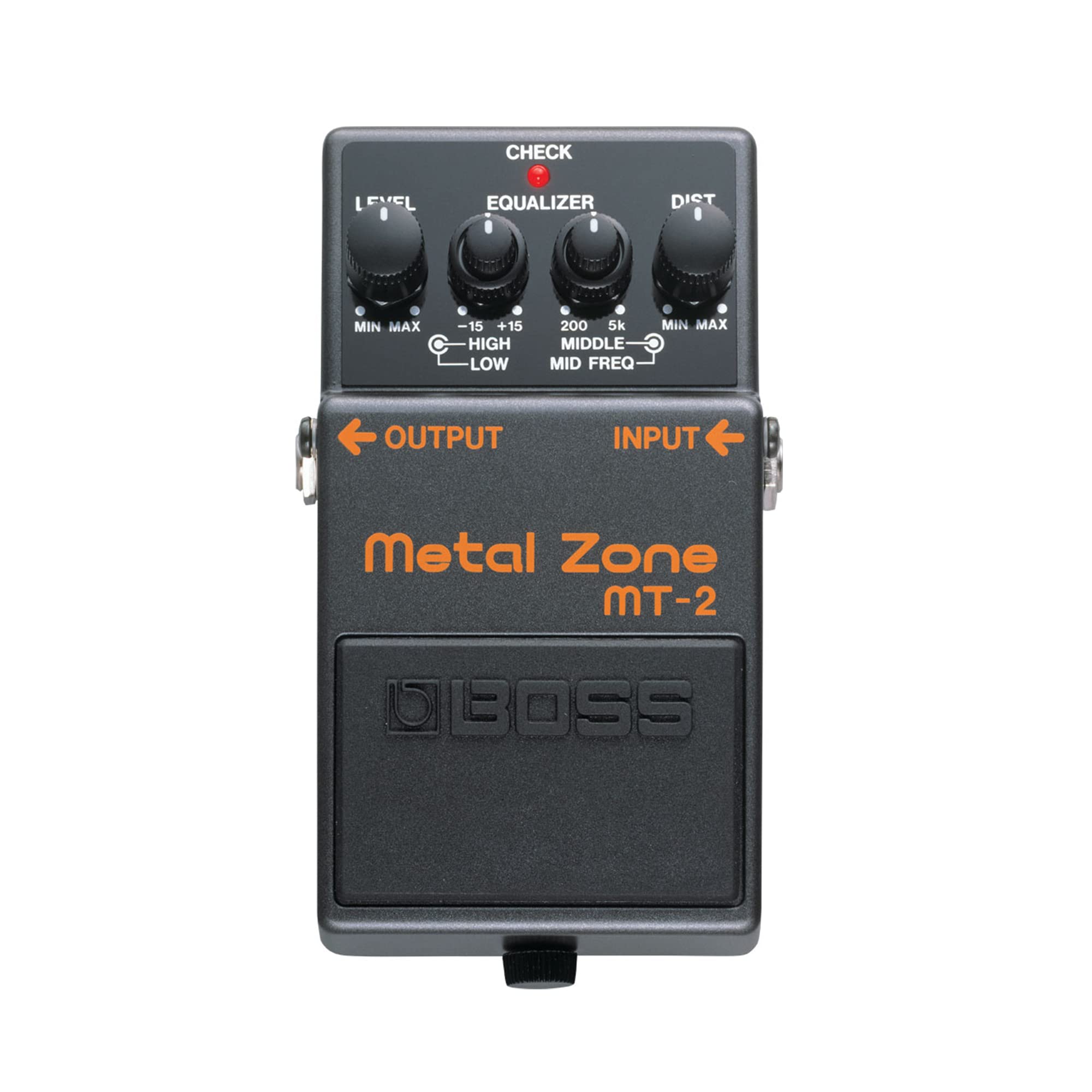
The Boss MT-2 Metal Zone is an iconic high-gain distortion pedal built around a dual-stage gain circuit that produces thick, tight distortion with smooth, singing sustain. The three-band EQ (low, mid, high) is exceptionally powerful — it allows you to sculpt your tone from scooped death metal to pronounced mid-range thrash. The pedal is equally effective when placed in the effects loop of a high-gain amp or in front of a clean channel.
Customer reviews confirm that the MT-2 can sound tinny if the EQ is not carefully dialed, but once you learn the interaction between the controls, it becomes incredibly versatile. It excels at 90s-era rock and sludge metal tones (Alice in Chains, Melvins, Acid Bath) and can also deliver modern, tightly-chugging riffage when paired with a noise gate. The 110mA current draw is modest for a distortion pedal, and the Boss build quality is famously durable.
Despite its reputation as a meme pedal, the MT-2 remains a staple for metal players who need aggressive, saturated distortion on a budget. The dual-stage gain circuit provides more compression and sustain than single-stage designs, making it ideal for soaring solos and dense rhythm playing. It is not subtle, but it is ruthlessly effective for its intended style.
Why it’s great
- Dual-stage gain circuit delivers massive sustain and saturation
- Powerful 3-band EQ for precise tone sculpting
- Legendary reliability — built like a tank
Good to know
- EQ is highly interactive — can sound harsh if not careful
- Best results achieved in an amp’s effects loop
6. Electro-Harmonix Soul Food Transparent Overdrive

The EHX Soul Food is a transparent overdrive that faithfully replicates the classic Klon Centaur circuit at a fraction of the cost. It features boosted internal power rails for extended headroom and note definition, allowing it to act as both a clean boost and a light overdrive without compressing your dynamics. The controls are simple: Volume, Drive, and Treble, with the Treble knob functioning more like a presence control that cuts or boosts highs rather than rolling them off.
Customer feedback highlights its excellent compatibility with tube amps — especially Fender and Marshall — where it adds sustain and clarity without darkening the tone. When used as a clean boost with the Drive set low, it pushes the amp into natural breakup while preserving chord definition. The selectable true bypass or buffered bypass modes let you choose between preserving your dry tone or maintaining signal strength over long cable runs. The enclosure is unpainted metal, durable and utilitarian.
For players who want the Klon magic — that elusive mix of clean boost, subtle overdrive, and mid-forward punch — without spending thousands on a vintage unit, the Soul Food is the most cost-effective entry point. It pairs especially well with single-coil pickups, adding thickness and harmonic bloom without sacrificing the amp’s inherent character.
Why it’s great
- Accurate Klon Centaur tone at a budget-friendly price point
- Selectable true bypass or buffered bypass for chain flexibility
- High headroom preserves note clarity even at high gain
Good to know
- Noticeable pop when engaging the pedal, especially with Drive turned up
- Treble control is subtle — not a traditional tone knob
7. Ibanez Tube Screamer Mini

The Ibanez Tube Screamer Mini packs the iconic TS-808 overdrive circuit into a compact enclosure that measures just 3.5 inches long. It retains the classic mid-hump frequency boost that tightens flabby low end and cuts through a mix, making it a go-to for blues, rock, and metal players. The controls are simple: Drive, Tone, and Level, with the Tone knob allowing precise shaping of the high-frequency roll-off.
Customer reviews confirm that the Mini does not sound like a compromise — it delivers the same warmth and clarity as the full-size version. One user reported that it cleaned up a muddy low-tuned metal rig (drop A# with heavy strings) where a budget clone had added noise and grit. The 100mA current draw is reasonable, but note that the pedal requires a 9V adapter (no battery compartment in the mini enclosure). The footswitch is easy to operate and provides positive engagement.
For guitarists with limited pedalboard real estate, the Tube Screamer Mini is a no-brainer. It delivers the same essential mid-boost, drive character, and muscle that made the original a gold standard, in a footprint that fits anywhere. Whether you need a solo boost, a rhythm tightener, or a standalone overdrive for blues, this mini is a reliable workhorse.
Why it’s great
- Classic TS-808 mid-hump overdrive in a space-saving mini enclosure
- Crystal-clear note definition even with heavy gain settings
- Easy footswitch and solid build
Good to know
- No battery compartment — requires a 9V adapter
- Only offers one clipping voice (silicon symmetrical)
FAQ
Why does my overdrive pedal sound thin through my Fender amp?
What is the difference between true bypass and buffered bypass?
Can I use a distortion pedal as a clean boost?
Final Thoughts: The Verdict
For most users, the guitar pedal winner is the EarthQuaker Plumes because its three clipping modes make it the most versatile overdrive — from clean boost to classic TS crunch to high-gain saturation — all in a compact, low-power format. If you want the amp-like feel of a MOSFET circuit with exceptional dynamic response, grab the Fulltone OCD. And for the ultimate all-in-one delay with a built-in looper, nothing beats the Boss DD-8.