
Practicing scales for an hour shouldn’t leave your lower back begging for a break. Yet most standard stools force a hunched position that pulls your focus away from your fretboard and onto your aching spine. A dedicated stool with lumbar support changes the physics of playing, letting you sit deep in a practice session or a full set without needing to stand and stretch every fifteen minutes.
I’m Mohammad Maruf — the founder and writer behind Drink4Good. I’ve spent years analyzing musician seating hardware, comparing frame welds, foam densities, and weight capacities to separate the designs that genuinely support a player’s posture from those that just look the part.
The right seat can transform how you connect with your instrument. After reviewing dozens of models across every price tier, I’ve put together this guide to help you find the best guitar stool with backrest for your particular playing style, body type, and budget.
How To Choose The Best Guitar Stool With Backrest
Not every padded seat with a back panel qualifies as a proper guitarist’s stool. The demands are different from a standard office chair or a drummer’s throne. You need a seat that keeps your hips at a neutral angle, a backrest that supports your lumbar without interfering with your strumming arm, and a base that stays planted when you lean into a challenging chord shape.
Seat Cushion Density and Depth
Thin foam that bottoms out after thirty minutes forces you to shift weight constantly, which throws off your picking hand’s stability. Look for a seat cushion at least 2.5 inches thick with high-density foam. Softer foam feels great in the store but collapses quickly under sustained use. A firm, resilient cushion distributes your weight evenly and keeps your sit bones stable for longer practice blocks.
Backrest Adjustability and Position
A fixed backrest bolted at a single angle can actually hurt more than it helps. The ideal stool lets you adjust the backrest height and tilt so the pad contacts your lumbar curve — not your mid-back or your tailbone. Guitarists need a backrest that supports the lower spine while leaving the shoulders free to rotate for strumming and fingerpicking. Models with removable backrests offer flexibility for players who switch between sitting and standing positions mid-session.
Frame Stability and Portability Balance
Stools under 10 pounds often flex at the crossbars when a player leans sideways, creating an unnerving wobble. Heavy-gauge steel frames in the 14- to 18-pound range deliver the rigidity you need for confident playing, but that weight adds up if you’re hauling gear to gigs. Look for a folding design with locking hinges that reduce breakdown time without sacrificing structural integrity. Rubber feet with textured treads prevent sliding on smooth stage floors.
Quick Comparison
On smaller screens, swipe sideways to see the full table.
| Model | Category | Best For | Key Spec | Amazon |
|---|---|---|---|---|
| Liquid Stands Guitar Stool | Premium | Gigging musicians needing quick fold | Height adjustable 23-32 inches | Amazon |
| STRICH SGT-30B | Premium | Studio players wanting backrest angle control | Backrest adjusts 2.8-5.3 inches | Amazon |
| Liquid Stands Piano Bench | Mid-Range | Multi-instrument practice rooms | 17.5-22 inch seat height range | Amazon |
| Rockville RDS42 | Mid-Range | Drummer/guitarist crossover use | 5 preset heights 22-31 inches | Amazon |
| Gator Frameworks GFW-GTRSTOOL | Mid-Range | Space-saving combo stool and stand | 2.5-inch thick padded seat | Amazon |
| Pyle PYG60 | Budget-Friendly | Entry-level players on a budget | 300 lb weight capacity | Amazon |
| FreekyFit D05-B | Entry-Level | Workshop and garage multi-use | 14.96-inch diameter seat | Amazon |
In‑Depth Reviews
1. Liquid Stands Guitar Stool Adjustable Stool

The Liquid Stands stool sits at the top of this list because it nails the trifecta of portability, stability, and back support adjustment. Setup takes under a minute thanks to a folding steel frame that weighs under 18 pounds — heavy enough to feel rigid under a 275-pound load, yet light enough to sling over a shoulder between gigs. The seat height spans from 23 to 32 inches, accommodating both shorter players and tall guitarists who need their hips above their knees for proper posture.
What sets this model apart is the fully adjustable backrest depth and footrest height. You can dial the lumbar pad exactly where your lower back needs it, and the footrest adjusts from 4 to 10.5 inches off the ground so your legs stay planted at a natural angle. The anti-slip rubber pads on both the feet and the footrest grip stage floors firmly, eliminating that sliding sensation cheaper stools produce when you shift your weight during a solo.
Gigging musicians will appreciate how the whole assembly folds flat without tools. The backrest stays attached during folding, so you don’t lose small hardware pieces between shows. While the seat cushion is firm rather than plush, that density is exactly what prevents bottoming out during a three-set night. For players who need one stool that travels reliably and supports their back through every performance, this is the pick.
Why it’s great
- Tool-free fold and setup in under a minute
- Adjustable backrest depth fits various torso lengths
- 275-pound weight capacity on a steel frame
Good to know
- Seat cushion is on the firmer side, may require break-in
- At 18 pounds, heavier than ultra-light budget stools
2. STRICH Guitar Stool With Backrest SGT-30B
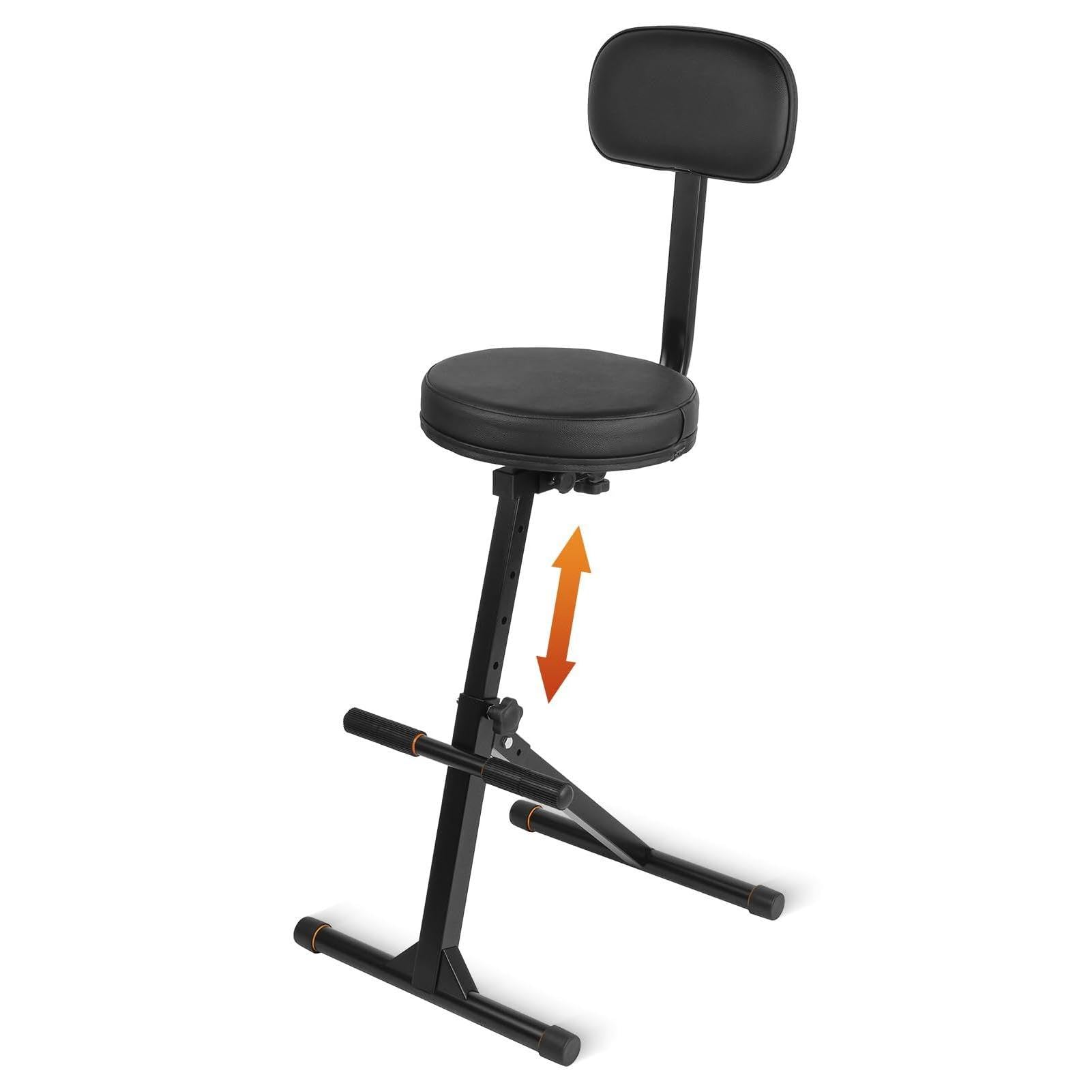
STRICH’s SGT-30B brings genuine ergonomic adjustability to the guitar stool category with a backrest that changes distance from the seat by 2.8 to 5.3 inches. That range lets you sit upright for classical fingerpicking posture or lean back slightly during long recording sessions. The all-steel frame supports up to 240 pounds, and the high-density foam seat holds its shape through hours of use without sagging at the edges.
The integrated guitar hanger on the backrest is a thoughtful addition for studio players who need quick instrument swaps between takes. Soft padding on the cradle arms protects the guitar’s finish, and the hanger folds flat when not in use. The seat also provides five height settings between roughly 22 and 31 inches, giving enough range for players from about 5’2″ to 6′ who want their feet flat on the floor.
Assembly is genuinely tool-free — the seat and backrest supports pop into place with locking pins, and the main frame folds for transport. Some users note that the footrest can slip at the highest seat height setting, so heavier players may want to lock it with a secondary clamp. The leather-like covering is breathable and easy to wipe clean after sweaty practice sessions. For home and studio use where frequent folding isn’t required, this stool delivers premium comfort.
Why it’s great
- Backrest distance adjusts for upright or relaxed postures
- Tool-free assembly with locking pin design
- Guitar hanger protects finish with soft cradle padding
Good to know
- Footrest may slip at max seat height for heavier players
- Guitar hanger can fall off during transport if not secured
3. Liquid Stands Piano Bench Adjustable Stool

Though marketed as a piano bench, this Liquid Stands model works exceptionally well for guitarists who prefer a wider, more stable seating surface than a round throne provides. The 18.5-inch wide seat gives your legs room to shift positions during long practice sessions, and the 17.5- to 22-inch height range covers the lower seating positions that fingerstyle and classical players often prefer. The backrest adjusts from 27.2 to 36.2 inches, accommodating players with longer torsos.
The assembly process takes roughly 30 minutes using the included Allen wrench, and the rubber feet feature adjustable threading that compensates for uneven floor surfaces — a detail rarely seen at this tier. At 14 pounds, the stool is light enough to move between rooms without strain, yet the alloy steel frame eliminates the wobble that lighter tubular stools develop. The plush seat cushion uses a medium-density foam that strikes a good balance between immediate comfort and long-session support.
Multi-instrument households will find this stool particularly useful because the wide bench design works equally well for keyboard players and guitarists. The backrest provides solid lumbar support without being intrusive, and the stainless steel finish resists rust in humid basement studios. Some users note that the crossbar requires gentle hammering during assembly, but once assembled the stool remains creak-free and stable. It’s a smart investment for players who value a furniture-grade build in their practice space.
Why it’s great
- Wide 18.5-inch seat offers leg room for shifting positions
- Adjustable rubber feet level on uneven floors
- Stainless steel frame resists corrosion in humid studios
Good to know
- Assembly requires about 30 minutes with Allen wrench
- Crossbar may need gentle force to seat during setup
4. Rockville RDS42 Adjustable DJ/Guitar/Drum Throne

Rockville’s RDS42 straddles the line between drummer throne and guitarist stool with five preset seat heights ranging from 22 to 31 inches. The 12-inch circular seat packs 2.75 inches of foam padding, making it one of the thicker cushions in this roundup. While the foam is on the denser side, that firmness prevents the bottoming-out sensation that plagues softer cushions during extended play. The removable padded backrest attaches with adjustable hardware that lets you tilt the lumbar support to your preferred angle.
The cushioned footrest is a standout feature: it adjusts up to 12 inches off the ground with a rubberized top surface that keeps your shoe sole from slipping. This is especially valuable for guitarists who anchor their left foot on a footrest while playing standing parts and then drop into a seated position. The folding steel frame collapses without tools and fits behind a speaker cabinet or in a car trunk for transport. At roughly 14 pounds, it’s portable enough for regular gigging.
One trade-off is the 12-inch seat diameter, which feels restrictive for players with wider hips or those who like to shift their seating position between songs. The cushion also uses a pleather cover that some users report wearing through within a year of heavy use. For the price point, the Rockville delivers good adjustability and a stable footrest, but expect the seat to be the first component that needs upgrading if you’re a full-time performer.
Why it’s great
- 2.75-inch thick foam cushion is among the deepest in class
- Adjustable footrest with rubberized top reaches 12 inches
- Foldable steel frame transports easily without tools
Good to know
- 12-inch seat diameter feels small for larger players
- Pleather cover may show wear within a year of daily use
5. Gator Frameworks Foldable Guitar Stool GFW-GTRSTOOL

Gator Frameworks solves a space problem with its 2-in-1 design: a padded stool with an integrated guitar stand built into the frame. The 2.5-inch thick foam seat provides enough cushioning for practice sessions and short gigs, while the fold-up guitar cradle and retractable neck yoke hold one instrument securely when you need both hands for tuning or adjusting pedals. The stainless steel frame folds compactly and weighs about 9 pounds, making it the most portable option on this list.
The built-in footrest bar wraps around the front of the stool at a comfortable height that keeps your legs from dangling. This is a real benefit for shorter players who struggle to find stools low enough to plant both feet flat. The rubber feet incorporate red safety trim that improves visibility on dark stages — a small detail that reduces tripping hazards during load-in and load-out. Customer feedback consistently praises the stool’s stability despite its light weight, with one user reporting it securely held a Taylor 12-string in the cradle.
The trade-off is the lack of a backrest on this model. While it’s not technically a stool with backrest, it earns a spot here because the integrated stand effectively serves as a rear support structure when you lean back against the guitar cradle assembly. The cushion runs firm, which some players prefer for posture, but those accustomed to plush seating may find it rigid. If your priority is a portable 2-in-1 unit that saves space at home or on stage, this Gator Frameworks stool delivers exceptional value.
Why it’s great
- Integrated guitar stand saves floor space in small rooms
- 9-pound folded weight is the lightest portable option here
- Rubber feet with red trim improve stage visibility
Good to know
- Not a true backrest stool — cradle provides limited rear support
- Rubber tubing on guitar stand may need adhesive reinforcement
6. Pyle Adjustable Guitar Seat PYG60
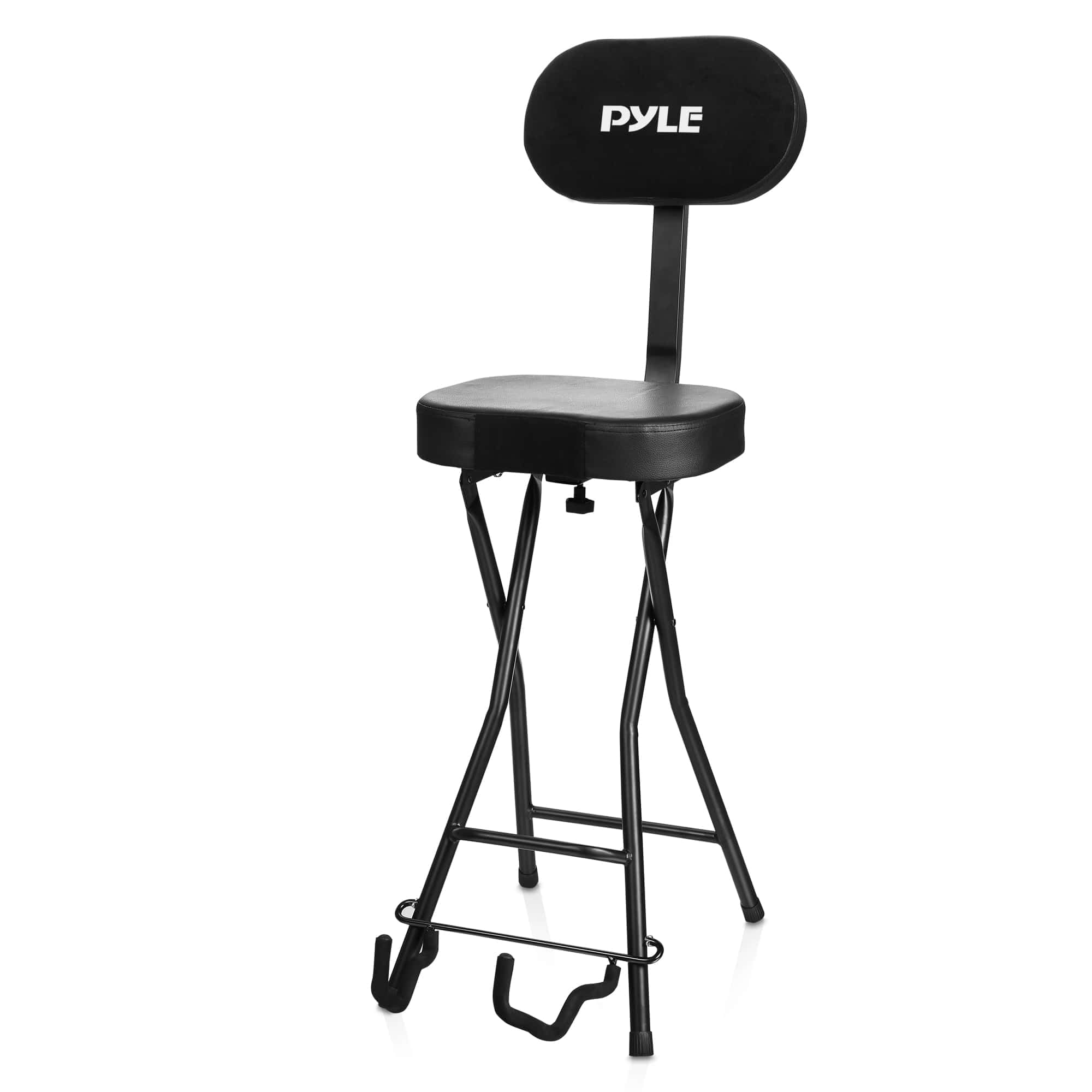
Pyle’s PYG60 enters the budget tier with a feature set that punches above its price point: a removable ergonomic backrest, a built-in guitar stand with EVA foam padded cradles, and a crossbar footrest. The steel frame supports up to 300 pounds, matching the capacity of stools costing significantly more. The seat cushion is thick enough for practice sessions, though the foam uses a lower density than premium models, meaning it will compress faster under daily use.
The collapsible design with quick-release pins lets you break the stool down for storage in tight spaces. Removing the backrest reduces the package even further, which is helpful for apartment dwellers. The integrated guitar stand folds out from the side and uses rubberized arms that won’t scratch your instrument’s finish. Beginner and intermediate players will find this setup particularly convenient for a practice corner where every square foot counts.
Build quality is where the budget price shows. Several users report that the crossmember welds can fail under heavier loads after a couple of months, with one account of a 235-pound user experiencing a snap after 25 uses despite the 300-pound rating. The backrest angle is fixed, so taller players may find the lumbar support hits too high or too low. For light practice use and smaller players, the Pyle offers good value, but full-time performers or larger guitarists should budget for a more robust frame.
Why it’s great
- Removable backrest and quick-release pins for compact storage
- EVA foam guitar cradles protect instrument finish
- 300-pound capacity on paper for larger players
Good to know
- Weld quality inconsistent — crossmember failures reported
- Fixed backrest angle may not suit all torso lengths
7. FreekyFit Shop Stool With Backrest

FreekyFit’s D05-B is technically a mechanic’s garage stool, but its adjustable height, 360-degree swivel seat, and padded lumbar backrest make it a viable option for guitarists who want a wider, more industrial seating platform. The 14.96-inch diameter seat is significantly larger than the typical 12-inch musician throne, giving players room to shift their hips between strumming and fingerpicking positions. The pneumatic height adjustment spans 24.49 to 30 inches, covering the range most guitarists need for proper leg angle.
The memory foam seat cushion measures 2.76 inches thick and uses a PVC surface that resists water and oil — actually useful for players who practice in mixed-use spaces like a garage or workshop. The backrest measures 6.69 inches high and 12.6 inches wide, providing targeted lumbar support that prevents the lower back fatigue common during extended practice. The 360-degree swivel is a bonus for guitarists who rotate toward a pedalboard or sheet music stand without lifting their weight off the seat.
The primary drawback for pure musical use is the lack of portability. This stool does not fold, and its 14.66-pound weight with a non-collapsible base makes it unsuitable for gigging. The plastic floor protector caps on the steel feet are poorly sized and may pop off, though a quick replacement with standard hardware store caps solves the issue. For players who want a heavy-duty stationary stool for their permanent studio or workshop setup, the FreekyFit delivers strong support at an entry-level price.
Why it’s great
- 15-inch seat diameter offers more room than standard thrones
- Pneumatic height adjustment and 360-degree swivel
- PVC seat cover resists stains and cleans easily
Good to know
- Non-folding design is not portable for gigging
- Plastic foot caps may need replacement with metal equivalents
FAQ
Does a backrest on a guitar stool actually improve playing posture or just add weight?
Why do some guitar stools use a round seat and others a rectangular bench shape?
How do I know if a guitar stool’s height range fits my body?
Final Thoughts: The Verdict
For most users, the best guitar stool with backrest winner is the Liquid Stands Guitar Stool because it combines a tool-free folding design, full adjustability across seat height and backrest depth, and a stable steel frame that supports 275 pounds without flex. If you want a studio-focused seat with precise backrest angle control, grab the STRICH SGT-30B. And for a budget-conscious entry-level setup that still includes a removable backrest and a guitar stand, nothing beats the Pyle PYG60.