
Dialing in a drop C tuning on a standard 25.5-inch scale guitar is a tension trap. The thickest string goes completely floppy, the high strings buzzing against the frets, and your palm-muted riffs end up sounding like wet cardboard instead of the tight, percussive chug you’re after. The wrong set kills your attack, your sustain, and your intonation, forcing constant retuning between songs.
I’m Mohammad Maruf — the founder and writer behind Drink4Good. I have spent the last fifteen years analyzing hardware specifications across thousands of musical instrument SKUs, cross-referencing real-world customer feedback with materials engineering data and marketplace sales velocity to separate marketing hype from actual performance.
In this guide, I break down the five string sets that actually deliver usable tension, tonal clarity, and playing stability for the drop C tuning range. Whether you rip baritone riffs on a six-string or need heavy-bottom gauge sets for a seven-string conversion, this roundup of the best guitar strings for drop c gives you the concrete specs and real-world verdicts to stop guessing and start chugging.
How To Choose The Best Guitar Strings For Drop C
Drop C tuning (C-G-C-F-A-D) drops the whole guitar a full step, then the low E down another two frets to C. That means the thickest string is four semitones lower than standard tuning, which cuts tension dramatically. A standard .046″ or even .049″ string will feel like cooked spaghetti under your pick. The entire selection process for a drop C set revolves around restoring that lost tension without turning your fretboard into a piano wire workout.
Gauge — The Tension Foundation
For drop C, a .052″ or .054″ wound sixth string is the minimum viable option. Anything thinner produces excessive flutter and pitch drift during aggressive palm muting. The high strings also need a bump: a plain .010″ set feels too slack, so most drop C players land on either .011″ or .012″ for the high E. Balanced tension sets (like 11-50 or 12-54) provide even resistance across all six strings, which is why 11-52 and 12-54 are the two most common gauge ranges in this category.
Core Wire Construction
Hexagonal core wires lock into the outer wrap more tightly than round-core strings. That mechanical grip translates to better tuning stability when you’re bending or divebombing a Floyd Rose. Round-core strings feel more flexible under the fingers but can lose pitch faster during aggressive note bending in drop tunings. For drop C, where you are already fighting slackness, a hex core provides the mechanical advantage worth paying attention to.
Coating vs Uncoated
Coated strings (polymer or nano-coating) last two to four times longer than uncoated sets because the barrier stops sweat and moisture from corroding the nickel or steel windings. The tradeoff is a slightly smoother, less “grabby” feel that some players describe as reduced string-to-finger texture. For heavy drop C riffs, coating is beneficial because the extra longevity offsets the higher price of heavy-gauge sets, and the slick surface can actually reduce fret noise during fast riffing. Uncoated sets deliver more raw brightness out of the box but die faster if you play long sets or live in humid environments.
Quick Comparison
On smaller screens, swipe sideways to see the full table.
| Model | Category | Best For | Key Spec | Amazon |
|---|---|---|---|---|
| Dunlop Heavy Core 12-54 | Premium | High-tension stability for aggressive riffing | Heavy Core Construction, .012-.054 | Amazon |
| Ernie Ball Beefy Slinky 11-54 (3-Pack) | Mid-Range | Balanced 3-pack value for drop C/D | Nickel Wound, .011-.054 | Amazon |
| DR Strings Red Devils 11-50 | Mid-Range | Coated longevity with visual flair | Red K3 Coating, .011-.050 | Amazon |
| Ernie Ball Flatwound 12-52 | Premium | Mellow, vintage tone for studio jazz | Stainless Steel, Polished, .012-.052 | Amazon |
| LEKATO 11-52 (10-Pack) | Budget | Best value per set for frequent changers | Nano-coated, Steel Core, .011-.052 | Amazon |
In‑Depth Reviews
1. Dunlop Heavy Core 12-54 (2-Pack)

The Dunlop Heavy Core set is engineered specifically for dropped and lowered tunings — not adapted from a standard-light formula. Its .012-.054 gauge range provides thick tension across the board, and the unique Heavy Core construction uses a proprietary core-to-wrap ratio that keeps the low C string tight under aggressive palm muting without choking the high strings. Customers consistently report stable tuning even after heavy 20-minute riff sessions in B and C standard tunings, which is rare for a non-baritone set. The set also ships in VCI (Vapor Corrosion Inhibitor) paper envelopes instead of plastic, which keeps the strings rust-free without creating micro-plastic waste in your case.
The pick attack feel is notably stiff compared to a standard .010 set — expect to fight the strings slightly on pull-offs. That resistance translates directly to clarity: each note cuts through a dense distorted mix without the flabby, phase-canceling wobble you get from lighter sets. The midrange frequencies stay focused, and the high end remains smooth rather than piercing, which is useful for lead lines that sit on top of chugging rhythm parts. Reviewers on two-pickup Schecters and Les Pauls noted that the .054 low string may require a slight pickup height adjustment and a nut slot file to seat cleanly without buzz.
For durability, the nickel-plated steel wrap holds its brightness well beyond the two-month mark if you wipe the strings after each session. The 2-pack bundle brings the per-set cost down to the mid-range tier, making this a realistic long-term choice for heavy players. The only genuine downside is the physical resistance: beginners used to light-gauge strings may find the hand fatigue too much.
Why it’s great
- Core wire-to-wrap ratio optimized for low tunings — not a standard set relabeled
- Superior tuning stability reported over months of heavy drop C use
- VCI protection eliminates rust without plastic packaging
Good to know
- Requires nut slot filing or widening for the .054 low string on many guitars
- Pickup height likely needs adjustment after installation due to higher tension
- Slightly rougher finger feel than coated strings
2. Ernie Ball 2627 Beefy Slinky 11-54 (3-Pack)

The gauges run .011, .015, .022P, .030, .042, .054 — that is a beefed-up low end with a slightly lighter plain E compared to a 12-54 set. This makes the Beefy Slinky a good middle ground if you want more tension than a standard .010 set but don’t want the full stiffness of a Dunlop Heavy Core. The nickel wound construction produces a classic warm attack with articulate lows, avoiding the overly bright top end that stainless steel strings can introduce during gain-heavy playing.
In drop C, the .054 low string holds tuning well for steady riffing and single-note runs, though aggressive hybrid picking or heavy tremolo use may cause the G string (.022P) to drift slightly due to its plain construction. The set is coated, which Ernie Ball describes as a “coated” finish — in practice, the coating is minimal, so expect a lifespan of about 4-6 weeks of daily play before noticeable brightness loss. Customers who used these for 10+ years on SG and Les Paul bodies tuned to drop D and drop C confirm the string takes the tuning well and holds pitch without requiring a truss rod overhaul.
The 3-pack bundle is the real value proposition: you get three complete sets at a per-pack cost that undercuts nearly every other heavy-gauge option. That makes it ideal for players who change strings every few weeks or maintain multiple guitars in the same tuning. The tradeoff is that the plain strings (.011, .015, .022P) can feel slightly floppy if you prefer a completely rigid feel under the pick, but for most drop C players, the .054 anchor provides enough bottom-end stability.
Why it’s great
- 3-pack brings per-set cost to entry-level territory — great for regular changes
- Lowest string (.054) provides excellent tension for drop C without being too stiff
- Proven track record — 10+ years of positive reviews for down-tuned playing
Good to know
- Coating is minimal — expect 4-6 weeks of lifespan with daily play
- Plain G string can drift during heavy vibrato or tremolo use
- Not ideal for full baritone tuning (B1 or lower) without additional tension
3. DR Strings Red Devils 11-50 (Coated)
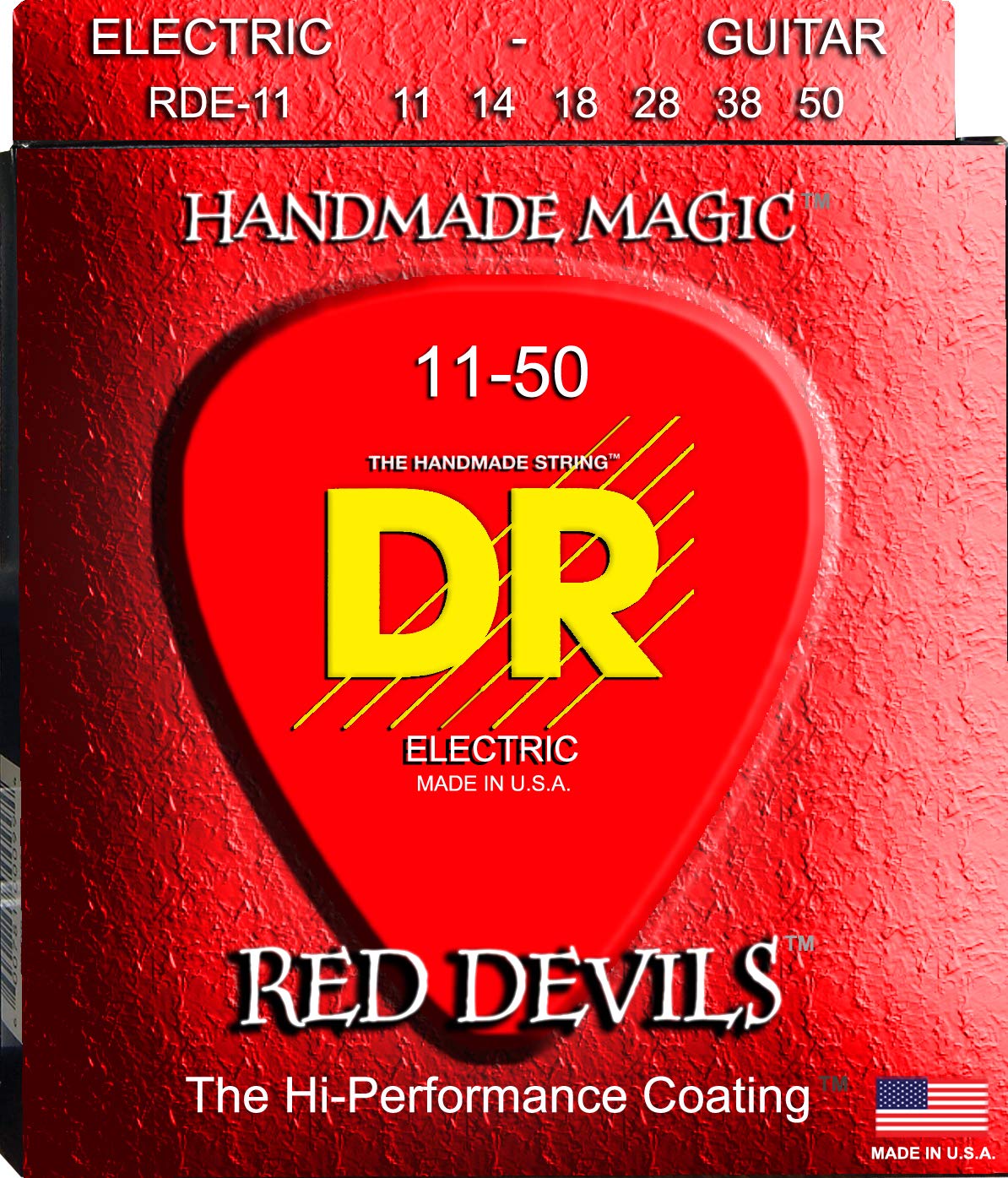
The DR Red Devils stand out visually with their deep red coating, but the real differentiator is the K3 coating technology applied over a hexagonal core wire with silver-plated nickel windings. The coating extends string life significantly — reviewers report three times the longevity of uncoated sets, with the red film resisting sweat and moisture far better than standard clear coatings. The gauges run .011, .014, .018, .028, .038, .050, which places the low string at .050 — slightly lighter than the .054 you get in the Dunlop set. That makes it a better match for drop C on shorter scale guitars (like a 24.75″ Les Paul or SG) where the lower tension of the .050 still reaches a usable pitch without choking your tone or requiring a nut slot cut.
The tonal character is notably loud and aggressive, thanks to the hexagonal core that transmits vibration more efficiently than round-core alternatives. Customers describe the sound as “bright without being tinny” — the silver-plated nickel wrap adds high-end shimmer that cuts through a mix without harshness. The coated surface also reduces finger squeak, which is useful for slide work or clean arpeggios between heavy riff sections. However, the .050 low string can sound slightly “thumpy” on low-end open strings compared to a .054, especially on a longer-scale guitar in drop C. Plugged into high gain, that thump transforms into a tight, percussive click that works well for modern metal chugging.
The coating wears off on the high strings (where the pick strikes) within about 8-10 hours of aggressive playing, but the corrosion protection remains intact underneath. The red color fades to a dull pink on the wound strings, which some players love and others find distracting. For the price per set, you get coated longevity with real tonal character and a visual flair that makes stage tuning easier to read.
Why it’s great
- K3 coating extends string life 3x compared to uncoated sets
- Hexagonal core delivers louder, more aggressive attack
- Reduced finger squeak — good for clean parts between heavy riffs
Good to know
- .050 low string may feel too light for drop C on 25.5″ scale guitars
- Red coating wears off visibly on picked areas within 10 hours
- Slightly duller acoustic tone compared to uncoated roundwound strings
4. Ernie Ball Medium-Light Stainless Steel Flatwound 12-52

The Ernie Ball Medium-Light Stainless Steel Flatwound set is an unconventional choice for drop C, but it fills a specific niche: players who want mellow, vintage-style tone with minimal finger noise and extreme longevity. The .012-.52 gauges provide thick tension, and the flatwound construction — stainless steel ribbon wound over a tin-plated steel hex core — produces a smooth, polished feel that eliminates the scrape noise of roundwound strings during chord slides. The intentionally dark, rich tone with scooped highs is ideal for jazz, surf rock, or doom metal where you want a thick, wooly low end without excessive high-frequency fizz.
In drop C, the .052 low string sits at the minimum viable tension for a 25.5″ scale. It holds tuning surprisingly well for clean passages and single-note riffs, but aggressive palm-muted gallops may produce slightly less punch than a roundwound .054 alternative. Customers who installed these on Squier Jazzmasters and Epiphone Sheratons reported consistent tuning stability for 6+ months with minimal retuning, which is extraordinary for any string in a lowered tuning. The flatwound design also reduces fret wear over extended periods compared to roundwound strings, making it a practical choice for guitars that stay in drop C for years.
The biggest caveat is the feel: flatwounds are much stiffer under the fingers than roundwound strings of the same gauge. Bending feels more resistant, and the smooth surface lacks the friction that some players rely on for precise vibrato control. The tone is also polarizing — if you want modern metal chugging dynamics, the flatwound’s lack of high-end sparkle will sound muffled. But for players who want a drop C setup that prioritizes smoothness, longevity, and vintage warmth, this set is a premium solution.
Why it’s great
- Flatwound construction eliminates finger and slide noise completely
- Stainless steel wrap and hex core deliver extreme durability — 6+ months of stable use
- Dark, warm tone perfect for vintage-styled doom, surf, or jazz in drop C
Good to know
- .052 low string may feel slightly under-tensioned for aggressive metal riffing
- Stiff feel under the fingers makes bending difficult
- Lack of high-end sparkle is not suitable for modern metal production
5. LEKATO 11-52 Nickel Plated Steel (10-Pack)
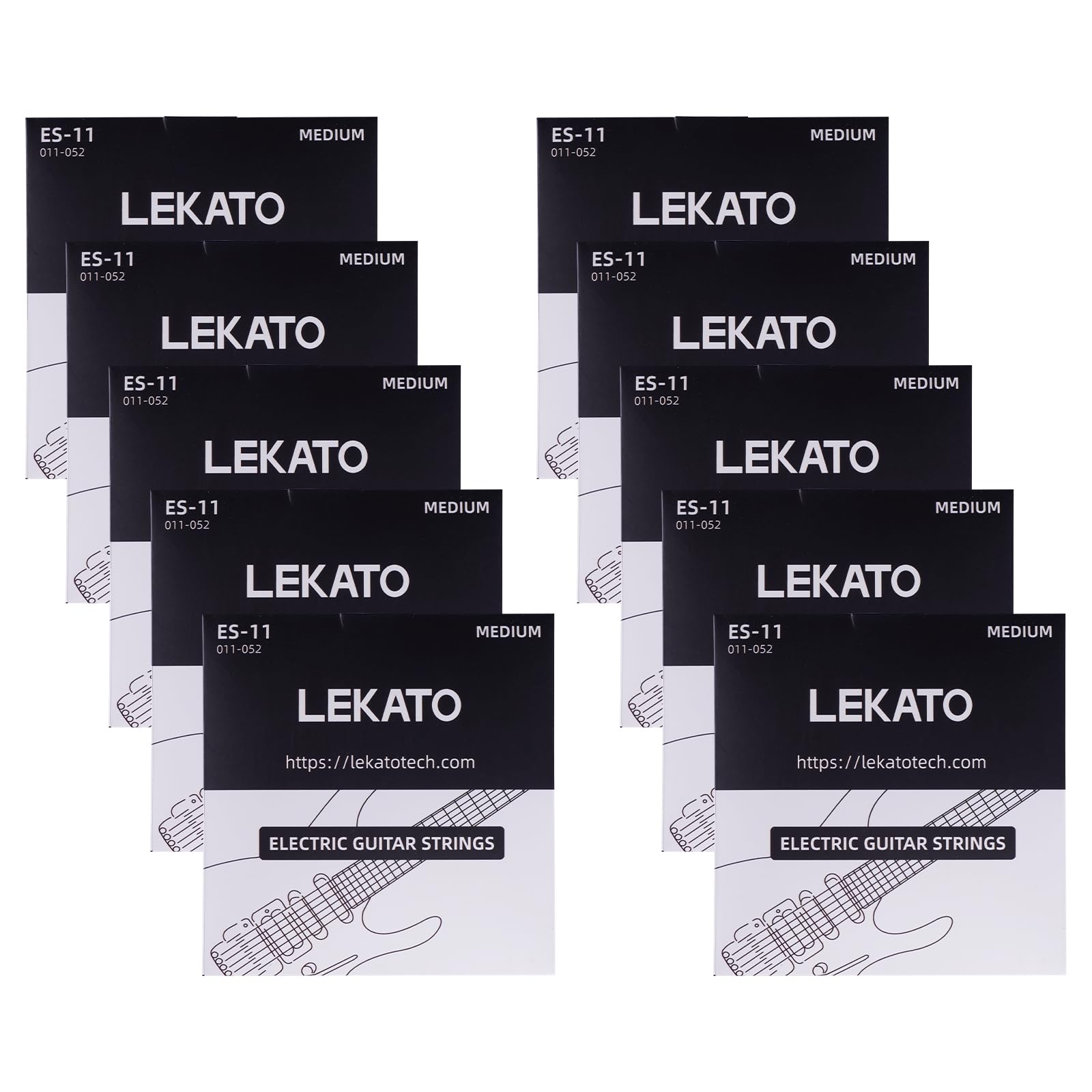
The LEKATO 11-52 set is the dark horse of this roundup: a budget-tier 10-pack that delivers competitive specs at a per-set cost that undercuts every other product here. The gauges (.011, .014, .018, .030, .042, .052) mirror a classic heavy-bottom light-top configuration. The .052 low string provides adequate tension for drop C on 25.5″ scale instruments, and the hexagonal high-carbon steel core wrapped with nickel-plated steel produces a warm, balanced tone with decent high-end clarity. The nano-coating offers genuine corrosion resistance without sacrificing finger feel — reviewers report the strings stay rust-free even after sweaty sessions.
Customer feedback reveals a high level of surprise at the quality-to-price ratio: players who normally use Ernie Ball Super Slinkys described the LEKATO sound as “identical, maybe brighter treble.” The strings stretch in well during installation and hold tuning reliably after the initial break-in period. The numbered ball-end tags make string changes fast and foolproof, which is helpful if you are swapping strings between multiple guitars. The 10-pack format is ideal for gigging musicians or teachers who blow through string sets every two to three weeks and want to keep a batch in their case at all times.
The main compromises are in the feel and durability ceiling. The nano-coating is less refined than proprietary solutions from major brands; reviewers note a slightly “rougher” surface feel compared to premium coated strings. The plain strings (.011 and .014) are more prone to breaking at the ball end if you use heavy tremolo action or aggressive bending, though proper installation technique mitigates this. For the per-set price point, these compromises are negligible for everyday drop C use. This is the go-to selection for players who treat strings as consumables and want consistent performance without the cost premium.
Why it’s great
- Unbeatable per-set cost — 10 packs for less than the price of three name-brand sets
- Nano-coating provides genuine rust protection at a fraction of the price of coated rivals
- Labels on ball ends reduce installation mistakes
Good to know
- Slightly rougher surface feel compared to major brand coated strings
- Plain strings more prone to breakage under heavy tremolo use
- Less springy feel than premium brands — less snap during pull-offs
FAQ
Can I use standard 10-46 strings for drop C tuning?
Do I need to adjust my guitar’s truss rod when switching to heavy drop C strings?
Do flatwound strings work well for drop C metal riffing?
Final Thoughts: The Verdict
For most players, the best guitar strings for drop c winner is the Dunlop Heavy Core 12-54 because its heavy core construction delivers the highest tuning stability and tonal clarity for aggressive dropped tunings, backed by a practical 2-pack bundle price. If you want a value-conscious 3-pack with proven drop-tuning performance, grab the Ernie Ball Beefy Slinky 11-54. And for a studio-grade, noise-free approach to drop C that prioritizes smoothness and longevity, the Ernie Ball Flatwound 12-52 is a premium alternative for vintage-toned heavy playing.