
Nothing stops a heavy deadlift set faster than your grip giving out before your back does. That moment where you reset your hands, chalk the palms, and still feel the bar roll out of control is the exact reason serious lifters stop relying on raw hand strength alone. A good set of gym lifting straps acts as a mechanical link between your forearms and the barbell, allowing you to overload your target muscles without worrying about your fingers uncurling under 400 pounds of iron.
I’m Mohammad Maruf — the founder and writer behind Drink4Good. I’ve spent countless hours analyzing gym accessory hardware, comparing webbing types, stitching patterns, and wrist padding densities to separate the straps that last from the ones that fray after a month of training.
This buying guide examines five of the most widely used options on the market right now, cutting through marketing claims to focus on real-world durability, grip reliability, and comfort under heavy load. Whether you are a powerlifter chasing a new personal record or a general gym-goer trying to keep your lat pulldowns honest, finding the right gym lifting straps directly determines how much volume you can handle before your forearms tap out.
How To Choose The Best Gym Lifting Straps
Lifting straps seem simple — a loop of fabric you wrap around the bar — but the differences in material, wrist padding, and strap length directly affect how much weight you can safely hold and how long the strap survives regular use. The wrong choice leads to straps that slip mid-rep, fray at the stitching, or dig painfully into your wrist bones.
Material: Cotton Webbing vs. Leather vs. Nylon
Cotton webbing is the standard choice for most lifters because it provides enough friction against the bar without being overly slick. It molds slightly over time and stays grippy even when chalked. Leather straps offer a more rigid, non-stretch surface that helps with heavier loads but requires a break-in period. Nylon or polyester-based straps tend to slide more under wet or sweaty conditions unless combined with a rubberized coating — they are better suited for accessory work than max-effort deadlifts.
Wrist Padding and Strap Length
The padding around the wrist loop determines whether you can grind through a heavy set without developing bruising or pinching. Look for neoprene padding at least 5mm thick and wide enough to distribute pressure across the wrist joint. Strap length matters too — 18-inch straps give you enough material for at least two clean wraps around a standard Olympic bar, while shorter straps can leave you struggling to get a tight lock.
Quick Comparison
On smaller screens, swipe sideways to see the full table.
| Model | Category | Best For | Key Spec | Amazon |
|---|---|---|---|---|
| Ekkovision Weight Lifting Straps | Cuffed D-Ring | Heavy deadlifts and secure wrist support | Thick cushioned padding with metal D-ring | Amazon |
| PICSIL Weight Lifting Straps | Padded Cotton | Versatile gym use with wrist protection | Elastic cotton blend with 7mm padding | Amazon |
| Frelaxy Lifting Wrist Straps | Double Leather | Lifters wanting callus protection and style | Double-layer soft cowhide with neoprene pad | Amazon |
| Gymreapers Lifting Wrist Straps | Classic Cotton | Daily training with heavy volume | 18-inch cotton webbing with neoprene pad | Amazon |
| Bear Grips Lifting Straps | Budget Cotton | Entry-level lifting and general gym work | 5mm neoprene padding, triple-stitched | Amazon |
In‑Depth Reviews
1. Ekkovision Weight Lifting Straps With Cuffed D Ring

The Ekkovision Weight Lifting Straps stand apart from the traditional loop-style straps because of the cuffed D-ring design. Instead of threading the strap through a fixed loop, the metal D-ring allows you to cinch the wrist cuff tightly before wrapping the webbing around the bar. This prevents the strap from shifting mid-lift, which is a common failure point with cheaper loop-only designs. The thick cushioned padding around the wrist measures noticeably denser than the standard 5mm neoprene pads found on most cotton straps, reducing the risk of bruising even during high-rep pulling sessions.
The heavy-duty stitching and rubberized grip pad on the webbing keep the strap locked against the bar without needing excessive wrist tension. Users who have logged a year of consistent use report that the stitching holds up without fraying, and the D-ring mechanism remains tight with no rattling or loosening. The only minor drawback is the lack of included instructions — the cuffed design has a slightly different wrapping technique than traditional straps, so you may need to watch a short video to get the hang of it.
For lifters who want wrist support that stays in place and a grip that does not slip during max-effort pulls, the Ekkovision straps deliver a noticeable upgrade in stability. The price sits at the top of this group, but the build quality justifies the cost for anyone who trains heavy multiple times per week.
Why it’s great
- Cuffed D-ring prevents strap shifting during heavy pulls
- Extra-thick wrist padding reduces bruising and pinch points
- Rubberized grip pad improves bar friction under sweat
Good to know
- No instructions included for the cuffed wrapping technique
- Heavier than basic loop straps due to metal D-ring and thick padding
2. PICSIL Weight Lifting Straps

The PICSIL Weight Lifting Straps use an elastic cotton blend that is slightly stretchier than pure cotton webbing. This gives the strap a more forgiving feel when you wrap it around the bar — it conforms to the knurling shape rather than sitting rigidly on top. The 7mm of wrist padding is thicker than the 5mm standard, offering more protection against the sharp edge of a knurled bar when you are pulling from the floor.
Users who tested these straps during heavy deadlift and barbell row cycles reported that the wrist protection prevented the torn skin that often comes from bare cotton straps rubbing against the palm side of the wrist. The loop design is straightforward — no buckles or D-rings — so the learning curve is minimal even for first-time strap users. The grey color option is subtle and does not show chalk or sweat stains as quickly as lighter fabrics.
On the downside, the elastic nature of the cotton blend means you cannot cinch the bar wrap as tightly as a pure cotton or leather strap. Lifters who pull over 500 pounds may notice the strap giving slightly under peak load. The best use case for these is mid-to-heavy volume work where wrist comfort matters more than max-weight rigidity.
Why it’s great
- Thick 7mm padding protects wrists during high-rep pulling
- Elastic cotton blend conforms well to bar knurling
- Simple loop design with easy learning curve
Good to know
- Elastic material limits max-weight wrapping tightness
- Not ideal for lifters exceeding 500-pound pulls
3. Frelaxy Lifting Wrist Straps
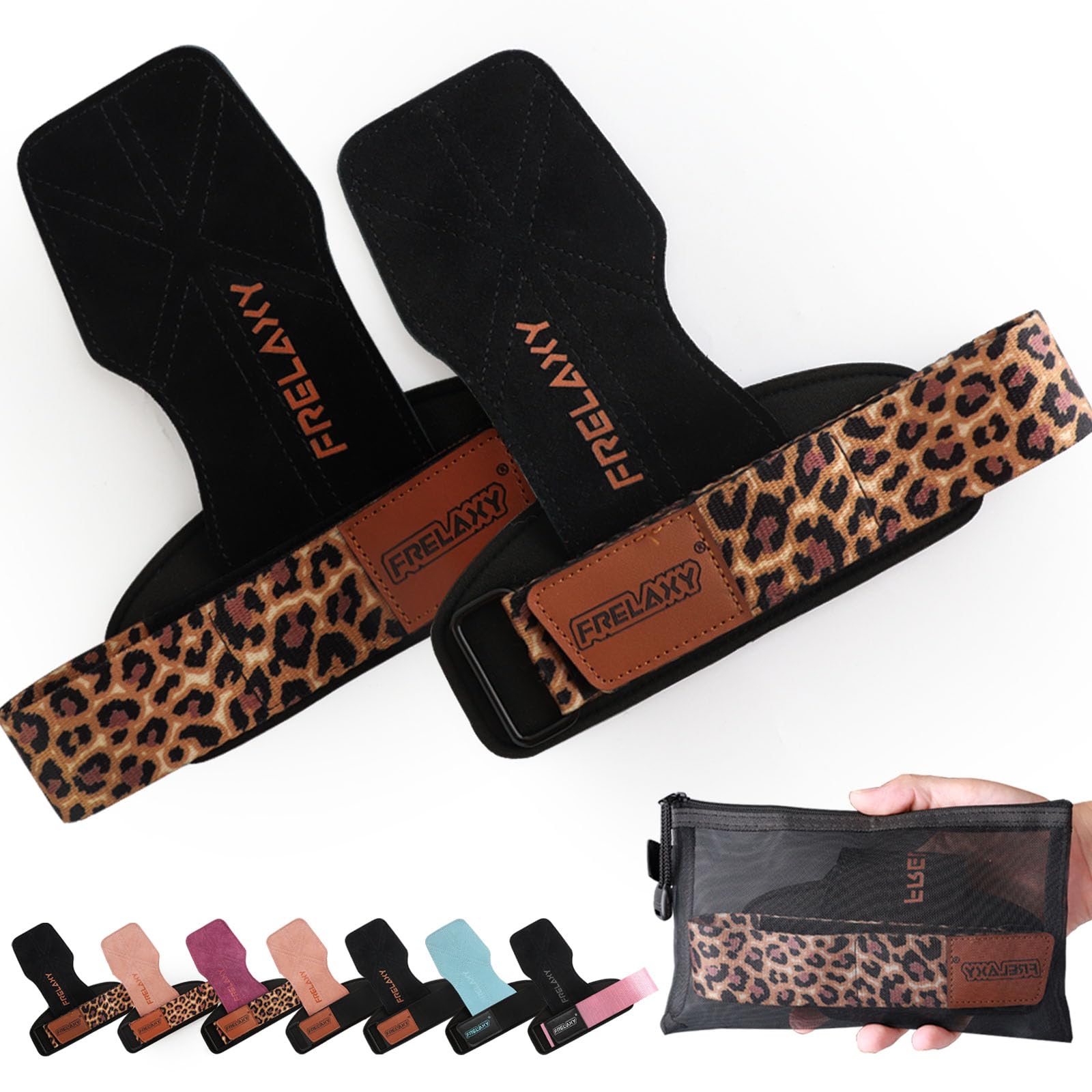
The Frelaxy Lifting Wrist Straps break away from the cotton-dominated category by using a double-layer soft cowhide leather grip. Leather offers a stiffer, more secure hold on the bar compared to cotton webbing, which tends to bunch up or shift under heavy loads. The leather also acts as a barrier between your palm and the knurling, reducing the formation of calluses and preventing the pinching that happens when cotton straps fold over themselves mid-rep.
The widened neoprene pad is designed to fit wrist circumferences from 5.5 to 8 inches, with an adjustable Velcro closure that allows you to dial in the tightness without cutting off circulation. Users with smaller hands found that the leather grip was easier to wrap than bulkier cotton options because the material does not fray or stretch out of shape. The included storage pouch is a practical touch for keeping the leather from getting scratched by other gear in your gym bag.
One thing to note: leather straps require a short break-in period before they feel fully flexible. The first few sessions may feel stiff, but after about a week of use the leather softens without losing its structural integrity. The leopard print color option is a unique visual choice that stands out from the sea of black cotton straps.
Why it’s great
- Double-layer leather reduces callus formation versus cotton
- Widened neoprene pad fits small to large wrists comfortably
- Storage pouch protects leather from gym bag damage
Good to know
- Requires break-in period before leather fully softens
- Not ideal for lifters who prefer the flexibility of cotton webbing
4. Gymreapers Lifting Wrist Straps

The Gymreapers Lifting Wrist Straps represent the classic cotton loop design refined for durability. The 18-inch length of heavy-duty cotton webbing gives you enough material to wrap the barbell at least twice, even on a thicker axle bar, creating a lock that does not slip no matter how sweaty your hands get. The neoprene wrist pad is 5mm thick and extends wide enough to distribute pressure across the entire wrist joint rather than concentrating it on a small pressure point.
Multiple users report that these straps lasted over two years of training one to two times per week without the stitching unraveling or the webbing fraying at the edges. The reinforced stitching runs along the full length of the strap, not just at the connection point, which is where most budget straps fail. The navy color option is visually subtle, but the real win here is the value — you get a reliable, no-frills strap that handles heavy deadlifts, rack pulls, and barbell rows without hesitation.
The trade-off is that the cotton webbing has no added grip coating or rubberized layer, so if you train in a very humid gym or your hands sweat excessively, you may need to use chalk in conjunction with the straps to maintain optimal friction. For most lifters, however, the raw cotton texture provides enough bite against the knurling to hold firm through the heaviest sets.
Why it’s great
- 18-inch length allows double wrap on thick bars
- Reinforced stitching lasts over two years of regular use
- Wide neoprene pad prevents localized wrist pressure
Good to know
- Cotton webbing lacks rubberized grip coating
- May require chalk in high-humidity gym environments
5. Bear Grips Lifting Straps

The Bear Grips Lifting Straps are the most affordable option in this lineup, but they do not cut corners where it matters most. The cotton webbing is heavy-duty and triple-stitched, which addresses the most common failure mode of cheap straps — the stitching pulling apart after a few heavy sessions. The 5mm neoprene padding under the wrist is standard for this category and provides adequate protection against bar bite during deadlifts and rows.
The webbing is slightly thinner than some premium options, which some lifters prefer because it makes the strap easier to thread through the loop and wrap around the bar. The color selection is broad, which is a nice touch for a budget strap.
The main limitation is the aggressive marketing copy that oversells the product relative to its actual performance — the straps work fine, but they are not indestructible or magical. They will not compensate for poor form or insufficient wrapping technique. For a lifter just getting into strap-assisted pulling or someone who needs a backup pair to toss in the gym bag, the Bear Grips offer a solid entry point without breaking the bank.
Why it’s great
- Triple-stitched construction prevents premature strap failure
- Thin webbing is easy to thread and wrap quickly
- Wide color selection for a budget-friendly option
Good to know
- Cotton webbing is thinner than premium counterparts
- Marketing claims exceed actual product performance
FAQ
What length of lifting strap should I buy for deadlifts?
Can I use leather lifting straps for pull-ups and rows without damaging the bar?
How do I know if my lifting straps need replacing?
Final Thoughts: The Verdict
For most users, the gym lifting straps winner is the Ekkovision Weight Lifting Straps because the cuffed D-ring design provides unmatched stability during heavy pulls while the thick padding protects against wrist bruising. If you want the raw durability and classic feel of cotton webbing with proven longevity, grab the Gymreapers Lifting Wrist Straps. And for a leather option that reduces callus formation and looks distinct from the crowd, nothing beats the Frelaxy Lifting Wrist Straps.