
That subtle wobble in the bottom of your squat — the one that makes your lower back compensate — starts with your footwear. Standard running shoes have a thick, compressible midsole that robs you of stability the moment you load the barbell. Gym sneakers are engineered with a flat, firm outsole and a reinforced heel to transfer every watt of force directly into the floor, not into the foam.
I’m Mohammad Maruf — the founder and writer behind Drink4Good. I’ve spent the last four years tracking sole density, heel-to-toe drop, and outsole rubber hardness across training footwear, correlating lab data with real-world gym performance to identify what actually works under a loaded bar.
Whether you are grinding through heavy deadlifts, pacing a HIIT circuit, or dialing in your squat depth, the right pair changes your mechanics immediately. My deep-dive into the current market identifies the best gym sneakers for every training style without wasting your budget on hype-driven cushioning.
How To Choose The Best Gym Sneakers
Gym sneakers must balance three conflicting demands: a flat, stable platform for compound lifts, enough forefoot flexibility for dynamic movements, and a tread pattern that grips when you push laterally. Choosing wrong means sacrificing depth on squats or risking a slip on box jumps. Here are the three specs that separate effective training shoes from casual sneakers.
Heel-to-Toe Drop
Measured in millimeters, this spec describes the height difference between the heel and forefoot. Running shoes commonly sit at 8-12 mm, tilting your pelvis forward. Gym sneakers should stay between 0 mm (flat) and 4 mm. A lower drop keeps your weight balanced over the midfoot, which is critical for squat depth and deadlift setup. Lifters with ankle mobility issues can still use a 4 mm drop safely.
Outsole Rubber Durometer and Tread Pattern
Hardness is measured on the Shore A scale. Gym-grade outsoles typically range from 60A to 75A — firm enough to resist compression on a hard platform but soft enough to bite into a rubber mat. Look for a tread pattern with directional chevrons or a full-length herringbone. Flat, smooth gum soles offer good deadlift traction but lose grip on dusty floors during lateral drills.
Midsole Density and Stack Height
You want a dense ethylene-vinyl acetate (EVA) or polyurethane (PU) midsole, not the plush, bouncy foams found in performance running shoes. Stack height should stay under 20 mm at the heel. Anything taller introduces leverage instability under heavy loads. Cross-training sneakers use a firmer compound that compresses less than 5 mm under your working weight, protecting your joints without stealing power.
Quick Comparison
On smaller screens, swipe sideways to see the full table.
| Model | Category | Best For | Key Spec | Amazon |
|---|---|---|---|---|
| UA TriBase Reign 6 | Premium | CrossFit & Heavy Lifting | 4 mm drop, wide toe box | Amazon |
| adidas Powerlift 5 | Premium | Olympic & Powerlifting | 0.6-inch heel, rigid sole | Amazon |
| Reebok Nano Gym | Mid-Range | Light Weights & General Fitness | 5 mm drop, arch support | Amazon |
| UA Charged Commit 5 | Mid-Range | All-Day Wear & Light Training | Charged Cushioning midsole | Amazon |
| adidas Kaptir 4.0 | Mid-Range | Treadmill Running & Walks | Cloudfoam midsole, 10 mm drop | Amazon |
In‑Depth Reviews
1. Under Armour Men’s TriBase Reign 6 Trainer
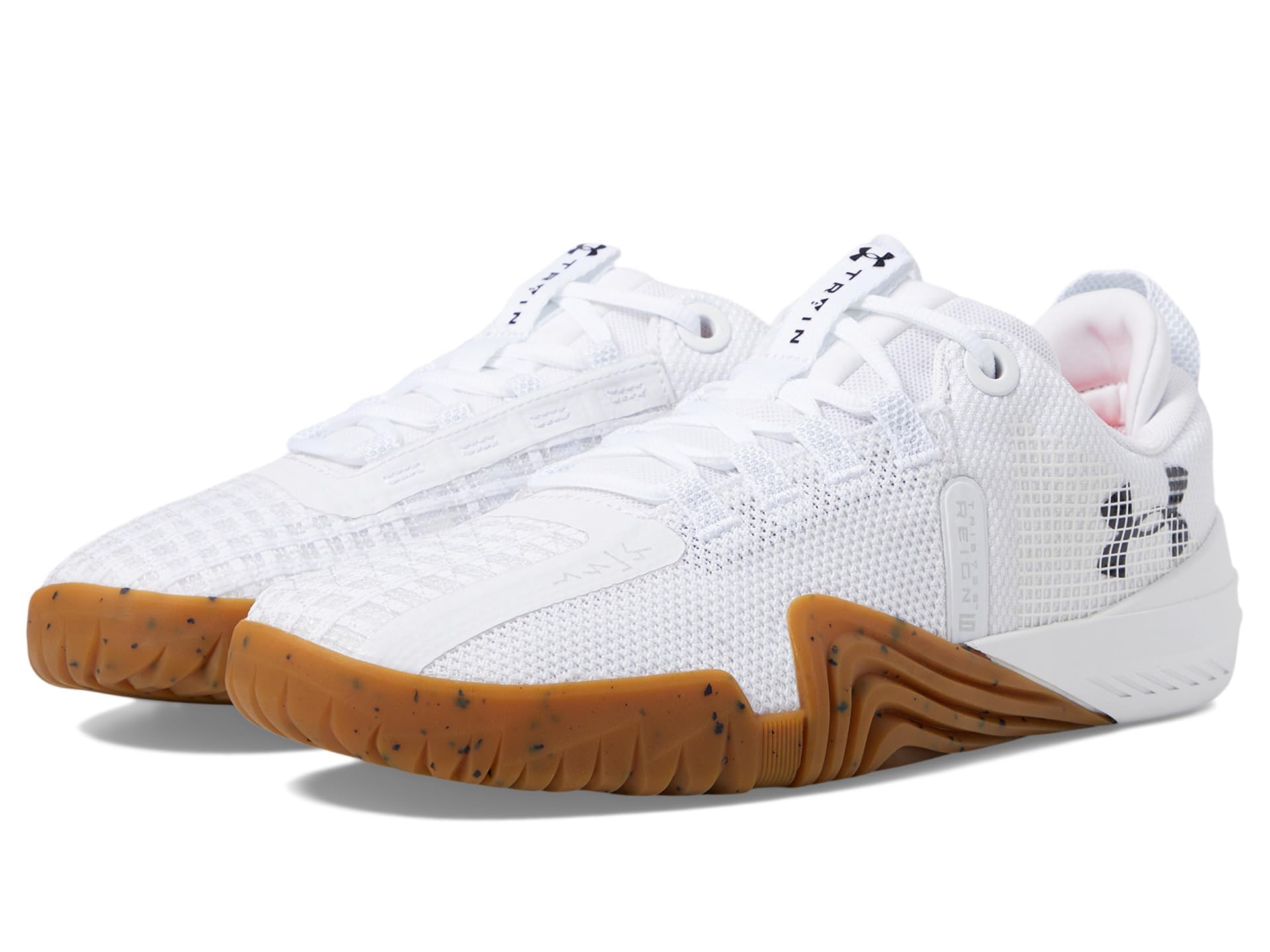
The TriBase Reign 6 strikes the hardest balance between a stable lifting platform and dynamic flexibility. The outsole uses a full-contact rubber compound with a multi-directional tread that grabs rubber gym flooring without feeling tacky. At 4 mm drop, your hips can sink to depth naturally during squats while the firm EVA midsole resists compression under 300+ lbs.
Reviewers consistently note the wider toe box — a relief for lifters with flat feet or bunions who feel cramped in Nanos and Metcons. The upper is a lightweight knit mesh with fused overlays, so it breathes during HIIT but locks the heel down during sled pushes. Sizing runs half a large; going down half a size gives a performance fit without heel slip.
Durability holds up well after six months of CrossFit-style training. The outsole shows minimal wear at the forefoot strike zone, and the lace eyelets have not frayed despite repeated tension. One common note: white colorways show scuffs fast, so if aesthetics matter, choose a darker variant.
Why it’s great
- Wider toe box than Nano and Metcon for natural toe splay
- 4 mm drop suits squatting and deadlifting without a heel block
- Durable full-rubber outsole with multi-directional tread
Good to know
- White upper is hard to keep clean during gym use
- Midsole feels stiff for long treadmill runs beyond 3 miles
2. adidas Unisex Adult Powerlift 5
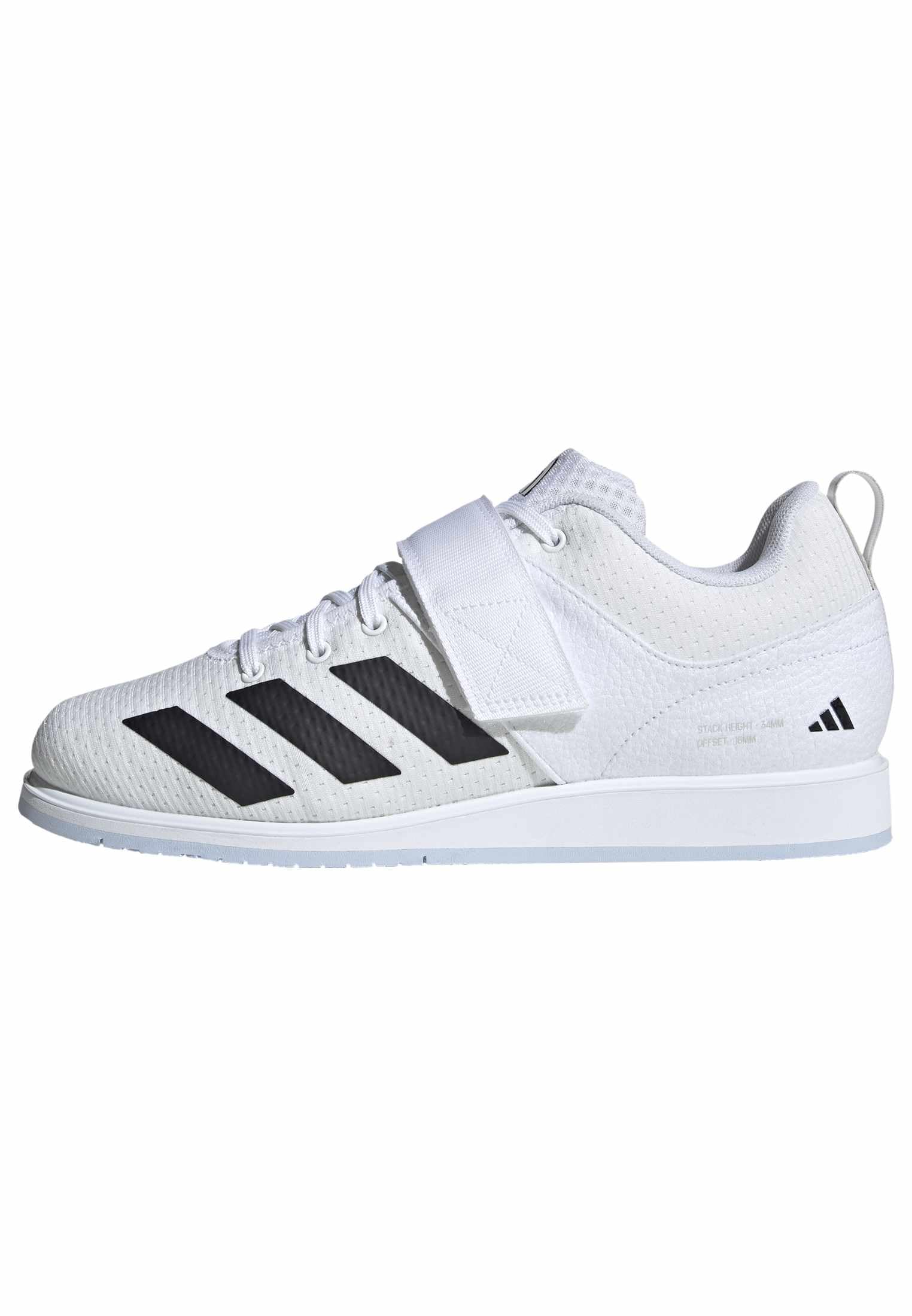
The Powerlift 5 is a dedicated weightlifting shoe with a raised polyurethane heel that measures roughly 0.6 inches. That slight incline opens up ankle range of motion instantly, letting you hit parallel depth on squats without your heels lifting off the floor. The outsole is almost entirely rigid — there is zero torsional flex, which means every watt of force from your legs goes into the bar, not into the shoe.
Its synthetic upper is low-profile with a single hook-and-loop strap across the midfoot, which replaces the two-strap system on the higher-end Adipower. This is enough to lock the foot in during heavy back squats and overhead presses. However, the toe box is notably narrow — lifters with wide feet or bunions report discomfort even after sizing up half a step.
Reviewers consistently mention knee pain vanishing after switching from running shoes to the Powerlift 5. The rigid heel reduces the forward shear force at the patella, making it a solid choice for lifters recovering from patellar tendonitis. Do not expect to run or jump in these; they are purpose-built for the barbell and little else.
Why it’s great
- Raised heel improves ankle mobility for deep squatting
- Rigid outsole maximizes force transfer to the floor
- Velcro strap locks midfoot for stability under load
Good to know
- Narrow toe box unsuitable for wide feet or bunions
- Not designed for running, jumping, or lateral movement
3. Under Armour Charged Commit Trainer 5
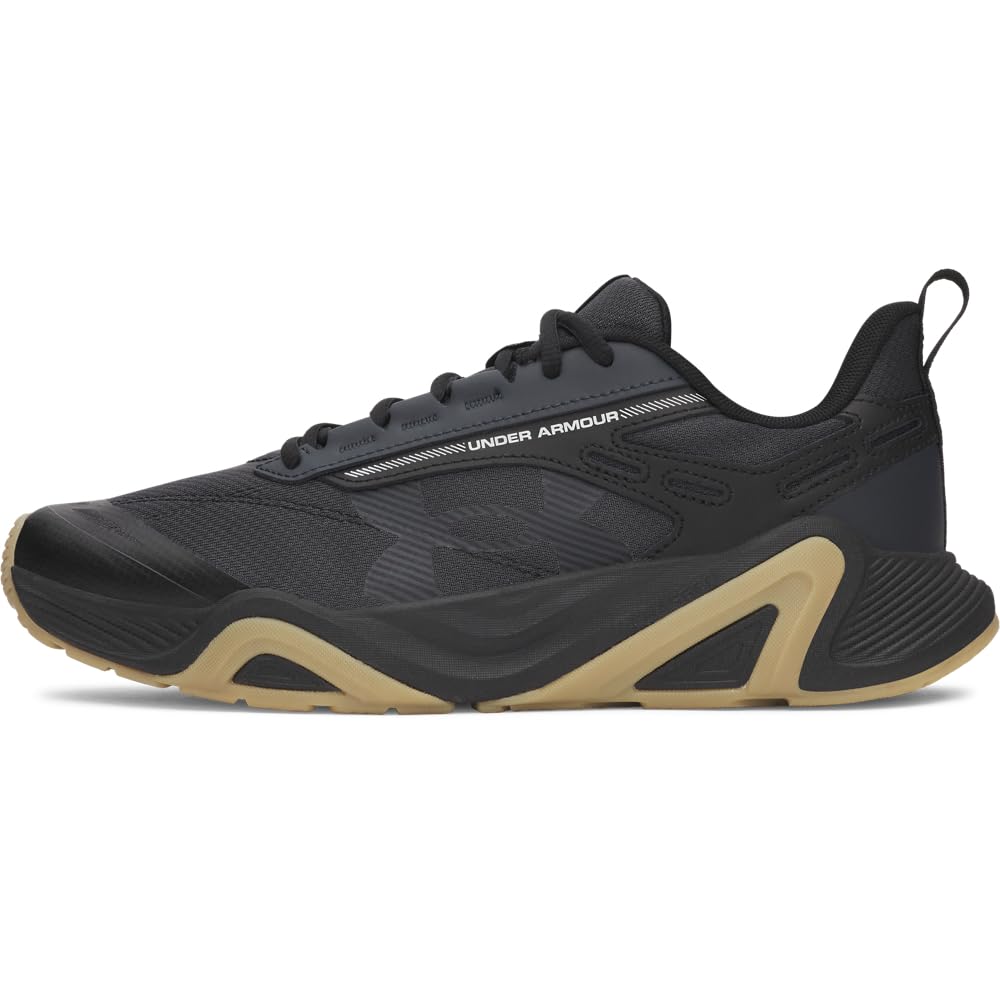
The Charged Commit 5 is UA’s answer to the lifter who needs a shoe for the gym floor, the pavement, and the office. The outsole uses a solid rubber pad with flex grooves that bend easily at the forefoot, so the shoe moves with your foot rather than fighting it.
Despite the plush midsole, the heel counter is reinforced with an external TPU clip that locks the calcaneus in place — critical when you shift weight forward during lunges or step-ups. Testers mention that the shoe feels surprisingly light on foot, which reduces fatigue during high-rep circuits. Sizing runs true to standard widths, and several users with wide feet report that the toe box accommodates without pinching.
The trade-off is straightforward: you lose some of the rigid stability needed for maximal squats. The Charged Cushioning compresses about 3-4 mm under a 250-lb load, which can introduce micro-wobble at the bottom of a heavy squat. This is a training shoe, not a powerlifting shoe, and it performs best for general fitness, light dumbbell work, and daily wear.
Why it’s great
- Lightweight build reduces fatigue during high-rep circuits
- External TPU heel clip provides solid rearfoot lock
- True to size fit with adequate toe box width
Good to know
- Midsole compresses noticeably under heavy barbell loads
- Not stable enough for maximal squat or deadlift work
4. Reebok Nano Gym
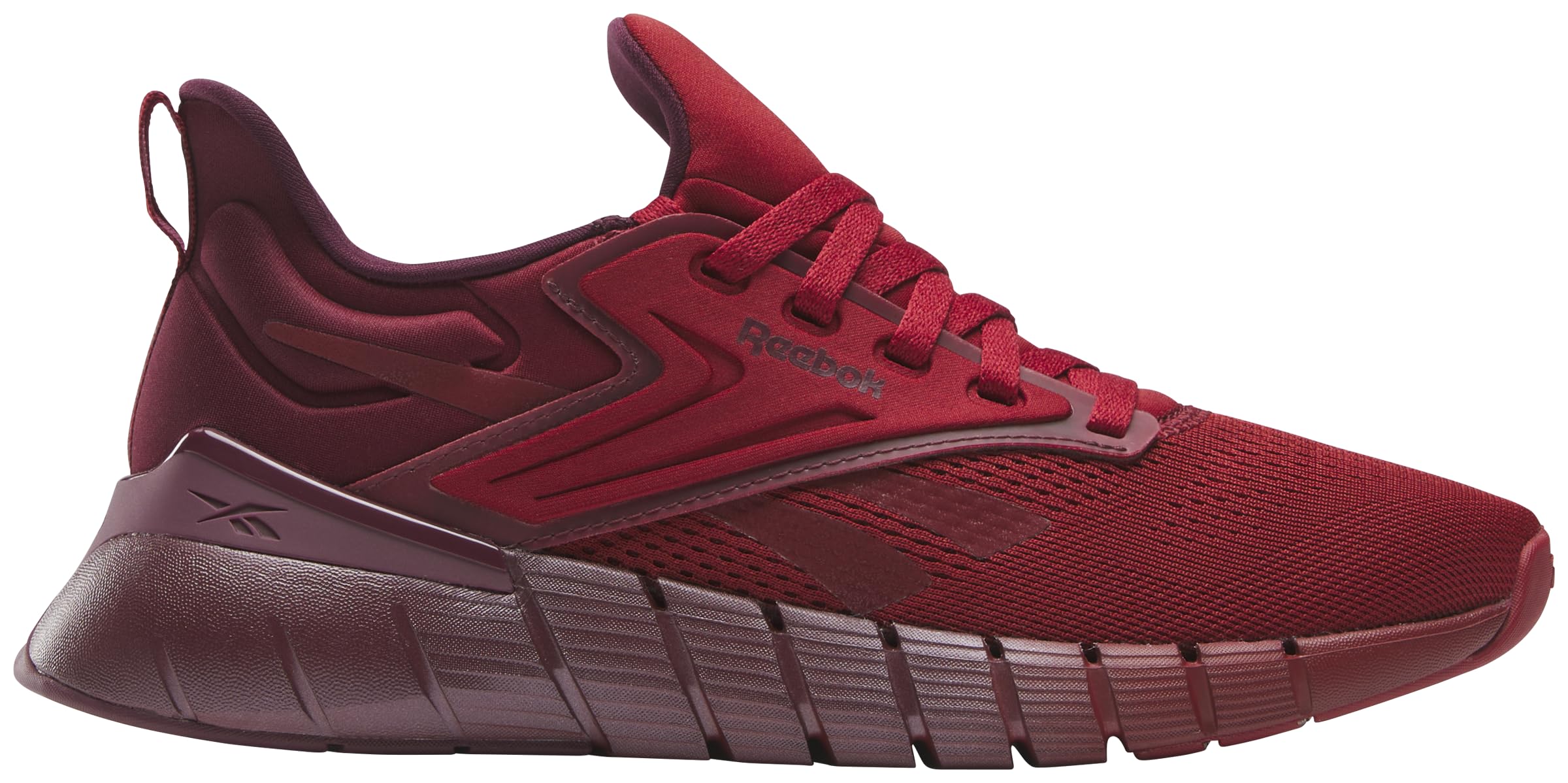
The Reebok Nano Gym bridges the gap between a casual gym sneaker and a dedicated training shoe without overshooting the budget. Its 5 mm drop is slightly higher than the TriBase Reign 6, but still flat enough to permit a balanced squat position. The midsole uses a firm EVA compound that resists bottoming out during moderate load work — think lunges, goblet squats, and machine weights — while delivering enough flex for burpees and agility drills.
Arch support is a standout feature here: the insole has a noticeable medial rise that supports flat feet and reduces strain during long standing sessions. Multiple reviewers specifically call out the arch support as the reason they switched from other cross-training shoes. The outsole uses a full rubber wrap with a chevron tread pattern that grips well on both rubber and vinyl gym floors.
Fit runs snug across the top of the foot, especially for those with a high instep. Several testers recommend going up half a size, since the one-piece knit upper lacks a separate tongue for volume adjustment. Durability after six months of use is excellent: the outsole shows light wear and the upper has held shape without stretching out.
Why it’s great
- Excellent arch support for flat feet and long standing sessions
- Firm EVA midsole resists compression under moderate loads
- Chevron outsole tread grips well on rubber and vinyl surfaces
Good to know
- Snug fit across the top; size up half a step
- Not ideal for heavy powerlifting maxes
5. adidas Men’s Kaptir 4.0 Sneakers
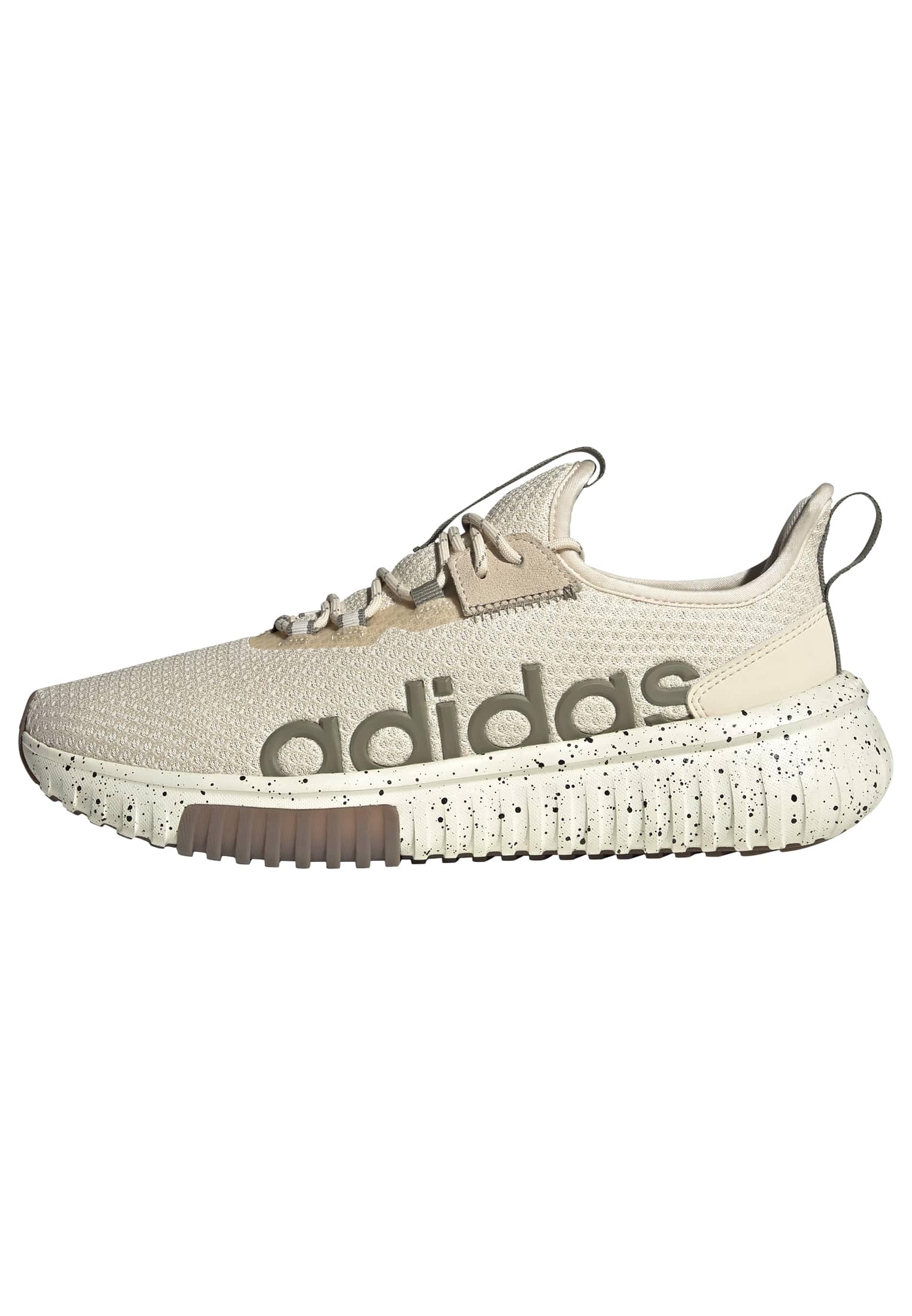
The Kaptir 4.0 is not a training shoe in the traditional sense — its 10 mm drop and Cloudfoam midsole prioritize walking comfort over lifting stability. The midsole uses a soft, bouncy EVA blend that absorbs shock well during treadmill jogging and bodyweight circuits. The knit upper is highly breathable, making these a solid option for warm gym environments or outdoor sessions where airflow is critical.
Where the Kaptir 4.0 shines is in its toe box geometry: the forefoot has a noticeably roomy profile that accommodates bunions and toe splay without rubbing. Reviewers who struggled with narrow-toe-box models like the Nano or Powerlift found relief here. The outsole uses a solid rubber strip under the heel and forefoot, which provides adequate grip for walking lunges and lateral shuffles on clean floors.
Do not attempt heavy squats or deadlifts in these — the compressible heel will cause you to rock forward under load. The Kaptir 4.0 is best understood as a casual gym shoe for cardio days, warm-ups, and post-workout recovery. The laces run unusually long; tying a double knot is the standard fix.
Why it’s great
- Roomy toe box ideal for bunions and natural splay
- Cloudfoam midsole delivers plush comfort for treadmill runs
- Breathable knit upper suits warm gym environments
Good to know
- 10 mm drop and soft midsole unsuitable for heavy lifting
- Laces are excessively long; double knot recommended
FAQ
Can I squat and deadlift in running shoes with a 12 mm drop?
Should I size up in cross-training shoes if I have wide feet?
How often should I replace gym sneakers used three times per week?
Final Thoughts: The Verdict
For most users, the best gym sneakers winner is the Under Armour TriBase Reign 6 because it delivers a stable 4 mm drop, a wide toe box, and a durable outsole that handles both heavy lifting and dynamic WODs. If you want a dedicated heel for deep squatting, grab the adidas Powerlift 5. And for a budget-friendly training shoe with excellent arch support, nothing beats the Reebok Nano Gym.