
Damaged hair isn’t just dry—it’s structurally compromised. When chemical services, heat styling, or environmental stressors break the bonds inside each strand, your hair loses its elasticity, strength, and natural shine. A conditioner that only sits on the surface won’t fix that; you need something that reinforces the inner protein matrix while sealing the cuticle from the outside.
I’m Mohammad Maruf — the founder and writer behind Drink4Good. I’ve spent years analyzing hair care chemistry, comparing bond-building technologies, and studying the performance metrics that actually predict whether a conditioner will repair damage or just mask it.
The sheer number of options makes finding a serious hair conditioner for damaged hair confusing, but the real test comes down to how deeply a formula can rebuild the hair fiber from within while restoring surface smoothness.
How To Choose The Best Hair Conditioner For Damaged Hair
Not all conditioners marketed for damaged hair actually repair. The difference lies in whether the formula contains bond-building agents that penetrate the cortex or just relies on heavy oils and silicones for temporary slip. You want a product that addresses the underlying structural loss, not one that merely coats the cuticle until your next wash.
Look for Bond Repair Technologies
Ingredients like hydrolyzed proteins, amino acid complexes, and bond multipliers (such as Olaplex’s patented system or Nexxus’s Hydrolink Bonder Technology) actively reconnect broken disulfide and hydrogen bonds inside the hair fiber. These are the only ingredients that can genuinely restore strength and elasticity to over-processed, brittle strands.
Match the Protein Level to Your Hair’s Porosity
High-porosity hair (damaged from bleach or heat) absorbs protein readily and benefits from concentrated bond builders. Low-porosity hair, however, can become stiff and brittle with too much protein. If your hair feels dry and straw-like after using a protein conditioner, switch to a formula that emphasizes hydration (glycerin, aloe, argan oil) over heavy keratin loads.
Check for Sulfates and Parabens
Harsh sulfates strip the hair of natural oils and accelerate moisture loss, worsening the damage cycle. A conditioner for damaged hair should be sulfate-free to avoid further drying the fiber. Paraben-free formulations are also preferable for color-treated or chemically processed hair to prevent irritation and fading.
Quick Comparison
On smaller screens, swipe sideways to see the full table.
| Model | Category | Best For | Key Spec | Amazon |
|---|---|---|---|---|
| Nexxus Conditioner Amino Bond | Bond Repair | Daily bond repair | 12.5% Hydrolink Bonder Technology + Amino5 Complex | Amazon |
| Camille Rose Black Castor Oil + Chebe | Deep Conditioning | Textured and curly hair | Black castor oil, coconut oil, Chebe powder | Amazon |
| Arvazallia Hydrating Argan Oil Hair Mask | Hydrating Mask | Extremely dry hair | Pure argan oil infusion | Amazon |
| Kitsch Moisturizing Hair Mask | Moisture Mask | Frizz control and all hair types | Nutrient-rich coconut oil base | Amazon |
| Olaplex N°.5 Bond Maintenance Conditioner | Bond Maintenance | Professional-level bond repair | Proprietary bond-building technology | Amazon |
In‑Depth Reviews
1. Nexxus Conditioner Amino Bond
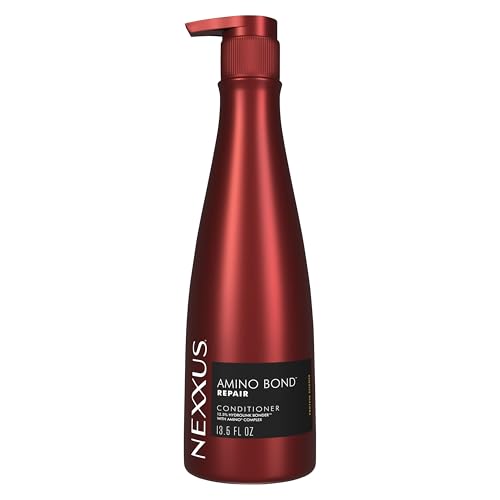
Where most conditioners simply coat the hair with oils, the Nexxus Amino Bond formula targets the broken bonds inside the fiber using 12.5 percent Hydrolink Bonder Technology. The Amino5 complex—a blend of five essential amino acids including glutamic acid and cysteine—replenishes the protein loss that occurs from chemical processing and heat. This is a true structural repair system, not just a moisturizer.
Clinical data backs up the claims: in a Nexxus salon study, 95 percent of participants reported nourishing care, and the system delivers up to two years worth of protein loss restoration in a single use compared to a non-conditioning shampoo. Users with hair damaged by multiple blonding sessions noted measurable reductions in breakage and split ends within weeks. The formula also includes glycerin for humectant hydration, which prevents the brittleness sometimes caused by protein-only treatments.
The texture is creamy without being heavy, and the fragrance is clean and pleasant—a subtle touch that fades quickly. This is the most complete mid-range option for anyone who wants bond repair without jumping to a premium price point.
Why it’s great
- Bond-building technology addresses all five damage types (thermal, mechanical, environmental, chemical, color)
- Amino5 complex targets specific amino acid depletion
- Clinically validated with high consumer satisfaction
Good to know
- Some users report it may be on the verge of discontinuation in certain markets
- Requires the full system (shampoo + conditioner) for maximum bond repair
2. Camille Rose Black Castor Oil + Chebe Deep Conditioner
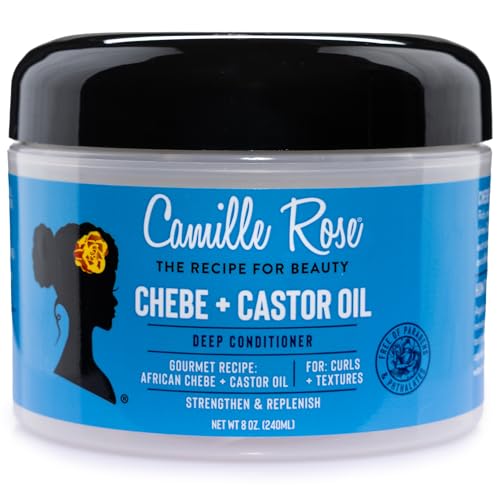
Camille Rose taps into the ancient Chébé ritual used by women in Chad to maintain waist-length braids. The deep conditioner combines black castor oil, coconut oil, and authentic African Chebe powder—a plant-based ingredient from Croton seeds—to strengthen and moisturize naturally textured hair. This is not a lightweight rinse-out conditioner; it’s a deep treatment designed for high-porosity, damaged curly and coily hair.
Reviews from 4C hair types are particularly strong, with users reporting improved retention and less hair loss during detangling. The formula is deliberately paraben-free and sourced with natural integrity in mind. The herbal scent is noticeable but not overpowering, and the conditioner has good slip, though some users with extremely thick hair wish for even more glide. For those with low-porosity fine hair, the formula can feel heavy if left on too long.
Unlike protein-heavy bond builders, this conditioner relies on rich oils and Chebe powder to reinforce the cuticle and reduce moisture loss. It excels as a weekly deep treatment for damaged, curly hair but may not be ideal for fine, straight hair that needs only a light daily conditioner.
Why it’s great
- Authentic Chebe powder replicates a centuries-old hair-strengthening ritual
- Deeply moisturizing for high-porosity, damaged textured hair
- Paraben-free formulation with clean ingredients
Good to know
- May be too heavy for fine, low-porosity hair if left on too long
- Herbal scent is strong and doesn’t appeal to everyone
3. Arvazallia Hydrating Argan Oil Hair Mask and Deep Conditioner
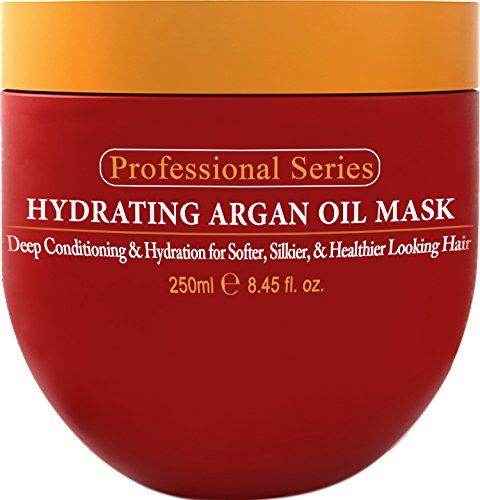
The Arvazallia Hair Mask has become something of a cult classic for extremely dry, damaged hair, and for good reason. Its single active ingredient—pure argan oil—is packed with essential fatty acids and vitamin E that penetrate the cortex to restore elasticity and shine. Unlike many conditioners that rely on silicones for instant slip, this mask uses argan oil’s natural molecular structure to hydrate from within.
User reviews consistently highlight the dramatic transformation it provides: one reviewer with extremely dry, damaged hair reported more improvement in two weeks than in four months of using other products. The formula is sulfate-free and paraben-free, making it safe for permed, natural, and color-treated hair. Low-porosity hair types find it lightweight enough to avoid greasiness, while coarse, damaged hair benefits from the intense moisture. Some users with fine hair note that the scent can be slightly bothersome, and the formula contains Methylisothiazolinone, a preservative that can be an allergen for sensitive scalps.
At a size of 8.45 ounces, this is a concentrated product where a little goes a long way. It works best as a weekly deep conditioning mask rather than a daily rinse-out conditioner, making it an excellent supplement to a lighter daily conditioner.
Why it’s great
- Pure argan oil formula deeply hydrates without weighing down fine hair
- Works quickly—visible improvement in 2 weeks for many users
- Sulfate-free and paraben-free for color and chemically treated hair
Good to know
- Contains Methylisothiazolinone (potential allergen for sensitive skin)
- Not ideal as a daily rinse-out conditioner; best as a weekly mask
4. Kitsch Moisturizing Hair Mask for Damaged Hair
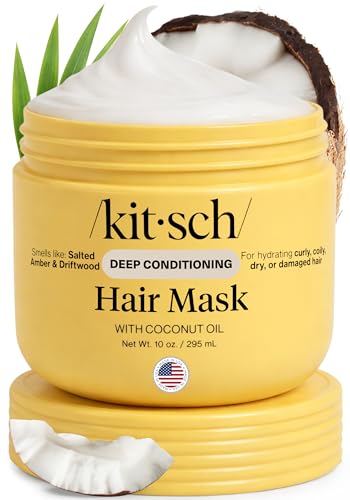
The Kitsch Moisturizing Hair Mask is built around a single core ingredient—coconut oil—chosen for its ability to penetrate the hair shaft and reduce protein loss. This isn’t a bond-repair formula; it’s a high-moisture treatment designed to seal the cuticle, control frizz, and restore softness. The 10-ounce jar offers generous volume for a deep-conditioning mask at a reasonable per-use cost.
User feedback emphasizes how effectively it reduces frizz and tangles without leaving a greasy residue. Fine, thin hair testers report softness and shine without weight, while curly hair users note improved definition and bounce. The coconut scent is prominent but pleasant, though some users find it strong enough to linger for hours after rinsing. A few users with curly textures noticed slightly reduced curl definition, likely due to the formula’s moisture-heavy profile.
This mask is best used one to two times per week as a supplement to a daily conditioner. It works across all hair types and is safe for color and keratin-treated hair, making it a versatile option for households where multiple people with different hair needs share products.
Why it’s great
- Generous 10-ounce size offers a low per-use cost for a deep conditioner
- Versatile across all hair types—curly, straight, wavy, coily
- Safe for color and keratin-treated hair
Good to know
- Coconut scent is very strong and may linger after rinsing
- May reduce curl definition for some users due to heavy moisture
5. Olaplex N°.5 Bond Maintenance Conditioner
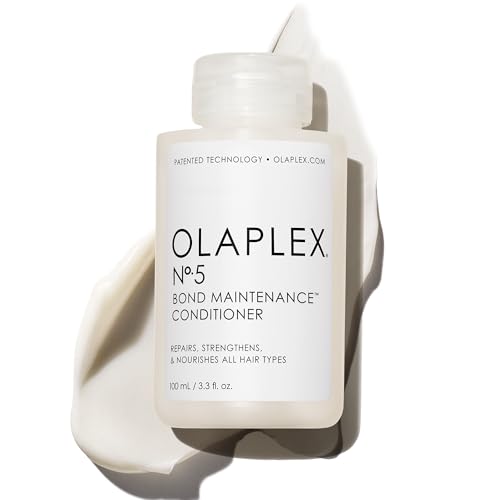
Olaplex’s reputation in the bond repair space is well-earned, and the N°.5 Bond Maintenance Conditioner is the brand’s most concentrated rinse-out option for daily use. The proprietary bond-building technology works at the molecular level to repair disulfide bonds broken by chemical services, heat styling, and mechanical stress. Clinical results show 60 percent less breakage and 90 percent easier detangling when used as a system with the N°.4 shampoo.
The formula is vegan, color-safe, and suitable for chemically treated hair. Users with thin, fine hair report that it doesn’t weigh strands down, while those with curly hair appreciate its frizz control and shine without greasiness. One drawback is its detangling performance: some users with long hair find it less lubricating than silicone-heavy alternatives, requiring more product. The conditioner is highly concentrated—a dime-sized amount suffices for shoulder-length hair—so the initial cost stretches further than most competitors. Some users note that it pairs best with the Olaplex shampoo, which adds to the overall cost of the system.
For severely damaged hair—especially from bleach or multiple chemical services—this is the gold standard. For hair that only needs maintenance, the lower-price bond builders may suffice, but for true structural recovery, Olaplex’s technology remains unmatched.
Why it’s great
- Proven bond-building technology repairs damage at a molecular level
- Clinically shown 60% less breakage and 90% easier detangling
- Concentrated formula stretches the per-use cost over many applications
Good to know
- Lower slip than silicone-based conditioners; long hair may need more product
- Pricier per ounce than most competitors; best as part of a full Olaplex system
FAQ
Can a conditioner alone repair hair bonds without a bond-building shampoo?
Will a protein-based conditioner make my low-porosity hair harder?
How often should I deep condition damaged hair for best results?
Final Thoughts: The Verdict
For most users, the hair conditioner for damaged hair winner is the Nexxus Conditioner Amino Bond because it delivers genuine bond repair with a targeted amino acid complex at a price that stays accessible for regular use. If you want a deep, hydration-focused treatment for extremely dry or textured hair, grab the Arvazallia Hydrating Argan Oil Hair Mask. And for the most severe structural damage where nothing less than molecular-level rebuilding will work, nothing beats the Olaplex N°.5 Bond Maintenance Conditioner.