
The hum of a generator during a storm is a sound of security, but the roar of the wrong one turns that security into a neighborhood nuisance. Choosing a portable gas generator means balancing three competing demands: enough starting watts to kick on your refrigerator or RV air conditioner, a low enough decibel rating to keep the peace, and a fuel runtime that carries you through the night. Get that balance wrong and you overpay for power you cannot use or end up sitting in the dark.
I’m Mohammad Maruf — the founder and writer behind Drink4Good. I’ve spent years analyzing the sub- generator market, dissecting inverter vs. conventional frames, cold-start reliability, and the real-world total harmonic distortion numbers buyers never see on the box.
After combing through over 100 hours of verified owner feedback and cross-referencing wattage, runtime, and noise data across nine models, I’ve built a definitive guide to the best portable gas generator for every budget and scenario, from hurricane backup to silent campsite power.
How To Choose The Best Portable Gas Generator
Every buyer enters this category with a different primary load: a homeowner needs to power a fridge and a few lights; an RVer needs to kick a 15,000 BTU air conditioner; a tailgater needs to run a TV and a coffee pot. The right generator sits at the intersection of starting wattage, runtime, noise, and portability. Here is how to decode the specs before you click buy.
Starting Watts vs. Running Watts
The single most misunderstood spec in the category. Starting watts (also called surge watts) handle the brief spike an electric motor draws when it first turns on — your fridge compressor, your well pump, your RV AC. Running watts sustain the load after the start. A generator rated at 4000 starting watts and 3400 running watts can handle a fridge that pulls 2200 watts to start but only 600 to run. Ignore the starting number and your generator will trip its breaker every time the compressor cycles.
Inverter vs. Conventional (Open Frame)
Conventional generators spin the engine at a fixed 3600 RPM to produce 60 Hz power, which means they run at full throttle even when powering a single lightbulb. That wastes fuel and creates noise. Inverter generators convert raw AC to DC and back to clean AC, letting the engine slow down under lighter loads. The result is total harmonic distortion (THD) below 3 percent, making inverter power safe for laptops, CPAP machines, and phone chargers. Inverter models also run significantly quieter — often 10 to 20 decibels lower — which is the difference between a generator that disappears into the background and one that dominates the conversation.
Noise Level and Decibel Ratings
Manufacturers measure dBA at 23 feet. An open-frame conventional generator typically lands at 68-74 dBA — roughly the volume of a vacuum cleaner. A closed-frame inverter often sits at 52-62 dBA, closer to normal conversation. Every 10-decibel drop represents a halving of perceived loudness. If you camp in tight quarters or live in a neighborhood with noise ordinances, prioritize a model rated 60 dBA or lower.
Portability and Weight
Gas generators range from 28 pounds (ultra-portable for car camping) to over 100 pounds (stationary backup). A handle design matters: a built-in telescoping handle with wheels is essential for anything over 50 pounds. Models in the 39-to-49-pound sweet spot balance enough power for a fridge and lights with the ability to lift into a truck bed. Always check the dimensions against your storage space — a generator that lives in a garage through the winter needs to fit on a shelf.
Quick Comparison
On smaller screens, swipe sideways to see the full table.
| Model | Category | Best For | Key Spec | Amazon |
|---|---|---|---|---|
| Oxseryn 4400W Inverter | Mid-Range | Home Backup & RV | 4400 surge / 3400 run watts | Amazon |
| Champion 4000W Inverter | Premium | RV & Parallel Use | 49 lbs, 64 dBA at 23 ft | Amazon |
| WEN DF360iX Dual Fuel | Premium | Flex Fuel & Quiet Ops | 3600 surge gas / 3500 surge propane | Amazon |
| Westinghouse 2550W iGen | Premium | Ultra-Quiet Backup | 52 dBA, 12-hr runtime | Amazon |
| PowerSmart 2500W (HB5020) | Mid-Range | Light Camping & RV | 59 dBA, 39.7 lbs | Amazon |
| PowerSmart 4300W Inverter | Mid-Range | High-Output Value | 4300 surge / 3500 run watts | Amazon |
| Oxseryn 2800W Inverter | Mid-Range | Compact RV & Electronics | 58 dBA, 40 lbs, 9-hr run | Amazon |
| AMERISUN 2500W Inverter | Budget | Portable Camping | 69 dBA, 39 lbs, CO sensor | Amazon |
| AIVOLT 1600W Inverter | Budget | Minimalist Camp Power | 57 dBA, 28 lbs, parallel ready | Amazon |
In‑Depth Reviews
1. Oxseryn 4400-Watt Inverter Generator
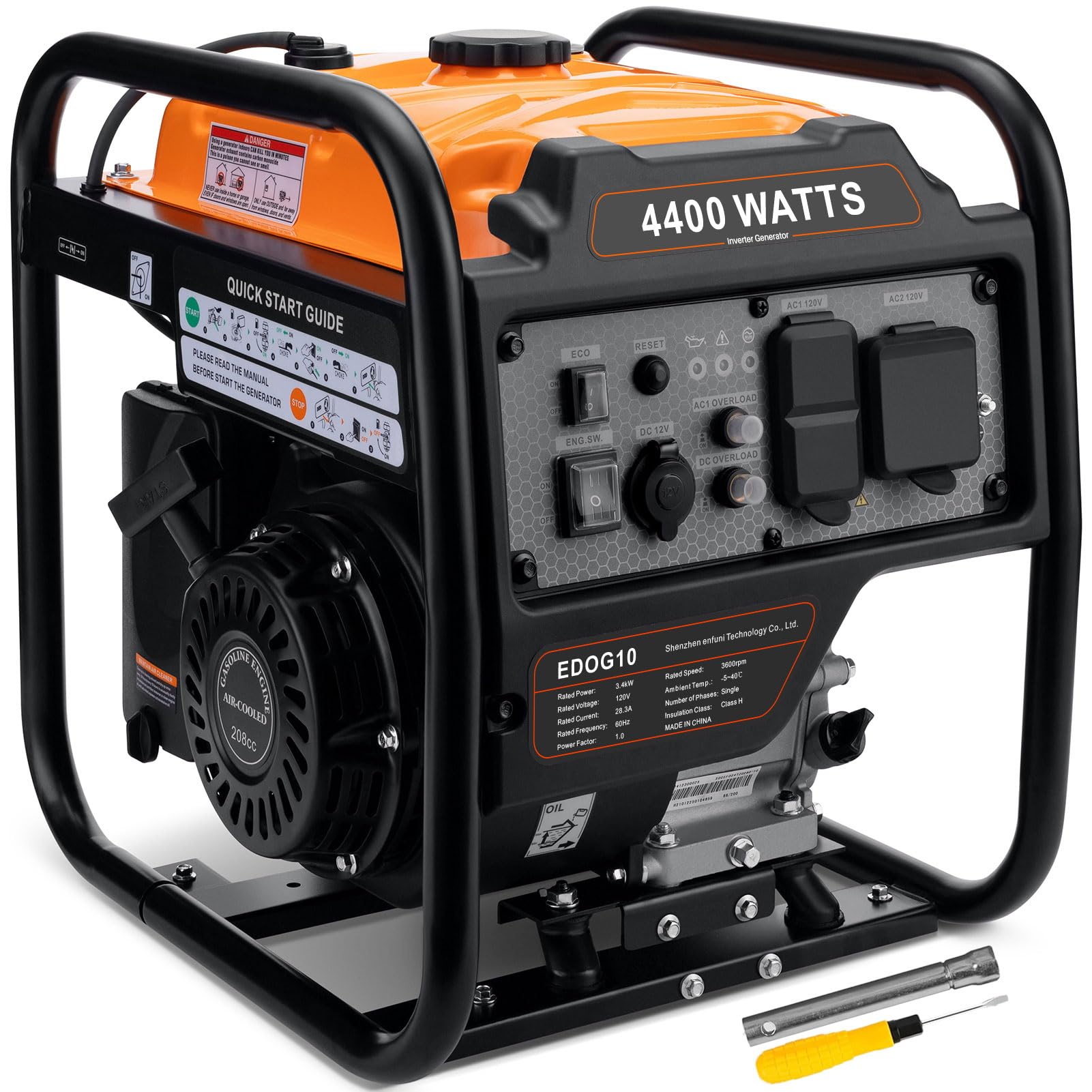
The Oxseryn 4400 is the rare generator that delivers genuine 30-amp RV readiness at a price point where most competitors stop at 20-amp household outlets. Its 4400 peak / 3400 running watts translate to real-world capability: it will start a 15,000 BTU RV air conditioner, run a refrigerator, and still have headroom for a few lights and a phone charger. The 2-gallon fuel tank claims 14 hours at 25 percent load, and owner reports confirm roughly 5 hours per gallon with eco mode engaged, giving you about 10 hours of mixed-use runtime on a single fill.
The open-frame design keeps weight at 57 pounds — manageable for two people to load into a truck bed but too heavy for solo camping. Noise is the trade-off: measured around 100 dBA at the unit and 75 dBA at 30 feet, this is not a quiet generator. It is an affordable powerhouse for emergency home backup where noise is a secondary concern to raw output. The factory functional test leaves a slight gas smell on delivery, which dissipates after the first run. Add 10W-30 oil (not included) and use ethanol-free gas for optimal first-pull starts.
Cold-start technology and low-oil shutdown add reliability for storm-season storage. The choke label is reportedly reversed on some units, so pay attention during the break-in. For the price, this unit undercuts most competitors by hundreds of dollars while still delivering inverter-clean power under 3 percent THD, making it safe for your fridge control board and laptop.
Why it’s great
- True 30A RV outlet on a budget inverter frame
- 14-hour runtime at quarter load covers overnight outages
- Inverter clean power protects sensitive electronics at under 3% THD
Good to know
- Open-frame design produces noticeable engine noise (75 dBA at 30 ft)
- Requires adding oil and breaking in the engine before first use
- Choke label orientation may be reversed; check manual carefully
2. Champion 4000-Watt RV Ready Inverter Generator

At under 49 pounds, the Champion 4000-watt inverter is a featherweight in the high-output class. It delivers 4000 starting watts and 3000 running watts, enough to run a 15,000 BTU RV air conditioner plus ancillary lights and the refrigerator, though simultaneously running the AC and a microwave will trip the overload (the easy-reset feature handles this gracefully). The 64 dBA noise rating at 23 feet is respectably quiet for its output class — quieter than most open-frame 3500-watt units.
The CO Shield carbon monoxide auto-shutoff system adds a critical safety layer. The parallel kit compatibility means you can pair two Champion 4000-watt inverters to double your output for larger loads. The 149cc 4-stroke engine uses a recoil start that owners consistently describe as first- or second-pull reliable. The included oil and funnel remove a common friction point for first-time generator owners.
Real-world fuel consumption runs about 5 gallons per 24 hours under continuous AC load, which is efficient for a 3000-watt running platform. The 12V automotive-style outlet and TT-30R RV outlet cover the full range of connection needs. One owner noted the lack of a built-in hour meter, but the clean power (under 3% THD), lightweight frame, and 3-year warranty make this the premium pick for RVers who need to move their generator between campsites frequently.
Why it’s great
- Under 50 lbs with 3000 running watts is the best power-to-weight ratio in its class
- CO Shield safety auto-shutoff meets modern safety standards
- Parallel capable for doubling wattage with a second unit
Good to know
- No built-in hour meter to track maintenance intervals
- 64 dBA is quiet for this output but not silent during late-night ops
- Can run RV AC and lights but not microwave on the same circuit
3. WEN 3600-Watt Dual Fuel Inverter (DF360iX)

The WEN DF360iX is the strongest dual-fuel inverter at its price point, producing 3600 surge / 2900 rated watts on gasoline and 3500 surge / 2600 rated watts on propane. The propane option is a game-changer for RVers and homeowners who want indefinite shelf life for their fuel — propane never goes bad, unlike gas that degrades in 3-6 months. The tool-free LPG quick-connector makes switching between fuel sources a 10-second process.
Noise is comparable to a normal conversation according to the manufacturer, and owners confirm the low-frequency hum is much less intrusive than conventional open-frame units. The fuel shut-off lets you run the carburetor dry before storage, preventing the gummed-up jets that kill generators during the off-season. The LED information panel displays voltage, frequency, runtime hours, and load percentage — a convenience feature absent from most competitors at this tier.
The CO Watchdog sensor automatically shuts the generator down if carbon monoxide accumulates, a critical safety feature for camping in enclosed areas or near RV windows. The two 120V household outlets hold plugs a bit loosely per some owner reports, but the TT-30R RV outlet, dual USB ports, and 12V DC outlet cover every practical connection. At 49 pounds and 149cc, the DF360iX is the obvious choice for buyers who want fuel flexibility and modern digital monitoring.
Why it’s great
- Genuine dual-fuel capability with propane for indefinite fuel storage
- Includes fuel shut-off for easy carburetor draining and storage
- Full info panel shows voltage, runtime, load, and frequency
Good to know
- 20A household outlets may hold plugs loosely
- Propane output is 100 watts lower than gasoline mode
- Premium price reflects dual-fuel flexibility and digital display
4. Westinghouse 2550W iGen Inverter Generator

Westinghouse engineered the 2550 iGen to disappear into the environment. At 52 dBA from 23 feet, it is quieter than a normal conversation — quiet enough to run in a campground without disturbing the neighboring site. The 2550 peak / 1900 rated watts are modest by home-backup standards but more than adequate for an RV refrigerator, lights, a CPAP machine, and charging devices. The 1.16-gallon gas tank delivers up to 12 hours of runtime in economy mode, meaning it can run all night on a single fill.
Dual-fuel capability (gasoline and propane) gives you the same indefinite-fuel-storage advantage as the WEN, and the included propane hose means zero additional purchases to get started. The unit comes with oil, an oil funnel, and a tool kit — genuinely plug-and-play. At 42.4 pounds, it is light enough for one person to carry to the campsite or load into an SUV.
The integrated CO sensor auto-shuts the generator when dangerous CO levels are detected. The parallel capability lets you connect two Westinghouse units for double the output. Owners praise the quiet operation for overnight RV boondocking, though a small number report initial sputtering if old gas is used — fresh ethanol-free fuel resolves it. The 3-year warranty and national service network provide peace of mind that budget brands cannot match.
Why it’s great
- Industry-leading 52 dBA noise rating for near-silent operation
- 12-hour runtime on a single gas tank with economy mode
- Full plug-and-play kit includes oil, funnel, tools, and propane hose
Good to know
- 1900 running watts limits simultaneous large appliances
- Propane valve guard is unguarded from the factory
- Service panel clips feel flimsy compared to the rest of the build
5. PowerSmart 2500W Inverter Generator (HB5020)
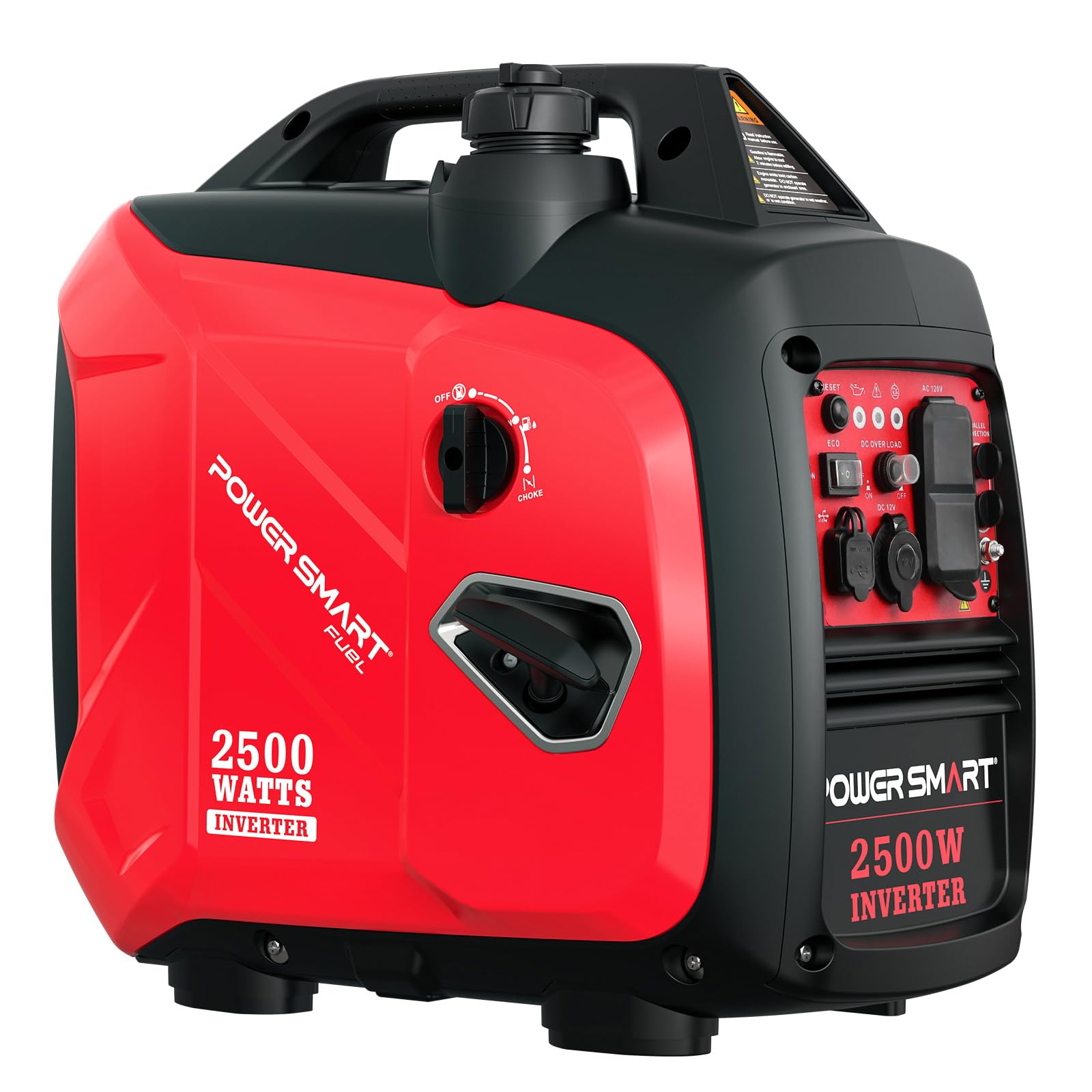
The PowerSmart HB5020 occupies the sweet spot for RVers who need a generator they can lift into a truck bed alone. At 39.7 pounds with a built-in ergonomic handle, it is one of the lightest 2500-watt inverters on the market. The 79.8cc 4-stroke OHV engine delivers 2500 starting watts and 1900 rated watts, which is enough to run a 13,500 BTU RV air conditioner, a refrigerator, and lights — but not the AC and the microwave at the same time.
Noise is measured at 59 dBA at 23 feet, which owners consistently describe as “exceptionally quiet” compared to traditional open-frame units. You can hold a normal conversation next to it. The 1.06-gallon fuel tank runs for 5.5 hours at 50 percent load, and the ECO mode extends that for lighter loads. The power panel includes two 120V AC outlets and two 5V USB ports, though notably absent is a TT-30R RV outlet — buyers who need a 30-amp RV connection will need an adapter.
Advanced inverter technology produces clean sine wave power with low THD, making it safe for laptops, CPAP machines, and smartphone charging. The digital display shows fuel level, runtime, voltage, wattage, and frequency — a rare feature at this price point. Owners report first-pull starts even after storage and praise the fuel efficiency. If you want a generator that lives in the RV compartment and comes out only when the shore power is out, the HB5020 is the right weight class.
Why it’s great
- Under 40 pounds with ergonomic handle for one-person transport
- 590 dBA is quiet enough for campground use without complaints
- Full data display shows fuel, runtime, voltage, and wattage
Good to know
- Lacks direct TT-30R RV outlet; requires adapter for 30A hookup
- 5.5-hour runtime at 50% load means refueling during extended outages
- 1900 running watts limits simultaneous refrigerator and microwave use
6. PowerSmart 4300W Inverter Generator
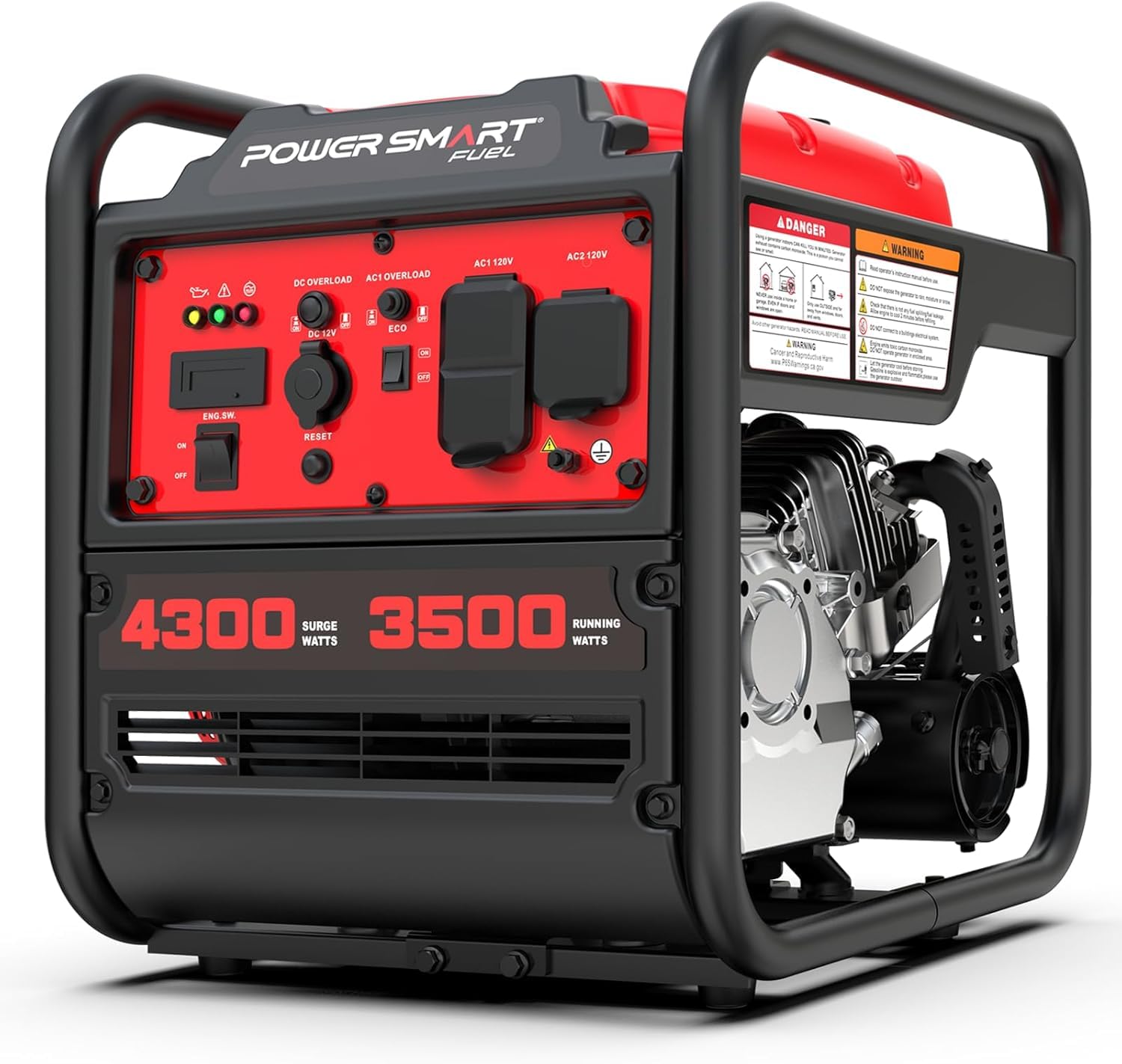
The PowerSmart 4300 packs a 223cc 4-stroke OHV engine into a compact frame to deliver 4300 surge / 3500 running watts — enough to start a 15,000 BTU RV air conditioner, a sump pump, a refrigerator, and still have headroom for power tools. The clean inverter power (under 3% THD) makes it safe for all sensitive electronics, including CPAP machines, laptops, and television control boards. This is the generator for homeowners and job site users who need professional-grade output but cannot justify premium-brand pricing.
The 1.98-gallon fuel tank provides up to 6.5 hours of runtime at 50 percent load, and the integrated ECO mode extends that for lighter loads by adjusting engine speed dynamically. Owners report real-world runtimes of 5.5 to 8 hours under mixed load, which covers a typical overnight outage. The manual recoil start is reliable even in cold weather, and the low-oil shutoff and overload protection safeguard the engine from user error.
At 68 pounds, it is heavier than the 2500-watt class units, so plan for two-person lifting or a small dolly. The noise is louder than enclosed inverter models — owners describe it as noticeable but not obtrusive at 25 feet. A DIY exhaust extension can reduce perceived noise by 10-15 dBA for around . The power panel lacks a standard TT-30R RV outlet; it uses a high-current 120V 29.2A output instead. For the power-to-price ratio, the 4300 is the best value in the high-output category.
Why it’s great
- 3500 running watts at this price point is unmatched in the inverter class
- 223cc engine provides reliable cold-weather starts and long engine life
- Inverter clean power under 3% THD for sensitive electronics
Good to know
- 68 lbs is heavy for one person; recommend a wheel kit or dolly
- Open-frame design produces more noise than enclosed inverter models
- No standard TT-30R RV outlet; requires adapter for 30A RV hookup
7. Oxseryn 2800W Portable Inverter Generator
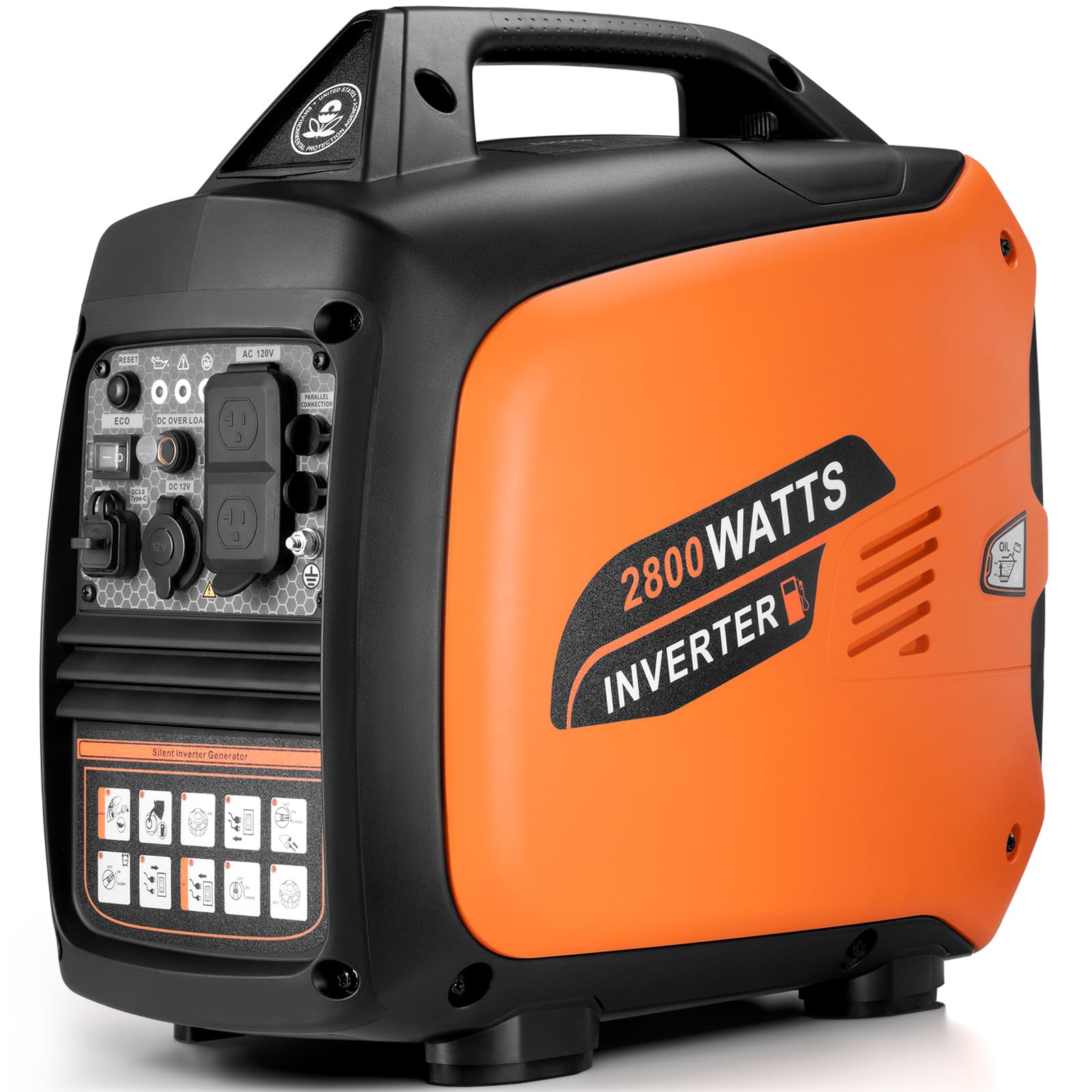
The Oxseryn 2800 is a 79.8cc closed-frame inverter that punches above its weight class. It delivers 2800 peak / 2000 running watts with less than 3 percent THD, providing clean power for phones, laptops, drones, and camera gear. The 1.1-gallon fuel tank runs for up to 9 hours at 25 percent load, which translates to a full night of power for an RV refrigerator and a few lights. At 58 dBA from 23 feet, it is quiet enough to run at a campground without earning complaints.
The multi-output panel includes two 120V AC ports, a 12V DC port, a standard USB-A port, and a USB-C port — the only unit in this review to include USB-C natively for modern device charging. The parallel function lets you connect two Oxseryn 2800 units for double the output. ECO mode intelligently adjusts engine speed to match the load, extending runtime and reducing fuel consumption significantly.
The oil check procedure is the Achilles’ heel: the side cover must be removed to access the dipstick, making oil checks messier than they should be. Some owners report metal debris in the first few oil changes (typical for break-in), but the unit is reliable after the initial oil change intervals. The 40-pound weight and built-in handle make it easy to carry solo. For RVers and campers who prioritize USB-C charging and whisper-quiet operation, the Oxseryn 2800 is a compact powerhouse.
Why it’s great
- Native USB-C port for modern device charging without adapters
- 58 dBA noise level is genuinely campground-friendly
- 9-hour runtime at quarter load covers a full night’s sleep
Good to know
- Side panel removal required to check oil level; messy process
- May stumble near max load in ECO mode; use full mode for heavy draws
- High-altitude kit needed for use above 4,000 feet
8. AMERISUN 2500W Portable Inverter Generator
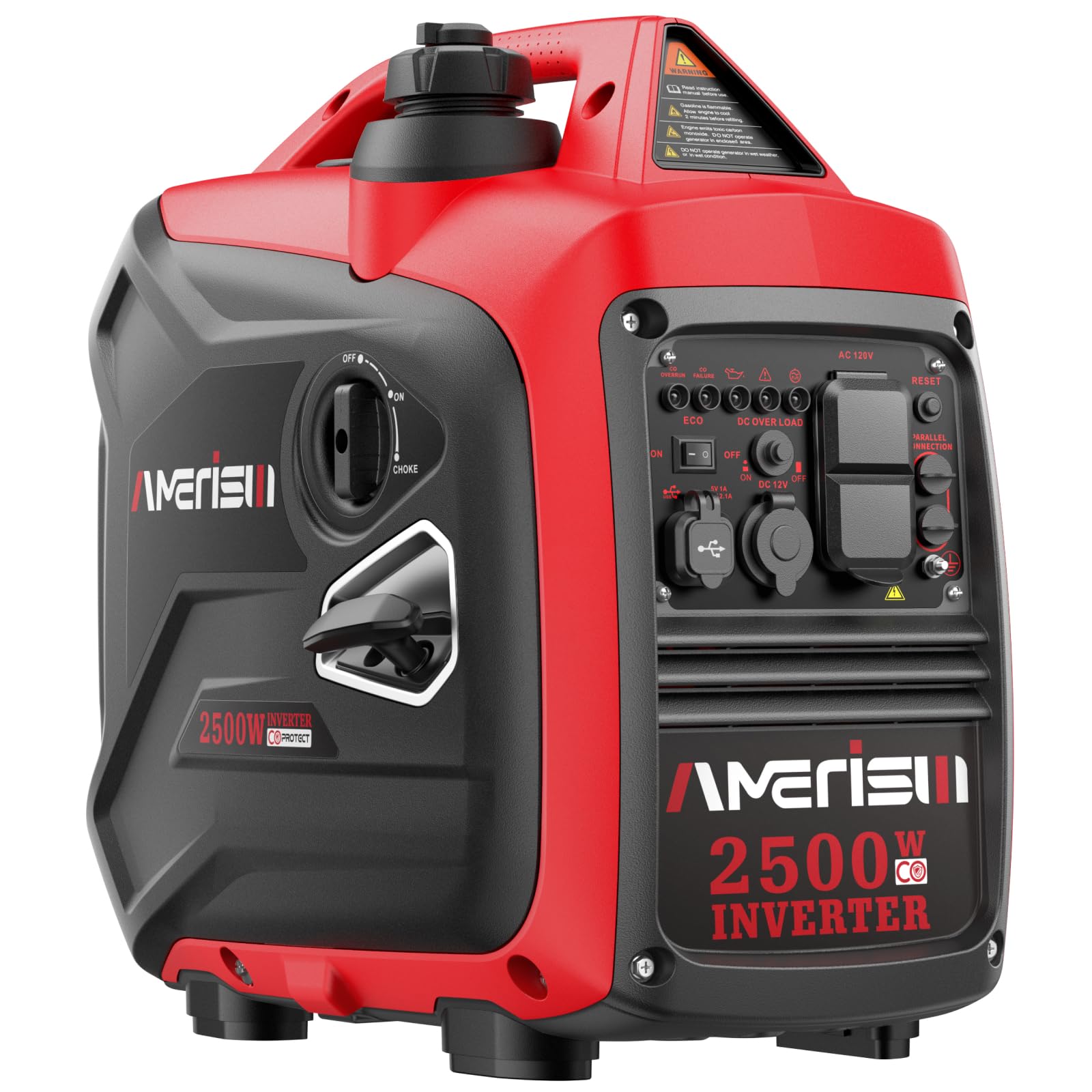
The AMERISUN 2500 is the budget-conscious camper’s entry into inverter technology. At 2500 peak / 1900 running watts, it will run a portable air conditioner, a coffee maker, lights, and sensitive electronics like laptops and CPAP machines — provided you do not run the AC and microwave simultaneously. The 1.05-gallon fuel tank delivers up to 11 hours of runtime at 25 percent load, making it efficient for overnight trips where you want to minimize fuel stops.
Weighing 39 pounds with a built-in carrying handle, it is light enough for one adult to carry to the campsite. The noise rating is 69 dBA at 23 feet — louder than a conversation but quieter than a lawnmower and significantly less intrusive than an open-frame conventional generator. Owners consistently describe it as “quiet” and “easy to start” after the first few pulls during the break-in period. The CO sensor auto-shuts the generator when dangerous CO levels accumulate, a crucial safety feature for RV and tent camping.
The panel includes two 120V AC outlets, a 12V DC outlet, and two USB ports — enough connections for a family camping setup. The unit ships without oil, so add 10W-30 synthetic before the first start. Owners report performance improves after 5 tanks of fuel as the engine breaks in. If you are on a tight budget and need inverter-clean power for a small RV, pop-up camper, or tailgate, the AMERISUN delivers the essentials at the lowest entry price in this review.
Why it’s great
- 11-hour runtime at 25% load on a single gas tank
- 39 lbs with handle is genuinely portable for one adult
- Built-in CO sensor adds critical safety for enclosed camping
Good to know
- 69 dBA is louder than premium inverter models
- Cold-blooded start; may take 2-3 pull attempts when cold
- Ships without oil; 10W-30 synthetic must be added before first use
9. AIVOLT 1600W Super Quiet Inverter Generator

The AIVOLT 1600 is the lightest and quietest generator in this lineup at just 28 pounds and 57 dBA from 23 feet. It is designed for car campers and tailgaters who need clean power for one critical appliance and device charging — not for whole-home backup. The 60cc 4-stroke engine produces 1600 peak / 1260 running watts, enough to run a small tent air conditioner (400W running, 1500W startup), charge laptops and phones via the two USB ports (Type-A and Type-C), and power a compact camping fridge.
The 0.9-gallon fuel tank provides up to 8 hours of runtime at 25 percent load. The ECO mode intelligently adjusts engine speed, significantly reducing fuel consumption and noise when running light loads. The built-in CO Alert technology automatically shuts the generator down if carbon monoxide reaches dangerous levels, a critical feature for tent campers. Parallel capability allows you to connect two AIVOLT 1600 units to double your output, though the parallel kit is sold separately.
The THD under 3 percent means this generator is safe for laptop chargers, CPAP machines, and drone batteries. Owners report the noise profile is excellent — quieter than a normal conversation. The main trade-off is the limited starting watts: you cannot run a full-size RV air conditioner or a refrigerator, and the unit may need to cool for 30-60 minutes before restarting if the engine heat trips the safety mode. For the ultralight backpacker by car or the tailgater who just needs device power and a small fridge, the AIVOLT 1600 is the quietest, lightest option available.
Why it’s great
- 28 lbs is the lightest generator in the review; easy one-hand carry
- 57 dBA is quieter than a normal conversation
- Native USB-C port and parallel capability for expansion
Good to know
- 1260 running watts limits use to small appliances only
- Hot safety mode may require 30+ minute cooldown before restart
- Not EPA approved for California use; check state regulations
FAQ
Can a portable gas generator run a refrigerator during a power outage?
How do I break in a new gas generator engine?
What is the difference between a TT-30R and a 5-20R outlet?
Can I run a portable gas generator inside my garage or RV?
How often should I change the oil in my generator?
Final Thoughts: The Verdict
For most users, the best portable gas generator winner is the Oxseryn 4400-Watt Inverter because it delivers true 30-amp RV readiness, 3400 running watts, and inverter-clean power at an unbeatable mid-range price. If you want the quietest, lightest premium option for RV boondocking, grab the Westinghouse 2550 iGen at 52 dBA with dual-fuel flexibility. And for high-output home backup on a budget, nothing beats the PowerSmart 4300W Inverter, which delivers 3500 running watts for emergency situations without breaking the bank.