
The line between a crisp morning ride and a frozen-finger ordeal often comes down to one piece of gear: a proper pair of winter cycling gloves. Standard fleece liners or bulky ski mitts sacrifice either the warmth you need or the dexterity required to safely finesse brake levers and shifters—a compromise that can ruin any cold-weather session.
I’m Mohammad Maruf — the founder and writer behind Drink4Good. I’ve spent countless hours digging into thermal insulation ratings, waterproof membrane construction, and palm-padding geometry to separate real cold-weather performers from overpriced fashion accessories.
Whether you’re facing a subzero commute or a long weekend ride just above freezing, the ideal winter cycling gloves balance windproof shells, insulating cores, and articulated fingers that don’t impede your clutch or brake control.
How To Choose The Best Winter Cycling Gloves
Every cyclist’s hands are different — knuckle span, preferred grip width, local wind chill. The wrong glove leads to either sweaty palms or dangerously numb fingers on the bars. Focus on three pillars: thermal structure, shell waterproofing, and palm dexterity features. The goal is one pair that stays on your hands the whole ride, not stashed in a jersey pocket.
Insulation & Core Warmth
The primary metric is insulation density, often measured in grams of fill. Lightweight (40–60g Primaloft Gold) works from the mid-30s to low 40s Fahrenheit; heavier fills (170g Primaloft Gold or 3M Thinsulate) can handle teens and single digits. Bulkier insulation trades dexterity for warmth, so lobster-claw designs split the difference by pairing index fingers separately.
Waterproofing & Breathability
Not all “waterproof” gloves are equal. A fully seam-sealed membrane (like SEALSKINZ’s inner layer or a laminated insert) stops rain and slush seepage during a full commute. DWR-coated shells block light snow but soak through after 20 minutes of steady rain. Breathability ratings (measured in grams/m²/24h) matter — a non-breathable glove traps sweat that chills you the moment you stop pedaling.
Palm Padding & Grip Control
Winter handlebar vibration and rough road shock require more than bare polyester palms. Look for silicone gripper prints, gel pads, or TPR palm protectors. The padding should be concentrated in the ulnar nerve area (the outer edge of the palm) without adding so much bulk that you lose feel for the brake lever pivot point. Lobster designs naturally reduce finger fatigue by distributing pressure across fewer digit compartments.
Quick Comparison
On smaller screens, swipe sideways to see the full table.
| Model | Category | Best For | Key Spec | Amazon |
|---|---|---|---|---|
| PEARL IZUMI AmFIB Lobster | Lobster | Sub-freezing road & gravel | 170g Primaloft Gold Cross Core | Amazon |
| GripGrab Ride Deep Winter Lobster | Lobster | Extreme wind & cold commutes | 15k breathability DWR softshell | Amazon |
| SEALSKINZ Witton Waterproof | Mitten | Wet, slushy winter rides | Primaloft Gold, goatskin palm | Amazon |
| DRYMILE HYLA Waterproof Dexterity | 5-Finger | All-weather commuting & hiking | Wool blend, waterproof membrane | Amazon |
| INBIKE Waterproof Motorcycle | Motorcycle | Shorter, cautious cold rides | TPR palm pad, EVA finger shock | Amazon |
| Carhartt Men’s Waterproof Insulated | Work glove | Very cold, minimal gear control | Polyurethane palm, knit cuff | Amazon |
| ROCK BROS Handlebar Mittens | Pogies | Fat bike / e-bike deep cold | 3M Thinsulate, windproof shell | Amazon |
In‑Depth Reviews
1. PEARL IZUMI Unisex Gel Gloves – AmFIB Lobster
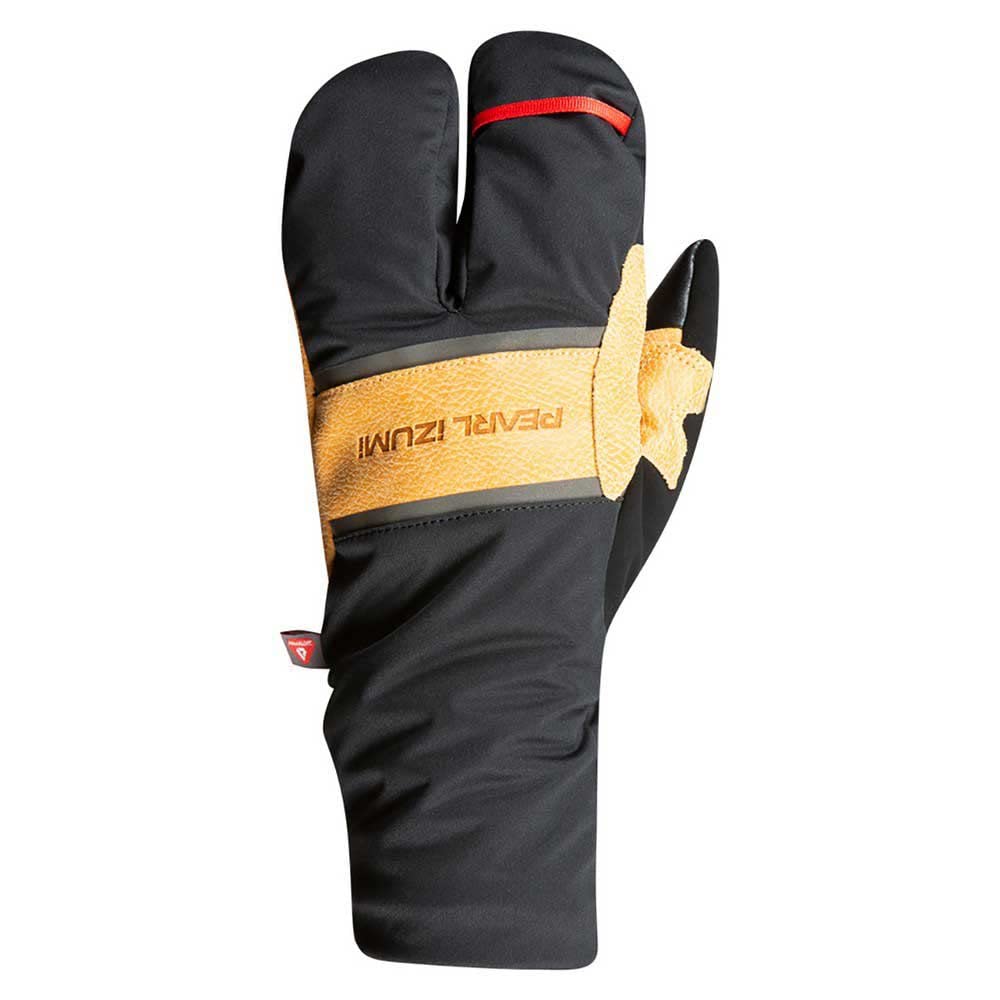
The AmFIB Lobster uses 170g Primaloft Gold with Cross Core aerogel technology to deliver serious warmth without the Michelin-man bulk that kills finger mobility. The lobster claw construction keeps your index finger free for shifting, while the middle two digits share thermal mass in the main pocket—a smart trade-off that has kept testers comfortable on two-hour rides in single-digit wind chills.
The 3D-shaped gel pad in the palm absorbs road chatter without deadening your feel for the brake lever, and the Ax Suede Laredo synthetic leather palm provides a reliable grip even when wet. Riders in the Washington DC area report solid performance from -8°C to 5°C in rain or snow, a very wide useful range for a winter-specific glove.
Some users note the touchscreen compatibility is finicky, and the price point sits at the premium end of the spectrum. But after owning the same pair for 16 years, one reviewer confirms the build quality makes them a long-term investment rather than a seasonal consumable.
Why it’s great
- Exceptional warmth-to-dexterity ratio thanks to Primaloft Gold Cross Core
- Gel padding reduces hand fatigue on long sub-zero rides
- Proven durability: one reviewer used the previous version for 16 years
Good to know
- Touchscreen index finger is unreliable
- Premium price may exceed budget for casual winter riders
2. GripGrab Ride Windproof Deep Winter Lobster 3-Finger

The GripGrab Ride is engineered for cyclists who keep pedaling when the mercury drops into the teens. Its windproof softshell outer blocks the worst gusts, while thermal fleece lining and a padded palm create a cocoon that testers describe as “warm and soft to the touch.” The lobster-claw split separates the index finger, making brake and shifter operation natural on both road and MTB lever setups.
A 15k breathability rating means sweat vapor can escape even during high-effort climbs, preventing that clammy chill when you stop pedaling. The silicone gripper strips on the palm and fingertips secure your hold on rubber hoods and carbon bars equally well.
On the downside, the fingers run slightly long; some riders with smaller hands found the XS length interfered with safe lever engagement. At 49.95 USD, they sit at a solid mid-range price point, and reviews praise their performance on 30°F e-bike commutes as “comfortable and warm as could be expected.”
Why it’s great
- Windproof softshell shrugs off single-digit wind chills
- 15k breathability rating prevents sweat buildup
- Separated index finger provides shifter precision
Good to know
- Finger length may be too long for smaller hands
- Labeled as “deep winter” but some find it better for 30°F+ rides
3. DRYMILE HYLA Waterproof Dexterity Gloves

The HYLA gloves aim to be the all-rounder: a wool-blend liner for natural warmth, a sealed waterproof membrane for wet conditions, and enough finger dexterity to operate zippers and phone screens without removal. According to testers, they excel in the 37–50°F range, keeping hands dry in heavy rain for up to sixty minutes before the outer shell begins to saturate.
The “snug-fit” design creates minimal dead space inside, so you retain excellent feel for handlebar controls and gear levers. The non-slip grip on the palm is light but functional for cycling, hiking, or even light fishing tasks. Reflective details improve low-light visibility for commuters.
Touchscreen performance is mediocre at best, and the wool blend lacks the thermal mass needed for prolonged subfreezing exposure. For riders in wet, cool climates who prioritize dexterity over arctic-grade warmth, the HYLA is a versatile companion at 38.95 USD.
Why it’s great
- Wool blend provides natural, breathable warmth for above-freezing rides
- Waterproof membrane withstands 60 minutes of heavy rain
- Snug fit maximizes finger dexterity for controls
Good to know
- Not warm enough for prolonged sub-35°F use
- Touchscreen sensitivity is inconsistent
4. SEALSKINZ Witton Waterproof Extreme Cold Weather Glove

Sealskinz is a trusted name in wet-weather gear, and the Witton glove brings their three-layer waterproof construction to the cycling world. The outer goatskin leather palm offers excellent durability and a natural feel that many synthetic gloves lack, while the Primaloft Gold insulation targets extreme cold. Pre-curved fingers improve grip ergonomics on the bars.
Testers confirm the glove is genuinely waterproof in slush and wet snow, even during prolonged contact with melt water. A slim fit (due to the zero-liner-movement construction) provides better dexterity than most mittens. Users who wore them for snowboarding and winter biking report they have “held up for a couple winters.”
The warmth ceiling is lower than the “extreme” label suggests: several reviews found fingers too cold after 30 minutes in 5°F conditions, and the touchscreen performance is poor. For winter cyclists in the 20°F–30°F range who need a reliable, slim waterproof mitten, the Witton is a strong contender at 57.09 USD.
Why it’s great
- Goatskin leather palm provides long-lasting grip and durability
- 100% waterproof membrane keeps hands dry in slush and wet snow
- Pre-curved fingers reduce hand fatigue on long rides
Good to know
- Warmth fails in extreme sub-10°F conditions
- Touchscreen index finger does not respond reliably
5. ROCKBROS Bike Handlebar Mittens – Pogies

The ROCKBROS pogie system attaches directly to your handlebars, creating a windproof, Thinsulate-lined cocoon that lets you wear just a light liner or fingerless glove even when temps drop to 25°F. This is the ultimate solution for fat bikers, e-bike commuters, and anyone who hates the restrictive bulk of thick gloves.
Installation is straightforward: internal handlebar plugs secure the mitts inside the bar ends, and pull straps cinch around shift cables to seal out drafts. A zippered pocket on top doubles as a vent for warmer days and a small storage pouch. Reflective patches improve visibility during dark winter commutes.
The primary tradeoff is emergency safety—exiting the pogies quickly in a crash takes practice. Below -10°F the Thinsulate fill reaches its limit, and heavy rain can eventually dampen the inner lining. Still, for riders who want glove-free mobility inside a warm envelope, the ROCKBROS pogies are a unique and effective cold-weather tool at 51.99 USD.
Why it’s great
- Allows thin liner gloves or bare hands in 25°F+ conditions
- Windproof shell and reflective details enhance safety
- Internal cable seals block cold air intrusion
Good to know
- Slow hand egress in crash situations
- Warmth limit reached below -10°F
6. INBIKE Waterproof Winter Motorcycle Gloves

The INBIKE waterproof gloves borrow heavily from motorcycle glove design, with TPR palm pads, hard knuckle protectors, and a waterproof membrane. Cyclists looking for basic barrier protection from 30°F winds and light precipitation will find them warm enough for short rides of 30–45 minutes. The soft fleece lining adds comfort, and the hook-and-loop wrist closure ensures a snug fit.
While the construction is solid for the price point (39.99 USD), the dexterity falls short of dedicated cycling gloves—the bulk of the TPR pad and the hard knuckle limits your ability to precisely feather brake levers. The touchscreen layer in the index finger is nearly non-functional according to multiple buyers.
These gloves function better as a budget all-purpose winter glove for errand running and commuting rather than a serious performance cycling piece. If you ride casually and prioritize hard-wearing toughness over finesse, the INBIKE offers reasonable protection at an entry-level cost.
Why it’s great
- TPR palm and hard knuckle offer good impact protection
- Soft fleece lining and fleece cuff seal in warmth
- Low price point for a multi-layer cold-weather glove
Good to know
- Bulk reduces finger precision on shifters and brake levers
- Touchscreen index finger barely works
7. Carhartt Men’s Waterproof Insulated Knit Cuff Glove

The Carhartt waterproof insulated glove is a workhorse design with a Polyester shell, a Polyurethane palm for waterproofing, and a knit cuff that seals out snow. Its primary strength is sheer warmth: testers report successful use in -29°F wind chill without frostbite. The heavy insulation and stiff build make it ideal for stationary cycling, fat biking, or shoveling snow after your ride.
At 32.99 USD, this is the most affordable option on the list, and the Carhartt name brings a promise of rugged durability that many users confirm—“I suspect I will be using these for many years,” one writes. The fabric weight is medium, but the insulation density is substantial, making the glove feel thick and slightly bulky in the palm.
However, those very qualities disqualify it for technical cycling. The polyurethane palm offers decent grip but minimal bar feel, the lack of touchscreen compatibility is a major nuisance, and the one-size-fit runs narrow, so sizing up is mandatory. For cyclists who need a dedicated riding glove, the Carhartt works best as a backup or for the coldest commutes where dexterity is secondary to survival.
Why it’s great
- Remarkable warmth even in extreme -29°F wind chill
- Durable Carhartt build quality at a budget-friendly price
- Knit cuff design keeps snow out of sleeves
Good to know
- Bulk compromises shifter/brake precision for cycling
- No touchscreen compatibility, runs narrow
FAQ
What is the difference between a lobster-claw and a 5-finger design for cycling?
How do I choose the correct size for winter cycling gloves?
Are touchscreen-compatible winter cycling gloves actually reliable?
Can I use motorcycle winter gloves for cycling?
Final Thoughts: The Verdict
For most users, the winter cycling gloves winner is the PEARL IZUMI AmFIB Lobster because it combines premium Primaloft Gold insulation with a lobster claw that delivers real-world shifter dexterity in single-digit weather. If you want a better breathability-to-warmth ratio for slightly milder winters, grab the GripGrab Deep Winter Lobster at a more accessible mid-range price. And for the wettest, slushiest commutes where total waterproofing is non-negotiable, nothing beats the slim profile and goatskin leather palm of the SEALSKINZ Witton.