
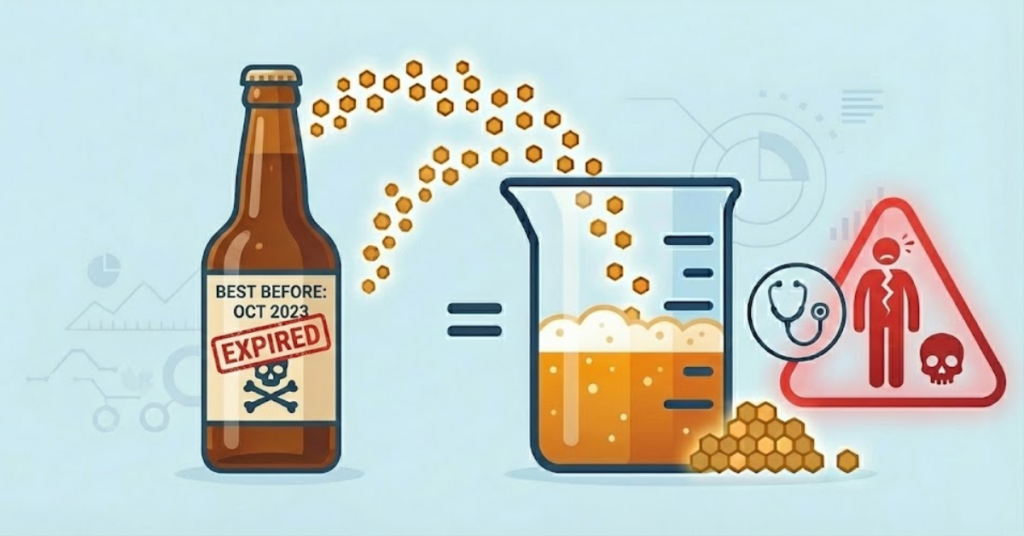
Yes, you can usually drink expired beer if it was stored sealed and cold, but taste declines and any beer that smells sour or odd should be discarded.
Can I Drink Expired Beer? Safety Basics
Seeing an old date on a bottle or can can trigger two questions at once: will this beer make me sick, and will it still taste good. The short answer is that most sealed beers past their date are more of a flavor issue than a safety crisis.
Beer has several built in protections. Alcohol, low pH, carbonation, and hops make the liquid a poor home for dangerous bacteria in a sealed container. Old beer is far more likely to taste flat or stale than to send you running to a doctor.
That said, can i drink expired beer? still has a conditional answer. A cold, unopened can from the fridge is a different case from a hot, light soaked bottle. Safety and enjoyment depend on storage, style, and the signs you see when you open it.
What Expiration Dates On Beer Actually Mean
Many drinkers treat the printed date on beer as a strict cutoff, yet in most regions that stamp is about quality, not safety. Agencies such as the U.S. Department of Agriculture explain that phrases like “best before” or “best if used by” signal peak quality, while “use by” dates are reserved for highly perishable foods where safety drops quickly.
Most breweries therefore choose a best before or drink by date. The beer does not suddenly spoil when the calendar flips. Instead, the brewer is telling you when they expect the aroma, bitterness, and malt character to line up with their recipe.
Some breweries print a clear “bottled on” or “canned on” date instead. Others use code strings that only regulars or staff can decode. Industry groups such as the Brewers Association encourage clear date and lot coding so retailers and drinkers can track freshness and trace any quality issues.
Best Before Versus Use By On Drinks
Understanding label language turns a scary looking date into a practical guide. Best before on a shelf stable drink like beer speaks to changing flavor, while a use by line on dairy or ready meals warns that safety drops quickly after that point.
Food safety agencies recommend using best before dates as guidance, then relying on sight and smell on low risk drinks. For a sealed beer that still looks normal, that usually means you can taste a small sip and decide whether the flavor is still worth finishing.
How Beer Changes After The Date
Once beer leaves the brewery, time, oxygen, temperature, and light slowly change it. Hop bright pale ales lose punch, crisp lagers turn dull, and some heavy dark beers pick up sherry like notes. These shifts roll out over months, not hours.
Two big forces are oxidation and light. Oxygen that seeps through caps and seams dulls hops and pushes malt toward cardboard like notes. Sunlight or harsh store lighting reacts with hop compounds in clear or green glass and creates the familiar skunky aroma.
| Factor | What Happens Over Time | Effect On Drinking |
|---|---|---|
| Hop Aroma And Bitterness | Hop oils break down, lowering citrus, pine, or tropical notes. | IPAs and pale ales taste muted or dull compared with fresh cans. |
| Malt Flavor | Malt sweetness and grain notes can fade or tilt toward cardboard. | Lagers lose crisp edges; rich malty styles can feel cloying or flat. |
| Carbonation | Slow gas loss through seals and tiny leaks over months or years. | Beer pours with less foam and feels less lively on the tongue. |
| Color And Clarity | Oxidation can darken pale beers; haze may increase in some styles. | Appearance may look tired but this alone does not prove spoilage. |
| Light Exposure | Sunlight and store lights react with hop compounds, especially in clear glass. | Light struck or “skunky” aroma develops, even before the date. |
| Storage Temperature | Warm storage speeds every staling reaction; cold slows them down. | Beer kept in a fridge ages far more slowly than beer in a hot garage. |
| Alcohol Strength And Style | Stronger, darker beers tolerate age better than light low alcohol styles. | Barleywines or imperial stouts can age gracefully; light lagers rarely do. |
From a safety angle, these changes seldom create toxins in sealed beer. The main worry is a container that lost its seal or picked up microbes after opening. An opened growler in the fridge for a week is riskier than a dusty but sealed bottle in a cupboard.
How Long Expired Beer Stays Drinkable
There is no single clock for every beer, yet a few patterns help. Hop heavy IPAs taste best within a couple of months of packaging, while many lagers still drink well for several months past the printed date when they stay cold and out of strong light.
Guides for retailers and drinkers often describe sealed beer stored in a steady fridge as drinkable for six months to a couple of years past the best before date, depending on strength and style. At room temperature, that window narrows, especially for lighter beers.
Style Differences In Shelf Life
Hop driven styles sit at the fragile end of the range. Once hop oils fade, the beer may still be safe yet feels bland and unbalanced. Crisp light lagers lose snap as malt and bitterness slide out of balance.
Dark, higher alcohol beers such as imperial stouts, strong ales, or some barrel aged releases often handle much longer storage. Some gain dried fruit and sherry like notes as they sit. Sour or mixed fermentation beers already taste complex, so small extra shifts mostly change character, not safety.
Signs Your Beer Has Gone Bad
Print dates and style guidelines are only part of the story. The clearest signal comes from your senses and a quick visual check of the package. Before you drink an old beer, run through a short checklist.
Check The Package
Start with the outside. Look for bulging ends on cans, heavy rust, deep dents along seams, or sticky rings from leaks. Any sign that pressure changed or the seal failed is reason enough to drop the can in the recycling instead of in a glass.
Use Sight And Smell
Pour the beer into a clean glass. Cloudiness in a style that should be clear, a thick stringy sediment that was not present when fresh, or odd colors can signal trouble. Foam that dies instantly can come from age, poor cleaning, or both.
Then smell the beer in the glass. A faint cardboard note or light skunky whiff means age but not necessarily danger. Sharp vinegar, solvent like alcohol, rotten eggs, or other harsh aromas are warning flags and a cue to pour the beer down the sink.
| Sign | What It May Mean | Suggested Action |
|---|---|---|
| Bulging Can Or Leaking Bottle | Pressure build up, broken seal, possible extra fermentation. | Do not drink; discard the container. |
| Thick Sediment Or Strange Haze | Yeast or bacteria growth beyond what the style expects. | Smell cautiously; if in doubt, pour it out. |
| Vinegar Or Rotten Egg Smell | Likely spoilage or heavy oxidation, not just harmless aging. | Skip drinking and recycle the glass or can. |
| Flat, Lifeless Pour | Gas loss from long storage or poor sealing. | Safe in many cases, but taste will disappoint. |
| Strong Skunky Aroma | Light struck hops in clear or green glass bottles. | Not a safety risk, yet many drinkers choose to dump it. |
| Sharp Metallic Or Dusty Notes | Age, poor storage, or issues with packaging. | Trust your palate; stop if it seems off. |
| Old Opened Growler Or Crowler | Loss of carbonation, higher chance of contamination. | Best within a day or two; discard older fills. |
Expired Beer Versus Spoiled Food
When people ask can i drink expired beer? they often picture milk or meat that becomes hazardous soon after a date passes. Foods with a use by stamp can allow rapid growth of dangerous bacteria once that line is crossed, so agencies advise throwing them out on time.
Beer has a different risk profile from meat or milk. Alcohol, acidity, and low nutrients mean harmful bacteria rarely thrive in a sealed bottle or can. Health focused sources, including a Healthline review of alcohol shelf life, describe flat or stale beer as more of a stomach upset risk than a source of serious infections.
When Extra Caution Makes Sense
Certain groups may want extra care with any alcohol past its date, even when risk for others stays low. People with weak immune systems, chronic liver disease, or digestive conditions may react more strongly. Those who avoid alcohol entirely should skip expired beer along with fresh beer.
Smart Habits For Buying And Storing Beer
Good habits on shopping day make the question can i drink expired beer less urgent later. Check dates in the store, especially on hop driven styles. When you can, pick the freshest cans from the cooler instead of warm stock from a high shelf.
At home, think of beer as a chilled pantry item. Dark storage and steady cold temperatures protect flavor. A dedicated beer shelf in the fridge or a cool basement corner will treat your bottles far better than a sunny windowsill.
Opened Beer Needs Faster Decisions
Once a bottle, can, or growler is opened, its clock speeds up. Oxygen rushes in, and any microbes from the air, glass, or your lips gain access. An opened container in the fridge usually tastes fine only for a day or two, sometimes less for delicate styles.
Practical Takeaways On Expired Beer
Most questions around old beer come down to three steps. First, read the date and note whether it is a best before or packaged on line. Next, check the container, pour into a glass, and look and sniff. Only drink when sight and smell both seem normal.
Expired beer in a sealed, undamaged can that was stored cold is highly unlikely to cause serious harm, though the taste may fall far short of fresh stock. Beer that gushes, smells harsh, or comes from a damaged container belongs in the sink, not in your glass.
That balance between low safety risk and noticeable flavor loss is the real answer behind the simple question on the label. Old beer is rarely dangerous, yet the best drinking experience still lives inside the window the brewer intended when they picked that date.