
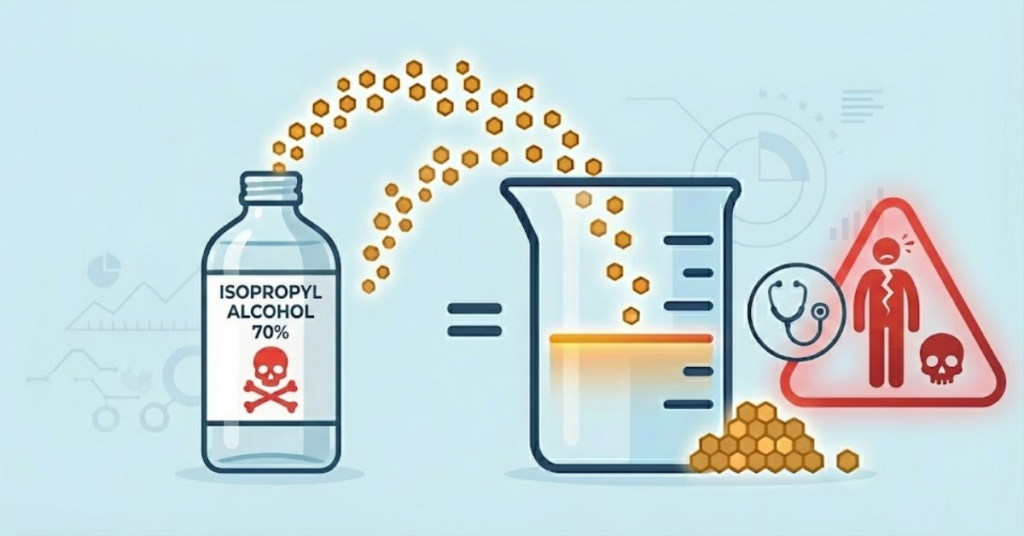
No, you cannot drink isopropyl alcohol because it is highly toxic and breaks down into acetone, causing severe organ damage, coma, or death.
Rubbing alcohol sits in almost every medicine cabinet. It cleans cuts, sanitizes surfaces, and helps with minor aches. Because it looks like clear liquor and smells somewhat similar to vodka, people sometimes wonder if they can consume it. This is a dangerous mistake. Isopropyl alcohol acts as a poison in the human body.
You might feel desperate or simply curious, but the chemistry of this liquid differs entirely from the alcohol found in beer, wine, or spirits. Drinking it leads to rapid poisoning. The body absorbs it quickly, and the toxic effects hit hard within minutes. Emergency rooms frequently treat accidental or intentional poisoning cases, and the outcomes can be tragic. This guide covers exactly why this substance is unsafe and what happens if it enters your system.
Can I Drink Isopropyl Alcohol? And The Immediate Risks
The short answer is absolutely no. You cannot drink isopropyl alcohol safely in any amount. While it shares the name “alcohol” with the ethanol found in beverages, the molecular structure makes it a potent toxin. Manufacturers create it for external use only. They often add bittering agents to discourage consumption, but the chemical itself does the real damage.
When you swallow this substance, your digestive system absorbs about 80% of it within thirty minutes. It enters the bloodstream and travels to the brain and liver. The liver tries to filter it but converts it into acetone. Acetone is the main ingredient in nail polish remover. This byproduct depresses the central nervous system much more intensely than regular alcohol.
People who ask, “can I drink isopropyl alcohol?” often do not realize that a small dose causes massive harm. Less than 200 milliliters can be fatal for an adult. For a child, even a sip creates a medical emergency. The intoxication hits faster and lasts longer than ethanol intoxication, but it brings severe internal bleeding and brain issues along with it.
Differences Between Isopropyl And Ethyl Alcohol
Understanding the gap between these two chemicals saves lives. Ethyl alcohol (ethanol) comes from fermenting grains or fruits. Isopropyl alcohol (isopropanol) comes from propene and water hydration chemically. Your body handles them differently.
Below is a detailed comparison to show why one is a drink and the other is a poison.
| Feature | Isopropyl Alcohol (Rubbing Alcohol) | Ethyl Alcohol (Beverage Alcohol) |
|---|---|---|
| Primary Source | Chemical synthesis (Propene/Water) | Fermentation (Grains/Fruits) |
| Metabolic Byproduct | Acetone (Toxic solvent) | Acetaldehyde (Broken down further) |
| Toxicity Level | High (CNS depressant/Poison) | Moderate (Safe in regulated amounts) |
| Intoxicating Potency | 2x to 3x stronger than Ethanol | Standard baseline |
| Safe for Consumption? | NEVER | Yes (In moderation) |
| Common Uses | Disinfectant, Solvent, Cleaner | Beverages, Tinctures, extract |
| Lethal Potential | High (Rapid onset coma/death) | Low (Requires large volume) |
The Toxic Effects Of Drinking Isopropyl Alcohol
Ingesting rubbing alcohol triggers a cascade of failures in the body. The primary danger comes from how your liver processes the fluid. Alcohol dehydrogenase, an enzyme in your liver, breaks down the isopropanol. This process turns the liquid into acetone. Acetone attacks the kidneys and the nervous system directly.
Symptoms appear quickly. You might notice a burning sensation in the throat and stomach immediately. This happens because high-concentration alcohol acts as a mild corrosive to soft tissues. Cramping and vomiting usually follow. The vomit may contain blood because the alcohol irritates the stomach lining to the point of hemorrhage.
Your body temperature drops. Low blood pressure and slow breathing set in as the central nervous system shuts down. This is not a “sleep it off” situation. The acetone stays in the blood for a long time, prolonging the coma risk. If the kidneys fail, the toxins build up until the body shuts down completely.
Physical Symptoms To Watch For
If you or someone else ingests this chemical, you must identify the signs fast. The progression moves from confusion to critical condition rapidly.
- Slurred speech and dizziness: These mimic regular drunkenness but feel heavier and more disorienting.
- Abdominal agony: Severe stomach pain indicates irritation or internal bleeding.
- Breathing trouble: Respiration slows down dangerously.
- Low body temperature: The skin feels cold and clammy.
- Seizures: The brain reacts to the toxin with electrical misfires.
Medical Consensus On Can I Drink Isopropyl Alcohol?
Doctors and toxicologists agree unanimously on this topic. The medical consensus answers the question “can I drink isopropyl alcohol?” with a strict warning. No medical professional considers any amount safe. Even the 70% solution found in drugstores contains enough poison to kill.
Hospitals treat isopropanol poisoning with supportive care. Doctors may use dialysis to filter the acetone and alcohol out of the blood if the levels are high enough. They also administer fluids to prevent dehydration from vomiting and low blood pressure. Sometimes, they must intubate the patient to keep them breathing. The recovery process is painful and can leave lasting kidney or liver damage.
You can verify these toxicity facts through the National Capital Poison Center, which explicitly warns against internal use. They state that even inhaling the fumes in a closed space can cause nausea and dizziness.
Common Misconceptions About Rubbing Alcohol
Myths confuse people about the safety of household chemicals. Correcting these errors prevents accidents.
Myth: It Gets You Drunk Like Vodka
While isopropanol causes sedation and slurring, it does not provide the euphoric “buzz” associated with social drinking. The sedation turns into unconsciousness very fast. People seeking a high often wake up in the ICU with tubes in their throats, or they do not wake up at all. The line between feeling “out of it” and dying is extremely thin with this chemical.
Myth: You Can Distill It To Make It Safe
Some internet forums suggest boiling or filtering rubbing alcohol makes it drinkable. This is false. Distillation separates liquids based on boiling points, but it does not turn isopropanol into ethanol. You simply end up with a more concentrated form of the same poison. No kitchen method changes the molecular structure of the alcohol.
Myth: Diluting It Makes It Okay
Mixing rubbing alcohol with juice or water does not neutralize the toxin. The total amount of isopropanol remains the same. Your liver still converts that amount into acetone. Dilution might reduce the throat burn, but it does not stop the organ damage.
What To Do If You Drink Isopropyl Alcohol
Acting fast determines the outcome. If you suspect someone swallowed rubbing alcohol, do not wait for symptoms to worsen. Time acts against you. The chemical absorbs rapidly, so every minute counts.
Step 1: Call for Help. Dial emergency services or your local poison control center immediately. In the United States, you can reach help at 1-800-222-1222. Professionals will guide you based on the amount swallowed and the weight of the person.
Step 2: Do Not Induce Vomiting. Unless a dispatcher tells you to, avoid making the person throw up. The chemical burns on the way down and can burn on the way up. Vomit can also enter the lungs (aspiration), causing severe pneumonia.
Step 3: Check Alertness. Keep the person awake and sitting up if possible. If they fall unconscious, roll them onto their side to prevent choking on vomit.
Step 4: Provide Information. Have the bottle ready. The doctors need to know the concentration (70%, 91%, or 99%) to calculate the toxicity level.
| Time Elapsed | Visible Symptoms | Internal Reaction |
|---|---|---|
| 0–30 Minutes | Dizziness, headache, slurring | Rapid absorption into the bloodstream. |
| 30–60 Minutes | Vomiting, severe stomach pain | Gastric irritation and start of acetone conversion. |
| 1–2 Hours | Confusion, poor coordination | CNS depression deepens; blood pressure drops. |
| 2–4 Hours | Unconsciousness, slow breathing | Acetone buildup peaks; kidney stress begins. |
| 4+ Hours | Coma, potential organ failure | Critical system shutdown requires life support. |
Why Isopropyl Alcohol Is Accessible Yet Dangerous
You find this product in pharmacies and grocery stores easily. It is cheap and effective for killing bacteria. This availability creates a false sense of security. Because it sits next to bandages and cough syrup, some assume it must be safe for the body. Manufacturers label it “for external use only” for a reason.
The high percentage of alcohol acts as a solvent. It dissolves oils and gums. Inside the body, this solvent property attacks protective mucous membranes. This is why internal bleeding happens so frequently with ingestion. The specific type of alcohol, isopropanol, serves industrial and medical cleaning needs, not dietary ones.
Even small amounts used for mouthwash (which you should not do) can be risky if swallowed. Safely storing these bottles away from children and separating them from edible items prevents mix-ups. Clear bottles of rubbing alcohol look exactly like water or vodka, leading to accidental swigs that end in disaster.
Chemical Addiction And Rubbing Alcohol
People struggling with severe Alcohol Use Disorder sometimes turn to non-beverage alcohols when they cannot access ethanol. This is known as consuming “surrogate alcohols.” It is a cry for help and a medical emergency. The withdrawal symptoms from regular alcohol might feel life-threatening, but treating them with rubbing alcohol introduces a new, deadlier threat.
Medical detox provides a safe path. Doctors use specific medications to manage withdrawal without poisoning the liver. If you know someone considering this desperate measure, direct them to a hospital immediately. They need medical intervention, not a substitute chemical.
For more technical data on chemical toxicity, you can review the safety data sheets provided by the CDC’s NIOSH guide. It outlines the permissible exposure limits and health hazards clearly.
Safe Storage And Handling
Prevention beats treatment. Keeping your home safe involves proper storage habits.
- Keep it high up: Store bottles on high shelves out of reach of toddlers who explore with their mouths.
- Keep original labels: Never pour rubbing alcohol into a water bottle or cup. Someone else might drink it by mistake.
- Color code: Some brands add green or blue dye to their isopropyl solutions. Buying these helps distinguish them from drinkable liquids.
- Educate family: Make sure everyone in the house knows that the “alcohol” in the bathroom cabinet is poison.
The Verdict On Consumption
The confusion surrounding the word “alcohol” leads to dangerous assumptions. In chemistry, “alcohol” refers to a broad family of organic compounds. Only one member of that family, ethanol, is safe for human consumption in moderation. The rest, including methanol and isopropanol, act as toxins.
When you ask, “can I drink isopropyl alcohol?” naturally hoping for a yes, remember the biology. Your body cannot run on this fuel. It destroys the machinery. The risks of blindness, kidney failure, and death far outweigh any temporary sedation.
If you need to sanitize a wound, use it. If you need to clean a circuit board, use it. But never let it pass your lips. The bottle warnings are not suggestions; they are facts based on human physiology. Stay safe and stick to beverages made for people, not industrial solvents.