
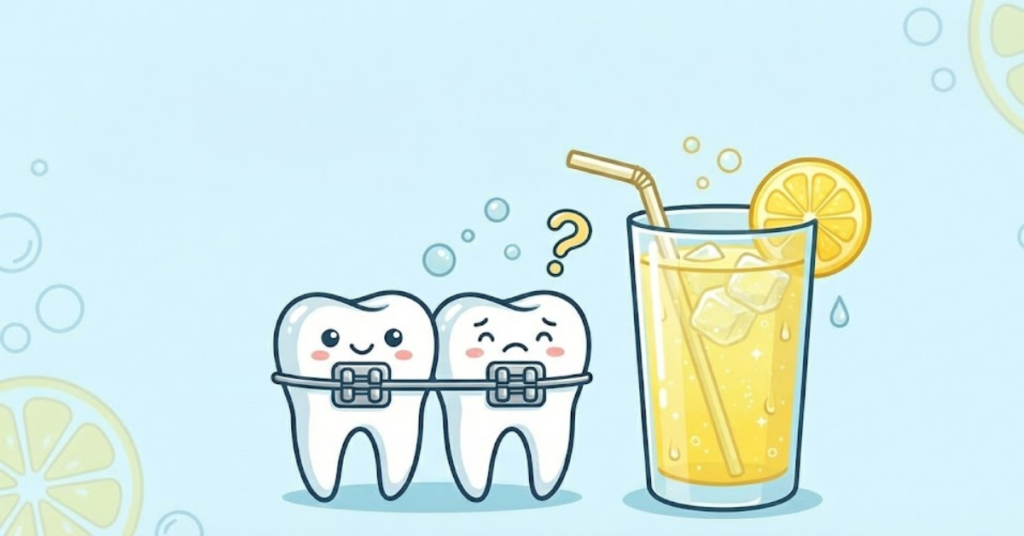
Yes, you can drink lemonade with braces, but use a straw and rinse with water to protect your enamel and brackets from the high acidity.
Summer days and tart, refreshing drinks go hand in hand. When you get orthodontic treatment, your diet changes drastically. You say goodbye to popcorn, sticky candy, and whole apples. But liquids often fly under the radar. You might wonder if your favorite citrus beverage is safe or if it will damage your expensive dental hardware.
The short answer is yes, but you cannot drink it carelessly. Lemonade is highly acidic and sugary. These two factors create a challenging environment for your teeth, especially when brackets and wires trap debris. You do not have to give it up completely, but you must change how you consume it to keep your treatment on track.
Can I Drink Lemonade With Braces?
You can enjoy this beverage, but moderation is non-negotiable. The main concern isn’t that the liquid will break a bracket immediately like a hard nut would. Instead, the danger lies in the chemical reaction between the citric acid and your tooth enamel, as well as the bonding agent holding your brackets in place.
Orthodontists generally warn against frequent consumption of acidic drinks. Lemonade has a low pH level, often ranging between 2.0 and 3.0. This is nearly as acidic as stomach acid. When you sip this drink slowly over an hour, you bathe your teeth in acid. This creates a risk of decalcification, which leaves permanent white squares on your teeth once the braces come off.
If you decide to indulge, do so quickly. Do not nurse the drink. Finish it in one sitting and follow up with a glass of plain water to neutralize the pH in your mouth. This simple step can save you from cavities and discoloration down the road.
Understanding The Acidity And Sugar Threat
Your braces create thousands of tiny hiding spots for sugar and acid. When you drink plain water, it washes over smooth surfaces. When you drink sugary lemonade, the liquid pools around the brackets, under the wires, and along the gumline. Bacteria in your mouth feed on this sugar and produce even more acid, leading to plaque buildup.
The bonding glue used to attach brackets to your teeth is strong, but it is not invincible. Constant exposure to high acidity can weaken this adhesive over time. If the bond weakens, a bracket might pop off while you are eating something soft, causing an unexpected trip to the orthodontist. Furthermore, acid softens the enamel. If you brush your teeth immediately after drinking acidic lemonade, you might actually brush away microscopic layers of softened enamel.
[Image of diagram showing acid erosion on teeth with braces]
Comparing Acidity In Common Beverages
To understand where lemonade stands, it helps to compare it with other drinks you might consume daily. Understanding pH levels allows you to make smarter choices for your dental health. A pH of 7 is neutral. Anything below 5.5 puts enamel at risk of dissolving.
| Beverage Type | Approximate pH Level | Risk To Braces |
|---|---|---|
| Pure Water | 7.0 (Neutral) | None |
| Milk | 6.5 – 6.7 | Low |
| Black Coffee | 5.0 | Low to Medium |
| Root Beer | 4.0 – 4.5 | Medium |
| Orange Juice | 3.3 – 4.2 | High |
| Traditional Lemonade | 2.0 – 3.0 | Very High |
| Cola / Soda | 2.5 | Very High |
| Energy Drinks | 2.5 – 3.5 | High |
Safe Drinking Habits For Orthodontic Patients
You do not need to banish lemonade forever, but you need a strategy. The goal is to minimize contact time between the liquid and your teeth. This reduces the opportunity for acid to etch the enamel or for sugar to feed bacteria.
Using a straw is your best line of defense. Position the straw past your teeth so the liquid goes straight to the back of your throat. This bypasses the brackets on your front teeth, which are the most visible when you smile. Even with a straw, avoid swishing the liquid around your mouth.
Another tactic is to drink it only with meals. When you eat, your mouth produces more saliva. Saliva is your body’s natural defense mechanism against cavities. It contains minerals that help harden enamel and neutralize acid. Drinking lemonade on its own, especially between meals, leaves your teeth vulnerable because saliva production is lower.
Risks Of Drinking Lemonade With Braces – Rules To Know
While the answer to “can I drink lemonade with braces?” is a cautious yes, ignoring the risks can lead to permanent damage. The most common issue is the development of white spot lesions. These are areas where minerals have been stripped from the enamel. They appear as chalky white outlines around where your brackets used to be.
Once these spots appear, they do not go away. Bleaching treatments can help blend them in later, but the structure of the tooth is permanently altered. By limiting your intake of high-acid drinks, you protect the aesthetic result of your orthodontic treatment. You spent time and money to straighten your teeth; keeping them healthy is just as important as keeping them straight.
Sensitivity is another factor. Braces often make teeth sensitive, especially after an adjustment appointment. Acidic foods and drinks can aggravate this sensitivity. If your teeth feel zingy or painful when you sip cold lemonade, it is a sign that your enamel is thinning or your dentin is exposed. Switch to water until the sensation subsides.
Sugar-Free Vs. Regular Lemonade Options
Many patients ask if sugar-free lemonade is a safer alternative. From a cavity prevention standpoint, yes, it is better. Without sugar, oral bacteria have less fuel to create plaque. However, from an acidity standpoint, sugar-free lemonade is often just as bad, if not worse.
Manufacturers still use citric acid to give the drink its sour tang. Sometimes, they add even more acid to balance the artificial sweeteners. So, while you might avoid sugar rot, you still face the risk of acid erosion. Treat sugar-free versions with the same caution as the sugary kind. Rinse with water afterwards and use a straw.
You can also dilute your drink. Mixing half water and half lemonade cuts the acidity and sugar concentration significantly. It might not taste as potent, but it is much gentler on your brackets and wires.
Proper Cleaning Routine After Acidic Drinks
A common mistake people make is rushing to brush their teeth immediately after finishing a sour drink. This seems like the right thing to do, but it causes more harm than good. Acid temporarily softens the enamel surface. If you scrub your teeth with a toothbrush right away, you are essentially sanding down your enamel.
The American Dental Association suggests waiting at least 60 minutes after consuming acidic foods or drinks before brushing. This waiting period gives your saliva enough time to wash away the acid and re-harden the enamel. In the meantime, vigorous rinsing with plain water is the best action.
Use a fluoride mouthwash once a day, preferably at night. Fluoride helps remineralize teeth and makes them more resistant to acid attacks. Ask your orthodontist for a prescription-strength fluoride toothpaste if you have a habit of drinking acidic beverages.
Signs Your Braces Are Damaged By Diet
Sometimes damage happens gradually. You might not notice a loose bracket until you wiggle it with your tongue. If the bonding glue has been weakened by acid erosion, the bracket might slide along the wire or feel unstable. A loose bracket does not effectively move your tooth, which delays your treatment time.
Check your wires in the mirror. If you see significant plaque buildup around the brackets that does not come off with brushing, this is a warning sign. Sugary drinks like lemonade contribute heavily to this sticky plaque. It hardens into tartar, which only a professional hygienist can remove. If your gums are puffy, red, or bleeding, your diet might be feeding gum disease.
Can I Drink Lemonade With Braces? – Temperature Matters
Temperature plays a surprisingly big role in comfort. Ice-cold lemonade can be a shock to teeth that are already sore from shifting. The wires used in modern braces are often heat-activated. Cold drinks can make the wire relax slightly, while hot things make it stiffen. While a cold drink might provide temporary numbing relief for sore gums, the extreme cold can cause sharp pain in sensitive teeth.
Room temperature or slightly chilled lemonade is often more comfortable than a glass full of ice. If you have just had your wires tightened, stick to lukewarm water or milk until the initial soreness passes.
Alternatives To Traditional Lemonade
If you crave something fruity but want to avoid the high acid content of pure lemonade, there are alternatives. Flavored water with a few slices of cucumber or strawberry offers a fresh taste without the aggressive pH drop. Coconut water is another excellent choice; it is low in acid and high in potassium.
You can also try making “low-acid” lemonade. Use less lemon juice and more water, or mix in other low-acid fruit juices like melon or pear juice. This changes the flavor profile but keeps the refreshing quality without attacking your enamel.
| Drink Option | Verdict | Why It Matters |
|---|---|---|
| Tap Water | Best Choice | Contains fluoride; cleans braces naturally. |
| Milk (Dairy/Soy) | Excellent | Neutralizes acid; provides calcium. |
| Diluted Lemonade | Moderate | Less acid than full strength, but still risky. |
| Pink Lemonade | Risky | Often contains red dyes that stain ligatures. |
| Sparkling Water | Caution | Carbonation creates weak carbonic acid. |
| Hot Lemon Water | Caution | Acidic, but usually consumed slower. |
| Slushies | Avoid | High sugar; ice chunks can break brackets. |
Staining Risks With Colored Lemonades
Clear or yellow lemonade is unlikely to stain your teeth, but it might stain the clear elastic bands (ligatures) that hold the wire to the bracket. These rubber bands are porous and absorb pigments easily. Once they turn yellow or brownish, your smile looks dingy until your next appointment.
Pink lemonade, strawberry lemonade, or varieties with artificial food coloring pose a higher staining risk. If you have clear ceramic braces (the tooth-colored kind), you need to be extra careful. While the ceramic brackets themselves resist staining, the glue and the bands do not. If you drink highly pigmented beverages, use a straw to bypass the front surfaces.
Dealing With White Spot Lesions
The biggest fear for anyone with braces is getting them off only to reveal white squares. These are early-stage cavities caused by demineralization. Sugary, acidic environments foster these spots. Lemonade is a prime culprit because it supplies both the acid to open the pores of the enamel and the sugar to feed the bacteria that invade those pores.
If you notice white lines forming near your gum line, stop drinking sugary beverages immediately. Improve your brushing game. Use an interdental brush (often called a Christmas tree brush) to clean under the wire and around the sides of the bracket. Orthodontists can sometimes prescribe a remineralizing paste that helps stop these spots from getting worse, but prevention is the only true cure.
[Image of interdental brush cleaning around braces bracket]
Hydration Importance During Treatment
Staying hydrated is vital for oral health. Braces can irritate the soft tissues of your mouth, causing sores or cuts. A dry mouth creates friction, making these sores worse. Water lubricates the mouth and helps these small injuries heal faster. Lemonade, while liquid, does not hydrate you as effectively as water because the sugar body processes sugar differently.
Carry a water bottle with you everywhere. If you drink a cup of coffee, tea, or lemonade, chase it with an equal amount of water. This helps restore the pH balance in your mouth much faster than your saliva can do on its own.
The Role Of Fluoride
Fluoride is a mineral that strengthens teeth. During orthodontic treatment, your teeth are under attack from plaque accumulation. Using a fluoride rinse helps harden the enamel against the acid attacks from drinks like lemonade. Many orthodontists recommend a specific routine: floss, brush, and then rinse with a fluoride mouthwash before bed. Do not eat or drink anything after the fluoride rinse so it can sit on the teeth overnight.
This extra layer of protection acts as a shield. It won’t make your teeth invincible to a gallon of lemonade, but it provides a necessary buffer for the occasional treat.
What Orthodontists Say
Most dental professionals agree that total deprivation leads to burnout. If you forbid yourself from having any treats, you might eventually binge on them. It is better to have a small glass of lemonade occasionally and clean your teeth properly than to sneak large amounts and neglect hygiene.
According to the American Association of Orthodontists, minimizing sugary and acidic foods is crucial for a successful treatment outcome. They emphasize that while the metal brackets are strong, the enamel underneath is not. Your compliance with diet rules directly impacts how your teeth look when the braces come off.
Final Thoughts On Summer Drinks
Navigating social events, barbecues, and pool parties with braces can be tricky. When everyone else is holding a soda or a lemonade, you might feel left out holding a water bottle. It is perfectly fine to have a drink. Just remember the techniques: straw, speed, and rinse.
Also, watch out for “hard” elements in drinks. Some fancy lemonades come with ice cubes or frozen fruit chunks. Chewing on ice is one of the fastest ways to break a bracket. Sucking on lemon wedges is also dangerous; the direct contact with the fruit flesh is extremely acidic and can erode enamel rapidly. Stick to the liquid and leave the solids alone.
If you are ever unsure, water is always the safest bet. It has zero negative side effects for your braces, costs nothing, and keeps your body functioning perfectly. Save the lemonade for special occasions, and your smile will thank you when reveal day finally arrives.