
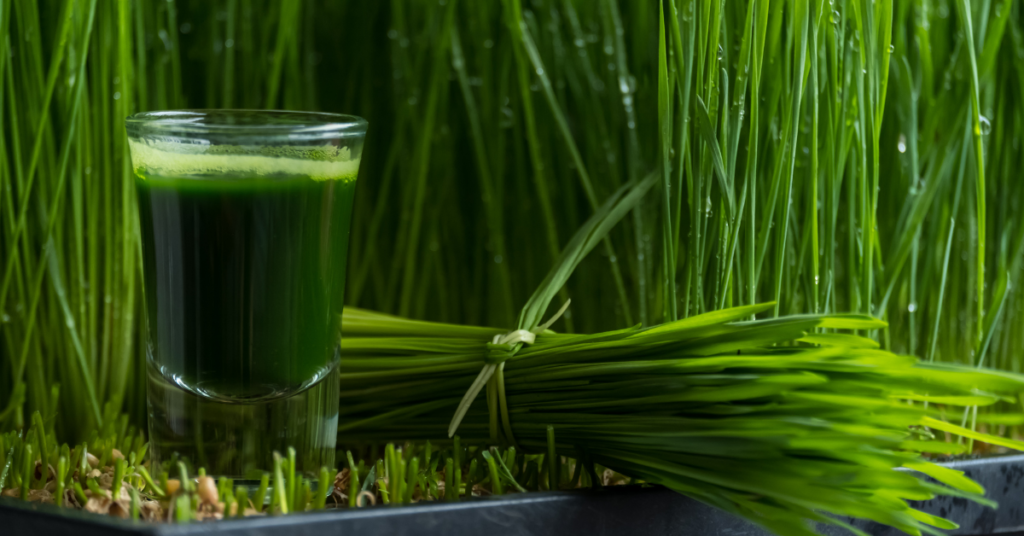
A standard one-ounce shot of fresh wheatgrass juice contains approximately 1 gram of carbohydrates, making it an extremely low-carb option for keto and diabetic diets.
Wheatgrass juice has gained a reputation as a potent wellness shot. It appears in juice bars, health food stores, and home kitchens everywhere. While its vitamin content gets most of the attention, many health-conscious people focus strictly on the macros. If you track your intake for weight loss or blood sugar management, you need precise numbers.
Knowing the carbohydrate count helps you fit this green drink into strict protocols like the ketogenic diet or intermittent fasting. The numbers look favorable, but the form matters. Fresh juice, frozen shots, and powdered supplements all vary slightly in their nutritional makeup. We will break down exactly what is in your glass so you can sip without worry.
The Detailed Nutritional Profile Of Wheatgrass
Before we look at the carbs alone, it helps to see the full picture. Wheatgrass is nutrient-dense, meaning you get a high volume of vitamins and minerals for very few calories. This density is why people tolerate the grassy taste. You do not need to drink a pint of it to get the benefits.
Most people consume wheatgrass in small quantities. A single “shot” is usually one or two ounces. This small volume keeps the caloric and carbohydrate load minimal. However, the specific growing method and harvest time can shift these numbers slightly. Field-grown wheatgrass often develops a complex root structure and may have a slightly different mineral profile compared to tray-grown indoor grass, though the carb counts remain relatively consistent.
The following table provides a broad look at the nutrients found in a standard serving. This data helps you understand what else you are ingesting alongside those carbohydrates.
Table 1: Nutrient Breakdown Of Wheatgrass (Fresh vs. Powder)
| Nutrient Component | Fresh Juice (1 oz shot) | Powder (1 tsp / 3.5g) |
|---|---|---|
| Calories | ~5 – 10 kcal | ~10 – 15 kcal |
| Total Carbohydrates | ~1.0 g | ~2.0 g |
| Dietary Fiber | 0 g (Juiced) | ~1.0 g |
| Sugars | < 0.1 g | < 0.5 g |
| Protein | ~1.0 g | ~1.0 g |
| Fat | 0 g | 0 g |
| Iron | ~0.5 mg | ~1.0 mg |
| Vitamin C | ~3.5 mg | ~4.0 mg |
| Chlorophyll | High Concentration | Concentrated |
How Many Carbs Are In Wheatgrass Juice? By Serving Size
The primary question remains: how many carbs are in wheatgrass juice? The answer depends almost entirely on how much you pour. Since most people drink it medicinally rather than for hydration, the serving sizes stay small. This works in your favor if you are counting carbs.
For a standard 1-ounce shot (about 30ml), you are looking at roughly 1 gram of total carbohydrates. Because the fiber is removed during the juicing process, the total carb count and net carb count are virtually the same. It is pure liquid nutrition with very little residual sugar.
If you opt for a double shot (2 ounces), the math is simple. You ingest about 2 grams of carbohydrates. Even at this doubled amount, the impact on your daily limit is negligible. You would have to drink a massive amount of wheatgrass juice—an amount that would likely cause stomach upset—to reach a carbohydrate level that would disrupt ketosis.
It is worth checking out the USDA FoodData Central database for specific brand variances, but generic fresh wheatgrass remains consistently low in carbs across the board.
Understanding Net Carbs In Green Shots
Carbohydrate counting often involves calculating “net carbs.” You find this number by subtracting dietary fiber from total carbohydrates. This calculation matters because fiber does not spike blood sugar or trigger an insulin response in the same way simple sugars do.
When you juice wheatgrass, a special masticating juicer crushes the grass to extract the liquid and separates the fibrous pulp. You discard the pulp. Consequently, fresh wheatgrass juice has almost zero fiber. This means the total carbs and net carbs are identical. If the label says 1 gram of carbs, your body absorbs 1 gram of carbs.
This differs from smoothies. If you were to blend the whole grass (which is impossible for humans to digest effectively due to cellulose), the fiber count would be higher. Since we only drink the extracted liquid, we treat the carb count as “net” automatically. Despite the lack of fiber buffering, the sugar content is so low that the glycemic impact remains minimal.
Wheatgrass Juice For Low Carb Diets
People on the keto diet often struggle to get enough micronutrients. Starchy vegetables are off-limits, and some fruits are too sugary. This leaves a gap in vitamin intake. Wheatgrass fills this gap perfectly without breaking the carbohydrate bank.
Because wheatgrass juice ranks very low on the glycemic index, it does not cause a sharp rise in blood glucose. This stability is vital for maintaining a state of ketosis. You can consume a shot in the morning on an empty stomach without worrying about an insulin spike that shuts down fat burning.
Some dieters mix wheatgrass with fats to improve absorption. Vitamins A, D, E, and K are fat-soluble. Taking your shot alongside a meal with healthy fats, or chasing it with a small amount of MCT oil, might help your body utilize the nutrients better. This combination fits seamlessly into a low-carb lifestyle.
Fresh Juice Versus Powdered Supplements
Convenience often dictates our choices. Not everyone has time to grow trays of grass or clean a juicer every morning. Powdered wheatgrass supplements offer a shelf-stable alternative. However, the processing changes the carb density slightly.
Powdered wheatgrass is essentially dehydrated whole grass or dehydrated juice. If it is dehydrated whole grass, it will retain some fiber. A typical teaspoon of powder might contain 2 to 3 grams of carbs, but 1 gram of that might be fiber. This brings the net carb count back down to around 1 to 2 grams.
You must read the label on powders carefully. Some brands add fillers, sweeteners, or flavorings to mask the strong, earthy taste. These additives can drastically change the answer to how many carbs are in wheatgrass juice? when made from a mix. Maltodextrin, rice flour, or fruit powders will spike the carb count significantly. Always choose brands that list “100% Organic Wheatgrass” as the sole ingredient.
Common Mixers And Hidden Sugars
The taste of pure wheatgrass is polarizing. It is intense, grassy, and slightly bitter. To make it palatable, juice bars often mix it with other ingredients. This is where the carb count can creep up unexpectedly.
Common mixers include:
- Apple: A small apple adds about 20 grams of sugar.
- Carrot: Adds sweetness but also carbs.
- Orange: High in fructose.
- Pineapple: Very high sugar content.
If you order a “wheatgrass shot” that comes with an apple slice chaser or is mixed into a “green goddess” blend, you are no longer drinking a 1-gram carb drink. You might be consuming 15 or 20 grams of sugar. To keep it low-carb, stick to straight grass. If you need to cut the flavor, use a squeeze of lemon or a sliver of ginger. Neither of these adds significant carbohydrates.
How Many Carbs Are In Wheatgrass Juice? For Diabetics
Diabetics must monitor carbohydrate intake strictly to manage blood sugar levels. The low carb count in wheatgrass makes it a safe choice for most people with diabetes. In fact, some animal studies suggest wheatgrass may help lower blood sugar levels, though human research is still ongoing.
When asking how many carbs are in wheatgrass juice? from a diabetic perspective, the focus shifts to glycemic load. The load is incredibly low. A 1-ounce shot does not provide enough glucose to require a significant insulin bolus for most Type 1 diabetics, nor does it tax the insulin sensitivity of Type 2 diabetics significantly.
However, safety relies on purity. Premade green drinks at grocery stores often look healthy but contain fruit purees. Always check the nutrition facts panel. If the sugar content exceeds 1 or 2 grams, it is likely not pure wheatgrass juice. Using a continuous glucose monitor (CGM) can help you see exactly how your individual body responds to a shot.
Impact Of Growing Conditions On Sugar Content
Believe it or not, the environment where the grass grows affects its sugar levels. Wheatgrass grown outdoors in cold weather tends to develop more simple sugars as a defense mechanism against freezing. This creates a sweeter juice. Indoor, tray-grown grass usually tastes more bitter and has a lower sugar content.
Harvest timing also plays a role. Grass harvested at the “jointing” stage—just before the wheat plant starts to develop a stem—has the highest nutrient density. If harvested too late, the cellulose increases, making it harder to juice and potentially altering the starch profile. For the average consumer, these differences are minor, but for the ultra-strict data tracker, indoor tray-grown grass is the most consistent option for low sugar levels.
Comparing Green Superfood Drinks
Wheatgrass is not the only green player in town. Celery juice and kale juice also compete for attention. Seeing how they stack up helps you decide which shot fits your carb budget best. The table below compares the carb content of popular juice shots without any added fruit.
Table 2: Carb Comparison Of 1 oz Green Juice Shots
| Drink Type (1 oz Pure) | Total Carbs | Net Carbs |
|---|---|---|
| Wheatgrass Juice | ~1.0 g | ~1.0 g |
| Celery Juice | ~1.5 g | ~1.0 g |
| Kale Juice | ~1.5 g | ~1.5 g |
| Spinach Juice | ~1.0 g | ~1.0 g |
| Cucumber Juice | ~1.0 g | ~1.0 g |
| Carrot Juice | ~2.8 g | ~2.5 g |
| Apple Juice (Ref) | ~3.5 g | ~3.5 g |
Potential Side Effects Of Excess Consumption
Even though wheatgrass is low in carbs, drinking too much can cause issues. The most common side effect is nausea. The grass is potent and acts as a mild detoxifier. If you drink four or five ounces at once, your stomach might rebel. This nausea has nothing to do with carbohydrates and everything to do with the concentrated enzymes and compounds in the plant.
Some people experience a “detox flu” or headaches when they first start. It is best to start slow. Begin with half an ounce daily and work your way up to a full ounce. This lets your digestion adjust without overwhelming your system. Since the carb count is so low, you are not limited by sugar intake but rather by your body’s tolerance to the green potency.
Tips For Sourcing Low Carb Wheatgrass
Finding high-quality wheatgrass requires a sharp eye. If you buy frozen shots, look for brands that flash-freeze the juice immediately after pressing. This preserves the enzymes and stops the sugars from breaking down or fermenting. WebMD offers insights on how processing affects nutrient retention in supplements like this.
When visiting a juice bar, watch them cut the grass. It should look vibrant green, not yellowing. Yellow grass is old and has lost nutritional value. Ask them not to add apple or agave. If you need a chaser, ask for a wedge of lemon on the side. You can bite the lemon after the shot to neutralize the grassy flavor without adding sugar.
Growing it at home is the ultimate control method. You buy organic hard red winter wheat seeds, soak them, and spread them on soil. In about 7 to 10 days, you harvest. This ensures zero processing, zero additives, and the absolute freshest juice with the lowest possible carb count.
Does Wheatgrass Break A Fast?
Intermittent fasting relies on keeping insulin levels low. Does a 1-gram carb shot break a fast? Technically, yes. Any caloric intake breaks a fast in the strictest sense. However, many functional medicine practitioners argue that the metabolic impact of 10 calories and 1 gram of carbs is so small that it does not disrupt the benefits of fasting.
If you are fasting for gut rest, stick to water. If you are fasting for weight loss or metabolic flexibility, a shot of wheatgrass is unlikely to derail your progress. It provides minerals that might actually help you sustain the fast longer by preventing electrolyte imbalances.
Buying vs. Juicing At Home
The method of acquisition affects your wallet more than your waistline, but it can impact quality. Home juicing is cheaper in the long run but requires a specific masticating juicer. Standard centrifugal juicers spin too fast and generate heat, which can oxidize the nutrients and destroy enzymes. They also struggle to extract juice from thin blades of grass.
Buying shots at a store is convenient but expensive. Pre-bottled shots are often pasteurized to extend shelf life (High Pressure Processing or HPP is better). Pasteurization kills bacteria but also degrades some heat-sensitive vitamins. HPP uses pressure instead of heat, preserving the raw qualities better. Always check the bottle for “added fruit juice” which serves as a cheap filler and raises the carb count.
Final Thoughts
Wheatgrass juice is a nutritional powerhouse that fits perfectly into a low-carb lifestyle. It provides essential micronutrients without the sugar burden found in fruit juices. Whether you choose fresh pressed shots, frozen cubes, or clean powders, the carbohydrate impact remains minimal—usually around 1 gram per serving.
Pay attention to mixers and fillers. The moment you blend that grass with apples or bananas, the carb count changes drastically. Keep it pure, keep it simple, and your body will reap the benefits of this green superfood without compromising your dietary goals.