
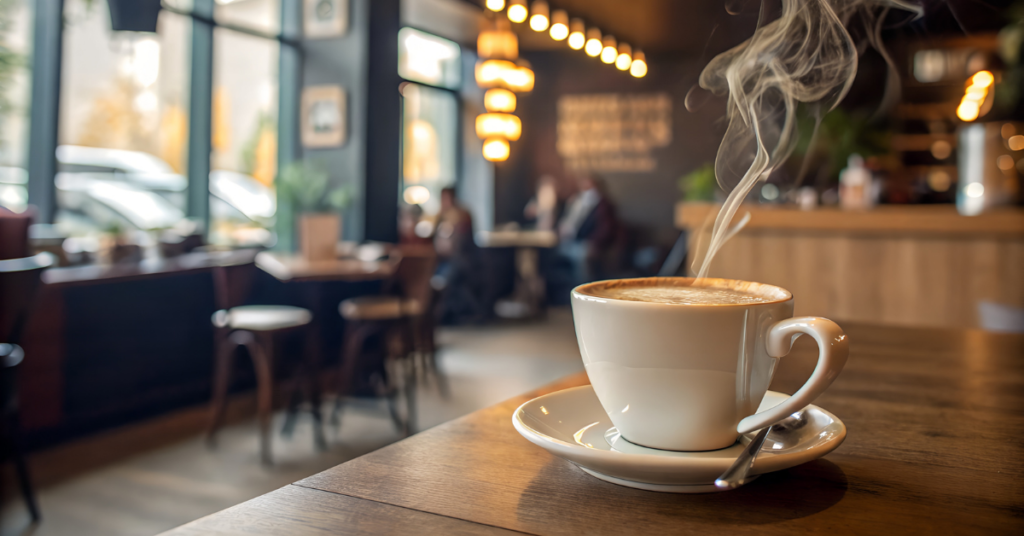
Using standard brew ratios, 250 grams of coffee beans makes roughly 17–20 mug-sized cups of coffee, or about 22–25 smaller 6-ounce cups.
When you buy a 250 gram bag of coffee beans, you want to know how many mornings it will cover and how many cups you can pour before the bag runs out. The answer depends on brew strength, cup size, and how carefully you weigh both beans and water, but the math stays friendly once you set a few simple rules.
This article uses common brew ratios and everyday cup sizes so you can turn 250 grams of beans into estimates for drip, press, espresso, and cold brew at home.
All of the estimates below use grams for both coffee and water. That keeps the numbers tidy and lines up with the Specialty Coffee Association brew ratio range, which centers around 55 grams of coffee per liter of water, or roughly a 1:16 to 1:18 ratio.
Quick Math For 250 Grams Of Coffee Beans
Before you can answer how many cups of coffee from 250 grams of beans, you need two starting points: a brew ratio and a cup size. Brew ratio is written as coffee to water, such as 1:16. That means 1 gram of coffee for every 16 grams of water. Cup size is the amount of brewed coffee that lands in the mug.
The SCA golden cup standard recommends around 55 grams of coffee per liter of water. That works out to a ratio close to 1:18 for classic drip coffee. Many home brewers like a slightly stronger 1:15 or 1:16 ratio for a richer cup. This guide uses a middle-of-the-road 1:16 ratio for most estimates, with ranges based on 1:15 and 1:18 so you can adjust to taste without a calculator.
For cup size, there are two common choices. Many machines and older recipes still treat a “cup” as 6 fluid ounces, which is about 180 milliliters. Everyday mugs in modern kitchens are closer to 8 fluid ounces or 240 milliliters. To keep things practical, the table below shows counts for both sizes.
| Brew Ratio & Cup Size | Water Volume From 250 g Beans | Approximate Cups From 250 g |
|---|---|---|
| 1:15 ratio, 240 ml mug | 3.75 L brewed coffee | About 15–16 mugs |
| 1:16 ratio, 240 ml mug | 4.00 L brewed coffee | About 16–17 mugs |
| 1:18 ratio, 240 ml mug | 4.50 L brewed coffee | About 18–19 mugs |
| 1:15 ratio, 180 ml cup | 3.75 L brewed coffee | About 20–21 cups |
| 1:16 ratio, 180 ml cup | 4.00 L brewed coffee | About 22–23 cups |
| 1:18 ratio, 180 ml cup | 4.50 L brewed coffee | About 24–25 cups |
| Average home brew range | 3.75–4.50 L brewed coffee | Roughly 17–20 mugs or 22–25 cups |
The numbers in the table assume that all brewed coffee ends up in the cup. In everyday brewing, wet grounds and filters hold on to some liquid, so you lose a small share of the brew to absorption. Plan on losing around ten percent to damp grounds, carafe residue, and a little left in the kettle or dripper. That is why a simple range such as “17 to 20 mugs from 250 grams” lines up better with daily experience than a single rigid number.
How Many Cups Of Coffee From 250 Grams Of Beans For Daily Drinking
Now take the brew ratio and cup sizes from above and connect them with daily routine. Many people drink one or two mug-sized servings each morning. If you brew at a 1:16 ratio and pour 240 milliliter mugs, 250 grams of beans gives around sixteen or seventeen mugs before the bag runs low. That covers one mug per day for more than two weeks or two mugs per day for a little more than a week.
If your household drinks smaller 180 milliliter cups, the same 250 grams of coffee stretches further. At a 1:16 ratio you get roughly twenty two to twenty three small cups across the life of the bag. That works out to about eleven days of two small cups per day, or nearly three weeks of a single small cup each morning.
The real answer sits inside your habits. If you brew once per day for one person, 250 grams is a relaxed, low-stress amount of coffee. If you host friends or share a pot with family members, the bag disappears much faster. Knowing the ranges above helps you plan how often to buy beans so you stay stocked without letting coffee go stale at the back of the cupboard.
Cups Of Coffee From 250 Grams Of Beans By Brew Method
Different brew methods use slightly different ratios and cup sizes, even when they start from the same 250 gram bag. Espresso uses a very fine grind and a short ratio, while French press and cold brew lean on immersion and longer contact time.
Drip Coffee Makers And Pour Over
Most drip machines and basic pour over brewers fit well with a 1:16 brew ratio. Using that ratio, 250 grams of beans turns into about four liters of brewed coffee. On a machine that labels the carafe with small “cups” of 5 or 6 fluid ounces, that can look like twenty or more machine cups. At the table, it feels like around sixteen or seventeen solid mugs. To keep things consistent, weigh your beans and water whenever possible. A small digital scale keeps recipes repeatable. If you measure by scoop, you can still get close by knowing that one level tablespoon of ground coffee is roughly five to seven grams, and the National Coffee Association drip standard of one to two tablespoons of coffee for every six ounces of water sits neatly inside the same range as the SCA brew ratios above.
French Press And Immersion Brewers
French press recipes often start near a 1:15 ratio because the coarse grind and long steep time make lighter ratios taste thin. At 1:15, 250 grams of beans nets about 3.75 liters of brewed coffee. If you pour 300 milliliter press mugs, you end up with roughly twelve strong servings. Use smaller 200 milliliter cups and that same bag yields close to eighteen rich presses.
Espresso And Milk Drinks
Espresso flips the script. Instead of long ratios like 1:16, baristas talk about 1:2 shots, meaning twice as much liquid espresso as dry coffee. Many recipes use around 18 grams of coffee in a double basket for 36 to 45 grams of liquid espresso, so 250 grams of beans gives about thirteen or fourteen double shots or roughly twenty seven single shots. Milk drinks such as lattes, flat whites, and cappuccinos use one or two of those shots per drink, so real-world drink count from 250 grams depends more on your milk habits than on the beans themselves.
Cold Brew And Concentrate
Cold brew recipes are wild cards because many people use a strong concentrate that they later dilute with water or milk. A common starting point for cold brew concentrate is a 1:4 or 1:5 ratio by weight. With 250 grams of coffee at 1:5, you combine the beans with about 1.25 liters of water to form concentrate.
If you then dilute that concentrate one to one with water or milk, you end up with roughly 2.5 liters of ready to drink cold brew. Poured over ice into 300 milliliter glasses, that yields about eight drinks from the 250 gram bag. Tweak the ratio or dilution and your final drink count shifts up or down.
How Grind Size, Strength, And Waste Change Your Cup Count
Numbers on a page are neat, yet real coffee brewing comes with small losses. Grind size shifts extraction, and with it your chosen ratio. Coarser grinds for French press invite a touch more coffee to keep flavor round and sweet, while finer grinds for pour over may need a bit less coffee or a little more water to stay balanced. Paper or metal filters soak up liquid, the grounds hold onto water like a sponge, a few beans stick in the hopper, some grounds stay in the grinder chute, and the last sip sometimes sits in the carafe instead of the mug.
Planning Weekly Coffee From A 250 Gram Bag
Now that you have realistic ranges, you can treat a 250 gram bag of beans as a simple planning unit. The table below assumes a 1:16 ratio and 240 milliliter mugs, plus a small allowance for absorption and everyday waste. Cup counts are rounded so they match normal household use.
| Daily Habit | Approximate Mugs Per Day | Days A 250 g Bag Lasts |
|---|---|---|
| Solo drinker, one mug | 1 mug | About 16–17 days |
| Solo drinker, two mugs | 2 mugs | About 8–9 days |
| Two people, one mug each | 2 mugs | About 8–9 days |
| Two people, two mugs each | 4 mugs | About 4 days |
| Weekend entertaining | 6–8 mugs | 3–4 gatherings |
| Cold brew concentrate only | 3–4 glasses per batch | Two batches per bag |
These ranges give you a clear sense of what a 250 gram bag delivers without constant math. If your goal is fresh flavor, plan so that each bag runs out in ten to twenty days. That window keeps beans lively and aromatic while still giving enough cups of coffee from 250 grams of beans to cover daily routine plus the extra pour when a friend visits.
By pairing a trusted brew ratio with a scale and a sense of your usual mug size, you turn an abstract weight on the coffee label into a predictable stack of cups. Once you know how many cups of coffee from 250 grams of beans match your taste and schedule, you can buy, grind, and brew with more confidence and less guesswork.