
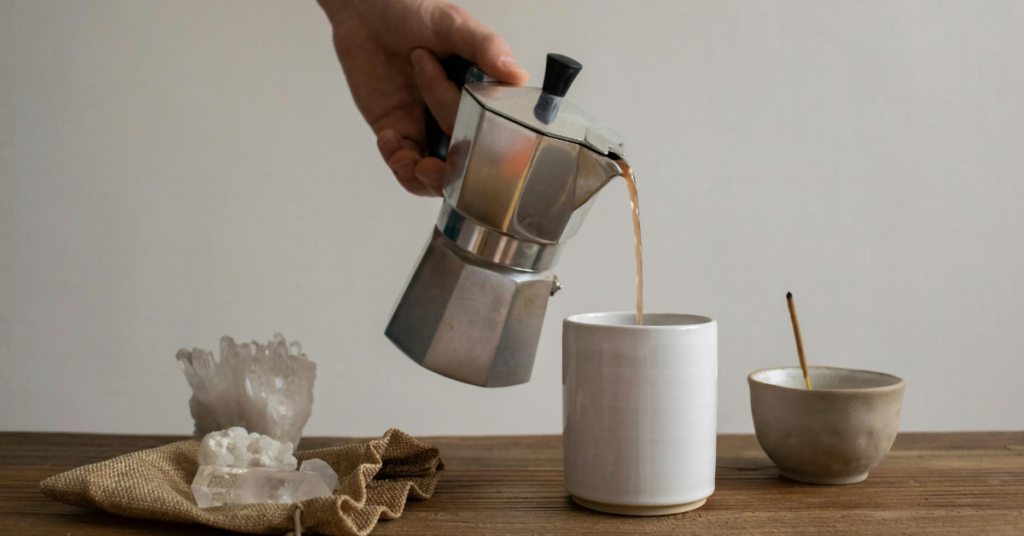
A moka pot usually makes 1–6 espresso-style shots, depending on its cup size and how you split the rich concentrate.
Why Moka Pot Shots Feel Different From Cafe Espresso
If you are trying to work out how many shots your stovetop brewer gives you, the first step is to see how moka pot coffee compares with a normal espresso shot from a machine. A moka pot uses steam pressure from boiling water, while a café espresso machine pushes water through coffee at far higher pressure.
That higher pressure gives bar espresso its thick crema and dense strength. Moka pots sit in the middle ground between drip coffee and espresso. The brew is strong and syrupy, yet a little lighter than a classic espresso shot, which matters when you start counting how many shots you have in the pot.
How Many Espresso Shots Does A Moka Pot Make? For Each Size
The label on a moka pot rarely lists millilitres. Instead, most brands describe each brewer by how many “cups” it makes. In this context one moka cup is very small, closer to an espresso demitasse than a mug. For home use, common sizes range from a one cup brewer up to a large twelve cup pot.
To translate those cups into espresso-like servings, you can match the brewed volume of the pot to the 25–35 millilitre range for a single shot. Many makers quote around 50–60 millilitres for a one cup moka pot, which lines up with one generous double shot once brewed.
| Moka Pot Size (Label) | Approximate Brew Volume* | Rough Espresso-Style Shots |
|---|---|---|
| 1 cup moka pot | 50–60 ml | 1–2 shots |
| 2 cup moka pot | 100–120 ml | 3–4 shots |
| 3 cup moka pot | 150–180 ml | 4–6 shots |
| 4 cup moka pot | 200–240 ml | 6–8 shots |
| 6 cup moka pot | 300–360 ml | 9–12 shots |
| 9 cup moka pot | 450–540 ml | 14–18 shots |
| 12 cup moka pot | 600–720 ml | 18–24 shots |
*Exact numbers depend on the brand and how high you fill the water chamber, but these ranges keep you in the right ballpark.
When you read that a moka pot makes “six cups,” it does not mean six full coffee mugs. It points to six tiny Italian espresso cups. In practice, a six cup moka often fills two small cappuccino cups or three strong Americanos after topping with hot water.
If you want your home brew to mirror machine espresso more closely, treat about 30 millilitres of moka coffee as one espresso-style shot. With that simple rule you can pour neat doubles, split the pot across guests, or top drinks with a repeatable dose of concentrated coffee.
Real Kitchen Shot Counts For A Moka Pot
The neat ranges in a table are handy, yet daily coffee habits are a little messier. This is where the question “how many espresso shots does a moka pot make?” becomes very practical. The answer shifts with your mugs, your recipe, and how strong you like the final drink. Home life often ignores charts.
For a one cup moka, most people treat the whole pot as one strong double shot for a flat white or as the base for a long milk drink. With a three cup brewer, you can pull enough concentrate for two flat whites or three small lattes, especially if friends prefer softer coffee.
Larger six and nine cup moka pots turn into workhorses for brunch or a busy household. Brew a six cup pot and you can comfortably pour four modest milk drinks or three stronger ones. Brew a nine cup pot and you have plenty of concentrate for guests, even once you stretch the coffee with hot water.
How Espresso Definitions Help You Count Moka Shots
Cafe baristas rely on consistent recipes so every shot tastes the same. You can borrow the same mindset at home by matching your moka pot against the classic espresso pattern. Think of a single shot as 25–35 millilitres and a double as roughly 50–70 millilitres of thick, concentrated coffee.
The modern espresso standard from the Specialty Coffee Association describes those ranges in detail, setting 7–9 grams of ground coffee for a single shot and 14–18 grams for a double along with that 25–35 millilitre target. Reading the official Specialty Coffee Association definition of espresso can give you a clear picture of what a classic shot looks like.
Once you keep that volume in mind, the moka pot table above starts to feel more concrete. A three cup moka that brews about 150–180 millilitres holds around three doubles or five singles. A six cup moka that brews about 300–360 millilitres can deliver six rich doubles or a crowd of smaller drinks.
Factors That Change Your Moka Pot Shot Count
Even when you know the labelled size of your moka pot, several variables shift how many espresso-style servings you actually pour. Paying attention to these details keeps your coffee routine predictable from day to day.
Grind size. A finer grind slows the flow and draws more flavour, so each measured shot tastes denser. A grind that is too fine can cause harsh, bitter coffee, while a grind that is too coarse gives a weaker cup, leaving you tempted to pour larger volumes that do not resemble espresso at all.
Fill level. Moka pots are designed to work best when the basket is full and level, not half empty. Underfilling the basket changes the water to coffee ratio and can flatten the flavour. For repeatable results, fill the basket loosely to the rim, level it with your finger, and avoid tamping.
Water amount. Most brewers work best when the water level stays just below the safety valve. If you add less water, the brew finishes early and the total volume falls. If you add more, you risk leaks or overextraction. Using the same fill line each time makes your shot counts easier to predict.
Heat level. Gentle, steady heat brings water to pressure without burning the coffee on the way. A roaring flame can scorch the base and rush the brew, giving an uneven cup. Keeping the heat in the middle range lets the moka pot hum along and makes every 30 millilitre portion taste more like the next.
Serving style. A small straight espresso-style drink uses less liquid than a latte in a large mug. If you like Americanos, you pour a short measure of moka coffee into the cup and then top it with water. If you like milk drinks, you might pour a bigger dose of concentrate so the coffee still shines after steaming milk.
Realistic Shot Planning For Popular Moka Pot Sizes
To move from theory to daily use, it helps to picture a few common scenarios. These rough serving counts assume a single shot is about 30 millilitres and a double is about 60 millilitres. They also assume the moka pot is filled correctly and brewed with steady heat.
| Moka Pot Size | Typical Use At Home | Approximate Shots Per Brew |
|---|---|---|
| 1 cup | One strong flat white or cortado | 1 double |
| 2 cup | Two small cappuccinos | 2 doubles |
| 3 cup | Two lattes or three macchiatos | 3–4 singles |
| 4 cup | Two tall lattes or iced coffees | 4–5 singles |
| 6 cup | Brunch for three or four people | 6–8 singles |
| 9 cup | Entertaining guests after dinner | 10–12 singles |
| 12 cup | Large family gathering or office pot | 14–16 singles |
These numbers are rough. They show how far one brew can stretch before it feels thin, while your taste still decides the final serving size.
Why A Moka Pot Is Not Quite True Espresso
Marketing language often calls a stovetop brewer a “stovetop espresso maker,” which can confuse new home baristas. In reality, moka pots sit in their own category. The coffee is very strong and rich, yet the brewing pressure stays much lower than the pressure inside a pump driven espresso machine.
Modern references note that moka pots operate around 1–2 bars of pressure, while espresso standards point to 9 bars. This pressure gap explains why moka coffee has a thinner crema and different mouthfeel. The official definition from the Specialty Coffee Association, echoed in many training resources, captures the high pressure side of true espresso.
For a closer view of moka pot sizes and volumes, many coffee educators share tables that match each pot to its millilitre output. One useful moka pot size guide points out that brands often treat 50–60 millilitres as one moka “cup,” very close to a double espresso in volume.
Putting It All Together For Your Daily Coffee Ritual
When you bring all these threads together, a pattern appears. A moka pot makes several small, dense servings that behave a lot like espresso shots, while the brew is technically different. The exact count depends on the labelled pot size, the grind, the fill level, and the style of drink in your cup.
For quick planning, treat one moka “cup” as roughly one double espresso-style shot. That means a one cup pot gives you a double, a three cup pot supplies three doubles for a group, and a six cup pot covers a breakfast table. Once you know that well, the phrase “how many espresso shots does a moka pot make?” stops feeling mysterious.
From there you can adjust the details to match your taste. If the drink feels too strong, top it with more water or milk instead of slicing the dose in half. If it feels too weak, grind a little finer, watch your heat, and pour slightly smaller servings so each cup stays full of flavour. Enjoy coffee.