
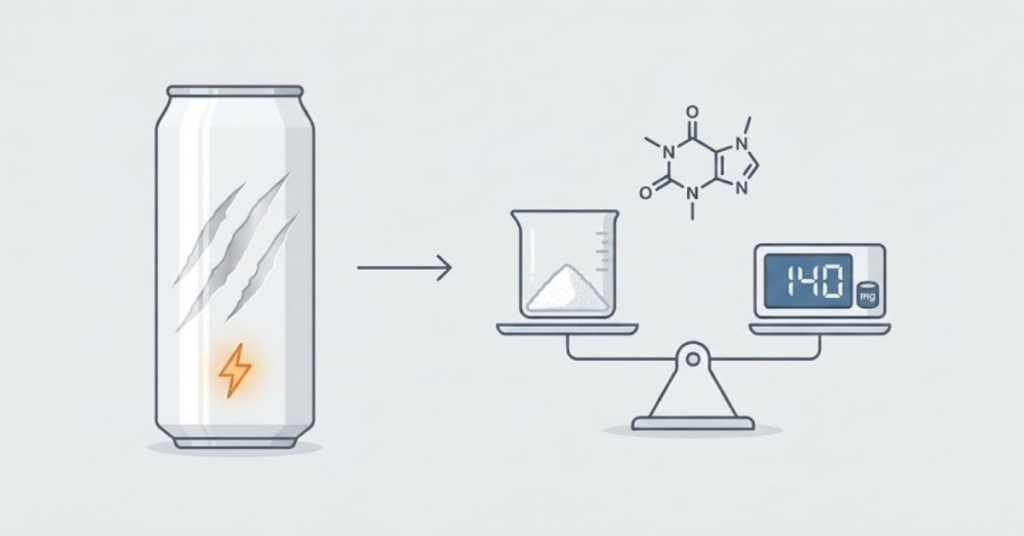
A 16-fl-oz can of Monster White (Zero Ultra) has 150 mg of caffeine; some 12-oz cans have 110 mg, and certain 473-ml cans list 137 mg.
Monster White, the Zero Ultra in the white can, keeps the buzz lighter than the original green can. The standard 16-ounce can lists 150 milligrams. Smaller 12-ounce multipack cans come in lower, while some regional labels print slightly different numbers. Below, you’ll see the figures by size, how they compare, and how to use them.
Monster White Caffeine By Size And Region
This table lists common cans and the label statements for Monster White, drawn from brand pages and retailer listings.
| Can/Region | Size | Caffeine (mg) |
|---|---|---|
| United States — main can | 16 fl oz | 150 |
| United States — multipack slim can | 12 fl oz | 110 |
| United States — some retail copy | 16 fl oz | 140 |
| Canada | 473 ml | 137 |
| South Africa/ZA product page | 500 ml | 150 |
| EU/UK label norm | 500 ml | 150–160 (30–32 mg/100 ml) |
| Japan/Korea label | 355 ml | ≈142 (40 mg/100 ml) |
Sources: U.S. Zero Ultra shows “150 mg (16 fl oz)”; U.S. 12-ounce cans show “110 mg per can”; some U.S. pages quote “140 mg per can”; Canadian 473-ml cans list 137 mg; South Africa lists 150 mg for 500 ml; EU/UK labels often show 30–32 mg/100 ml; select Japan/Korea cans print 40 mg/100 ml.
If you came for the exact phrase “How Many MG Of Caffeine In Monster White?”, the U.S. 16-ounce can answer is 150 mg.
How Many MG Of Caffeine In Monster White — By Size, Label, And Math
Two things drive the answer: the can you bought and the country it came from. In the U.S., the flagship 16-ounce can is 150 mg. The 12-ounce slim can sits at 110 mg. A handful of retailer pages mention 140 mg for a 16-ounce can; that copy doesn’t match the brand’s own page, and shelf cans usually match the 150 mg panel. North of the border, many 473-ml cans print 137 mg. In South Africa, the 500-ml can is listed at 150 mg. Across the EU and U.K., energy drinks commonly show caffeine “per 100 ml,” which you multiply by the can volume to get the total.
The white can tastes lighter than the original green can, yet numbers are punchy. Original Monster sits near 160 mg in a 16-ounce can, so Zero Ultra is just a step lower. That gap matters if you stack cans during the day.
Label Reading Tips So You Buy The Right Can
Check The Per-Can Panel First
Many cans print caffeine “per can,” which is the number that matters when you drink the whole thing. Monster’s U.S. Zero Ultra page shows 150 mg for the common 16-ounce can, and that’s what most U.S. cans show in stores.
Watch For “Per 100 Ml” In Some Regions
In Europe and parts of Asia, you’ll often see caffeine written as “30 mg/100 ml” or “32 mg/100 ml.” That isn’t lower; it’s just a different format. Multiply by the milliliters on your can to get the total. A 500-ml can at 32 mg/100 ml works out to 160 mg.
Spot The 12-Ounce Multipack Can
U.S. club and grocery packs sometimes include 12-ounce Zero Ultra cans. Those list 110 mg per can, a handy pick if you want the flavor with a little less kick.
How Zero Ultra Compares To Other Drinks
Here’s how the white can stacks up against other common picks. Values come from brand pages and long-running databases.
| Drink/Serving | Standard Size | Caffeine (mg) |
|---|---|---|
| Monster Zero Ultra (White) | 16 fl oz | 150 |
| Monster Energy (Original) | 16 fl oz | 160 |
| Red Bull | 8.4 fl oz | 80 |
| Cola | 12 fl oz | ≈34 |
| Energy shot | 2 fl oz | ≈200 |
| Zero Ultra — per 100 ml | 100 ml | ≈31.7 |
| Zero Ultra — per fl oz | 1 fl oz | ≈9.4 |
The white can sits in the mid-high range for a single energy drink. It’s below many energy shots, above most colas, and a touch under the original green can. If you prefer a lighter ride, the 12-ounce can trims the total without changing the flavor profile.
Safe Daily Limits And Sensible Use
For most healthy adults, regulators place a daily total near 400 mg from all sources. That’s a ceiling, not a target. One 16-ounce white can at 150 mg takes up more than a third of that budget. Two cans would put you at 300 mg before any coffee or tea. If you’re pregnant or caffeine-sensitive, use a lower cap.
Energy drinks bring more than caffeine. The blend often includes taurine, b-vitamins, and flavors that vary by region. If sleep quality or jitters are creeping in, step down in size or spread servings earlier in the day. Hydrate alongside each can and give yourself an afternoon cut-off so bedtime isn’t a fight.
Practical Ways To Fit Monster White Into Your Day
Pick A Size For The Situation
Grab the 16-ounce can when you need a stout boost and won’t pair it with coffee. Reach for the 12-ounce can if you just want the crisp citrus flavor before a workout or during a commute. In regions where the 500-ml can is the norm, think of it as roughly a can and a quarter versus the U.S. 16-ounce size.
Use Time Windows
Front-load caffeine earlier. A 16-ounce white can in late morning leaves room for a small coffee after lunch while staying under common limits. If sleep is touchy, keep caffeine before early afternoon.
Stack Smart
Mixing Zero Ultra with other energy drinks ramps the total quickly. Pair it with water, flavored seltzer, or no-caffeine options rather than doubling up. If you already had a shot or a strong espresso, save the can for another day.
How Labels And Formulas Vary By Market
Energy drinks are regulated as foods or beverages, not as supplements, in many countries. That can change what must appear on the panel. The U.S. can usually states caffeine per can. EU and U.K. cans often show a per-100-ml figure and a warning for high-caffeine drinks. Japan and South Korea frequently print 40 mg per 100 ml on some Ultra flavors, even when the total per can ends up close to the U.S. number. These patterns explain why the same flavor can post different totals in a store abroad.
Convert Per-100-Ml Labels Fast
- Step 1: Read the per-100-ml value on the panel (for Zero Ultra, common figures are 30, 31.5, or 32 mg/100 ml).
- Step 2: Multiply by the can’s milliliters. A 500-ml can at 30 mg/100 ml is 150 mg.
- Step 3: Round to the nearest whole number; brands often do the same on their sites.
When you only find per-serving numbers, check how many servings the panel counts. A 16-ounce can is sometimes listed as two 8-ounce servings. If each serving shows 75 mg, the whole can is 150 mg. Read the serving line closely so you don’t double-count during the day.
Taste Isn’t A Caffeine Meter
Zero Ultra tastes crisp and less sweet than the classic green can. That lighter taste doesn’t mean less caffeine. Recipes build sweetness, acid, and aroma separately from the stimulant load. Judge your intake by the printed number, not by flavor strength.
Proof And References You Can Check
The brand’s U.S. Zero Ultra page lists “150 mg caffeine” for the 16-ounce can, and the South Africa page shows “150 mg” for 500 ml. U.S. grocer listings for the 12-ounce multipack can show “110 mg per can,” while several Canadian grocers list “137 mg per 473 ml.” Caffeine databases peg Zero Ultra at 150 mg per 16 ounces and original Monster at 160 mg, with per-ounce and per-100-ml conversions that match the math above. Health agencies point to a 400-mg daily limit for most adults.
You can read the brand page here: Monster’s Zero Ultra page, and the regulator guidance here: FDA caffeine guidance. For comparisons, see long-standing databases that log can labels and lab tests.
Common Label Quirks Explained
Some U.S. retailer pages quote 140 mg for a 16-ounce Zero Ultra. That copy lags the current panel. When the product image shows the facts panel, it usually matches the brand page at 150 mg. Trust the can you’re holding and the brand page first.
Original green Monster rounds to 160 mg in a 16-ounce can. The white Zero Ultra rounds to 150 mg. The taste is lighter, but the hit stays close. If you’re counting totals through the day, that small gap still helps.
Wholesalers sometimes list a 24-ounce Zero Ultra. If you find it locally, expect the total to scale with volume. Check the caffeine panel before opening and plan the rest of your intake around it most days.
Clear Answer And Takeaways
For the common U.S. can, the answer is 150 milligrams. That’s the number on the brand page and the panel on most shelf cans. The 12-ounce U.S. can lists 110 mg. The 473-ml Canadian can lists 137 mg. The 500-ml South African can lists 150 mg. EU and U.K. labels often show “30–32 mg/100 ml,” which matches 150–160 mg for a 500-ml can. With those figures, one white can fits inside a typical 400-mg daily budget. Use size to tune the hit and time your intake so sleep stays steady. If you’re unsure, choose the smaller can and reassess.
Quick recap: U.S. 16-ounce white can = 150 mg; U.S. 12-ounce = 110 mg; Canada 473 ml = 137 mg; South Africa 500 ml = 150 mg; EU/UK 500 ml ≈ 150–160 mg based on 30–32 mg per 100 ml.
You’ve got the numbers. If you came here wondering, “how many mg of caffeine in Monster White?” the short answer never changes for the main U.S. can: 150 mg. Pick the can that matches your plan. Stay mindful.