
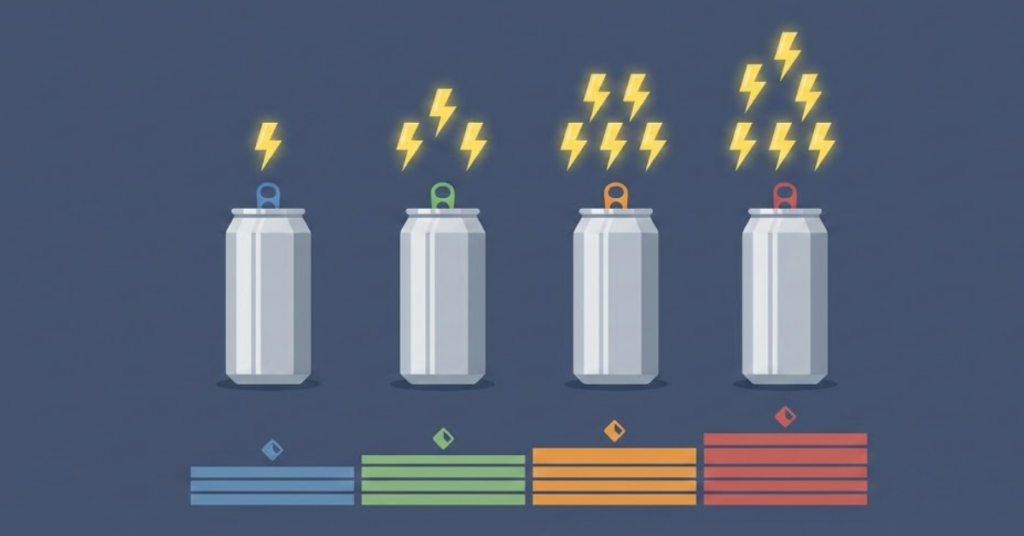
Most energy drinks contain about 80–200 milligrams of caffeine per serving, with some reaching 300 milligrams per can.
If you grab an energy drink on a busy day, you probably glance at the sugar line and skip the caffeine line. Yet that tiny number in milligrams shapes how alert you feel, how well you sleep later, and how safe your daily total really is. This guide walks through typical caffeine ranges in energy drinks, how they compare with coffee, and what health agencies list as safe daily limits.
The phrase how many milligrams of caffeine are in energy drinks? sounds simple, but the answer shifts with serving size, brand formula, and even whether the drink is sold as a beverage or a supplement. Once you know the usual numbers and the extremes, it gets far easier to decide if a can fits into your day or pushes you over your own limit.
Why Caffeine Levels In Energy Drinks Vary So Widely
Energy drinks sit in a grey zone between soft drinks, coffee, and dietary supplements. Some brands follow soft drink style limits, while others use the flexibility of supplement labeling and pack in far higher doses. On top of that, cans come in many sizes, from 8.4 ounces to 24 ounces, so the caffeine on the label can look modest until you notice that it refers to two servings per container.
Brands also stack caffeine from several ingredients. Guarana, yerba mate, tea extracts, and coffee extracts all add caffeine on top of the “added caffeine” listed in the ingredients. Reputable manufacturers now list total caffeine from all sources on the can, yet not every shopper stops to read that fine print.
How Many Milligrams Of Caffeine Are In Energy Drinks Per Serving?
For most mainstream products, a single serving of energy drink lands somewhere between 80 and 200 milligrams of caffeine. Smaller cans tend to cluster near the low end, while tall 16 ounce or 500 millilitre cans often sit in the middle of that range. A few performance focused drinks jump up to 250–300 milligrams in one can, which can swallow most of a healthy adult’s suggested daily caffeine budget in one hit.
To make the question how many milligrams of caffeine are in energy drinks? less abstract, the table below pulls together typical numbers for well known brands based on their standard cans. Always check your own can, since formulas and sizes can change.
Caffeine In Popular Energy Drinks
| Drink | Typical Serving Size | Caffeine (mg) Per Serving |
|---|---|---|
| Red Bull | 8.4 fl oz (250 ml) | 80 mg |
| Monster Energy | 16 fl oz (473 ml) | 160 mg |
| Rockstar Energy | 16 fl oz (473 ml) | 160 mg |
| Celsius | 12 fl oz (355 ml) | 200 mg |
| Bang Energy | 16 fl oz (473 ml) | 300 mg |
| Generic Energy Drink | 8 fl oz (240 ml) | 80–100 mg |
| Energy Shot | 2 fl oz (60 ml) | 180–200 mg |
This table shows why serving size matters so much. A small 8.4 ounce can delivers roughly the same caffeine as a strong cup of tea. A 16 ounce “standard” can often holds around 160 milligrams, close to a medium coffee, and a high powered drink with 300 milligrams sits closer to a double espresso or strong brew.
Standard Serving Sizes And Typical Caffeine Ranges
While each brand sets its own recipe, patterns appear if you look at the caffeine content by volume. A typical 8.4 ounce energy drink holds around 80 milligrams of caffeine. A 16 ounce can usually doubles that to about 160 milligrams, and many 12 ounce cans fall near 120–200 milligrams. Measured by volume, many products cluster near 10 milligrams per ounce.
Those averages hide the outliers. Some high stimulant products reach the upper end of the range, with more than 300 milligrams of caffeine in a single can. At the other end, “lite” or “reduced caffeine” options keep the dose closer to a small coffee, which may suit people who are sensitive to caffeine or who drink several caffeinated beverages in the same day.
Energy Drinks Versus Coffee, Tea, And Soda
Context helps when you judge caffeine in an energy drink. Brewed coffee often falls between 90 and 200 milligrams per 8 ounce cup, depending on the roast and brewing method. One cup of black tea usually lands near 40–70 milligrams, while most regular colas sit around 30–40 milligrams per 12 ounce can.
That means a single 16 ounce energy drink with 160 milligrams of caffeine lines up roughly with a medium coffee from a chain, and a 300 milligram can can rival, or even beat, a large coffeehouse drink. Anyone who also drinks coffee, tea, cola, or pre workout supplements can reach a high daily total quickly without noticing.
How Caffeine In Energy Drinks Affects Your Body
Caffeine blocks adenosine receptors in the brain, which lifts fatigue and sharpens alertness for a few hours. At the same time, it prompts a bump in heart rate and blood pressure and can shorten sleep later in the night, especially if you drink it late in the day.
Most healthy adults tolerate moderate caffeine intake well, yet larger single doses raise the odds of shaky hands, rapid heartbeat, restlessness, or an upset stomach. People who rarely drink caffeine often feel these effects at lower doses than regular users. Children, teenagers, pregnant people, and anyone with heart rhythm or blood pressure issues fall into higher risk groups and need lower limits.
Energy drinks mix caffeine with sugar, sweeteners, and other stimulants such as taurine or guarana. Research links high intakes, especially several cans in one sitting, with spikes in blood pressure and irregular heartbeat in some people. That is why many health groups and heart organisations urge children and teenagers to avoid energy drinks altogether.
Safe Daily Caffeine Limits From Energy Drinks
Health agencies use daily caffeine totals, not just energy drink numbers, to set safety guidance. The U.S. Food and Drug Administration, in its consumer update on caffeine, notes that up to 400 milligrams of caffeine per day appears safe for most healthy adults. The European Food Safety Authority gives a similar figure and, through its EFSA guidance on caffeine, also points out that single doses up to 200 milligrams are unlikely to raise safety concerns for adults.
Pregnant people receive tighter advice. Many professional bodies suggest staying at or below 200 milligrams of caffeine per day from all sources during pregnancy. For children and teenagers, expert groups often suggest limits based on body weight, around 3 milligrams of caffeine per kilogram of body weight per day, with energy drinks strongly discouraged.
How Many Energy Drinks Fit Inside Those Limits?
If you use 160 milligrams as a middle of the road energy drink, the daily limits above translate into small numbers of cans. Two cans already deliver 320 milligrams of caffeine. Add a cup of coffee or a pre workout drink and you can pass 400 milligrams without realising it.
The table below gives rough examples for different groups. These are not personal medical recommendations, just a practical way to picture how the caffeine in energy drinks stacks up.
Approximate Safe Energy Drink Counts By Group
| Group | Suggested Daily Caffeine Limit | Approx 160 mg Energy Drink Equivalents |
|---|---|---|
| Healthy Adult (Not Pregnant) | Up To 400 mg Per Day | 2 cans, plus only small amounts from other sources |
| Pregnant Person | Up To 200 mg Per Day | About 1 small can, if no other caffeine |
| Teenager (55 kg Body Weight) | Around 165 mg Per Day | At most 1 small can, often better to avoid |
| Child | Lower Weight Based Limits | Specialists generally advise no energy drinks |
| Adult With Heart Or Sleep Issues | Often Advised Below 400 mg | Depends on medical advice; many are told to skip energy drinks |
Health guidance always refers to total caffeine across the day. If an adult drinks one 160 milligram energy drink, two small coffees, and a cola, the total may approach or pass 400 milligrams. For someone who already struggles with insomnia, anxiety, or palpitations, even lower totals may trigger symptoms.
How To Read An Energy Drink Label For Caffeine
Energy drink labels can look busy, with bright graphics and long ingredient lists. The caffeine number often sits in small text near the nutrition facts, and some cans list caffeine per serving instead of per can. A quick label routine helps you spot the real dose without much effort.
Steps To Check Caffeine On The Can
Start by looking for a line that reads something like “caffeine content: 160 mg per serving.” Then find the serving size just above or below that line. If the can holds two servings, double the caffeine figure to get the total per can. Next, scan the ingredient list for guarana, yerba mate, green tea extract, or coffee extract, since these add caffeine on top of any flavour or vitamin ingredients.
Some brands sell both standard and sugar free versions of the same drink. While the sugar changes, the caffeine content often stays the same. Do not assume the “light” option means a lighter stimulant load; always check the printed caffeine figure.
Energy Shots And Pre Workout Drinks
Small energy shots and powdered pre workout mixes often sit close to energy drinks on store shelves. These products can hold concentrated caffeine, with 150–300 milligrams in a small 2 ounce shot or a single scoop of powder. Because they are easy to drink quickly, they raise the risk of high single dose caffeine intake.
If you already drink coffee, tea, or energy drinks, think about how an energy shot or pre workout drink changes your total. Many people only count the big cans and forget the small products, even though the caffeine load can be similar or higher.
How Many Milligrams Of Caffeine Are In Energy Drinks?
By this point, the short answer comes into focus. Common energy drinks usually sit around 80 milligrams of caffeine in a small can and around 160 milligrams in a standard 16 ounce can, with some strong products reaching 250–300 milligrams. That places them in the same league as brewed coffee, not soft drinks.
For a healthy adult, an energy drink can fit into a daily caffeine budget as long as you count other sources and stay near the 400 milligram mark that many agencies use as a guide. For children, teenagers, pregnant people, and anyone with heart or sleep issues, the safest move is often to limit or avoid energy drinks and rely on lower dose sources such as tea, or skip caffeine altogether.
Practical Tips For Using Energy Drinks Safely
Plenty of adults use energy drinks from time to time without trouble. The risk rises when cans stack on top of coffee, tea, and soda, or when someone already has sleep, heart, or blood pressure problems. A few simple habits can lower the chance of side effects while still giving you some caffeine when you feel tired.
Simple Rules For Day To Day Use
Set a personal caffeine cap, such as one standard energy drink on days when you skip other strong caffeinated drinks. Leave a buffer of at least six hours between your last energy drink and bedtime, since caffeine can linger in your system for a long stretch. Mix in water during the day so you are not relying on caffeinated drinks to stay hydrated.
If you ever feel chest pain, severe palpitations, extreme anxiety, or faintness after an energy drink, seek urgent medical help. For ongoing concerns about heart rhythm, blood pressure, or sleep, talk with a doctor or pharmacist about whether any energy drink use makes sense for you. Parents who are worried about children or teenagers using energy drinks can also ask a paediatrician for direct advice.
Above all, treat energy drinks as occasional pick ups rather than daily staples. When you know roughly how many milligrams of caffeine are in energy drinks, how that compares to coffee, and what health agencies view as a safe daily ceiling, it becomes much easier to make choices that protect long term health while still leaving room for the odd can on a long day.