
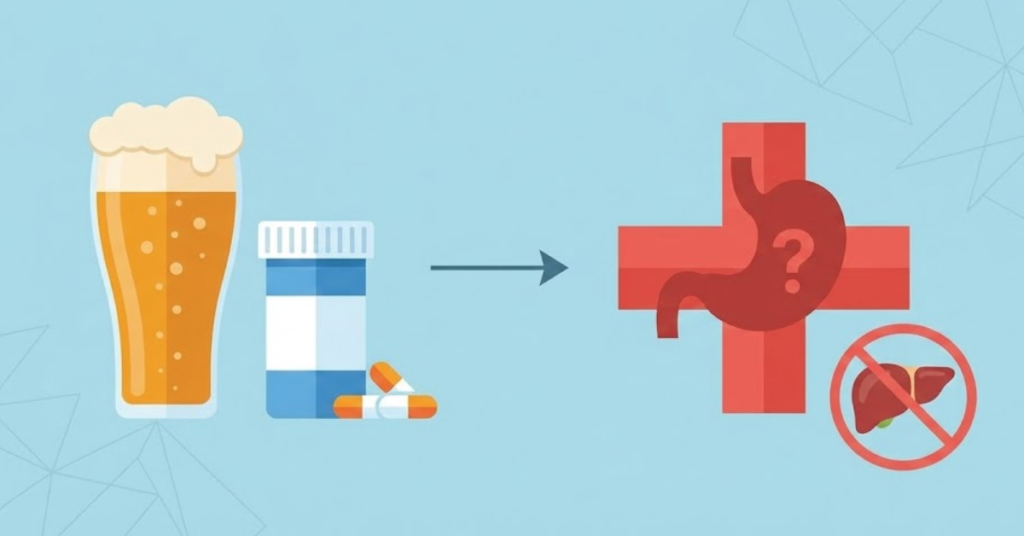
Yes, you can drink beer with amoxicillin, yet alcohol may worsen side effects and slow your recovery from the infection.
When a course of amoxicillin lands on your kitchen counter, life rarely stops. Work goes on, social plans stay on the calendar, and a cold drink with friends might already be booked. That raises the big question: can I drink beer with amoxicillin without putting my health at risk?
The short answer is that a small amount of beer usually does not block amoxicillin from doing its job. Even the UK’s NHS guidance on amoxicillin notes that alcohol is allowed in general. At the same time, alcohol can stir up side effects, drain your energy, and drag out your recovery. So the smarter choice often leans toward keeping beer intake low, or skipping it until you feel better.
This guide walks through what amoxicillin does, how beer affects your body while you heal, and when mixing the two starts to look like a bad idea. By the end, you can decide how much beer, if any, makes sense during your treatment.
Can I Drink Beer With Amoxicillin? What Doctors Usually Say
Health services in several countries state that you can drink alcohol while taking amoxicillin, and that moderate drinking does not stop the antibiotic from working. At the same time, many doctors and pharmacists still urge people to limit or avoid beer during treatment. Both views fit together once you separate two points: direct drug interaction and overall recovery.
| Factor | What Happens With Beer On Amoxicillin | Practical Tip |
|---|---|---|
| Direct Drug Interaction | No strong evidence that beer blocks amoxicillin or creates a toxic combo. | Fear of an instant chemical clash is usually unnecessary. |
| Antibiotic Effectiveness | Amoxicillin still targets bacteria, but poor sleep and dehydration slow healing. | Limit beer so your body can back up the antibiotic. |
| Side Effects | Both alcohol and amoxicillin can cause nausea, dizziness, and diarrhea. | Mixing them can leave you miserable even with small amounts. |
| Immune System | Alcohol can weaken immune responses during infection. | Skip beer on the worst days of illness. |
| Dehydration | Beer pulls fluid from the body and may worsen headaches and fatigue. | Match each drink with water, or stay off alcohol. |
| Sleep Quality | Even one or two beers can disrupt deep sleep stages. | Good sleep helps your body clear infection faster. |
| Liver Workload | Liver handles both medicine and alcohol, which can matter with other drugs. | People with liver disease or multiple medicines should treat beer with care. |
| Missed Doses | Drinking sessions increase the odds of late or skipped pills. | Finish the full course on time, even if you pass on beer. |
So can I drink beer with amoxicillin on a casual night out? For many healthy adults, one small beer with food rarely leads to a dramatic reaction. The trouble begins when the infection already drains your strength, side effects show up, or beer pushes you toward dehydration and poor sleep. That is why many clinicians lean toward the simple rule: let the antibiotic and your immune system do their work with as little booze in the mix as possible.
How Amoxicillin Works Against Infection
Amoxicillin is a penicillin-type antibiotic that blocks bacteria from building strong cell walls. Once those walls weaken, the bacteria lose structure and the immune system clears them more easily. Doctors use amoxicillin for ear infections, sinus infections, dental infections, chest infections, urinary infections, and more.
Most people take amoxicillin several times a day for five to ten days, depending on the infection. To keep drug levels stable in the blood, doses need to stay on schedule. Skipping pills or stopping early gives bacteria room to bounce back, which increases the chance that symptoms return or complications appear.
Common Side Effects Of Amoxicillin Alone
Even without beer, amoxicillin can bring a few unwanted changes. The NHS lists nausea, loose stools, and mild rashes among the most common issues. Some people also deal with thrush in the mouth or genitals, since antibiotics can disturb normal bacteria that usually keep yeast under control.
Most side effects stay mild and settle once the course finishes. Yet any extra stress on your body, including alcohol, can turn a manageable week of treatment into something far less pleasant. That trade-off becomes clearer once you look at how beer behaves inside the body.
What Beer Does To Your Body While You Heal
Beer is more than a drink with bubbles and flavor. Ethanol acts as a depressant on the central nervous system and touches nearly every organ system. In small amounts, the effects may feel like relaxation and a lighter mood. During an active infection, those changes rarely help your body do its job.
Alcohol irritates the stomach lining, shifts blood sugar, strains the liver, and affects fluid balance. A pint also brings a noticeable calorie load that the body has to process. None of this directly destroys amoxicillin, yet the combined strain can slow the overall healing process.
Alcohol, Infection, And Recovery Time
Medical sources reviewing antibiotics and alcohol note a common pattern: modest drinking does not usually cancel the medicine, but it can increase side effects and stretch out recovery time. A review on alcohol and antibiotics from Healthline points out the link between alcohol, poorer sleep, and weaker immune response, especially while the body fights infection.
You may still ask, can I drink beer with amoxicillin during a long course for something mild, such as a small dental infection? Some people tolerate a single drink with no extra issues. Others feel sick after one beer, especially if nausea or loose stools already started from the drug. Because that reaction is hard to predict in advance, many doctors prefer a cautious approach.
Risks Of Drinking Beer With Amoxicillin
Mixing beer with amoxicillin sits on a spectrum. At one end, a single light beer with dinner in a healthy adult might pass without drama. At the other end, heavier drinking in someone with a serious infection and other medications can turn into a problem. Several risks show up more often than people expect.
Worse Stomach And Gut Symptoms
Amoxicillin already lists nausea and diarrhea among its frequent side effects. Beer can irritate the stomach and speed the movement of food through the gut. Put the two together and you may see stronger cramps, loose stools, or vomiting.
Even if this mix does not damage organs, it can limit food and fluid intake. That loss matters during an infection, when you need hydration and calories to stay upright and for the immune system to work well.
More Dizziness And Poor Coordination
Some people feel light-headed on amoxicillin, especially when standing up quickly or when dehydration settles in. Beer adds its own effect on balance and reaction time. The combination can make everyday tasks, such as walking down stairs or driving, noticeably less safe.
People who take other drugs that affect the brain, such as sleep aids or anxiety medicines, sit at even higher risk. Beer can tip that mix toward strong drowsiness and slower reflexes.
Extra Load On The Liver And Other Medicines
The liver helps break down both alcohol and many medicines. Amoxicillin itself does not carry the same strong alcohol warning as drugs like metronidazole, yet alcohol still uses up processing capacity. If you already take medicines that stress the liver, or you live with liver disease, even light drinking during an antibiotic course can be a poor match.
In addition, people on amoxicillin sometimes take other drugs such as pain relievers or cold remedies. Some of those already have alcohol inside, while others depend on good liver function for safe use. Beer nudges the balance in the wrong direction.
Higher Chance Of Missed Or Late Doses
One less obvious risk sits in simple timing. Drinking sessions make people more likely to forget an evening pill or sleep through a morning dose. Antibiotics work best when taken evenly over the day, so missed tablets can weaken the course even if each drink, by itself, seems harmless.
If your main question is can I drink beer with amoxicillin on a big night out, this point often matters more than the chemistry. A heavy evening with friends increases the odds that your schedule goes off track, and that delay hurts treatment.
Safer Drinking Rules While Taking Amoxicillin
Health sites such as the Healthline review of alcohol and antibiotics describe a common pattern: modest alcohol may be allowed, yet skipping drinks during illness often feels better. That idea carries over to beer and amoxicillin as well. A few simple rules help people who still plan to drink.
Situations Where Skipping Beer Makes Sense
Some situations tilt strongly toward avoiding beer until the course ends:
- You have a serious infection such as pneumonia, kidney infection, or sepsis risk.
- You already feel weak, dizzy, or nauseated from the illness or from amoxicillin.
- You take other medicines that stress the liver or interact with alcohol.
- You have a history of liver disease, stomach ulcers, or pancreatitis.
- You drove yourself to the event or need sharp coordination later the same day.
- You tend to drink more than planned once you start.
In these settings, the question “can I drink beer with amoxicillin” matters less than “will this beer make the next few days harder.” In many cases, passing on alcohol buys you quicker relief and fewer side effects.
If You Still Choose To Drink
Some readers will still decide to have a small beer during treatment. In that case, a more cautious approach helps keep trouble down:
- Wait until the infection starts to improve and fever settles.
- Keep to one standard drink in an evening, or even less.
- Drink slowly and always with food.
- Match each beer with a full glass of water to limit dehydration.
- Set alarms for your antibiotic doses so the schedule stays on track.
- Stop drinking right away if nausea, flushing, or dizziness flare up.
Anyone who notices strong or strange reactions with small amounts of beer should stop drinking and speak with a doctor or pharmacist before trying again.
Other Interactions To Keep In Mind During Treatment
Beer is not the only product that matters while you use amoxicillin. Many people combine antibiotics with pain relievers, stomach remedies, or other prescriptions. Small interactions add up, especially when alcohol joins the mix.
| Item Or Situation | Interaction Concern | Practical Note |
|---|---|---|
| Other Alcohol-Sensitive Antibiotics | Drugs such as metronidazole can react strongly with alcohol. | Check every drug label; some combinations ban alcohol completely. |
| Pain Relievers (E.g. Paracetamol) | Both alcohol and some pain pills use liver pathways. | Stay within daily dose limits and keep alcohol low. |
| Blood Thinners | Amoxicillin and alcohol can each change bleeding risk. | People on warfarin or similar drugs need careful medical advice. |
| Birth Control Pills | Antibiotics and vomiting or diarrhea can reduce pill reliability. | Use backup contraception if illness affects digestion. |
| Existing Liver Or Kidney Disease | Drug and alcohol clearance may slow down. | Many clinics advise avoiding alcohol entirely in this setting. |
| Heavy Regular Drinking | Chronic alcohol use weakens immunity and organ function. | Heavy drinkers benefit from a direct conversation with a clinician. |
This table shows why a simple yes or no rarely tells the full story. Your other medicines, medical history, and drinking habits all shape how safe beer looks during amoxicillin treatment.
Main Points On Beer And Amoxicillin
Amoxicillin itself does not carry a strict “no alcohol” warning, and health services such as the NHS state that people can drink while using it. At the same time, alcohol still affects the body in ways that slow recovery and amplify side effects. That is why many clinicians suggest avoiding beer, at least during the roughest days of an infection.
If you feel tempted to ask again, can I drink beer with amoxicillin, the balanced summary goes like this:
- Direct chemical clashes between beer and amoxicillin are rare.
- Side effects such as nausea and dizziness become more likely with alcohol.
- Dehydration, poor sleep, and missed doses make it harder for the antibiotic to work.
- People with serious infections, organ disease, or other medicines in the mix gain the most by avoiding alcohol entirely.
- Anyone unsure about their case should talk with a doctor or pharmacist before drinking.
A single light beer may be allowed on paper, yet your body may appreciate a pause more than you think. Giving amoxicillin and your immune system a clear run often means fewer rough days and a smoother return to normal life.