
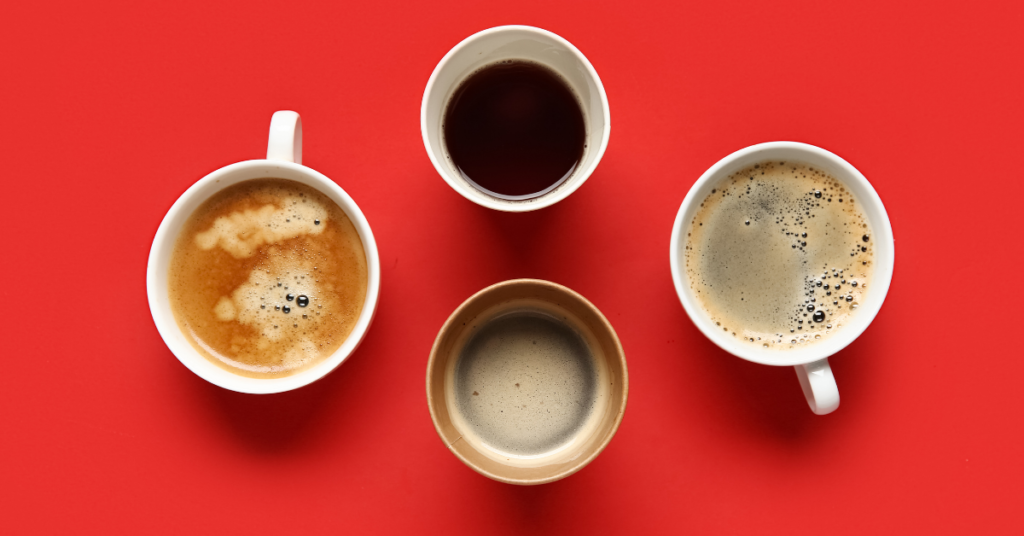
Ten fluid ounces of coffee equal about 1¼ standard 8-ounce cups, or roughly one full mug plus a small top-up.
Why 10 Ounces Of Coffee Feels Confusing
If you have a small pitcher or carafe with 10 ounces of brewed coffee, it can be hard to tell how far it will go. Part of the confusion comes from the word “cup.” A recipe cup, a drip machine cup, and a mug on your desk often mean different volumes.
On paper, the math is straightforward. One standard U.S. measuring cup holds 8 fluid ounces. That means you divide the ounces by 8 to get cups. For 10 ounces, the calculation is 10 ÷ 8, which gives 1.25 cups. So in strict kitchen math, 10 fluid ounces of coffee make one and one quarter cups.
Real life coffee drinking feels different because most people do not pour coffee into a measuring cup. They pour into mugs, takeaway cups, or the small “cups” marked on a drip coffee maker. Those vessels range from 5 to 16 ounces or more, so the number of servings you get from 10 ounces changes with the vessel.
| Cup Type | Typical Size (fl oz) | Cups From 10 fl oz |
|---|---|---|
| Standard Measuring Cup | 8 | 1.25 cups |
| Drip Machine “Coffee Cup” | 5 | 2 cups |
| Small Coffee Cup | 6 | About 1.7 cups |
| Everyday Coffee Mug | 10 | 1 cup |
| Large Coffee Mug | 12 | About 0.8 cups |
| Travel Tumbler | 16 | About 0.6 cups |
| Single Espresso Shot | 1 | 10 shots |
| Iced Coffee Glass | 14 | About 0.7 cups |
How Many Cups Of Coffee Does 10 Oz Make For Different Cup Sizes?
To answer how many cups of coffee does 10 oz make in a way that matches day to day drinking, you need to think about what “a cup” means for you. If your habit is a slim 6 ounce porcelain cup, 10 ounces almost fill two servings. If you drink from a chunky 12 ounce mug, the same 10 ounces feel more like a modest pour.
Many drip coffee makers mark a cup as around 5 fluid ounces, not the full 8 used in baking. In that context, 10 ounces fill two maker cups. So when a machine claims to brew ten cups, you are often getting closer to six to eight modern mugs.
Plenty of home mugs fall in the 8 to 10 ounce range. Brands that share mug size charts point out that an 8 to 10 ounce mug is common for morning drip coffee, while larger 11 to 15 ounce cups suit heavier drinkers (coffee mug size guides describe this spread). With that in mind, 10 ounces usually pour one full everyday mug or a generous short mug and a small refill.
How Much Coffee Does 10 Ounces Make In Cups?
This is the part where the numbers help. The base formula for volume conversion is simple. One U.S. cup equals 8 fluid ounces. So the number of cups you get from any volume is:
Cups of coffee = fluid ounces of coffee ÷ 8
Using that equation with 10 ounces looks like this: 10 ÷ 8 = 1.25 cups. That means 10 ounces of coffee make one and a quarter standard cups. If you like to spoon brewed coffee into a recipe or need to match a drink size on a menu, that number gives you a reliable reference.
In conversation, you might round 1.25 cups in a few ways. Some people call it “about one cup,” others say “one and a bit.” When you care about exact servings or caffeine intake, it helps to hold the full figure in your head and picture it as a full cup plus a small top up.
How 10 Ounces Works With Brewing Ratios
So far, everything has focused on the drink once it is in the cup. Another angle is to ask how many cups of brewed coffee a 10 ounce water pour will produce when you follow common ratio guidance. That question matters when you want to plan a pour over, a French press, or a small batch on a drip machine.
The Specialty Coffee Association publishes a “Golden Cup” standard with suggested ratios for drip style brewing. Their protocols point to around 55 grams of coffee per liter of water as a good balance between strength and extraction Specialty Coffee Association brewing protocols. A liter is close to 34 fluid ounces, so 10 fluid ounces sit at just under one third of that water volume.
If you picture that liter as a large pot of coffee, 10 ounces look more like a personal batch. You are drawing off a single generous mug from a larger brew, which is why small changes in dose stand out so clearly at this scale.
If you scale that guidance down, 10 ounces of water line up with roughly 16 grams of ground coffee. That dose yields about 1.25 cups of brewed coffee by volume. How strong that feels depends on grind, device, and personal taste, yet it gives a grounded starting point for repeatable brewing.
When you prefer a lighter cup, you can stretch 10 ounces of water a little further by using a touch less coffee. Fans of bold brews do the opposite and add a gram or two. Either way, the liquid volume stays near 1.25 cups; only the flavor and strength move.
Everyday Ways To Use 10 Ounces Of Coffee
Once you know that 10 ounces of coffee make about a cup and a quarter, it becomes easier to plan day to day drinking. The same amount of coffee can act as a single large drink, two small cups, or the base for a drink with milk or ice.
Here are some very common ways people use this amount:
- One Big Morning Mug: Fill a 10 ounce mug to the brim and sip it slowly.
- Two Small Cups: Split between two 5 to 6 ounce cups for you and a partner.
- Iced Coffee Base: Pour 10 ounces over ice in a tall glass and add a splash of cold water or milk.
- Latte Starter: Use 10 ounces of brewed coffee as a mild base and top with steamed milk if you do not have an espresso machine.
- Recipe Helper: Some dessert and brunch recipes call for a cup of coffee; 10 ounces give you a tiny bit more, which can be handy if you spill or mismeasure.
- Tasting Session: Split 10 ounces into several tiny tasters to compare beans or grind settings side by side.
In each case, the number of “cups” varies on paper, but the liquid is the same. That original question feels less mysterious once you think in terms of ounces first and vessel size second.
| Scenario | Serving Size | Result From 10 fl oz |
|---|---|---|
| Single Large Mug | 10 fl oz mug | One full mug |
| Two Small Cups | Two 5 fl oz cups | Two small servings |
| Shared Pour Over | Two 6 fl oz cups | Two light pours |
| Iced Coffee Glass | 14 fl oz glass with ice | One tall drink |
| Recipe Portion | 1 cup coffee needed | Meets recipe with 2 fl oz spare |
| Desk Refill | 8 fl oz mug | One full mug plus small refill |
| Tasting Flight | Four 2.5 fl oz tasters | Four tiny samples |
Tips For Getting The Most From 10 Ounces Of Coffee
Once you start to see 10 ounces as about 1.25 cups, you can fine tune how you brew to match that target. A few small habits make that short carafe or kettle top off feel more satisfying.
Match Your Mug To Your Volume
If you regularly brew only 10 ounces, pick a mug that sits close to that size. When cup and volume match, the drink looks full and feels generous, even if you are not drinking an oversized portion.
Use A Scale Or Mark Your Kettle
Pours that feel weak or too strong often come from mismatched ratios. Mark a 10 ounce fill line on your kettle or use a kitchen scale the first few times. Once you lock in the feel of that volume, your hand pours become more reliable.
Tune Your Coffee Dose
Start with around 16 grams of coffee for 10 ounces of water, then adjust by a gram or two to suit your taste. It is a small tweak, yet it helps you keep the flavor of that 1.25 cup batch in a pleasant range.
Plan For Refills And Guests
If you like to offer a warm refill, think in units of 10 ounces. Two rounds of 10 ounces give you about two and a half standard cups, which can cover two people with room for a shared extra splash.
When you need to explain how many cups of coffee does 10 oz make to a friend or in a recipe, you can now answer with confidence. In simple terms, 10 fluid ounces of brewed coffee give you about one and a quarter standard cups. Once you keep that picture in your mind, planning brew sizes and serving mugs gets easier every morning.