
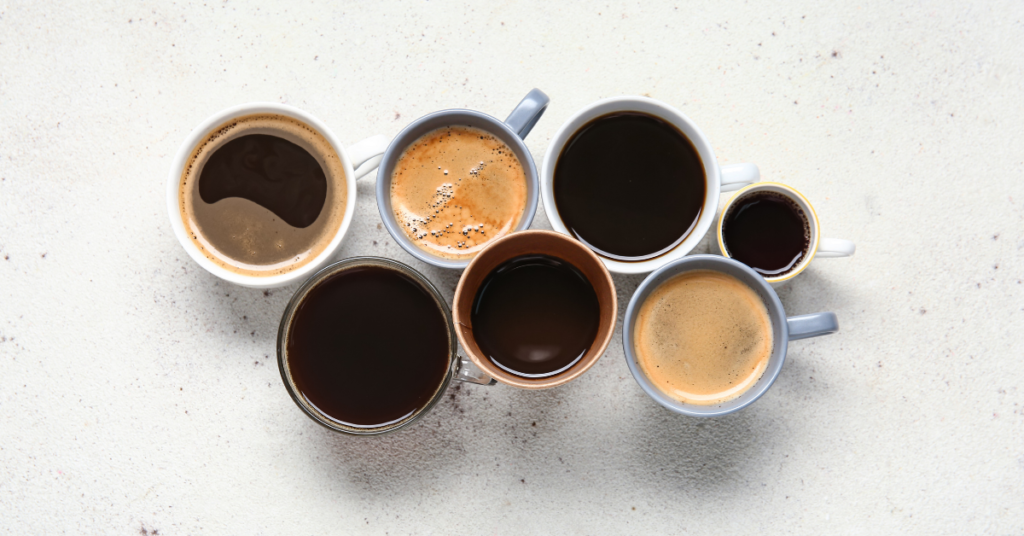
Thirty two ounces of brewed coffee usually pours about four classic eight ounce cups, with mug size and brew style shifting the final count.
Standing in front of a fresh pot, it is easy to wonder how far a full quart of coffee will go. Home brewers see ounces on the carafe, cup icons on the machine, and different mug sizes in the cupboard, so a basic pour can feel confusing.
This guide walks through cup math for a thirty two ounce batch in plain terms. You will see the simple answer first, then how that answer changes with six ounce coffee cups, big travel mugs, brew strength, and caffeine limits for daily use, so the question “How Many Cups Of Coffee Does 32 Oz Make?” has a clear, practical answer in your kitchen.
How Many Cups Of Coffee Does 32 Oz Make?
In everyday kitchen use, thirty two fluid ounces of brewed coffee gives roughly four standard eight ounce cups. Think of it as a full small family breakfast pot or a solo supply for a long work session. If your mugs on the shelf hold closer to ten or twelve ounces, the same thirty two ounce brew gives about three generous servings instead.
The math behind that headline answer stays straightforward. A cup marked as eight fluid ounces is one quarter of thirty two ounces, so four servings fit neatly inside the batch. When you pour into smaller six ounce coffee cups, that same thirty two ounce volume stretches to about five cups with a little left in the pot for refills.
Cups From Thirty Two Ounces At Common Sizes
The table below lines up common coffee vessel sizes with the number of servings you can pour from thirty two ounces of brewed coffee.
| Cup Or Mug Size (Fluid Ounces) | Approximate Cups From 32 Oz Brew | Typical Use |
|---|---|---|
| 4 oz | About 8 cups | Espresso style demitasse or tasting flights |
| 5 oz | About 6 cups | Small china cup or older drip machine marking |
| 6 oz | About 5 cups | Classic coffee cup from many diner sets |
| 8 oz | 4 cups | Standard kitchen mug or measured cup |
| 10 oz | Just over 3 cups | Medium everyday mug |
| 12 oz | About 2.5 cups | Larger mug or to go cup |
| 16 oz | 2 cups | Travel tumbler or big cafe serving |
These values use simple division of thirty two by the serving size, then round to an easy number for planning. Real mugs often sit a little under the rim when filled for drinking comfort, so your actual count can shift by half a cup either way. For hosting, plan for the lower rounded number and keep a kettle ready if you expect heavy refills.
Understanding Coffee Cup Sizes In Real Kitchens
Package labels, machine markings, and household habits rarely match. A drip machine from one brand might call six ounces a cup, while another stretches that same word to almost seven ounces. At the same time, many households reach for stout twelve ounce mugs because they feel satisfying and cut down on trips back to the pot.
The safest way to break the tangle is to measure once with a kitchen scale or a liquid measuring cup. Fill your favorite mug with water as high as you normally would, tip that water into a jug marked in ounces, and jot down the number. That single check turns vague “one cup” language into a clear volume you can rely on every morning.
How Many Coffee Cups 32 Oz Of Brew Can Fill For Different Mugs
Once you know the actual size of the mugs in your cabinet, it becomes easy to plan serving counts from a thirty two ounce batch. A row of delicate six ounce porcelain cups suits a tasting with several guests, while thick twelve ounce stoneware fits slow sipping with plenty of milk added.
Small Cups For Tasting Or Light Service
For tasting flights, four ounce demitasse cups let eight people sample the same coffee from a single thirty two ounce brew. If you use five ounce cups, six guests receive near full servings before the pot runs dry. These portions work well when coffee shares the table with juice, tea, or rich desserts.
Standard Mugs For Everyday Drinking
With eight ounce mugs, each person receives a familiar cafe style pour and you plate four servings per brew. Ten ounce mugs bring that count closer to three and a bit, so hosts often pair them with a slightly larger batch when many people are at the table. Keeping the mug size in mind stops surprise short pours halfway around the group.
Large Travel Tumblers And Oversize Cups
Travel tumblers and oversize ceramic mugs often hold twelve to sixteen ounces even before adding milk or cream. From a thirty two ounce brew, that means two full sixteen ounce travel mugs, or two large twelve ounce mugs with a modest top up for a third person.
How Brew Strength Shapes A Thirty Two Ounce Batch
The number of cups from thirty two ounces stays the same no matter how strong the coffee tastes, but the amount of ground coffee and the style of brew do change the character of every serving. A classic medium strength drip brew uses roughly one part coffee to sixteen to eighteen parts water by weight.
Specialty coffee standards describe this range through what many roasters call the golden cup ratio. Guidance drawn from the SCA golden cup ratio standard recommends roughly fifty five grams of ground coffee per liter of water, which lines up with around thirty four fluid ounces and sits near a common thirty two ounce household brew volume. Many consumer coffee resources that follow this standard describe it as one gram of coffee for every sixteen to eighteen grams of water for an everyday drip brew.
In practice, many home brewers follow a simple spoon based rule instead of weighing every batch. One common starting point suggests about two tablespoons of ground coffee for each six ounce cup marker on a machine. That rough rule still circles the same range as formal standards, and it keeps both flavor and strength close to what most drinkers expect.
Caffeine In Thirty Two Ounces Of Coffee
Alongside cup counts, many people want a rough idea of how much caffeine hides in a thirty two ounce pot. Caffeine content varies by bean, roast, grind, and brew time, so any figure can only be an estimate. A widely used reference for brewed coffee puts a typical eight ounce serving near ninety five milligrams of caffeine.
Using that average number, four eight ounce cups from a thirty two ounce brew carry roughly three hundred eighty milligrams of caffeine in total. Health guidance for most adults often cites four hundred milligrams per day as an upper limit that is not generally linked with negative effects, a figure echoed in public advice from the U.S. Food and Drug Administration.
Those broad limits do not suit every person. People who are pregnant, those with heart concerns, or anyone who notices jittery feelings after smaller amounts should talk with a health professional and treat caffeine intake with extra care.
Approximate Caffeine From Thirty Two Ounces By Serving Size
The table below uses the ninety five milligram average per eight ounce serving to give a rough idea of caffeine across different cup sizes poured from a thirty two ounce brew.
| Serving Size (Fluid Ounces) | Cups From 32 Oz Brew | Approximate Caffeine Per Serving* |
|---|---|---|
| 6 oz | About 5 cups | Around 70 mg |
| 8 oz | 4 cups | About 95 mg |
| 10 oz | Just over 3 cups | Roughly 120 mg |
| 12 oz | About 2.5 cups | Near 140 mg |
| 16 oz | 2 cups | About 190 mg |
*These values use straight math from the ninety five milligram eight ounce reference. Many beans and brew methods fall above or below that number, so treat the table as a planning aid rather than a medical rule.
Practical Ways To Use A Thirty Two Ounce Coffee Brew
Once you know the serving math, a thirty two ounce batch turns into a flexible base for several habits. Early risers might pour a single twelve ounce mug at home, fill a sixteen ounce travel tumbler for the commute, and leave a small remaining serving to chill for iced coffee later in the day.
Hosts who offer both regular and decaf coffee often brew two separate thirty two ounce pots. With eight ounce cups, each pot serves four guests, or fewer guests with second pours. Linking the pot size to expected mug sizes helps keep every person at the table supplied without waste.
Checking Your Own Setup So The Numbers Match
Kitchen habits become easier when your written math and real life pours line up. Take one quiet morning and measure your usual brew volume, carafe markings, and favorite mugs. Note how many ounces your machine uses when filled to its regular line, and how much coffee that actually produces in the cup.
If you use a scale, weighing water in grams adds even more control because one gram of water equals one milliliter. A full liter, or one thousand grams of water, sits close to thirty four fluid ounces, so it lines up well with the thirty two ounce example in this article.
After those checks, you will know how many real cups a labeled pot size gives in your kitchen. When someone asks, you can answer the question “How Many Cups Of Coffee Does 32 Oz Make?” without pausing to do the math.