
Nine-year-olds live in a tricky zone—they’ve outgrown simple preschool games but aren’t ready for the multi-hour complexity of adult strategy titles. The sweet spot lands somewhere between 20-minute rounds and 45-minute sessions, with rules that click after a single explanation but enough depth to keep a curious mind engaged through repeated plays. Finding that balance without drowning in options can feel exhausting.
I’m Mohammad Maruf — the founder and writer behind Drink4Good. I’ve spent years analyzing the mechanics, age ratings, and replayability data that separate a one-time hit from a permanent fixture on the family game shelf.
These are the hand-picked picks that actually hold a nine-year-old’s attention. Whether you need a quick tic-tac-toe upgrade, an immersive dragon-training adventure, or a Lego-fueled strategy challenge, this curated guide to the best games for nine year olds covers every scenario without the guesswork.
How To Choose The Best Games For Nine Year Olds
Nine is a turning point—kids start craving genuine strategy and competition but still bail on anything that drags on too long or buries them in a rulebook. The key is matching the mental load to their attention span, not their birthday.
Game Length and Attention Span
Stick to games that finish in 20 to 45 minutes. Anything shorter feels shallow; anything longer risks losing focus halfway through. A crisp game loop that fits in a single after-school window means the box actually comes out again.
Reading Level and Rule Complexity
Look for games rated 7+ or 8+ with instructions that explain in under five minutes. At this age, reading comprehension varies widely, so games with no text on the cards (or simple icon-based directions) level the playing field and let the strategy do the talking.
Replayability vs. Gimmick Factor
The best games for nine-year-olds reveal new layers on the tenth play. Beware of one-trick designs that feel fresh once and flat forever. Games with variable board states, changing player roles, or expandable components hold interest across dozens of sessions.
Quick Comparison
On smaller screens, swipe sideways to see the full table.
| Model | Category | Best For | Key Spec | Amazon |
|---|---|---|---|---|
| Monopoly: How to Train Your Dragon | Mid-Range | Dragon-loving strategists | 45 min playtime, 2-4 players | Amazon |
| Exploding Kittens: The Board Game | Mid-Range | High-energy party action | Flip board, 65 action cards | Amazon |
| Gobblet Gobblers | Budget-Friendly | Quick 2-player head-to-head | All-wooden pieces, 2 min games | Amazon |
| Monkey Palace – LEGO Board Game | Premium | Lego fans & creative builders | 231 LEGO elements, strategy + build | Amazon |
| Electronic Battleship Reloaded | Premium | Solo practice & head-to-head | Electronic sounds, advanced mode | Amazon |
In‑Depth Reviews
1. Monopoly DreamWorks How to Train Your Dragon Edition Board Game
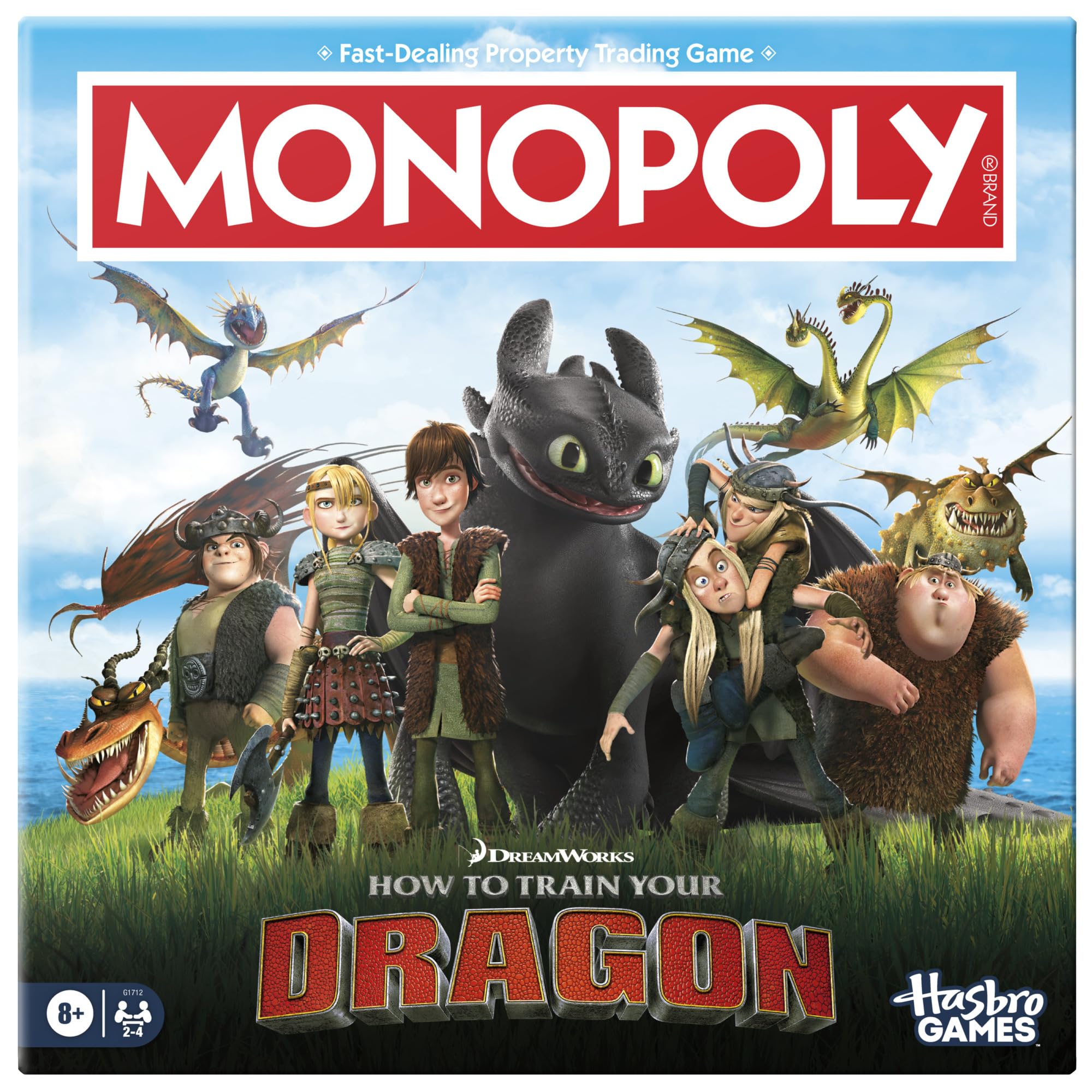
This isn’t your parents’ Monopoly. Instead of buying Boardwalk and Park Place, players land on dragon species and pay fish to train them. The classic “buy and rent” loop gets reskinned into a dragon-collecting race across Berk, and the result is a game that feels familiar enough to teach in two minutes but fresh enough that a nine-year-old won’t groan when the box comes out.
The physical components elevate the experience: four sculpted Viking tokens (Hiccup, Astrid, Tuffnut, and Ruffnut) each come with a matching character mat that grants a unique ability. Rolling the training die to earn dragon shields replaces the standard dice-and-money grind, and the whole thing clocks in at roughly 45 minutes—short enough to finish before dinner, long enough to feel like a real board game session.
Parents will appreciate that it still builds strategic thinking (resource management, risk assessment, prioritization) without the cutthroat bankruptcy spiral that makes standard Monopoly a relationship test. The Dragon Lesson, Arena, and Berk cards add variety to each playthrough, so round ten doesn’t feel like a re-run of round one.
Why it’s great
- Familiar Monopoly mechanics but much faster and more engaging for this age group
- Sculpted character tokens and themed art make it a collector-worthy gift for HTTYD fans
- Teaches strategic thinking through dragon selection and resource allocation
Good to know
- Small plastic parts pose a choking hazard for younger siblings
- Thematic appeal is strongest for kids already invested in the How to Train Your Dragon universe
2. Exploding Kittens: The Board Game
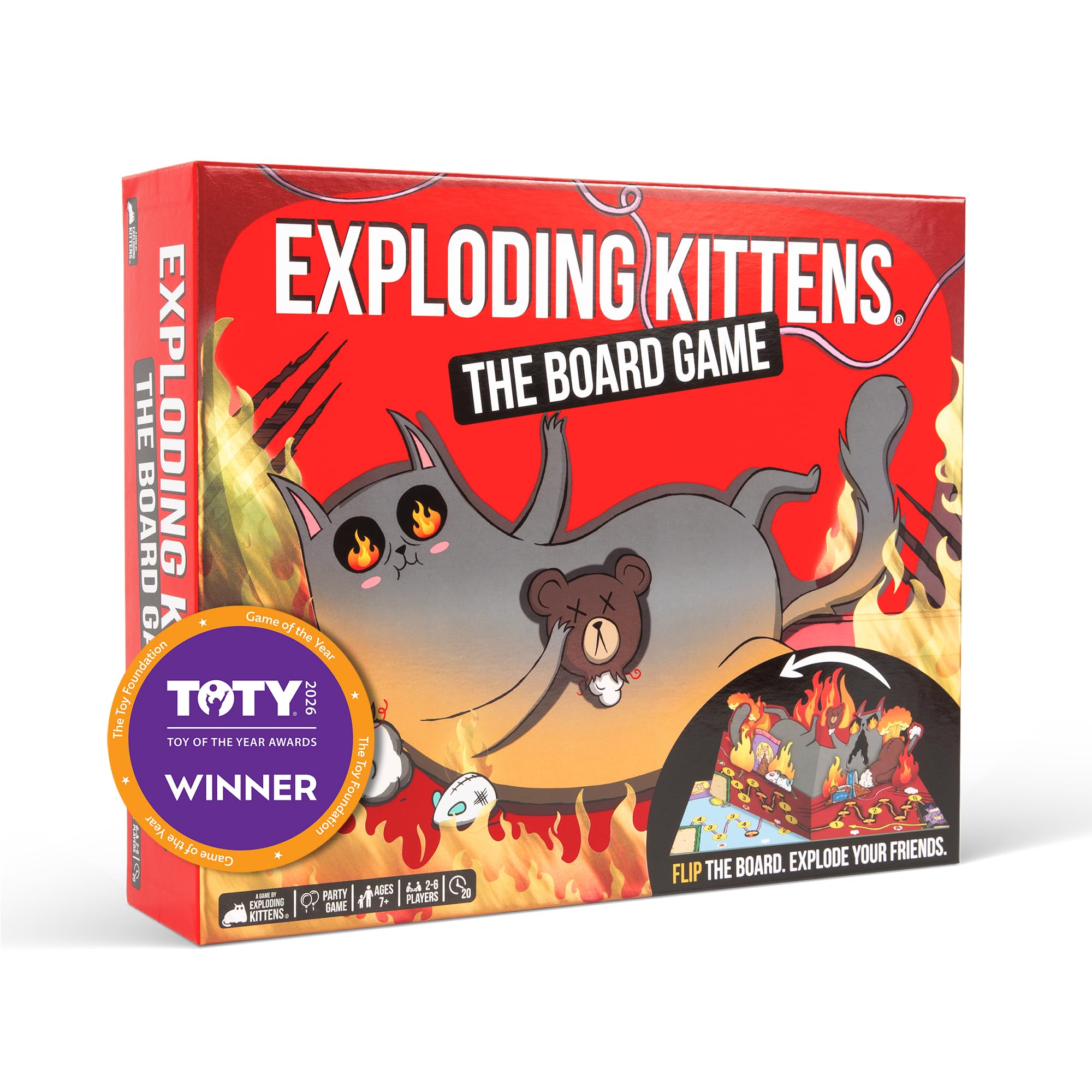
The card game version already conquered family tables worldwide, and this board game adaptation doubles down on the chaos with a physical board that physically flips over when the action heats up. The premise is simple: make it to the end of the path without exploding. The twist is that one wrong move literally changes the layout of the board, revealing new dangers and opportunities that keep every round unpredictable.
With 65 Action Cards, 26 Move Cards, and six character standees (TacoCat, SushiCat, and GnomeCat among them), the component count is generous. Rounds can stretch from 30 minutes to two hours depending on player count and aggressiveness, which gives families flexibility—short sessions for weeknights, longer brawls for weekends. The recommended age of 7+ is accurate; a nine-year-old can grasp the core rules after one demo, though younger siblings may need help reading the action cards.
The Toy Foundation named it 2026 Toy of the Year, and that industry validation matches the real-world buzz. It works equally well as a family game or a party game with older kids and adults, and the humor leans into the absurd—expect genuine belly laughs when a Litterbox Sandworm card gets played.
Why it’s great
- Flip-board mechanic keeps every game fresh and visually exciting
- Supports up to 6 players, ideal for sleepovers or larger families
- Fast to learn, with deep enough strategy to satisfy adults
Good to know
- Cardboard components feel slightly thin compared to the premium price
- Game length varies significantly; some rounds drag past 90 minutes
3. Gobblet Gobblers Fun Strategy Board Game

If your nine-year-old has already mastered tic-tac-toe and needs something that actually challenges their brain, Gobblet Gobblers is the perfect next step. It looks like a simple 3×3 grid, but the twist is deadly: larger pieces can “gobble” (cover) smaller ones, so a piece you thought was yours might actually be hiding an opponent’s token underneath. That revelation—that the board state is never what it seems—teaches spatial reasoning, memory, and forward planning in a way that feels like a puzzle, not homework.
Each game lasts roughly two minutes, which is both a strength and a trap. Kids can rattle off ten games in half an hour and still want more, making it ideal for short attention spans or quick transitions between other activities. The wooden pieces are sturdy, with a pleasant tactile weight, and the felt “hair” on each gobbler adds a charming sensory detail that plastic tokens can’t match. No reading is required, so it levels the playing field completely for mixed-age groups.
Award-winning from Blue Orange Games, it’s part of a classic wooden game collection that includes Pengoloo and Zimbbos. For nine-year-olds learning to win and lose graciously, the rapid-fire format builds emotional resilience fast—there’s always another round in sixty seconds.
Why it’s great
- Sub-two-minute games mean zero downtime; perfect for restless minds
- Solid wood construction with a premium, heirloom-quality feel
- Teaches spatial ordering, cause-and-effect, and strategic camouflage
Good to know
- Strictly two-player only—won’t work for larger groups
- Very simple premise may bore adults after extended play
4. Monkey Palace – LEGO Board Game

Monkey Palace does something no other game in this lineup attempts: it turns the playing field itself into a physical construction project. Players stack real interlocking LEGO bricks to build a palace for monkeys, placing their monkey figures strategically on the unstable towers. When the structure collapses—and it will—the resulting scramble for points turns into a laughing, groaning, re-stacking frenzy that pure card games can’t replicate.
The box contains 231 LEGO elements plus a 32×32 knob plate that serves as the foundation. The 84 game cards and four jungle maps drive the strategy, but the bricks are fully compatible with standard LEGO sets, so families who already have a tub of bricks can supplement the limited supply. The rated age of 10+ is slightly conservative—a nine-year-old Lego enthusiast with good spatial awareness will handle the mechanics fine, though younger kids may struggle with the rule complexity on the first playthrough.
Setup takes about ten minutes the first time, and cleanup requires bagging the bricks by type, but the payoff is a game that feels different every time because the physical board literally changes shape each round. It’s a rare hybrid that satisfies both the builder instinct and the strategist impulse without sacrificing either.
Why it’s great
- Real LEGO bricks create a tactile, creative experience no cardboard can match
- Each playthrough produces a unique physical board state
- Encourages spatial reasoning, planning, and adaptivity under pressure
Good to know
- Setup and cleanup are time-consuming; not ideal for spontaneous play
- Tower collapses can frustrate younger or perfectionist players
5. Hasbro Gaming Electronic Battleship Reloaded Board Game

The original Battleship formula—guess coordinates, sink ships—gets a sensory overhaul here that makes the paper-and-peg version feel ancient. Voice commands, realistic explosion sound effects, and flashing lights create an immersive naval combat atmosphere that hooks kids immediately. The “pew-pew” factor is real; hitting a ship triggers a satisfying audio cue that makes each successful guess feel like a victory, not just a data point.
This Reloaded edition supports both Classic Mode and Advanced Mode. Advanced mode introduces special weapon pegs that unlock salvo strikes (fire multiple shots per turn) and other tactical options, which add meaningful depth for the nine-year-old who wants more than random guessing. The folding command unit makes storage neat, and the preset ship layouts speed up setup for impatient players. It also includes a solo mode where kids can practice against a computer opponent—a lifesaver for only children or households where game time doesn’t always align.
Setup is slower than the classic version because each ship must be placed on the grid manually, and the electronic unit requires three AAA batteries (not included). But once the game is running, the immersion factor is unmatched in this category. For a nine-year-old who loves logic puzzles or military-themed play, this is the head-to-head experience that delivers the most sensory satisfaction per round.
Why it’s great
- Electronic sounds and lights create a genuinely immersive experience
- Advanced mode adds meaningful strategic depth beyond basic guessing
- Solo mode lets kids play independently without a second player
Good to know
- Ship setup is slower than classic Battleship; expect a 5-minute prep
- Requires 3 AAA batteries for the electronic unit
FAQ
Can a nine-year-old play a game rated for ages 10 or older?
How long should a family board game session be for this age group?
Are two-player games or group games better for a nine-year-old?
Final Thoughts: The Verdict
For most users, the best games for nine year olds winner is the Monopoly DreamWorks How to Train Your Dragon Edition because it takes a familiar, trusted system and shortens the playtime while injecting a theme that sparks genuine excitement. If you want a wildly creative, build-as-you-play experience, grab the Monkey Palace LEGO Board Game. And for quick, repeatable head-to-head strategy that fits in a school-night pocket, nothing beats the Gobblet Gobblers.