
Watching an elderly parent or loved one get behind the wheel can stir a mix of emotions—relief at their independence, paired with a constant low-level anxiety about whether they’ll remember the route home or get lost in an unfamiliar area. For families navigating the challenges of aging, cognitive decline, or early-stage dementia, the right device bridges the gap between freedom and safety, offering tracking, communication, and emergency response tools that work without complicating their daily life.
I’m Mohammad Maruf — the founder and writer behind Drink4Good. My work focuses on analyzing assistive technology markets, evaluating GPS module accuracy, cellular fallback reliability, and battery endurance specifically for devices designed to support aging and special-needs populations.
After comparing dedicated trackers, medical alert pendants, smartwatches, vehicle OBD plug-ins, and standalone car navigators, I’ve organized this research into a clear guide on the best gps for elderly drivers so you can choose the right form factor and feature set with confidence.
How To Choose The Best GPS For Elderly Drivers
Selecting the right device starts with understanding how much autonomy your loved one retains. A driver with mild forgetfulness may only need a reliable car navigator, while someone with dementia who wanders may require a wearable tracker with geofenced alerts. Below are the critical factors to weigh before deciding.
Form Factor and Real-World Fit
Wearables like smartwatches and pendant trackers are ideal if the person does not always carry a phone or only wants one-button emergency communication. A vehicle OBD plug-in like Bouncie works only when they are in the car and will monitor driving behaviors alongside location. Standalone car GPS navigators assist with directional guidance but do not alert a caregiver when the driver has left a safe zone. Match the form to the person’s routine, not just your preference as a caregiver.
Subscription Costs and Network Lock-In
Many GPS trackers and medical alert devices require an ongoing monthly plan that covers cellular data, SIM card access, and server-based tracking features. Monthly fees range from roughly to depending on whether the plan includes fall alerts, unlimited live tracking, voice minutes, and customer support. Always verify that the device uses a carrier with strong coverage where your loved one lives and drives.
Battery Life and Charging Discipline
For wearable trackers, battery endurance determines whether the device stays on during outings. A smartwatch with a one-day battery demands nightly charging; a pendant that lasts five or six days is more forgiving for those with memory challenges. In-vehicle OBD modules draw power from the car and never need charging, making them a set-it-and-forget-it solution for the car-only use case.
Geofencing, SOS, and Fall Detection
The combination of customizable safe zones, an immediate SOS button, and automatic fall detection provides layered protection. Geofencing pushes a notification when the wearer leaves a designated area — a vital feature for dementia wandering risk. Fall detection works only in accelerometer-equipped wearables, not in car navigators or OBD dongles.
Quick Comparison
On smaller screens, swipe sideways to see the full table.
| Model | Category | Best For | Key Spec | Amazon |
|---|---|---|---|---|
| AngelSense GPS Watch | Wearable Watch | AI-driven daily routine alerts | 48-hour battery; auto-learns schedule | Amazon |
| SecuLife Fall Alert Pendant | Wearable Pendant | Automatic fall detection & SOS | 6-day battery; IP67 waterproof | Amazon |
| Seculife Medical Alert Watch | Wearable Watch | Wrist-worn fall & health monitor | 680 mAh battery; heart rate monitor | Amazon |
| Bouncie Vehicle GPS | Vehicle OBD | Real-time driving behavior tracking | OBD-II plug-in; no battery needed | Amazon |
| NAVRUF 9″ Car GPS | Car Navigator | Turn-by-turn without smartphone | 9-inch HD screen; lifetime maps | Amazon |
| MJVV 4G GPS Smart Watch | Wearable Watch | Global 4G with video calls | Multimode GPS+WiFi+LBS; water resistant | Amazon |
| Secure Phone GPS Phone | Basic Phone | No-app distraction-free phone | 3-5 programmable speed-dial contacts | Amazon |
| Garmin DriveSmart 55 | Car Navigator | Reliable in-vehicle navigation | 5.5″ display; Garmin Traffic included | Amazon |
| Garmin DriveSmart 76 | Car Navigator | Large 7″ screen for limited vision | 7″ hi-res capacitive display; Alexa built-in | Amazon |
In‑Depth Reviews
1. AngelSense GPS Watch
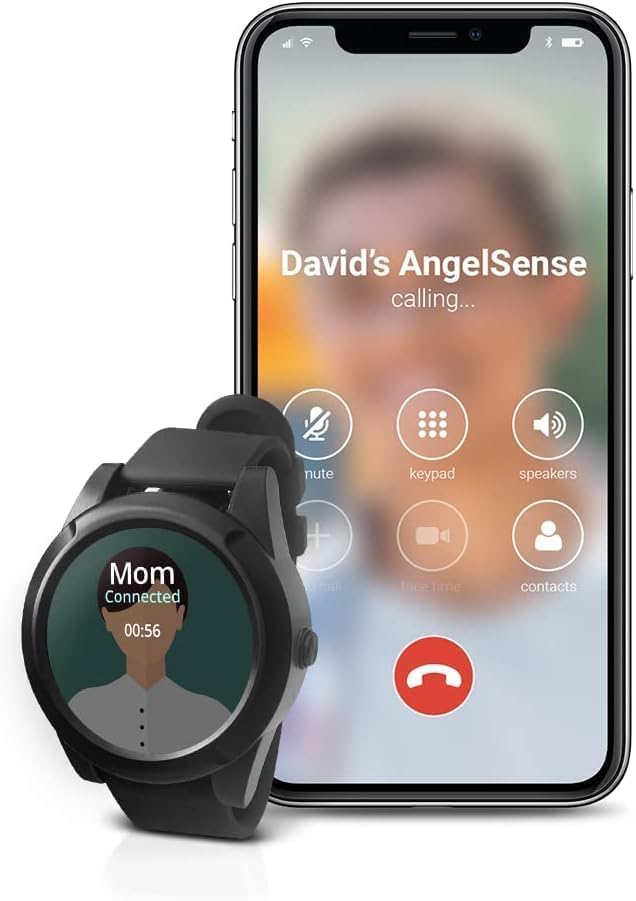
AngelSense differentiates itself from standard GPS watches by employing AI that auto-learns the wearer’s daily routine. Instead of only firing alerts based on preset geofences, it learns what time the person typically leaves for a walk or visits the community center, then notifies you if an early departure or unexpected detour occurs. This proactive alerting is especially valuable for elderly individuals whose patterns may change gradually with dementia progression.
The standalone 4G LTE watch includes a 47.5 mm OLED touch screen, an assistive speakerphone with auto-pickup for caregiver calls, and a recessed SOS button guarded against accidental presses. Battery life is rated at 16 hours of active use with a 48-hour standby claim, and the silicone band is comfortable enough for all-day wear. The detailed location history dashboard stores up to 90 days of movement data, which families can review with clinicians.
Note that a monthly subscription is mandatory — currently per month with a one-year contract — covering the SIM, unlimited live tracking, 60 voice minutes, and unlimited customer care. The first month is free. For caregivers who value pattern-based intelligence over brute-force geofencing, the AngelSense is the most thoughtful preventive tool in this roundup.
Why it’s great
- AI routine learning detects departures and missed stops proactively
- Auto-answer calls with 2-way speakerphone for easy check-ins
- Real-time indoor and outdoor location with 90-day history
Good to know
- /month subscription with a one-year commitment required
- Some users report battery not lasting a full school or work day
- Wrist form factor may not suit someone who dislikes watches
2. SecuLife Fall Alert Pendant
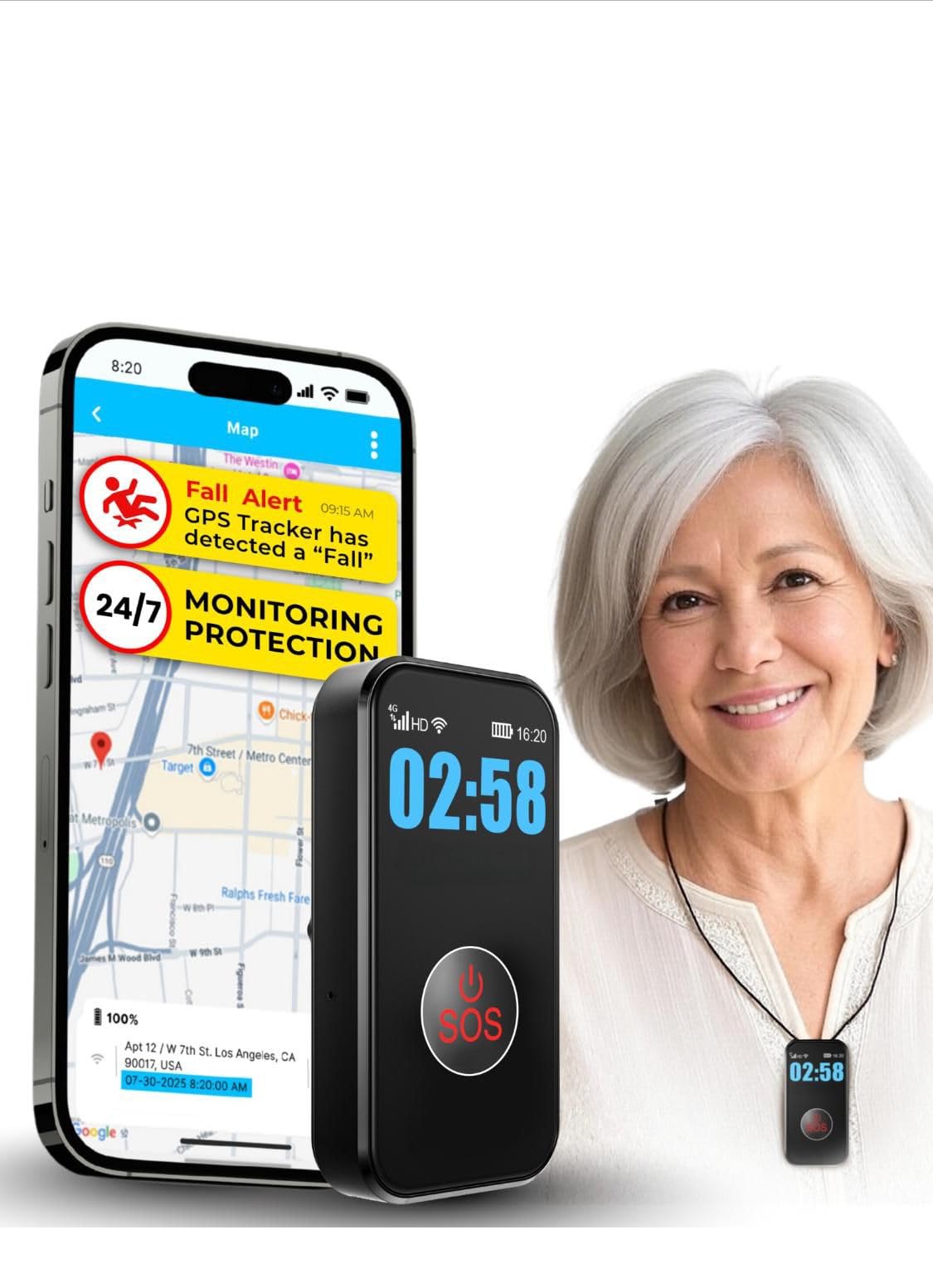
The SecuLife pendant solves two of the biggest friction points with wearable medical alerts: battery anxiety and waterproofing. With a 1000 mAh battery that lasts up to six days on a one-hour location ping interval, this pendant reduces the risk that it dies forgotten on a nightstand. It is fully IP67-rated, so the wearer can shower, walk in rain, or do dishes without removing it — a key feature for seniors who will treat it as a permanent accessory.
Fall detection relies on built-in accelerometers and the device immediately auto-dials pre-selected emergency contacts when a fall is detected. The SOS button also works manually, and the 2-way calling feature uses a loudspeaker that older users find easy to hear. Real-time GPS tracking updates location in the accompanying app, and custom geofence zones trigger entry or exit alerts.
The required subscription is per month, which comes with unlimited fall alerts, unlimited live tracking, and unlimited voice minutes — a comparatively low ongoing cost. The pendant enclosure measures only 3 x 1 x 1 inches and weighs almost nothing on a lanyard. For a senior who will actually wear it consistently, this is the most practical fall-focused wearable on the list.
Why it’s great
- Up to 6-day battery life on a single charge
- IP67 waterproof rating allows shower and rain wear
- /month subscription with unlimited voice minutes
Good to know
- Fall detection may not trigger consistently in all real-world conditions
- Plastic enclosure feels less durable than metal alternatives
- App interface could benefit from larger font options
3. Seculife Medical Alert Watch
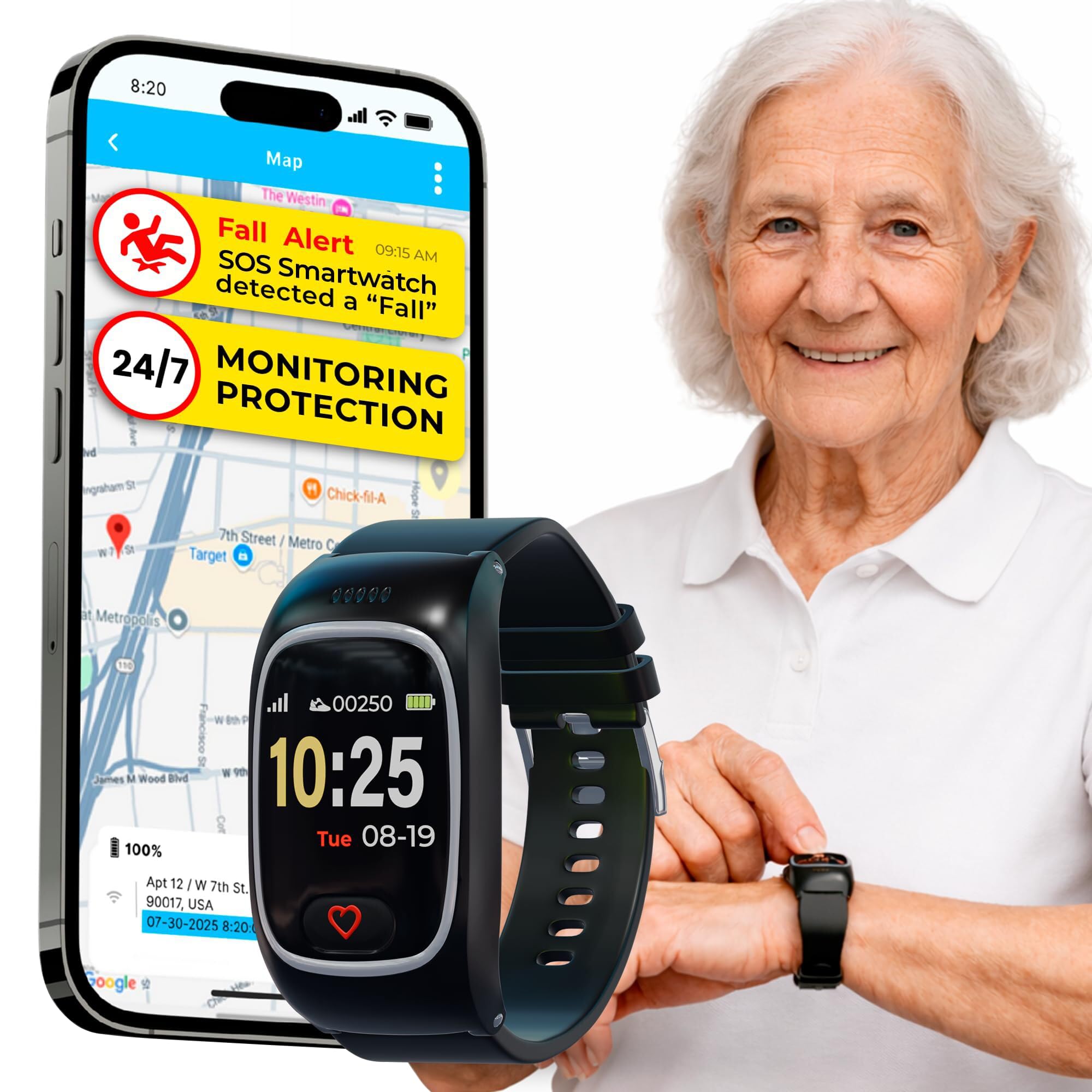
Seculife offers the medical alert functionality in a wristwatch format that blends into daily life. The black silicone band and 44 mm case resemble a standard fitness smartwatch, making it far more socially acceptable for seniors who would feel self-conscious wearing a pendant. The watch runs on 4G LTE and offers both cellular fall detection and a long-press SOS button that triggers emergency calls to pre-set contacts.
Beyond safety tracking, this watch adds health monitoring sensors for heart rate, blood pressure, and blood oxygen. These readings are visible in the Secupro app, giving caregivers a snapshot of overall well-being between doctor visits. The hand-free auto-answer feature automatically picks up calls from approved contacts, so the elderly wearer does not have to fumble with small buttons. IP67 splash resistance and a comfortable silicone band make it suitable for all-day, daily wear.
Be aware of the shorter battery life — the 680 mAh cell typically lasts one day, meaning the watch needs nightly charging. The monthly subscription starts at per month. For a senior who wants the discreet look of a watch and can manage the charging habit, the Seculife wrist-worn alert system is a well-executed mid-range option.
Why it’s great
- Wrist format is less stigmatizing than a pendant
- Heart rate, blood pressure, and SpO2 sensors included
- Auto-answer calling for hands-free caregiver check-ins
Good to know
- Battery life is roughly one day; daily charging required
- Geofencing can drain battery faster during heavy use
- Some users report unreliable SOS call connection
4. Bouncie Vehicle GPS

For families whose main concern is the elderly person’s behavior while driving — speeding, hard braking, getting lost — the Bouncie OBD tracker is the sharpest tool. It plugs directly into the OBD-II port under the dashboard, draws power from the vehicle, and requires zero charging or interaction from the driver. From the moment the car starts, Bouncie transmits real-time GPS location, route history, speed data, acceleration events, and diagnostic engine codes to the caregiver’s smartphone app.
The geofencing feature is highly responsive: set a safe zone (e.g., the neighborhood or the grocery store parking lot) and receive instant push or SMS alerts when the vehicle enters or exits that area. Accident detection uses impact sensors to send alerts immediately after a collision. The app stores unlimited trip history with detailed street-level mapping, so you can see exactly which routes your loved one took and how they drove.
The only recurring cost is the monthly subscription, which is the lowest in this category by a significant margin. The hardware fits vehicles from 1996 onward. For families focused solely on driving safety rather than personal wandering, the Bouncie module is an unobtrusive, low-cost solution that also provides vehicle health diagnostics like battery voltage and check-engine codes.
Why it’s great
- Self-powered from OBD port; no battery to charge
- Lowest monthly subscription at per month
- Detailed driving behavior reports including speed and braking
Good to know
- OBD plug can feel loose; a cable tie helps secure it
- Only tracks the vehicle, not the person on foot
- 15-second location delay makes it unsuitable for real-time navigation
5. NAVRUF 9″ Car GPS

If an elderly driver’s primary challenge is navigating unfamiliar roads rather than wandering, a dedicated dash-mounted GPS like the NAVRUF 9-inch unit makes excellent sense. The oversized 9-inch HD touchscreen is significantly easier to read for aging eyes than a standard phone display, and the bright LCD remains visible even under direct sunlight. The device comes preloaded with the 2026 USA, Canada, and Mexico maps and promises free lifetime map updates with no subscription fees or hidden costs.
The voice navigation speaks real-voice turn-by-turn directions, so the driver never has to glance at the screen. It also includes speed camera alerts, red light camera warnings, and lane guidance. For trucks and RVs, the routing can be customized by vehicle weight, height, length, and width to avoid restricted roads — a useful feature for older drivers who occasionally tow a camper or drive a larger vehicle.
Customer reviews on battery life are mixed: the built-in battery lasts only a few minutes without the car charger plugged in, meaning the unit must stay connected to the 12V socket at all times. Setup is straightforward for the tech-savvy person, but some users report inconsistent auto-power-on behavior. For a pure navigation tool that eliminates phone dependency, the NAVRUF delivers a clear view and lifetime map support.
Why it’s great
- Big 9-inch screen ideal for visually impaired drivers
- Free lifetime map updates with no subscription required
- Custom routing by vehicle dimensions for RVs and trucks
Good to know
- Battery life is very short; must stay plugged in
- Some units have inconsistent auto-power-on performance
- Voice navigation accuracy varies by firmware version
6. MJVV 4G GPS Smart Watch

Families with international ties or elderly parents who travel abroad will appreciate the MJVV 4G watch, which supports a wide range of global LTE bands and works with a Nano SIM card from local carriers worldwide. Beyond standard GPS tracking, this watch provides HD video calling, allowing caregivers to see their loved one’s environment during a check-in — a feature absent from most medical alert pendants.
The positioning system combines GPS, WiFi, and LBS (cell tower triangulation) for more reliable location fixes indoors and in dense urban areas. The watch records up to 90 days of historical route data, and the geofencing tool sends an alarm when the wearer exits a defined safe zone. It also includes a pedometer, heart rate monitor, and blood pressure measurement, though the clinical accuracy of those biometric sensors is best treated as a wellness indicator rather than a diagnostic tool.
Initial setup can be more involved than plug-and-play alternatives, and the watch requires a Nano SIM with both calling and data activated separately. Some US users report that GPS features do not function correctly with third-party SIMs — the company recommends Speedtalk. For cross-border seniors or families who need video call capability alongside location tracking, the MJVV offers unusual global flexibility.
Why it’s great
- Works with international Nano SIMs for global use
- HD video calling for visual check-ins
- Multimode GPS+WiFi+LBS for better indoor tracking
Good to know
- Setup can be complex; GPS issues reported with third-party SIMs
- Heart rate and blood pressure are for reference only
- Small text on screen may be hard for some seniors to read
7. Secure Phone GPS Phone

For elderly individuals prone to distraction or who have been susceptible to phone scams, the Secure Phone serves as a tightly controlled communication device. It looks like a basic touch phone but runs a proprietary locked-down OS with no internet browsing, no games, no app store, and no ability to receive spam calls. Only contacts programmed by the caregiver can call or be dialed — up to 15 contacts spread across three speed-dial buttons plus an SOS key.
Real-time GPS location is accessible through a companion app on the caregiver’s phone, and the device supports a remote listening feature that allows the caregiver to hear the wearer’s surroundings in an emergency. The SIM card is included, but users must purchase a cellular plan directly from Secure Phone — you cannot use an existing carrier plan. The monthly rate is described by customers as cheaper than Verizon but specific pricing depends on the chosen plan.
Battery life is approximately 24 hours, requiring nightly charging. The initial setup process has a learning curve, though the company owner, Mike, is frequently praised for hands-on support. If your priority is preventing a loved one from being targeted by phone fraud while still maintaining a GPS lifeline, this is the only device that addresses that specific risk head-on.
Why it’s great
- Eliminates all internet and app-based distractions
- Only approved contacts can call or be dialed
- Remote listening feature for caregiver situational awareness
Good to know
- Requires proprietary cellular plan; your own SIM won’t work
- Texting is limited to pre-set canned responses
- No case available; some units have cracked screens
8. Garmin DriveSmart 55

Garmin remains the gold standard for dedicated in-car GPS navigation, and the DriveSmart 55 distills that expertise into a compact 5.5-inch package with simple, senior-friendly menus. The WQVGA color TFT display with resistive touch is bright enough to see in direct sunlight, and the voice-activated controls allow the driver to say “OK Garmin, navigate to 123 Main Street” without taking hands off the wheel — an important safety consideration for older drivers with slower reaction times.
The unit comes with built-in Garmin Traffic, which receives real-time traffic data through an included traffic receiver to automatically suggest alternate routes. Driver alerts warn about upcoming school zones, sharp curves, speed changes, and railroad crossings, adding a layer of situational awareness. When paired via Bluetooth with a smartphone, it supports hands-free calling and smart notifications. The built-in Wi-Fi handles map and software updates without needing a computer.
The downsides are the 1-hour battery life — it must stay plugged into the vehicle at all times — and the resistive touchscreen, which is functionally accurate but less fluid than a capacitive screen. For elderly drivers who have relied on Garmin for years and prefer a predictable, no-surprises navigation experience, the DriveSmart 55 is the most trustworthy option in the mid-range navigator tier.
Why it’s great
- Simple menus and intuitive touch interface
- Built-in Garmin Traffic with automatic rerouting
- Voice-activated control for hands-free destination entry
Good to know
- 1-hour battery life requires constant 12V connection
- Resistive touch screen is less responsive than modern capacitive screens
- Map updates may become outdated in rapidly developing areas
9. Garmin DriveSmart 76

The DriveSmart 76 is the premium choice for elderly drivers with significant visual challenges. The 7-inch capacitive touch display is noticeably crisper and more responsive than the lower-tier models, and the high-resolution maps show street names, landmarks, and turn lanes with exceptional clarity. The larger screen real estate reduces the need for the driver to lean forward or squint — a real-world advantage for those whose near vision has degraded.
Voice assist is the standout feature here: the “OK Garmin” wake command understands natural speech well enough to handle complex queries like “find a gas station near the airport with diesel.” Alexa integration is also built in for playing music, checking weather, and controlling smart home devices while driving. The unit includes a comprehensive database of National Parks, TripAdvisor ratings, and Foursquare POIs, making it a strong companion for the many elderly retirees who enjoy road trips.
The included dual USB charger is a considerate addition for vehicles where multiple devices need power. Like its smaller sibling, the battery lasts only about one hour, so it must be plugged in during use. The suction cup mount has been criticized as mediocre, and some Android users have reported Bluetooth connectivity quirks with the Drive app. For sheer readability and voice control accuracy, the DriveSmart 76 is the best-in-class car navigator for the elderly driver.
Why it’s great
- 7-inch high-resolution display for seniors with vision difficulty
- Natural-language voice assist and Alexa integration
- Comprehensive POI database ideal for road trips
Good to know
- 1-hour battery; must stay connected to car power
- Suction cup mount is prone to falling off on rough roads
- Occasional Bluetooth pairing issues with Android phones
FAQ
Can a GPS tracker for elderly drivers work without a monthly subscription?
Is there a device that tracks both the person and the car?
How does geofencing help with dementia wandering?
Final Thoughts: The Verdict
For most users, the best gps for elderly drivers winner is the AngelSense GPS Watch because its AI-driven routine learning offers an extra layer of proactive safety that goes beyond basic geofencing. If you want the most comfortable form factor with automatic fall detection and the longest battery life, grab the SecuLife Fall Alert Pendant. And for pure driving navigation with the clearest screen and voice control, nothing beats the Garmin DriveSmart 76.