
That powdery white coating on your rose leaves isn’t just unsightly—it’s a fungal infection that chokes off sunlight and weakens the entire plant. If left unchecked, powdery mildew can stunt new growth, distort buds, and turn a show-stopping rose garden into a mess of curled, dying foliage. The right treatment stops the spread fast and keeps your blooms healthy through the season.
I’m Mohammad Maruf — the founder and writer behind Drink4Good. I’ve spent years analyzing horticultural chemistry and biological fungicide formulations to find treatments that actually work on stubborn rose diseases without burning delicate foliage or harming pollinators.
Finding a reliable fungicide for powdery mildew on roses means choosing between systemic chemicals, biological bacillus treatments, and botanical oil blends—each with different strengths depending on your garden setup.
How To Choose The Best Fungicide For Powdery Mildew On Roses
Powdery mildew on roses is caused by the fungus *Podosphaera pannosa*, which thrives in warm, dry days followed by cool, humid nights. Not all fungicides penetrate the same way, and choosing the wrong one can leave spores alive to reinfect next season. Focus on three core factors before buying.
Systemic vs. Contact Action
Systemic fungicides like Bonide Rose Rx are absorbed into the plant’s vascular system, traveling through leaves and stems to protect new growth from the inside out. Contact fungicides—such as botanical oil sprays—only kill spores they physically touch and require thorough coverage on both leaf surfaces. For established rose bushes where mildew hides inside curled leaves, systemic drenches provide longer-lasting control.
Active Ingredient Chemistry
Bacillus amyloliquefaciens (found in Southern Ag and Bonide Revitalize) is a beneficial bacterium that colonizes leaf surfaces and outcompetes fungal pathogens. Citric acid-based formulas like Earth’s Ally break down fungal cell walls on contact. Neem and clove oil blends suffocate spores but can burn rose foliage if applied in direct sun above 85°F. Match the chemistry to your tolerance for reapplication frequency.
Formulation Concentration
Ready-to-use sprays are convenient for small gardens but run out quickly on large rose bushes. Concentrates that mix with water give you more applications per dollar and let you adjust strength for severe outbreaks. A 32-oz concentrate typically makes 8 to 10 gallons of finished spray—enough to treat 15 to 20 mature rose bushes weekly for a full season.
Quick Comparison
On smaller screens, swipe sideways to see the full table.
| Model | Category | Best For | Key Spec | Amazon |
|---|---|---|---|---|
| Bonide Rose Rx Systemic Drench | Systemic | Long-term rose protection | 6-week systemic coverage | Amazon |
| Earth’s Ally Disease Control | Contact | Gentle organic treatment | Citric acid active ingredient | Amazon |
| Bonide Revitalize Biofungicide | Biological | Preventative immune response | Bacillus amyloliquefaciens | Amazon |
| Grower’s Ally Crop Defender 3 | Broad Spectrum | Multi-pest control on edibles | Triple-action botanical blend | Amazon |
| Southern Ag Bio Fungicide | Biological | Budget-friendly prevention | 98.85% bacillus concentrate | Amazon |
In‑Depth Reviews
1. Bonide Rose Rx Systemic Drench

Bonide Rose Rx stands apart because it doesn’t require spraying. Mix the concentrated liquid and pour it around the base of each rose bush. The active ingredients travel up through the root system into every leaf and stem, providing full plant coverage against powdery mildew, black spot, and rust for six full weeks per application.
The 32-ounce bottle treats up to 17 mature rose bushes when mixed at the standard rate. Gardeners report visible results within two weeks—curled leaves unfurl, black spots stop spreading, and new growth emerges clean and green. The systemic action means rain doesn’t wash it off, unlike contact sprays that need reapplication after heavy downpours.
One important caveat: this product is toxic to bees during application. Do not drench while flowers are open and pollinators are active. Applied in early morning before blooms open or after petals fall, it’s an extremely effective long-term solution for serious rose collections.
Why it’s great
- Six-week systemic protection from roots to leaves
- Controls insects and fungal diseases simultaneously
- No spraying equipment needed
Good to know
- Harmful to bees during flowering period
- 32 oz treats exactly 17 roses—not 20 as often marketed
2. Earth’s Ally Disease Control
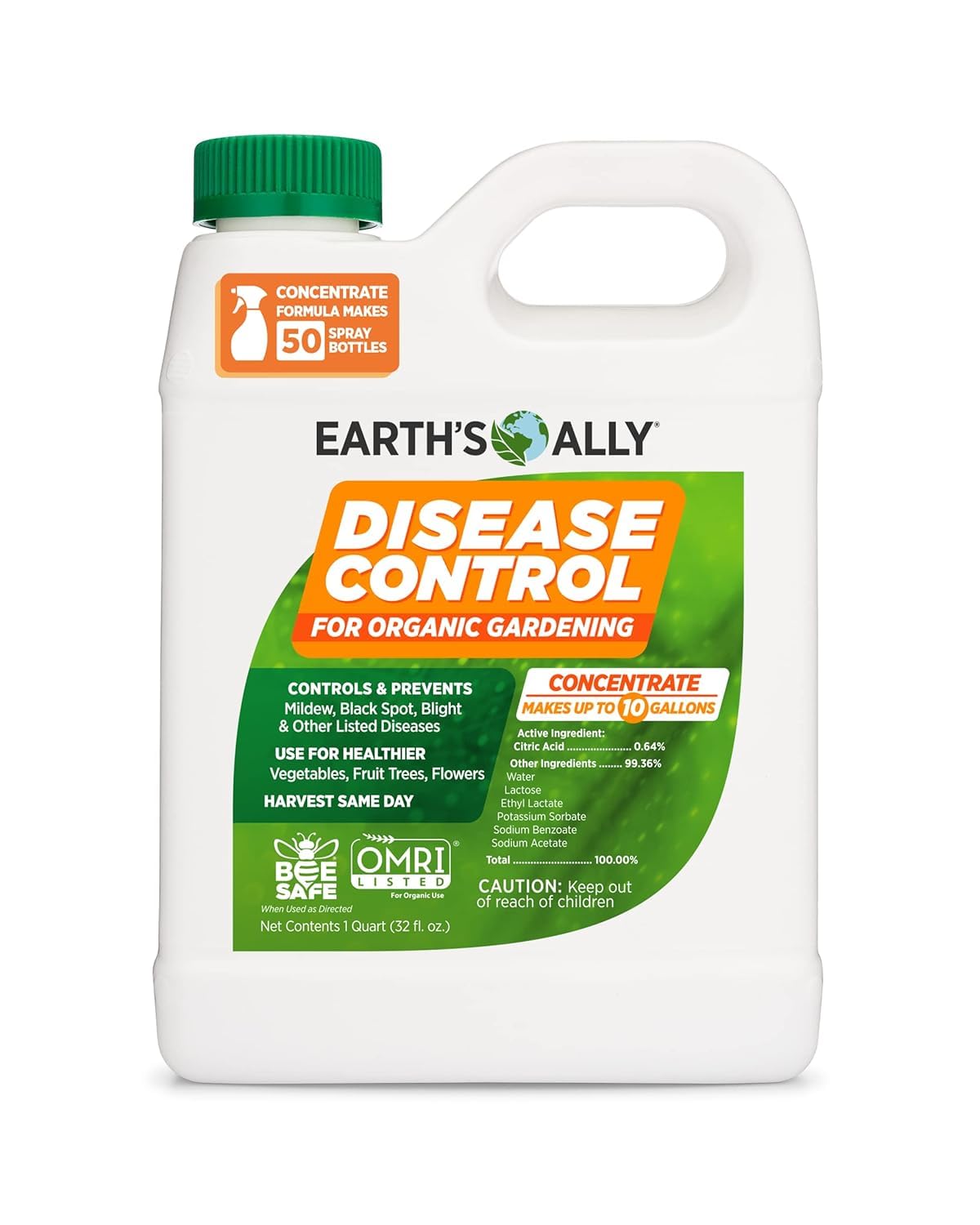
Earth’s Ally uses citric acid as its active ingredient, a contact fungicide that breaks down powdery mildew spores on contact without synthetic chemicals. The OMRI Listed formula is safe enough to use on edible plants up to the day of harvest—perfect for rose hips you plan to use in teas or jams.
The 32-ounce concentrate makes 10 gallons of ready-to-use spray. Mix 6 tablespoons per gallon of water and apply as a foliar spray until both leaf surfaces are dripping. Users report noticeable improvement in rose leaf health within a week, with new growth emerging free of white mildew coating.
Because it’s a contact fungicide, complete coverage is essential. Powdery mildew often hides on the undersides of lower leaves, so lift branches and spray from multiple angles. Reapply after rain or every seven days during high-humidity periods for consistent control.
Why it’s great
- Safe for fruits and vegetables until harvest day
- Concentrated formula offers excellent value per gallon
- No harmful residues or synthetic additives
Good to know
- Requires thorough leaf coverage for effectiveness
- Needs reapplication after heavy rain
3. Bonide Revitalize Biofungicide

Bonide Revitalize takes a completely different approach: instead of killing spores directly, it triggers the rose plant’s own immune response. The bacillus amyloliquefaciens bacteria colonize leaf surfaces and produce compounds that signal the plant to strengthen cell walls and produce defense proteins against powdery mildew and black spot.
This biological fungicide works best as a preventative—apply it before mildew appears, especially in early spring when temperatures hit 60°F. It can also slow active infections, though it won’t erase visible mildew overnight. Mixed as a foliar spray or soil drench, it’s approved for organic gardens and safe for use around pollinators once dry.
Users note the strong bacterial smell that confirms the culture is alive. The 16-ounce concentrate covers a moderate garden well, and two to three seasonal applications provide season-long protection when combined with good garden hygiene.
Why it’s great
- Strengthens plant immunity without chemicals
- Safe for use on edibles until harvest
- Works as foliar spray or root drench
Good to know
- Strong unpleasant smell during mixing
- Slower acting than synthetic fungicides
4. Grower’s Ally Crop Defender 3
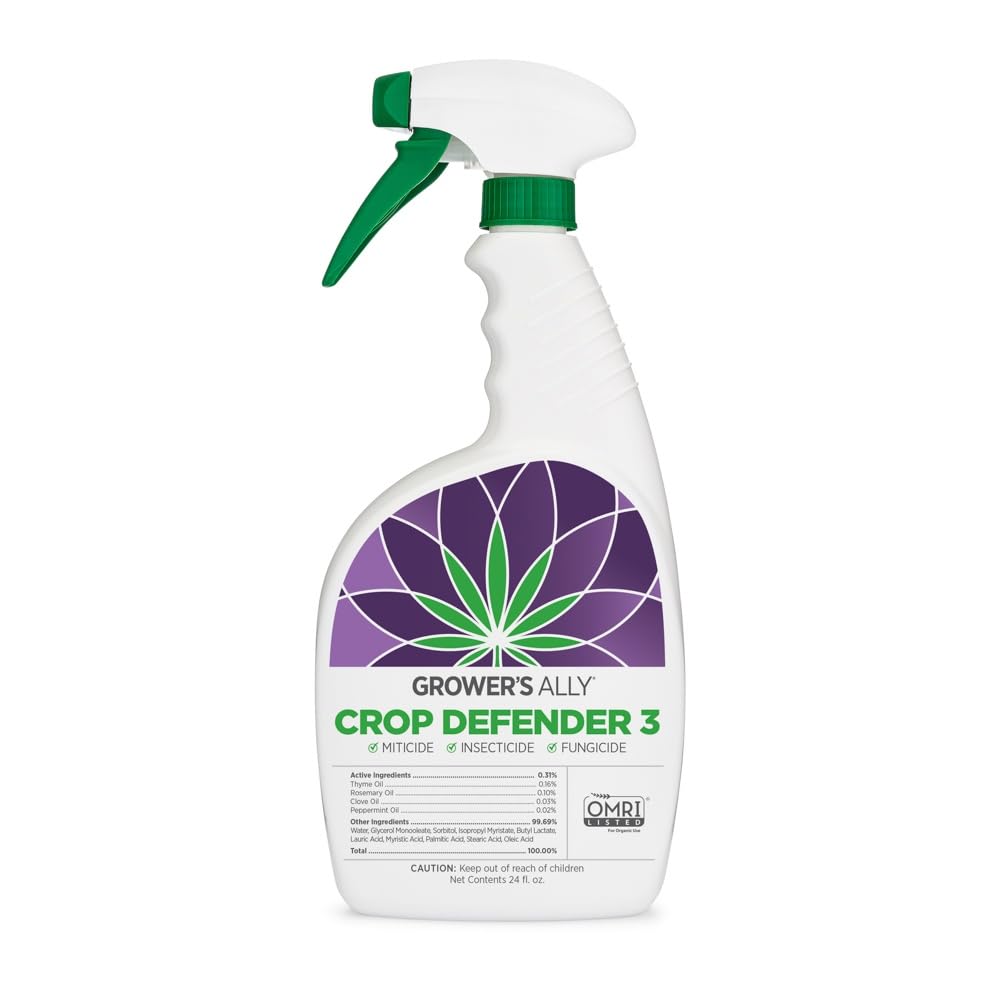
Grower’s Ally Crop Defender 3 combines miticide, insecticide, and fungicide action into a single spray. The blend of botanical oils—including clove and rosemary—suffocates powdery mildew spores, spider mites, aphids, and thrips on contact. The built-in surfactant helps the spray spread evenly across waxy rose leaves for more complete coverage.
The ready-to-use 24-ounce bottle is convenient for small rose gardens and indoor roses. It’s FIFRA 25(b) exempt, meaning no synthetic pesticides or heavy metals, and it tests clean for residual solvents. Gardeners report wiping out severe spider mite infestations after a single application at the elimination concentration.
This spray is bee-safe when dry and can be applied during the flowering cycle, making it a strong option for gardeners who want to protect pollinators. The clove oil smell dissipates within a few hours, and treated plants can be harvested the same day.
Why it’s great
- Controls mites, insects, and mildew with one spray
- Safe for bees once dry
- Zero synthetic residues or heavy metals
Good to know
- Ready-to-use runs out faster than concentrates
- Can burn foliage if applied in extreme heat
5. Southern Ag Bio Fungicide

Southern Ag Garden Friendly Biofungicide delivers 98.85% bacillus amyloliquefaciens in a compact 8-ounce bottle. This is a straight biological concentrate—no fillers, no surfactants—making it one of the most pure options for mildew prevention. A little goes a long way: just 2 ml per 5 gallons in hydroponic systems or 1 tablespoon per gallon for foliar sprays.
The strong bacterial smell confirms live, active culture. It’s particularly effective as a preventative treatment in humid southern climates where powdery mildew pressure is constant from late April through June. Users note it slows mildew spread rather than wiping out established infections, so apply early in the season.
This product also works in hydroponic and soil drench applications to prevent root rot and bad bacteria. For rose growers who want an entry-level biological option without paying for premium branding, the concentrated formula and USDA specification make this a solid foundation for an integrated pest management plan.
Why it’s great
- Very high bacillus percentage for potent prevention
- Extremely concentrated—small bottle lasts a long time
- Works in both soil and foliar applications
Good to know
- Strong odor that lingers in storage
- Less effective against active severe infections
FAQ
Can I use a biofungicide like Bonide Revitalize after powdery mildew appears?
How often should I apply a systemic fungicide to my roses?
Final Thoughts: The Verdict
For most users, the fungicide for powdery mildew on roses winner is the Bonide Rose Rx Systemic Drench because it provides six weeks of full-plant protection without spraying and controls both insects and disease simultaneously. If you want a gentle organic treatment safe for edibles and pollinators, grab the Earth’s Ally Disease Control. And for a preventative biological approach that strengthens your roses’ natural defenses, nothing beats the Bonide Revitalize Biofungicide.