
Nothing kills a stored engine faster than fuel that has turned into a sticky, varnish-like sludge. Left untreated, gasoline and diesel begin to oxidize within weeks, forming gums and deposits that clog carburetor jets, injectors, and fuel lines, turning your prized vehicle or weekend equipment into a frustrating no-start project.
I’m Mohammad Maruf — the founder and writer behind Drink4Good. I’ve spent years analyzing chemical formulations, concentration ratios, and real-world field data to understand exactly which fuel stabilizers prevent phase separation and protect sensitive fuel systems during long-term storage.
Whether you’re winterizing a boat, storing a generator for hurricane season, or putting away a classic car, the right treatment keeps fuel fresh for months. This guide breaks down the science and the specs to help you find the best fuel stabilizer for your specific needs.
How To Choose The Best Fuel Stabilizer
Selecting a fuel stabilizer isn’t about picking the cheapest bottle on the shelf. You need to match the chemistry to your specific engine type, fuel composition, and storage duration. The wrong formula can leave water in your fuel or fail to protect against extreme cold.
Engine Type: Gasoline vs. Diesel
Gasoline stabilizers focus on preventing oxidation and gum formation, while diesel formulas must also handle biodiesel degradation and gelling in cold weather. Some premium enzyme-based treatments work in both fuel types, giving you a single solution for mixed fleets.
Water Management: Dispersion vs. Demulsification
Ethanol-blended gasoline attracts moisture from the air, leading to phase separation. Some stabilizers emulsify water into tiny droplets that burn off during operation; others separate water so you can drain it. For ethanol-laced fuels, a phase separation inhibitor is critical.
Storage Duration and Concentration
Short-term storage (up to 6 months) needs a basic antioxidant stabilizer. Long-term storage (1-2 years) requires a concentrated formula with higher dosage rates. Check the treat rate — an ounce treating 5 gallons is different from an ounce treating 30 gallons.
Quick Comparison
On smaller screens, swipe sideways to see the full table.
| Model | Category | Best For | Key Spec | Amazon |
|---|---|---|---|---|
| Star Tron Super Concentrated Diesel Formula | Enzyme Diesel | Long-term diesel storage | 1 oz treats 32 gallons | Amazon |
| K100 Marine Grade Gasoline Treatment | Water Emulsifier | Marine and seasonal equipment | 32 oz bottle | Amazon |
| STA-BIL Diesel All-Season | Anti-Gel Diesel | Cold-weather diesel storage | Treats 150 gallons | Amazon |
| Quicksilver Quickstor | Marine OEM | Boat winterization | 1 oz treats 5 gallons | Amazon |
| Ethanol Shield Fuel Stabilizer | Ethanol Defense | Small engines and ethanol fuel | 24 oz (2-pack) | Amazon |
In‑Depth Reviews
1. Star Tron Super Concentrated Diesel Formula – Enzyme Fuel Treatment
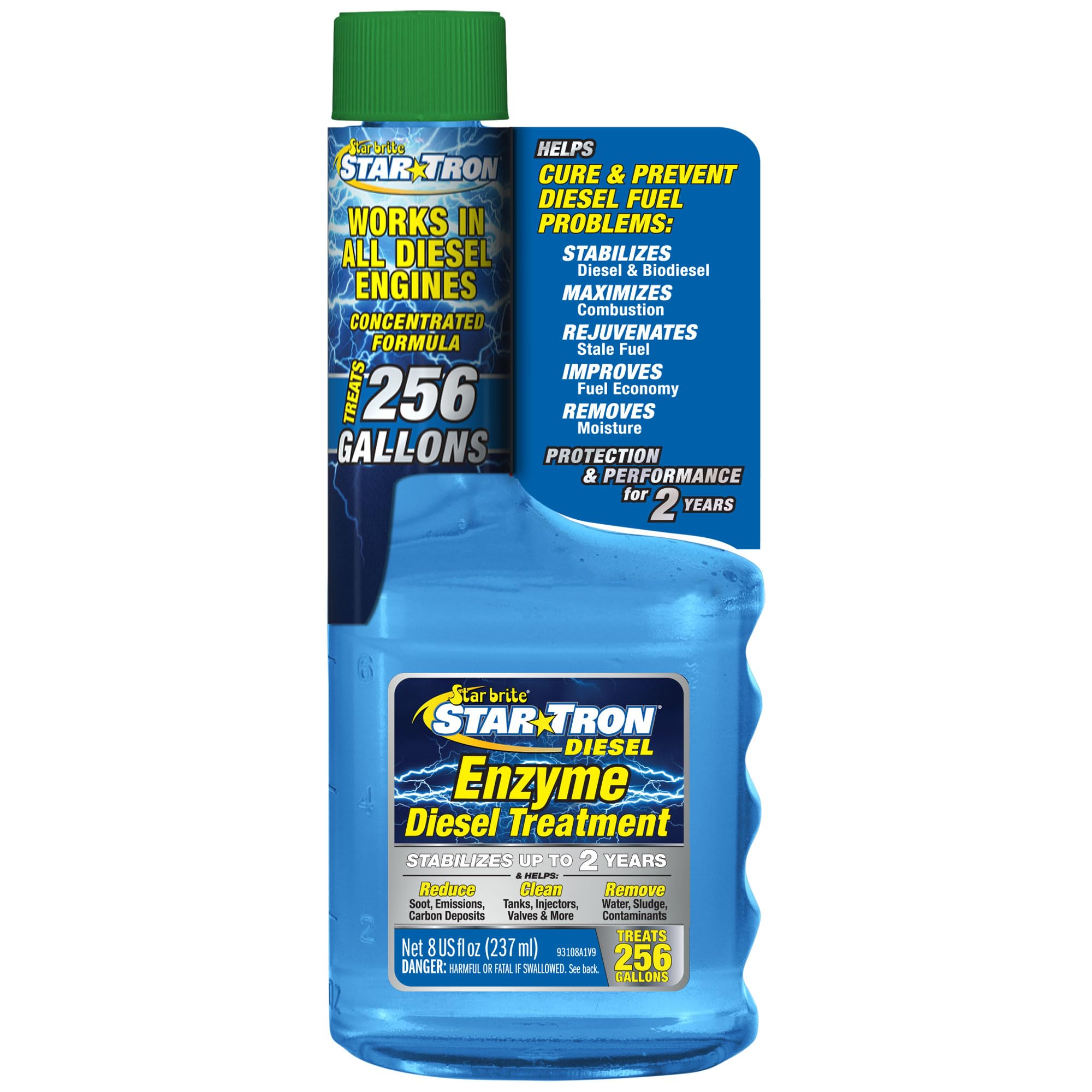
Star Tron uses a proprietary enzyme formula that actively breaks down gum and varnish while dispersing water into submicron droplets that burn off during operation. At a treat rate of 1 ounce per 32 gallons, this super-concentrated diesel formula stretches further than any other stabilizer in this lineup. Users report revived engines running on year-old fuel after just a single treatment, which speaks to the enzymatic cleaning power that standard antioxidants lack.
Designed to stabilize diesel fuel for up to two years, the Star Tron formula also reduces carbon buildup on injectors and exhaust components. The enzyme action is heat-tolerant, meaning it continues working even when fuel temperatures fluctuate during storage. It works in boats, RVs, cars, and any diesel engine, and multiple long-term users confirm it has saved them from carburetor or injector replacement.
While labeled for diesel, experienced owners also add this concentrated formula to gasoline engines with positive results. The only small catch is the 8-ounce bottle size — though it treats 256 gallons of diesel, you’ll need to track your usage carefully if you’re treating large tanks or a mixed fleet of gas and diesel machines.
Why it’s great
- Enzyme technology cleans old deposits while stabilizing fresh fuel
- Exceptional concentration — one bottle treats hundreds of gallons
- Works in both diesel and gasoline despite the diesel label
Good to know
- Small 8 oz bottle requires careful measuring for huge tanks
2. K100 Marine Grade Gasoline Fuel Treatment
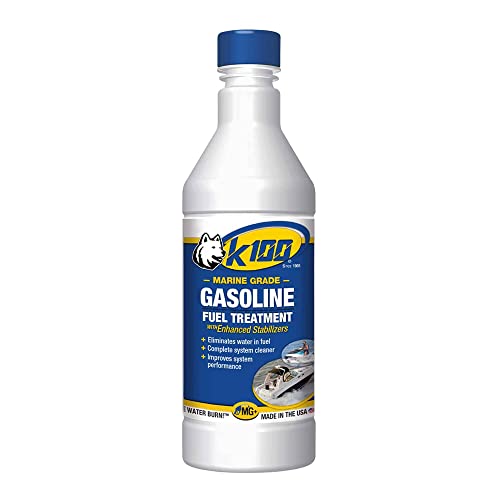
K100 takes a unique approach — instead of separating water out, it emulsifies water into burnable particles so the engine can consume it along with the fuel. This makes it especially effective for marine applications where water intrusion is a constant threat. The 32-ounce bottle treats a substantial amount of fuel, and the formula also adds two octane points while scrubbing gums and varnishes from the entire fuel system.
Real-world feedback is impressive: users report engines starting after 14 months of storage without any fuel draining, and others claim an extra 30 miles per tank in sedans. The versatility across cars, trucks, motorcycles, ATVs, and snowmobiles makes it a strong one-bottle solution for households with multiple power sports machines. It works equally well in ethanol-free and ethanol-blended fuels.
One caution — K100 is known to damage painted surfaces and furniture, so careful handling during pouring is necessary. The bottle packaging is also minimal, so storing it upright and away from spills is wise. For anyone who battles water in fuel regularly, this is the most effective water-management stabilizer on the list.
Why it’s great
- Emulsifies water so it burns off instead of accumulating
- Adds 2 octane points and cleans fuel injectors
- 32 oz bottle offers excellent coverage for the price tier
Good to know
- Spills will damage painted surfaces and some plastics
3. STA-BIL Diesel All-Season – Anti-Gel – Cetane Boost – Cleans And Lubricates Fuel System

STA-BIL is a trusted name in fuel stabilization, and this Diesel All-Season formula brings anti-gel protection down to -40°F alongside cetane boost and fuel system cleaning. The 20-ounce bottle treats 150 gallons of diesel, making it a budget-friendly option for owners of tractors, trucks, and heating oil tanks who face brutal winters. The water demulsification capability is a standout feature for diesel owners who don’t want water emulsified into their fuel.
Long-term users with stored diesel equipment report that the formula prevents sludge and corrosion over cold months, with engines starting and running smoothly after six months of inactivity. The cetane boost improves cold-start performance, which is critical when temperatures drop below freezing. Several user testimonials highlight that it saved money compared to paying oil delivery services for their own stabilizer.
While the anti-gel and water-separating abilities are excellent, this formula is focused on diesel engines and shouldn’t be used as a primary gasoline stabilizer. The 20-ounce bottle is a practical size for personal use, but large fleet operators may want a larger container option.
Why it’s great
- Anti-gel protection down to -40°F for extreme cold climates
- Demulsifies water instead of burning it
- Treats 150 gallons from a single bottle
Good to know
- Designed specifically for diesel — not a gasoline stabilizer
4. Quicksilver Quickstor Fuel Treatment and Stabilizer

Quicksilver Quickstor is the OEM-recommended stabilizer for Mercury outboard engines, making it the top choice for boat owners who want a factory-engineered formula. It stabilizes fuel for up to two years, preventing ethanol-blended fuels from breaking down and forming gum and varnish in fuel lines, carburetors, and injectors. At 1 ounce per 5 gallons, the treat rate is standard, but the confidence that comes with OEM backing is strong.
Boaters consistently praise this formula for winterization routine. Users report that adding Quickstor to fresh gasoline before storage ensures reliable spring starts without fuel system cleaning. The formula is also effective in generators, lawnmowers, and other power sports equipment, broadening its use beyond just marine applications. The 32-ounce bottle provides enough coverage for a typical boat fuel tank with some left over for other seasonal gear.
Being an OEM-specific product, it carries a price premium compared to generic stabilizers. For owners of non-Mercury engines, the same protection can be found in other brands at a lower cost. But for Mercury owners or anyone wanting the peace of mind of a factory spec, this is the definitive choice.
Why it’s great
- Mercury Marine OEM formula ensures perfect compatibility
- Two-year storage protection for ethanol fuel
- Versatile enough for land equipment too
Good to know
- OEM branding adds a premium over generic alternatives
5. Ethanol Shield Fuel Stabilizer, 24 oz (2 Pack)

Ethanol Shield was formulated specifically to combat the three biggest problems of ethanol-blended fuels: phase separation, corrosion, and fuel degradation. The proprietary Combustion Cool Technology helps reduce combustion chamber temperatures while the phase separation inhibitor prevents ethanol from absorbing enough water to separate from gasoline. This is critical for small engines and seasonal equipment that sit for months at a time.
Real-world results are striking — users revived a chainsaw running on year-old 25:1 mix, going from 10-12 pulls to start to just 4 after a four-hour soak. The stabilizer also bonds with water in the fuel so it can be burned off, preventing rust formation in humid climates. The 2-pack format gives you 48 ounces total, which is generous coverage for multiple machines.
The primary concern is packaging — a few users reported leaky bottles upon delivery, so inspecting the seals immediately is wise. This formula is gasoline-specific and not designed for diesel engines. For anyone who stores lawn mowers, snow blowers, generators, or chainsaws with ethanol gas, Ethanol Shield is the most targeted solution available.
Why it’s great
- Phase separation inhibitor is purpose-built for ethanol fuel
- Combustion Cool Technology protects small engines
- 2-pack provides excellent value for multi-machine households
Good to know
- Packaging can sometimes arrive with leaks
- Gasoline only — not suitable for diesel engines
FAQ
Can I use a diesel stabilizer in my gasoline engine?
How long does fuel stabilizer last once added to the tank?
Does fuel stabilizer fix old stale gas?
Final Thoughts: The Verdict
For most users, the best fuel stabilizer winner is the Star Tron Super Concentrated Diesel Formula because its enzyme technology actively cleans deposits while stabilizing fuel for up to two years, all at a treat rate that outperforms everything else. If you want to eliminate water from gasoline stored in boats or seasonal machines, grab the K100 Marine Grade Treatment. And for extreme cold climates where diesel gelling is a real threat, nothing beats the STA-BIL Diesel All-Season with its -40°F anti-gel protection.