
That split-second sound of an enemy reloading can decide a round. A gaming headset is the difference between hearing the battle and feeling it—turning chaotic noise into a tactical map you can read with your ears. Finding the right one means cutting through marketing claims to focus on driver size, virtual surround implementation, mic clarity, and the physical comfort that keeps you locked in through a six-hour session.
I’m Mohammad Maruf — the founder and writer behind Drink4Good. I’ve spent years analyzing the hardware specifications, driver technologies, and real-world performance data behind every mainstream and boutique gaming headset to give you a clear, spec-driven view of what actually matters.
Whether you’re dueling in a ranked FPS or exploring a sprawling open world, a gaming headset with the right balance of precision audio, clear voice communication, and long-wearing comfort can transform how you play and communicate.
How To Choose The Best Gaming Headset
The market is saturated with flashy RGB and bold audio claims. To pick a headset that actually improves your gameplay, you need to isolate the specs that deliver measurable performance: driver architecture, surround sound method, microphone design, build materials, and connection type. Here is exactly what each of those means for your win rate and comfort.
Driver Size and Diaphragm Material
Larger drivers typically produce fuller sound, but material choice matters more. Standard dynamic drivers use PET or paper cones. Bio-cellulose diaphragms, used in the premium tier, offer superior stiffness-to-weight ratio — this translates to faster transient response and clearer separation between footstep frequencies and bass explosions. A 50mm bio-cellulose driver often outperforms a generic 53mm driver in directional clarity.
Virtual Surround Sound: Hardware vs. Software
Hardware-driven 7.1 surround sound uses a dedicated USB DAC that processes the audio signal before it reaches the drivers. This offloads processing from your computer and ensures consistent performance across consoles. Software-based spatial audio (DTS Headphone:X, Windows Sonic, THX Spatial Audio) offers more customization via companion apps but depends on the platform’s processing power. For console gamers, hardware-based surround is often more reliable.
Microphone Architecture and Pickup Pattern
A detachable boom mic with a unidirectional or cardioid pickup pattern is the gold standard for filtering out keyboard clatter and room noise. Full-band condenser mics (like Razer’s 12mm HyperClear) capture a wider frequency range, making your voice sound more natural. For streamers and Discord-heavy users, Blue VO!CE software offers real-time EQ, noise gate, and compression that can turn a mediocre mic into a broadcast-quality tool.
Quick Comparison
On smaller screens, swipe sideways to see the full table.
| Model | Category | Best For | Key Spec | Amazon |
|---|---|---|---|---|
| Razer BlackShark V3 Pro | Wireless ANC | Competitive FPS with positional audio | 50mm bio-cellulose drivers with THX 7.1.4 | Amazon |
| Logitech G522 Lightspeed | Wireless RGB | Multi-platform gaming with broadcast mic | PRO-G 48kHz/24bit drivers with Blue VO!CE | Amazon |
| SteelSeries Arctis Nova 3P | Wireless | Multi-platform wireless with mobile app presets | 40-hour battery with fast charge (9h from 15min charge) | Amazon |
| Logitech G Pro X SE | Wired Pro | Tournament play with EQ memory | PRO-G 50mm drivers with DTS Headphone:X 7.1 | Amazon |
| HyperX Cloud II | Wired Classic | Open-budget multi-platform surround sound | 53mm dynamic drivers with hardware 7.1 DAC | Amazon |
| FIFINE AmpliGame H13BP | USB RGB | RGB streaming setup with software surround | 50mm dynamic drivers with 7.1 virtual surround | Amazon |
| JBL Quantum 100M2 | Wired Budget | Starter gaming for kids and light use | 40mm dynamic drivers with JBL QuantumSOUND | Amazon |
In‑Depth Reviews
1. Razer BlackShark V3 Pro Wireless ANC Gaming Headset for PS5
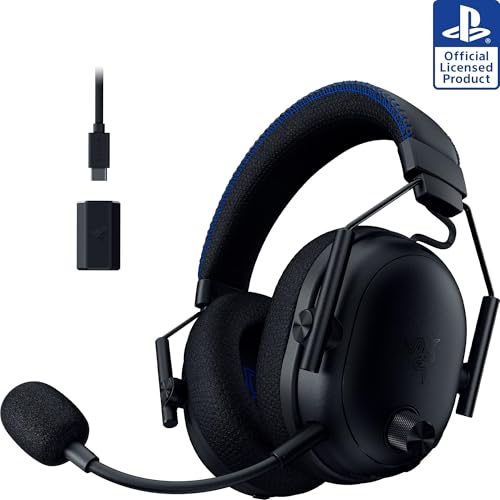
The BlackShark V3 Pro is built around Razer’s Gen-2 Triforce Bio-Cellulose 50mm drivers. The bio-cellulose diaphragm is stiffer and lighter than standard PET, delivering faster transient response — critical for catching the direction of a single footfall during a chaotic firefight. The hybrid active noise cancellation works by combining a feed-forward and feedback microphone system, then pairing it with the passive seal of hybrid memory foam ear cushions. This ANC approach is tuned to filter broadband noise like HVAC hum without warping the in-game positional audio.
The detachable HyperClear 12mm full-band mic uses a unidirectional pickup pattern with a large capsule, capturing more of the voice frequency spectrum than typical 6mm booms. The result is vocal clarity that sounds more natural in Discord and TeamSpeak. The headset supports simultaneous 2.4 GHz and Bluetooth audio mixing — useful for taking a call while still hearing game sound — plus 3.5mm wired backup. Battery life ratings are strong, though actual endurance can dip slightly with ANC engaged at full volume.
The plastic hinge construction is the main durability compromise on an otherwise metal-reinforced frame. Some users report that the auto-off timer is too aggressive during idle menu navigation. Still, the combination of low-latency wireless, high-fidelity drivers, and effective ANC make this the most complete package for competitive players who need to shut out the world.
Why it’s great
- Bio-cellulose drivers deliver fast transient response for pinpoint positional audio
- Hybrid ANC combines feedback and feed-forward systems for superior noise isolation
- 12mm full-band mic captures natural voice with background noise suppression
- Simultaneous 2.4 GHz and Bluetooth audio mixing
Good to know
- Plastic hinge feels less premium than all-metal designs
- Auto-off timer is aggressive during menu navigation
- Game/chat mix wheel not fully functional on PS5
2. Logitech G522 Lightspeed Wireless Gaming Headset

The G522 uses Logitech’s PRO-G drivers, which are engineered to deliver synchronized 48 kHz/24-bit audio. This higher bit depth means lower distortion in the transient peaks — the sharp sounds of grenade pins and weapon swaps retain their attack without muddiness. The 60-hour battery life (with RGB disabled) is industry-leading for this price tier, and the 30-meter wireless range via LIGHTSPEED lets you grab a drink without dropping the audio signal.
The full-bandwidth 48 kHz/16-bit microphone is the standout feature here. When paired with the Blue VO!CE software, you can apply a noise gate, compressor, and EQ presets in real time. The companion G HUB software also allows saving custom EQ profiles to the headset’s onboard memory, so your sound signature travels with you to LAN events or a friend’s console. The tri-connectivity (LIGHTSPEED wireless, Bluetooth, and wired USB-C) covers PC, PlayStation, and Nintendo Switch without adapter swapping.
The washable suspension headband is a thoughtful durability addition — sweat and oils accumulate quickly during long sessions, and being able to machine-wash the band extends the headset’s usable lifespan. The plastic ear cup hinges are the only potential weak point, but the overall 280-gram weight makes it one of the most comfortable options for marathon play. Audio quality leans slightly toward gaming rather than critical music listening, with boosted mid-bass for explosion impact.
Why it’s great
- 60-hour battery life with LIGHTSPEED wireless
- Full-band 48kHz/16-bit mic with real-time Blue VO!CE processing
- Tri-connectivity covers PC, PlayStation, and Switch natively
- Machine-washable suspension headband
Good to know
- Audio tuning leans toward gaming bass, less neutral for music
- Plastic hinges remain a long-term durability concern
- RGB reduces battery life to around 35 hours
3. SteelSeries Arctis Nova 3P Wireless Multi-Platform Gaming Headset

SteelSeries uses custom-designed neodymium magnetic drivers in the Arctis Nova 3P. Neodymium magnets produce a stronger magnetic field per unit weight than ferrite magnets, which translates to faster driver response and higher sensitivity — meaning you get more detail at lower volumes without cranking the gain. The 40-hour battery is solid, but the fast-charge feature is the real win: 15 minutes of charging yields 9 hours of playback, making it forgiving for players who forget to plug in overnight.
The mobile app integration (Arctis Companion) sets this headset apart from most wireless competitors. You can select from over 200 game-specific EQ presets created in partnership with esports athletes, tailored for hearing footsteps in CoD, Fortnite, and other competitive titles. The 260-gram weight, stretchy suspension headband, and dual-hinge adjustment points significantly reduce clamp force and hotspot pressure, addressing the “headset headache” complaint common with heavier designs.
Connectivity is via a multi-platform USB-C dongle that works on PC, PlayStation, Switch, and mobile without cable swapping. The Bluetooth 5.3 connection allows low-latency audio mixing with the 2.4 GHz game signal for calls or Discord on your phone. The microphone is serviceable but not at the broadcast quality of the Logitech G522 or Razer BlackShark V3 Pro — it lacks a dedicated EQ software. The plastic body is light but less rugged than aluminum-framed alternatives.
Why it’s great
- Neodymium magnetic drivers provide high sensitivity for detailed low-volume audio
- Fast charge gives 9 hours playback from 15 minutes of charging
- 200+ game-specific presets via mobile app
- Only 260 grams with stretchy suspension band for zero hotspot pressure
Good to know
- Microphone lacks broadcast-quality EQ software
- Plastic construction feels less durable than metal-frame alternatives
- Mac app EQ Engine non-functional on Apple Silicon for extended period
4. Logitech G Pro X SE Wired Gaming Headset with Microphone

The G Pro X SE is a wired workhorse built around a durable aluminum fork and steel headband, designed to survive the repeated drops and twists of tournament travel. The PRO-G 50mm drivers use a hybrid mesh material that reduces distortion, and the included external USB sound card (DAC) processes DTS Headphone:X 7.1 surround sound off the host device, which is critical for consistent audio on tournament PCs where software installation may be restricted. The DAC also stores a custom 5-band EQ profile to onboard memory — meaning your preferred sound signature loads automatically without G HUB software running.
The detachable 6mm microphone uses Blue VO!CE technology for real-time noise reduction, compression, and EQ. While the physical capsule is smaller than the Razer’s 12mm, the software processing can elevate voice clarity significantly. The ear pads are leatherette with memory foam, offering a tight seal for passive noise isolation. The cable is a 2-meter PC cable with in-line volume and mute, plus a Y-splitter included for separate mic and headphone jacks on older hardware.
Audio quality is tuned for competitive clarity rather than cinematic bass. The mids are forward, helping dialogue and environmental cues cut through, while the lows are controlled. Some users report that the plastic adjustment clips on the headband can crack under heavy use, which is the primary build quality complaint on an otherwise metal-framed headset. The G HUB software itself has been known to cause driver conflicts on certain Windows builds, though saving profiles to the DAC sidesteps this issue entirely.
Why it’s great
- Aluminum fork and steel headband are tournament-rugged
- External USB DAC stores custom 5-band EQ profiles to onboard memory
- Blue VO!CE mic processing enhances voice clarity beyond the small 6mm capsule
- DTS Headphone:X 7.1 processing is hardware-offloaded for consistent performance
Good to know
- Plastic adjustment clips are the weakest structural point
- G HUB software can cause driver conflicts on some systems
- Audio tuning prioritizes mids for competitive play, less immersive for single-player
5. HyperX Cloud II Gaming Headset

The HyperX Cloud II is the long-reigning standard for mid-range wired gaming headsets. Its 53mm dynamic drivers are larger than average, and the closed-back ear cup design paired with memory foam leatherette pads provides effective passive noise cancellation — no ANC, just physical isolation. The included USB DAC handles the 7.1 virtual surround sound processing independently from your PC, which is especially important for console users (though the 7.1 effect is only active on PC/Mac; consoles get stereo output via the 3.5mm jack).
The detachable microphone is TeamSpeak and Discord certified. The noise-canceling element uses a cardioid pickup pattern that rejects side-ambient noise, keeping your voice clear even with a mechanical keyboard rattling next to you. The aluminum frame is a notable durability asset at this price point — most headsets in this range use all-plastic builds that crack after a year. The Cloud II has a proven track record of surviving 4-6 years of daily use among the verified customer reviews we analyzed.
Comfort is excellent for extended sessions due to the memory foam ear pads and padded leatherette headband. The earcup rotation is 90 degrees for flat storage. Sound quality is balanced, with slightly recessed bass compared to modern gaming-tuned headsets. Some users report that the virtual 7.1 effect is subtle and not as immersive as software-based implementations like DTS Headphone:X. The USB DAC is also non-detachable from the main cable, which can be a cable management nuisance for console players who only need the 3.5mm connection.
Why it’s great
- 53mm drivers deliver high-quality audio with good directional awareness
- Hardware-driven 7.1 USB DAC offloads processing from PC
- Aluminum frame provides durability far beyond the price point
- Memory foam ear pads with leatherette offer excellent passive isolation
Good to know
- 7.1 surround effect is subtle compared to DTS or THX implementations
- USB DAC is permanently attached to the cable, limiting console use convenience
- Bass is recessed compared to modern gaming-tuned headsets
6. FIFINE AmpliGame H13BP Wired Gaming Headset
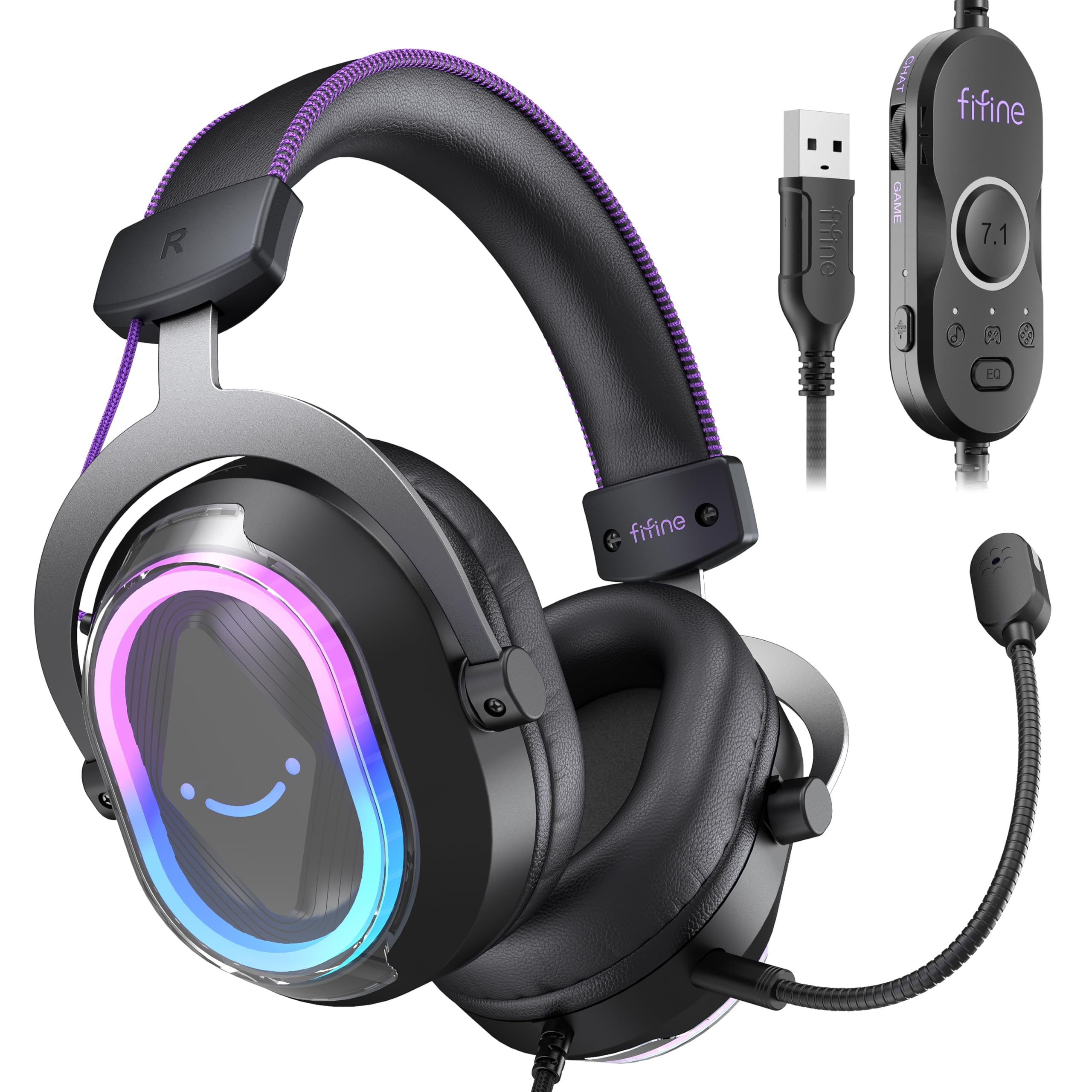
The FIFINE H13BP uses 50mm dynamic drivers with a software-enabled 7.1 virtual surround sound toggle. Unlike the hardware DAC approach of the Cloud II, the surround effect here is processed through the USB audio controller on the PC side. The new-gen drivers are tuned for clarity across high, mid, and low frequencies, with an emphasis on revealing subtle audio details like footsteps and environmental ambience. The 7.55-foot braided USB cable provides sufficient reach for desktop setups with the tower on the floor.
The standout aesthetic feature is the rhombus shell with transparent ear cups and 11 dynamic RGB lighting modes. Streamers can toggle the lighting via a long press on the inline controller, with options ranging from static colors to cycling patterns. The inline control box also includes dedicated game/chat balance adjustment, volume wheel, EQ mode switching, and one-click mute with a red indicator light. The noise-canceling microphone uses a unidirectional pattern for background noise rejection during live streams.
Comfort comes from protein skin ear pads with memory foam filling, and the adjustable headband accommodates a range of head sizes. The closed-back ear cups provide passive noise cancellation sufficient for blocking out ambient room noise. Some users noted that the ear cups can squeak against the frame during head movement, and the braided cable transmits friction noise (cable rustle) easily. The USB-A connection means it is not compatible with Xbox, and PS5/PS4 support is limited to USB-A ports only. Build quality is largely plastic with a metal-reinforced frame, which feels sturdy at this price.
Why it’s great
- 50mm dynamic drivers with 7.1 virtual surround for immersive in-game audio
- 11-mode RGB lighting with rhombus shell is streamer-ready
- Inline control box with game/chat balance and one-click mute
- Protein skin memory foam pads provide comfortable passive isolation
Good to know
- Ear cups can squeak during head movement
- Braided cable transmits audible friction noise
- Not compatible with Xbox consoles; PS5 support is USB-A only
7. JBL Quantum 100M2 Wired Over-Ear Gaming Headset

The JBL Quantum 100M2 is an entry-level wired headset built around JBL’s QuantumSOUND Signature tuning. The 40mm dynamic drivers are smaller than the competition, but the frequency response (20 Hz – 20 kHz) covers the full audible spectrum. The signature tuning emphasizes clarity in the mid-range and upper frequencies, making footsteps and dialogue stand out without muddy bass. This makes it a viable option for younger gamers or those on a strict budget who still need clear audio cues.
Comfort is addressed by fabric-covered memory foam ear cushions on an oval earpiece shape. The fabric breathes better than leatherette for long sessions, reducing sweat buildup. The lightweight headband puts minimal clamp force on the skull. The detachable boom microphone is omnidirectional, which means it picks up ambient room noise alongside your voice. This is a downgrade from unidirectional mics, but the included mute switch on the cable helps you cut the feed when needed. Compatibility spans PC, PlayStation, Xbox, Nintendo Switch, Mac, and mobile via a single 3.5mm jack.
Build quality is mixed. The plastic construction keeps weight low but does not inspire confidence for rough handling. Multiple verified reviews report sound cutting out when the 3.5mm cable is grazed at the jack connection, suggesting a weak solder joint. The lack of virtual surround sound software or a USB DAC means you are limited to stereo spatialization. For the price, the audio clarity and comfort are good, but the longevity concerns make this a headset better suited for light, sporadic use rather than daily competitive gaming.
Why it’s great
- JBL QuantumSOUND Signature tuning emphasizes footsteps and dialogue clarity
- Fabric-covered memory foam cushions breathe better than leatherette
- Lightweight design with minimal clamp force for long sessions
- Compatible with all major platforms via 3.5mm jack
Good to know
- Omnidirectional mic picks up background noise alongside voice
- 3.5mm jack connection prone to cutting out with cord movement
- Plastic construction does not tolerate rough handling well
- No virtual surround sound support, limited to stereo audio
FAQ
What driver size is ideal for hearing footsteps in competitive shooters?
Does wireless latency affect competitive gaming performance?
Why do some microphones sound clearer than others on a gaming headset?
Final Thoughts: The Verdict
For most users, the gaming headset winner is the Razer BlackShark V3 Pro because it combines bio-cellulose drivers, hybrid ANC, and a 12mm full-band mic into a single wireless package that covers competitive and casual use equally well. If you want the best battery life and broadcast-quality mic software, grab the Logitech G522 Lightspeed. And for a proven value that has held up for nearly a decade, nothing beats the HyperX Cloud II.