
First-person view flying changes everything. You’re not just piloting a drone from the ground; you’re inside the cockpit, reacting to every bank and dive through a set of goggles. The difference between a standard camera drone and a true FPV system is the difference between watching a race and driving the car. The choice comes down to how deep you want to go into the immersive flight experience.
I’m Mohammad Maruf — the founder and writer behind Drink4Good. I’ve spent years analyzing the specs that separate a toy from a tool: transmission latency, frame durability, goggle resolution, and the motor-to-weight ratios that define how a quadcopter actually handles in the air.
Whether you’re a beginner looking for a ready-to-fly kit or a pilot wanting to upgrade your video feed, this guide breaks down the top options to help you find the best fpv drone for your skill level and budget.
How To Choose The Best FPV Drone
Choosing the right FPV drone depends on your flight goals. A sub-250g model avoids FAA registration and is great for travel, while a heavier, more powerful racing quad offers higher speeds but requires registration. The most important factor is the video transmission system: analog is affordable and low-latency, while digital (like DJI O3 or HDZero) delivers clearer video but costs more.
Transmitter Protocol: ELRS vs FrSky vs Crossfire
ExpressLRS (ELRS) has become the standard for FPV drones because of its long range, low latency, and open-source nature. Most modern bind-and-fly drones ship with ELRS receivers, making it easy to pair with a compatible radio. If you are buying a kit, check that the transmitter and receiver match — mixing protocols causes connection issues.
Flight Modes and Durability
FPV drones typically offer three flight modes: Angle, Horizon, and Acro (Rate). Beginners should look for a drone with Angle mode to prevent flipping, while experienced pilots need a rigid frame that can survive crashes. A built-in propeller guard or a ducted design (cinewhoop style) is critical for indoor flying.
Quick Comparison
On smaller screens, swipe sideways to see the full table.
| Model | Category | Best For | Key Spec | Amazon |
|---|---|---|---|---|
| DJI Avata 2 Combo | Digital FPV | Immersive cinematic flight | 155° FOV, 4K/60fps | Amazon |
| Potensic ATOM 2 Fly More | Hybrid FPV | Long-range exploration | 10KM transmission, 96 min | Amazon |
| Bwine F7MINI 4K(RC3) | Screen Controller | No-phone FPV flying | 5.5″ 1080P RC screen | Amazon |
| Ruko F11GIM2 | Mini GPS | Travel & beginner stability | 3-axis gimbal, 96 min | Amazon |
| Veeniix V11Air | Photo Focus | Aerial photography on budget | 6K photo, 5x zoom | Amazon |
| DJI Neo 2 | Compact Selfie | Palm takeoff & gesture control | 151g, obstacle sensing | Amazon |
| BETAFPV Aquila16 Kit | True FPV Kit | Learning acro & freestyle | 8 min flight, VR03 goggles | Amazon |
| Potensic ATOM LT | Entry GPS | Budget-friendly first flight | 2.5K EIS, 80 min total | Amazon |
| Karuisrc GPS Drone | Screen Kit | All-in-one beginner package | 4.5″ LCD controller, GPS | Amazon |
In‑Depth Reviews
1. DJI Avata 2 Fly More Combo (1 Battery)

The DJI Avata 2 is the gold standard for immersive FPV flight. It ships with the Goggles 3 and the RC Motion 3 controller, giving you a full digital FPV experience out of the box. The 155° field of view on the 4K/60fps camera puts you directly in the action, while the built-in propeller guard lets you fly near obstacles without fear of destroying the drone on impact.
Flight time hovers around 18–23 minutes depending on how aggressive you fly, and the integrated remote ID makes it FAA-compliant without extra modules. The motion controller allows beginners to start flying intuitively — just tilt your wrist to turn. Acro mode for flips and rolls is simple to engage as your confidence grows.
The only real tradeoff is the price: this is a premium investment. But for the pilot who wants a complete, ready-to-fly digital system that requires no soldering or firmware tuning, the Avata 2 sets the bar. It is the best way to experience true first-person flight today.
Why it’s great
- Full digital FPV kit with goggles, controller, and drone
- Durable propeller guards for indoor and proximity flying
- Intuitive motion control lowers the learning curve dramatically
Good to know
- Battery life drops to ~17 minutes in aggressive acro mode
- High entry price compared to analog kits
- Simulator support is weaker than dedicated FPV sims
2. Potensic ATOM 2 Fly More Combo with RC PTD 1
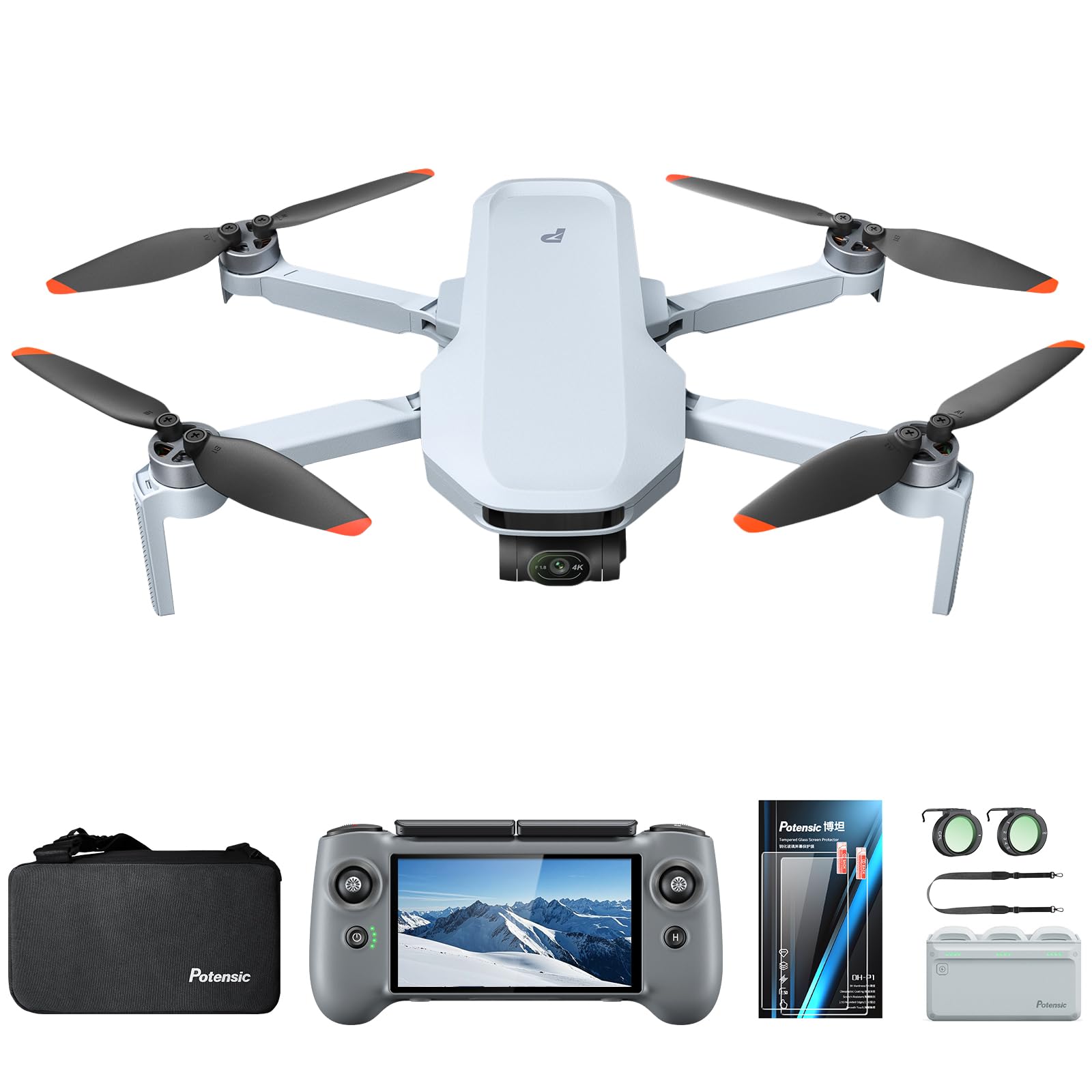
Potensic’s ATOM 2 Fly More Combo is a digital transmission powerhouse. The PixSync 4.0 system pushes a stable 1080p/30fps live feed up to 10 kilometers, and the built-in 5.5-inch 700-nit FHD touchscreen on the PTD 1 remote eliminates the need to connect your phone. The 1/2-inch Sony CMOS sensor captures 48MP photos and 4K HDR video through a 3-axis gimbal, and the kit includes ND and CPL filters right in the box.
The three-battery charging hub fast-charges everything in 1.3 hours, giving you a total of 96 minutes of flight time. AI tracking modes — Spotlight, Follow, and Parallel — lock onto subjects with impressive accuracy, and the Night Shot mode produces usable footage in low light. The drone weighs under 249 grams, so no FAA registration is required.
This is not a traditional acro-style FPV drone, but for long-range exploration with a dedicated controller screen, it is unmatched in its class. The gimbal stabilization handles level 5 wind without jello, and the cruise control mode lets you focus entirely on framing the shot.
Why it’s great
- 10KM digital transmission with 700-nit bright screen
- ND and CPL filters included for pro-level footage
- Under 249g with 96-minute total flight time
Good to know
- Not designed for acro or freestyle maneuvers
- Glare can be an issue on the glossy controller screen
- Firmware updates required before first flight
3. Bwine F7MINI 4K(RC3) with 1080P Screen Controller
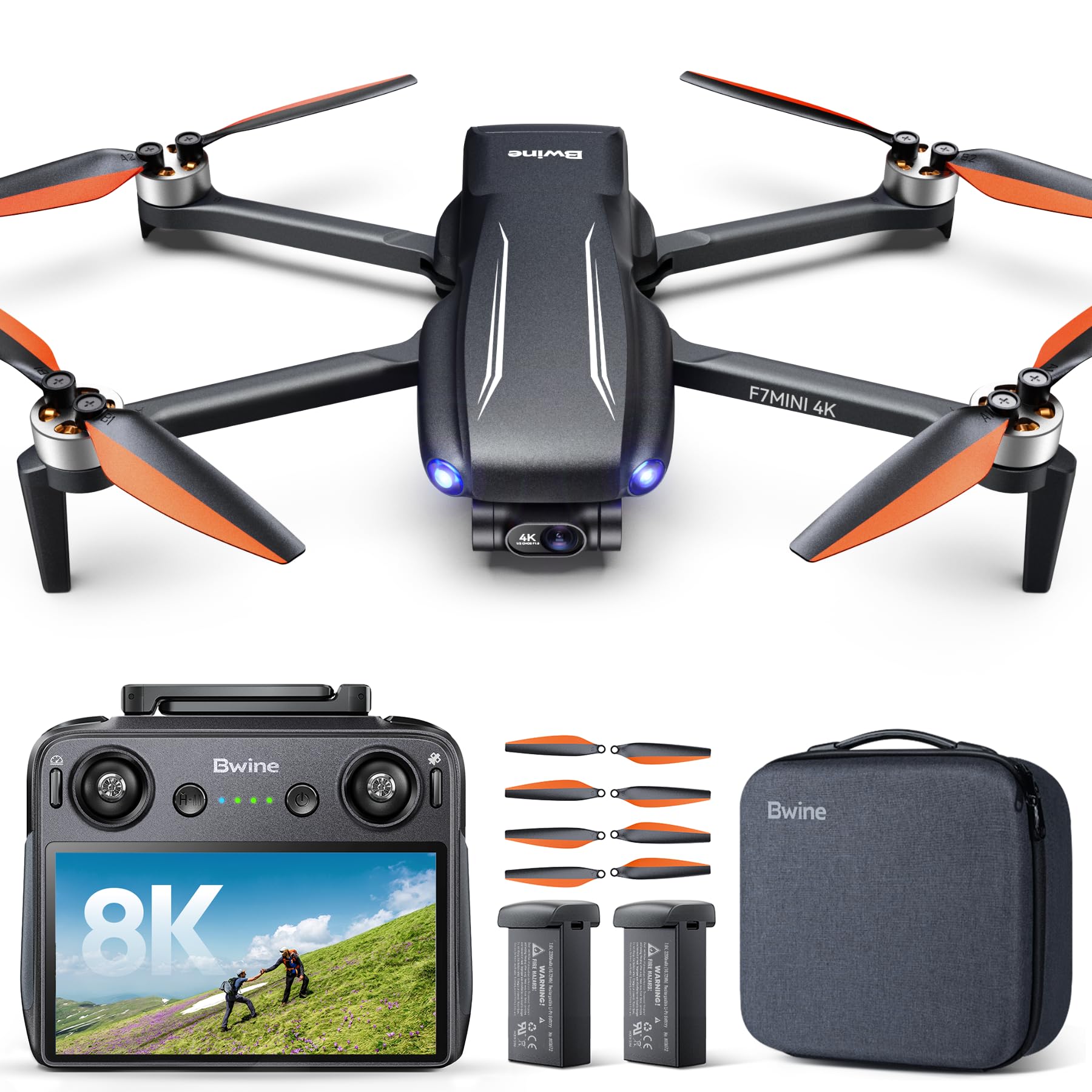
The Bwine F7MINI 4K(RC3) solves one of the biggest FPV annoyances: draining your phone battery while flying. The remote features a 5.5-inch 1080P screen running at 500 nits, with 32GB of internal storage so you can review footage directly on the controller. The drone itself is under 249 grams, and the 3-axis brushless gimbal with EIS keeps 4K video silky smooth even in gusty conditions.
The transmission system reaches 20,000 feet with 0.1-second latency, and the two included batteries give a combined 64 minutes of flight time. GPS features include Active Track, Orbit Flight, Waypoint Planning, and a 120dB beeper for locating the drone if it lands in tall grass. The beginner mode limits speed and altitude, making it safe for pilots who have never flown a camera drone before.
One standout detail is the Dynamic Home Point feature — the return-to-home location updates with the controller, so the drone follows you rather than flying back to where you started. For surveyors, hikers, or content creators who move while filming, this is a huge practical advantage.
Why it’s great
- Dedicated 1080P controller screen with 32GB storage
- Dynamic Home Point follows the pilot’s location
- Under 249g with 20,000ft transmission range
Good to know
- Wi-Fi based transmission can degrade in RF-heavy areas
- No internal ND filters included
- Media transfer to phone is slower than direct cable
4. Ruko F11GIM2 Drone with 4K UHD Camera

Ruko’s F11GIM2 packs a 3-axis brushless gimbal and a 48MP sensor into a 248-gram frame, making it fully exempt from FAA registration. The 1/2-inch CMOS sensor captures 8K photos and 4K/30fps video, and the R2 digital transmission system delivers a stable feed up to 20,000 feet without the interference common to Wi-Fi drones. Three intelligent batteries give you 96 minutes of total airtime.
The AI takeoff and landing system uses a combination of GPS, barometric altitude, TOF, and optical flow positioning to handle launches and landings precisely — even on uneven ground. The built-in beeper helps locate the drone if it goes down, and the beginner-friendly one-button takeoff means you can go from box to flying in minutes.
Customer reviews note that the joysticks are sensitive, which is typical for a GPS-stabilized drone, but the flight modes (Follow Me, Waypoint, Orbit) are reliable and easy to activate through the app. The carrying case included in the bundle is sturdy enough for backpack travel.
Why it’s great
- 3-axis gimbal in a sub-250g package
- Three batteries for 96 minutes of flight
- R2 digital transmission avoids Wi-Fi interference
Good to know
- Joysticks feel sensitive, requiring steady hands
- No audio recording in video files
- Some units had battery defects replaced under warranty
5. Veeniix V11Air 6K Drone with 3-Axis Gimbal
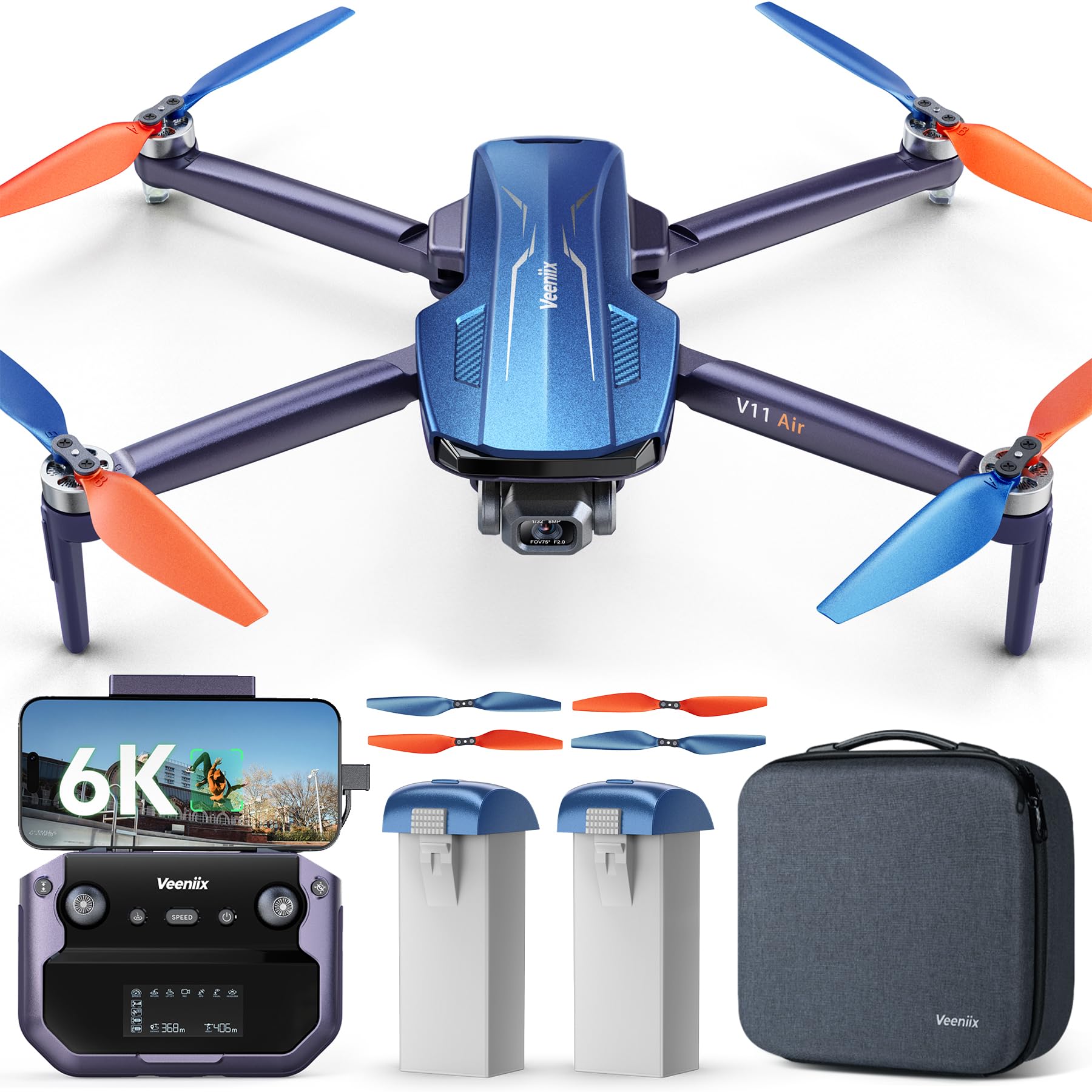
The Veeniix V11Air is built for pilots who prioritize image quality without stepping into premium pricing. The imported sensor captures 6K stills and 4K/30fps video, and the 3-axis brushless gimbal with 5x lossless zoom lets you frame distant subjects without sacrificing resolution. The dual 3200mAh battery setup delivers 70 minutes of total flight time, and fast charging fills both batteries in 2.5 hours.
The transmission system reaches up to 10,000 feet, and features like Cruise Control, Follow Me, Orbit Flight, and Waypoint Planning are all accessible through the app. The night mode is surprisingly capable for this price point, pulling sharp details from low-light scenes that would leave most budget drones producing unusable noise.
One critical note: the remote’s Type-C port is for charging only — you must use the dedicated data port on top of the phone holder for video transmission. Missing this detail can lead to frustrating connection issues. The drone also lacks collision detection, so manual piloting awareness is required.
Why it’s great
- 6K stills with 3-axis gimbal stabilization
- 5x lossless zoom for distant framing
- Effective night mode for low-light flights
Good to know
- No obstacle or collision detection sensors
- Transmission range drops in wooded areas
- Remote data port is not the main USB-C
6. DJI Neo 2 (Drone Only)
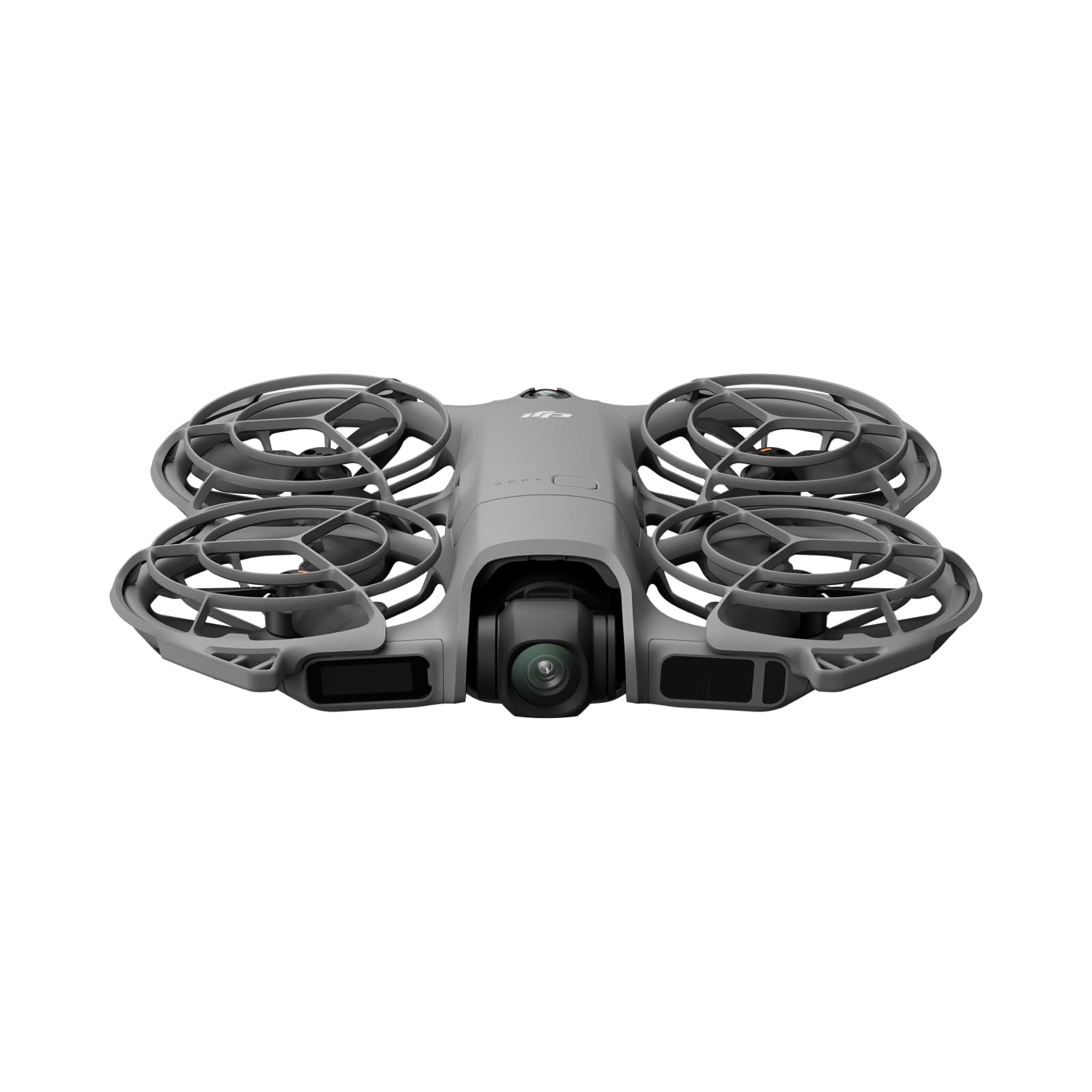
The DJI Neo 2 is the lightest and most portable entry on this list at just 151 grams. It is C0 certified, meaning it can fly almost anywhere in Europe without additional licensing, and full-coverage propeller guards make it safe for indoor selfies and close-range tracking. The palm takeoff and landing feature works reliably — you simply hold out your hand and the drone lifts off or lands on your palm.
Gesture control and ActiveTrack keep subjects in frame without a controller, and the 4K camera with 12MP stills delivers sharp, vibrant footage. Omnidirectional obstacle sensing prevents crashes during autonomous tracking, and the Apple Watch integration lets you view the live feed and adjust tracking from your wrist.
Battery life is about 18–19 minutes in standard flight and drops further in aggressive tracking mode. The Neo 2 does not include a remote controller in the base package — it relies on phone control or gesture commands. For casual users who want a pocketable drone for quick social content, this is a solid choice.
Why it’s great
- Extremely portable at 151 grams
- Palm takeoff and landing with reliable gesture control
- Omnidirectional obstacle sensing for safe tracking
Good to know
- No remote controller included in base version
- Battery life limited to ~18 minutes
- Not designed for high-speed FPV flight
7. BETAFPV Aquila16 FPV Kit with LiteRadio 2 SE

If you want to learn actual acro flight on a true FPV drone, the BETAFPV Aquila16 Kit is your entry point. It comes with the LiteRadio 2 SE transmitter running ELRS V3, the VR03 goggles with DVR recording, and a durable cinewhoop-style drone with covered props. The 1100mAh battery gives about 8 minutes of flight, and the three modes (N/S/M) let you progress from stabilized angle mode to full acro manual.
The VR03 goggles feature a 4.3-inch 800×480 LCD and 350mW video transmission, delivering a stable analog feed up to 200 meters. The transmitter doubles as a simulator controller, so you can practice on your PC before flying the real quad. Turtle Mode flips the drone back over if it lands upside down — a huge quality-of-life feature for beginners crashing frequently.
Build quality is decent, but the camera cable can loosen after repeated crashes, requiring you to reseat the plug. The goggles also lack nose foam, causing light bleed in bright conditions (easy to fix with adhesive foam). This kit is not for cinematic footage — it is for learning real FPV muscle memory.
Why it’s great
- Complete RTF kit with goggles, radio, and drone
- ELRS V3 protocol for long-range, low-latency control
- Turtle mode prevents walk-of-shame after crashes
Good to know
- Short 8-minute flight time per battery
- Camera cable can disconnect after hard crashes
- Goggles lack nose foam, causing light pollution
8. Potensic ATOM LT GPS Drone Under 249g

Potensic’s ATOM LT is built for the pilot who wants a reliable GPS drone without the FAA registration. At under 249 grams, it is foldable and pocketable, and the two 3000mAh batteries deliver a combined 80 minutes of flight — 40 minutes per battery. The 2.5K EIS camera with the Sony sensor captures 2560×1440 footage with ShakeVanish 2.0 stabilization, though it requires good lighting for best results.
The PixSync 2.0 transmission system provides a smooth HD feed up to 4 kilometers, and the four GNSS satellite systems (GPS, GLONASS, Galileo, BeiDou) lock quickly for precise positioning. Smart flight modes include Follow Me, Waypoint Fly, and Circle Fly, making it easy to capture dynamic footage without manual piloting. The app supports iOS 11+ and Android 7.0+, and the kit includes both Type-C and Lightning adapter cables.
GPS acquisition can be slow in areas with heavy tree cover or near buildings, and the drone relies exclusively on GPS mode — it cannot fly in non-GPS environments. The camera is not true 4K, but for the price point, the combination of long battery life, GPS reliability, and sub-250g weight is very competitive.
Why it’s great
- 80-minute total flight time with two 3000mAh batteries
- Quad-GNSS positioning for reliable GPS lock
- Sub-249g, foldable design for travel
Good to know
- Camera is 2.5K, not 4K resolution
- Slow GPS lock in obstructed areas
- Cannot fly without GPS satellite connection
9. Karuisrc GPS Drone with EIS Camera & 4.5″ Screen
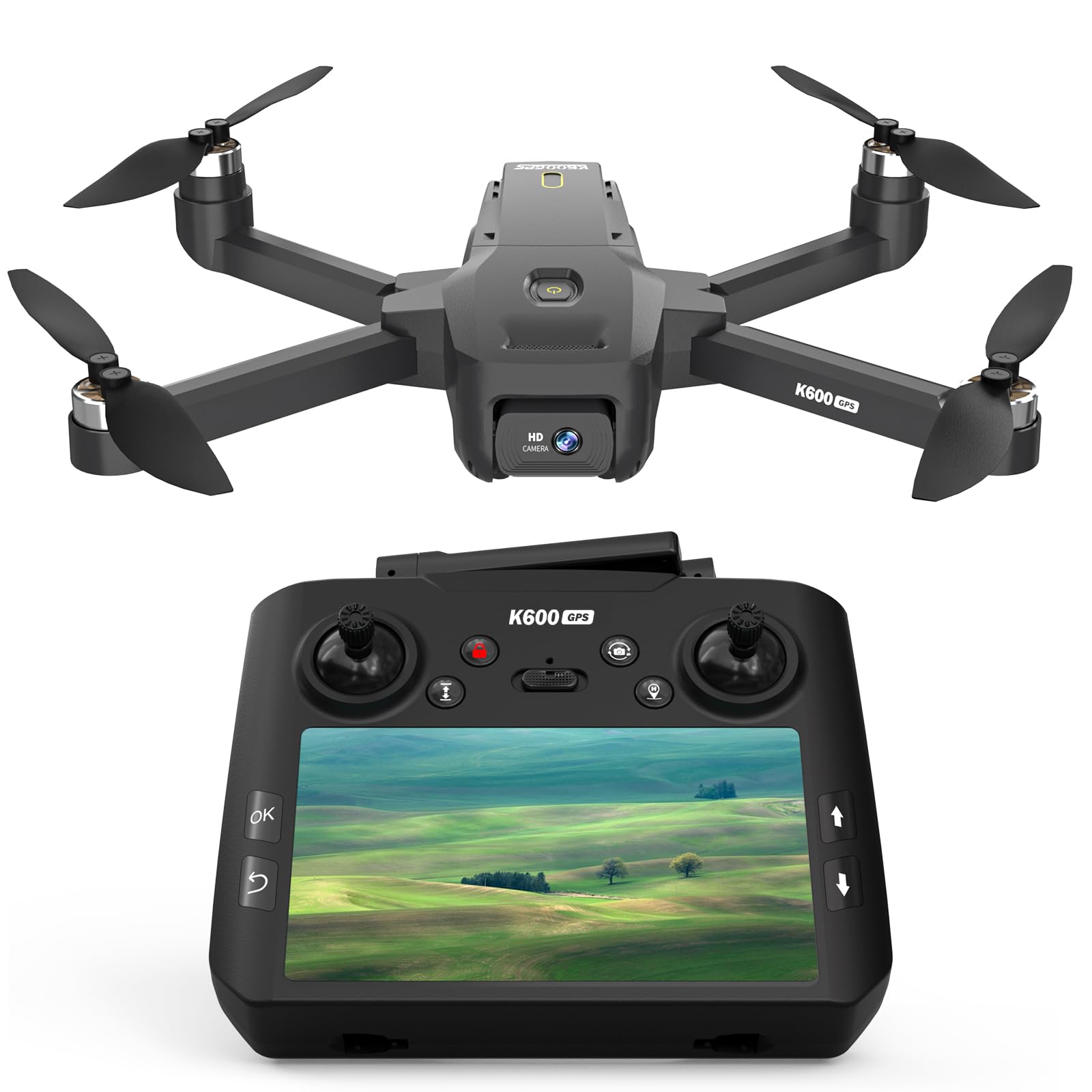
The Karuisrc GPS Drone is the most affordable option on this list, but it packs a surprising feature: a 4.5-inch HD display built directly into the controller. This means you never have to connect your phone or drain its battery — the live feed appears on the controller screen instantly. The GPS drone supports Follow Me, Waypoint Navigation, and Orbit Mode, and the 2200mAh battery provides around 25 minutes of flight.
The EIS stabilization smooths out the footage from the camera, and the wind-resistant design handles moderate breezes without drifting. The controller transmits up to 400 meters of control range with a 250-meter video mapping capability. Setup is straightforward, with clear manuals and YouTube tutorials available for first-time pilots.
Image quality is acceptable for social media sharing but not on par with higher-end units. The built-in screen eliminates phone connection issues entirely, which is a massive convenience for beginners who just want to fly without troubleshooting app compatibility. For the budget-conscious pilot who values ease of use over raw camera specs, this is a solid starting point.
Why it’s great
- Built-in 4.5″ LCD screen eliminates phone dependency
- GPS positioning with reliable return-to-home
- EIS camera stabilization for smooth footage
Good to know
- Limited to 400m control range
- Camera quality is basic compared to premium models
- Battery life is standard at 25 minutes
FAQ
What is the difference between an FPV drone and a camera drone?
Do I need a license to fly an FPV drone?
How long does it take to learn FPV flying?
Can I use my phone as an FPV screen instead of goggles?
Final Thoughts: The Verdict
For most users looking for the best fpv drone to start their journey, the DJI Avata 2 Fly More Combo is the top pick because it delivers a complete digital FPV experience with intuitive motion controls and excellent camera quality. If you want long-range exploration with a built-in screen and no phone dependency, grab the Potensic ATOM 2 Fly More Combo. And for learning true acro FPV on a budget, nothing beats the BETAFPV Aquila16 Kit.