
Nothing ages a garage floor faster than a sealer that peels, yellows, or fails to stop oil from soaking into the concrete. The difference between a showroom-grade floor and a stained, dusty mess comes down to picking the right chemistry — epoxy, acrylic, or penetrating silane/siloxane — for your specific slab condition and traffic load.
I’m Mohammad Maruf — the founder and writer behind Drink4Good. I’ve analyzed hundreds of real-world application reports and customer experiences across all major sealer chemistries to identify what actually holds up under tires, deicing salts, and fluctuating garage temperatures.
Whether you need a high-gloss wet look or an invisible barrier that stops salt damage, this guide breaks down the performance tradeoffs and real coverage rates you need to pick the right garage floor sealer for your project.
How To Choose The Best Garage Floor Sealer
Selecting a sealer means matching the chemistry to your concrete’s condition, your desired finish, and the abuse the floor will take. A show-car epoxy will disillusion you fast if your slab has moisture vapor issues, while a penetrating silane/siloxane will leave you disappointed if you wanted a glossy wet look.
Chemistry: Film-Forming vs. Penetrating
Film-forming sealers (epoxy and acrylic) sit on top of the concrete and provide a glossy, often repairable surface. Epoxy is thicker and more chemical-resistant but can peel or yellow if applied over moisture. Acrylic is easier to apply and dries faster but wears more quickly under tire traffic. Penetrating sealers (silane/siloxane) soak into the slab and react chemically to block water and salt — they change the look minimally but never peel because there is no surface film.
Coverage: The Real Number vs. The Label
Manufacturer coverage estimates assume a smooth, sealed surface. On raw broom-finished concrete, expect to get 60–70 percent of the stated coverage — sometimes half on highly porous slabs. Buy an extra gallon for the second coat that porous concrete will demand, especially with emulsified acrylics that need two coats for even gloss.
Application Conditions: Temperature and Humidity Matter
Most sealers require surface temperatures above 50°F for 48 hours before and after application. Water-based acrylics are less forgiving than solvent-based options in cooler weather, and high humidity extends cure times across all chemistries. Epoxies are especially sensitive — applying below 55°F can prevent proper cross-linking and cause premature failure.
Quick Comparison
On smaller screens, swipe sideways to see the full table.
| Model | Category | Best For | Key Spec | Amazon |
|---|---|---|---|---|
| Rust-Oleum 292514 EPOXYSHIELD | Epoxy | Garage floors needing hot-tire resistance | 100% solids, 250 sq ft on bare concrete | Amazon |
| Armor AR500 5 Gal | Solvent Acrylic | Wet look on exterior driveways and pavers | 700 VOC, 175-225 sq ft/gal coverage | Amazon |
| Siloxa-Tek 8500 Concentrate | Penetrating | Salt-protection on driveways and walkways | Makes 5 gal, 250 sq ft/gal per coat | Amazon |
| Coloredepoxies 10002 | Epoxy Resin | High-build showroom floors in garages | 100% solids, 3-gal kit, 7-hr cure | Amazon |
| DOMINATOR SG+ | Water Acrylic | Decorative paver wet look with low odor | 250-400 sq ft/gal, 45-min recoat | Amazon |
| Cryli-Tek 5505 | Solvent Acrylic | Brick and paver color enhancement | Self-crosslinking, 128 oz, high gloss | Amazon |
| Lithi-Tek 9500 Concentrate | Penetrating | Densifying old or dusty concrete | Makes 5 gal, treats 1000 sq ft per coat | Amazon |
In‑Depth Reviews
1. Rust-Oleum 292514 EPOXYSHIELD Premium Clear Garage Floor Coating Kit

This two-part epoxy kit delivers the thickest protective layer among the seven products reviewed here, with 100 percent solids content meaning zero solvent evaporation and a full-build film that resists hot tire pickup — the primary failure mode for garage floor coatings. The 250-square-foot coverage on bare concrete (500 on previously painted surfaces) reflects the real-world consumption rate on porous broom-finish slabs.
Cure timing is the critical tradeoff: the coating is walk-ready in 24 hours but requires a full 72 hours before vehicle traffic. Reviews consistently report that the clear high-gloss finish holds up to toolbox drops and chemical spills, though at least one user noted yellowing after one year in tire contact areas. The burst-pouch packaging reduces waste versus mixing separate cans.
Low odor and low VOC levels make it suitable for attached garages where ventilation is limited. If your garage floor sees daily vehicle parking and you want a glossy, repairable surface, this epoxy kit offers the best balance of chemical resistance and ease of application among mid-range options.
Why it’s great
- 100% solids epoxy eliminates solvent shrinkage and provides maximum film thickness
- Low odor formula makes indoor application more comfortable than solvent-based alternatives
Good to know
- Full vehicle cure takes 72 hours — plan for the garage to be out of commission for a weekend
- Some users report yellowing at tire contact points after about one year
2. Armor AR500 High Gloss Wet Look Concrete Sealer 5 Gallon

The AR500 delivers professional-grade wet-look gloss that customers consistently describe as stunning, with price-per-gallon far below comparable five-gallon buckets of epoxy. The solvent-based acrylic formula uses UV-stable resins that resist yellowing — a common complaint with cheaper film sealers — and self-prints over existing solvent-based coatings for easy recoating.
Real-world coverage runs between 175 and 225 square feet per gallon, which is narrower than the Dominator SG+ but typical for a high-solids acrylic that builds a thicker film. Customers report needing two coats on porous surfaces, and the strong solvent fumes demand a respirator and good cross-ventilation. The 700 VOC formulation is not legal in all states; check your local VOC regulations before ordering.
It is available in 700, 350, and 50 VOC formulations to meet regional air-quality rules. If you need a high-gloss, color-enhancing film on a large driveway or patio without the cure-time delay of epoxy, the bulk pricing on this five-gallon bucket makes it the most cost-effective wet-look option.
Why it’s great
- Five-gallon bucket offers the lowest price per gallon among premium acrylic sealers
- UV-stable resin formula resists the yellowing that plagues lower-grade acrylics
Good to know
- Strong solvent fumes require a respirator and open-air application
- Coverage drops significantly on porous broom-finished concrete — plan for two coats
3. Siloxa-Tek 8500 Ultra Concentrate – 1 Gallon

This penetrating silane/siloxane sealer is the only option in this lineup with Department of Transportation approval, meaning it is engineered to withstand deicing salt exposure and freeze-thaw cycles that destroy film-forming coatings. The ultra-concentrate formula allows one gallon to make five gallons of ready-to-use sealer, treating up to 250 square feet per mixed gallon per coat.
Because it penetrates into the concrete capillary structure rather than sitting on the surface, it will never peel, flake, or delaminate — the primary advantage over epoxy and acrylic films. It also leaves the surface texture unchanged, so there is no slip hazard on pool decks or sloped driveways. Users report excellent water beading and salt resistance for two to three seasons before reapplication is needed.
The tradeoff is aesthetic: this sealer provides zero gloss or color enhancement. If you want a wet look, choose the Armor AR500 or the Rust-Oleum epoxy instead. But if your priority is stopping salt damage, moisture intrusion, and efflorescence without changing the concrete’s appearance, this penetrating formula is the correct choice.
Why it’s great
- DOT-approved chemistry resists deicing salts and freeze-thaw damage better than any film sealer
- Penetrating formula means zero peeling or delamination over the life of the treatment
Good to know
- No gloss or color enhancement — the concrete will look natural, not wet
- Concentrate must be mixed with four parts water, so application timing matters to avoid uneven penetration
4. Coloredepoxies 10002 Clear Epoxy Resin Coating 3 Gallon Kit
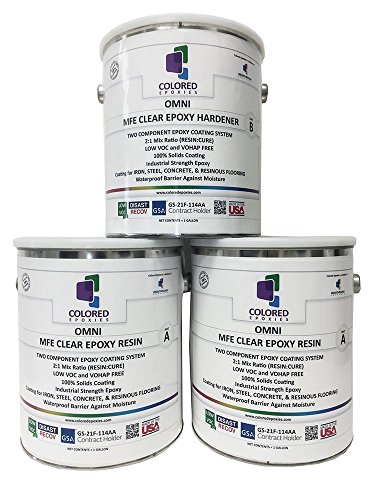
This three-gallon kit from Coloredepoxies is the thickest-build option on the list, designed for garage floors where a showroom-grade mirror finish is the goal. The 100 percent solids epoxy cures to a hard, abrasion-resistant surface that can be applied over multiple coats, and the manufacturer reports a full cure time of just seven hours — fast enough for a same-day floor transformation.
Customer reviews consistently highlight the importance of proper surface preparation: grinding the concrete to create a mechanical profile, acid etching, and using a torch to pop bubbles during application. The kit does not include a topcoat, and several experienced DIY users recommend adding a polyurethane top layer to prevent the ambering that clear epoxies can develop over time.
This is not a beginner-friendly product. The 30-minute working time per batch and the need for precise mixing ratios mean it rewards careful planning. If you want the deepest, thickest clear coat possible and are willing to invest in prep and technique, this kit delivers the most professional-looking result in the lineup.
Why it’s great
- 100% solids formulation cures to the thickest, most abrasion-resistant film of any product reviewed
- Fast seven-hour full cure time enables same-day project completion
Good to know
- Requires concrete grinding and careful bubble removal — not suitable for first-time DIY users
- Clear epoxy can amber over time without a UV-stable polyurethane topcoat
5. DOMINATOR SG+ Clear Acrylic Sealer 1 Gal

This water-based acrylic achieves the same wet-look gloss as solvent-based alternatives but with drastically lower odor and easier cleanup. The 45-minute recoat time allows the entire job to be completed in a single day, and the generous coverage rate of 250–400 square feet per gallon means a single gallon will cover a typical two-car garage slab.
The catch is temperature sensitivity: the surface must stay above 50°F for 48 hours before and after application, and humidity above 70 percent can cause the white liquid to dry with a temporary haze. Customers who followed the ideal 70–85°F window and applied two thin coats with a sprayer achieved the gloss they wanted, while those who cut corners on temperature got lower shine than expected.
This sealer lasts two to four years on paver surfaces before needing reapplication, and the water-based formula makes cleanup simple with soap and water when the brush or sprayer is still wet. For small garage projects where low odor and fast dry time matter more than ultimate film thickness, this is a strong choice.
Why it’s great
- Water-based formula has minimal odor and cleans up with soap and water
- Fast 45-minute recoat window enables one-day application on most garage floors
Good to know
- Surface temperature must stay above 50°F for the full 48-hour cure window
- Some users report less gloss than expected if applied in less-than-ideal conditions
6. Cryli-Tek 5505 Solvent Based Acrylic High Gloss Wet Look Sealer
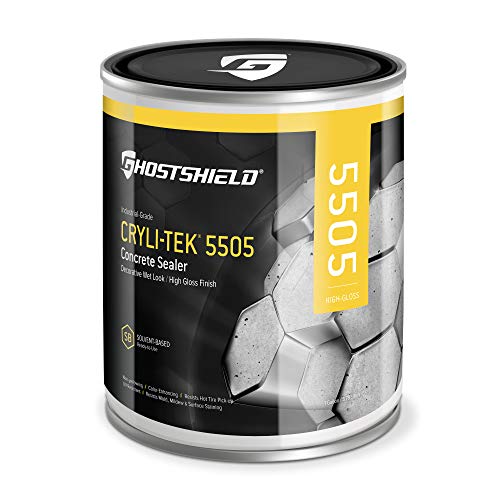
The 5505 uses a self-crosslinking acrylic polymer that claims up to three times the service life of standard solvent-based acrylics. It is designed to bond tenaciously to concrete, brick, and natural stone, and it requires no primer even when recoating over previous sealers — a convenience that saves time on touch-up projects.
The solvent base delivers dramatic color enhancement and a high-gloss wet look, particularly on brick and paver patios where the darkening effect restores faded surfaces. Users report that it holds up well in direct sunlight without whitening or clouding, and the UV-stable resins prevent the yellowing that afflicts lower-grade acrylics. The strong fumes, however, are a genuine concern — several customers mentioned respiratory irritation from the solvent vapors.
Coverage is lower than water-based options: users frequently report needing one gallon per 200 square feet of porous surface. If you want maximum color saturation on outdoor brick or pavers and are willing to manage the solvent odor with proper ventilation, this sealer offers the deepest pigment enhancement in the lineup.
Why it’s great
- Self-crosslinking polymer resists UV degradation and outlasts standard acrylics by a significant margin
- No primer needed for recoating, simplifying maintenance applications
Good to know
- Solvent fumes are strong and require a respirator, especially in enclosed garage spaces
- Coverage is lower than water-based competitors — buy extra for porous concrete
7. Lithi-Tek 9500 Ultra Concentrate Penetrating Concrete Sealer
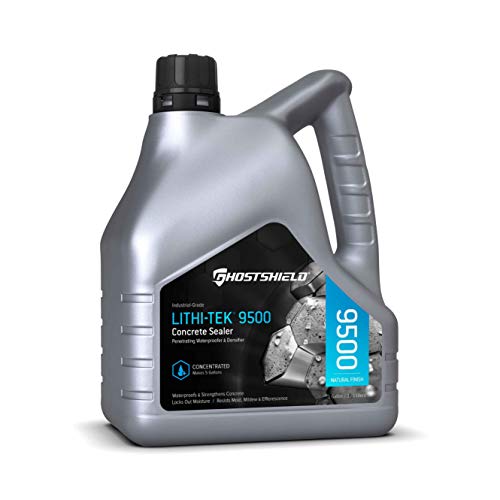
This industrial-grade lithium silicate densifier is chemically different from every other product on this list. Rather than forming a surface film, it reacts with free calcium in the concrete to harden the slab from within, reducing abrasion resistance by up to 50 percent and suppressing the dusting that plagues old garage floors. One gallon of concentrate makes five gallons of ready-to-use solution that treats up to 1,000 square feet per coat.
The primary application for this product is old, soft concrete that sheds dust under foot traffic or tire movement. It will not produce gloss, change the color, or fill cracks — it simply makes the concrete denser and more water-resistant. Users report excellent water beading after treatment, and the low odor makes it suitable for occupied spaces. The concentrate requires mixing with four parts water, and the product warns against allowing puddles to form during application because they can leave dark spots.
If your garage floor is structurally sound but dusty, or if you need to reduce moisture vapor transmission without adding a slippery film, this densifier is the right tool. It works best when followed by a topical sealer if gloss is desired, but as a standalone treatment it provides the longest-lasting protection against abrasion and dusting.
Why it’s great
- Reacts chemically with concrete to harden the slab and eliminate dusting permanently
- Ultra-concentrate makes five gallons and treats up to 1,000 square feet per coat
Good to know
- Provides zero gloss or color enhancement — concrete looks natural
- Requires careful application to avoid puddling that leaves visible dark spots
FAQ
Can I apply a garage floor sealer over existing paint or epoxy?
How long does a garage floor sealer actually last before resealing is needed?
Why does my clear sealer look white or milky after drying?
Final Thoughts: The Verdict
For most users, the garage floor sealer winner is the Rust-Oleum EPOXYSHIELD because it combines the thickest protective film with manageable low-odor application for attached garages. If you want a budget-friendly wet-look acrylic for an outdoor project, grab the Armor AR500 5 Gallon. And for salt-protection on a driveway without changing the concrete’s natural look, nothing beats the Siloxa-Tek 8500.