
Leftover window tint glue can turn a simple removal project into a frustrating battle for hours, clinging stubbornly to the glass and refusing to budge. Whether you’re restoring car windows, cleaning up after a DIY tint job, or rehabbing old fixtures, finding a remover that dissolves adhesive without wrecking the surrounding surfaces is the real challenge.
I’m Mohammad Maruf — the founder and writer behind Drink4Good. I’ve spent years analyzing household and automotive chemical product categories, cross-referencing technical specifications with real-world user results to find the formulas that actually work on tough adhesive films.
After sifting through dozens of options, I’ve identified the top formulas that balance solvent strength with surface safety. This guide breaks down the best options for any budget and project size, so you can pick the perfect glue remover for window tint with confidence.
How To Choose The Best Glue Remover For Window Tint
The differences between these removers come down to how aggressive the solvent is, the volume you get, and the application method. Understanding these core variables helps you pick the right tool for your specific tint-removal job, whether it’s a single car window or a whole houseful of panes.
Solvent Strength: Citrus vs. Heavy-Duty
Citrus-based removers (like those using d-limonene) offer a pleasant scent and are safer on paint, plastics, and sensitive surfaces. They require a bit more dwell time. Heavy-duty chemical solvents, on the other hand, break down adhesive in seconds but carry a stronger odor and can damage painted surfaces if not used with care. For window tint, a mid-strength citrus formula is often ideal, while heavy-duty options handle baked-on or older residue.
Application Method: Spray vs. Bottle
Spray applicators are great for targeting small to medium residue spots precisely without wasting product. Bottle-style applicators, like those with a built-in pen or scraper, work best for larger projects or commercial use where you need to cover more surface area or saturate a cloth. The right choice depends on whether you are tackling a small sticker or an entire window film.
Volume and Project Scale
If you’re only removing tint from one car window, a small 8-12 ounce spray bottle is more than enough. For stripping tint from multiple car windows, a large home window, or a commercial application, a bigger container over 20 ounces offers better value and avoids mid-project shortages. Consider this factor carefully to avoid running out of solvent mid-scrape.
Quick Comparison
On smaller screens, swipe sideways to see the full table.
| Model | Category | Best For | Key Spec | Amazon |
|---|---|---|---|---|
| Goo Gone Gunk Remover | Citrus Solvent | Safety-first removal on paint | Citrus cleaning agents | Amazon |
| Goof Off FG659 | Heavy-Duty Solvent | Tough, baked-on adhesive | 22-ounce trigger spray | Amazon |
| Un-du Commercial Remover | Non-Toxic Liquid | Archival & delicate surfaces | 32-ounce bottle | Amazon |
| Orange-Sol Contractor Solvent | Citrus Solvent | Versatile household goo | Non-hazardous formula | Amazon |
| MCTRHG Adhesive Remover | Water-Based Spray | Budget-friendly small jobs | Spray with scraper tools | Amazon |
In‑Depth Reviews
1. Goo Gone Gunk and Adhesive Remover
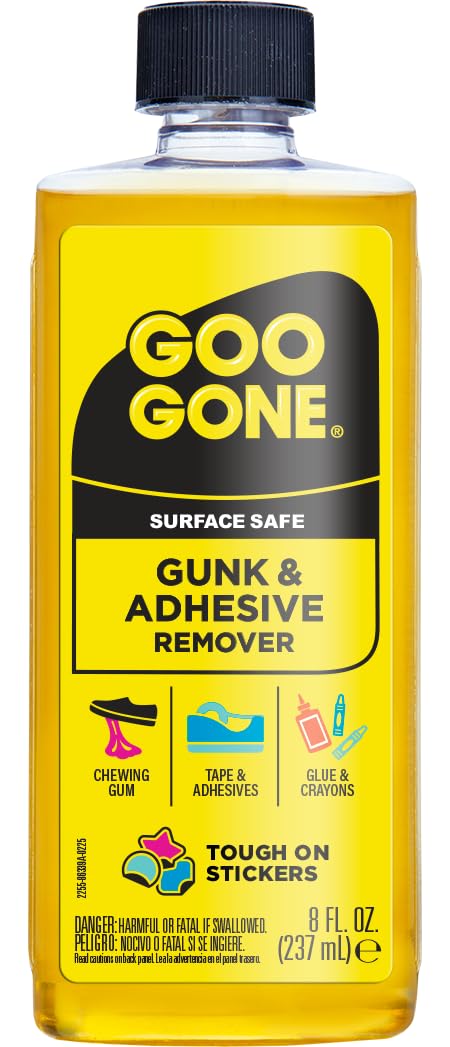
Goo Gone’s citrus-based formula strikes the optimal balance between solvent power and surface safety, making it a top contender for window tint glue removal on cars and home glass. Its ability to dissolve adhesive without damaging clear coat, paint, or plastic trim is exactly why it’s a versatile workhorse for automotive and household use.
Customers consistently report success with aged baby-proofing glue and washed-on shirt labels, which aligns with the chemical makeup of typical window tint residue. The pleasant citrus scent is a notable upgrade over harsh chemical alternatives, reducing the need for heavy ventilation during indoor use on glass tables or window frames.
The main trade-off is its oily finish, requiring a warm, soapy water wipe-down to restore a fully clean surface. At an 8-ounce size, it is best suited for single-car or small interior jobs, but the reliability of the trusted brand makes it a default starting point for most people.
Why it’s great
- Powerful citrus formula safe on car paint and clear coat
- Non-toxic scent ideal for indoor use
- Works effectively on dried adhesive, chewing gum, and sticker residue
Good to know
- Leaves an oily film that requires a follow-up clean
- Small 8-ounce bottle may not be enough for large windows
- May require a few minutes of dwell time on thicker adhesive layers
2. Goof Off FG659 Heavy Duty Remover

Goof Off is the heavy-duty specialist for when citrus-based formulas need more chemical aggression. Its trigger spray delivers a powerful solvent attack that dissolves adhesive residue in under a minute, making it ideal for stubborn window tint glue that has cured for years or been exposed to intense sunlight.
Reviews confirm its ability to remove paint from carpet, caked-on grease, and even sticky residue from car gas tanks without damaging the original paint. The 22-ounce bottle provides enough capacity for multiple windows or a full-vehicle strip-down, offering strong value for frequent users tackling larger projects.
The solvent has a strong chemical smell, so good ventilation is a necessity, and it should be tested on an inconspicuous area first, especially on painted plastic trim. This is a powerful tool when you need maximum dissolving power quickly, but not the first choice for delicate surfaces or those sensitive to fumes.
Why it’s great
- Dissolves adhesive residue in under 60 seconds
- Large 22-ounce trigger spray for heavy use
- Effective on paint, marker, and grease beyond just glue
Good to know
- Strong chemical odor requires proper ventilation
- May damage sensitive painted plastics if left too long
- Not recommended for use on bare wood or unsealed surfaces
3. Un-du Commercial Framing Adhesive Remover

The Un-du formula is built for precision and gentleness, originally designed for archivists and framers to remove adhesive from old posters, photographs, and scrapbooks without any damage. Its non-toxic and acid-free composition makes it the safest choice if the window tint residue is on a painted wooden frame, a delicate craft surface, or near artwork.
Users with vintage posters and photo collections praise its ability to loosen tape and sticker residue cleanly, allowing the adhesive to peel away without leaving marks. The built-in scraper tool on the large 32-ounce bottle is a practical addition for commercial and heavy-duty framing jobs, offering excellent value for large-scale use.
It has a strong alcohol/lighter fluid scent that some might find bothersome, and the bottle lacks a precision dispenser, which can lead to over-application on small areas. As a dedicated adhesive remover for delicate surfaces, it is less aggressive than Goof Off but much safer for archival materials.
Why it’s great
- Non-toxic and acid-free formula safe for paper and photos
- Large 32-ounce bottle with built-in scraper tool
- Preserves the adhesive for re-sticking dry residue
Good to know
- Alcohol-based strong scent can be pungent
- No precision tip causing potential waste on small spots
- Slower on heavily baked-on automotive tint glue
4. ORANGE-SOL 10022 Contractor Solvent

Orange-Sol is the contractor-grade citrus solvent that bridges the gap between consumer-friendly Goo Gone and industrial-strength options. It is formulated to be non-hazardous and non-corrosive, making it safe enough for skin and hair contact while still being strong enough to dissolve silicone caulk, road tar, and spray foam residue.
Real-world feedback highlights its effectiveness where other citrus solvents fall short, particularly on old silicone sealant, which parallels the tough adhesive films used in window tint. Users report it handles freezer spills and baked-on bugs, confirming its durability across diverse messes. The citrus scent is tolerable and less clinical than chemical alternatives.
The main drawbacks are that the spray bottle tends to leak and tip over easily, and the formula leaves a mildly oily residue requiring warm water and soap for a streak-free finish. It is a strong mid-tier option for those who need a solvent that can handle the toughest household and automotive adhesives without the full hazard of concentrated chemicals.
Why it’s great
- Non-hazardous, non-corrosive, safe on skin and paint
- Stronger than typical consumer citrus removers
- Effective on silicone caulk, tar, and baked-on residue
Good to know
- Spray bottle design is prone to leaking and tipping
- Leaves an oily residue that requires a soapy cleanup
- May need longer dwell time on thick window tint adhesive
5. MCTRHG Adhesive Remover with Scraper
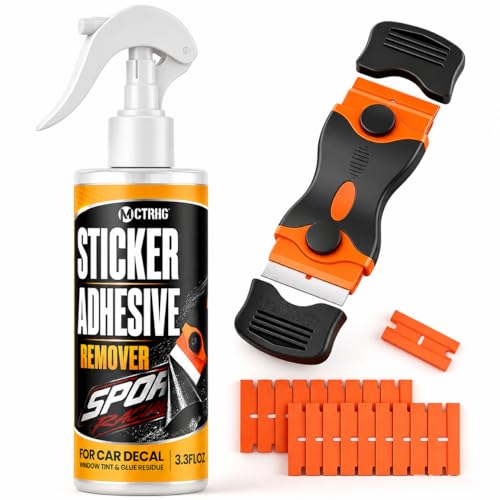
MCTRHG’s adhesive remover is an entry-level, budget-friendly solution that includes a dual-blade scraper and 19 plastic razors, offering a complete toolkit for small adhesive removal tasks. Its water-based formula is advertised as ultra-safe for painted surfaces, glass, and metal, making it a low-risk starting point for those new to tint removal.
User reports confirm it works on whiteboard tape residue, car decals, and small window stickers, though some noted the spray tube is too long and can be difficult to use in tight spaces. The plastic scrapers are a clear benefit for preventing glass scratches, and the metal blade option helps with tougher buildup, giving flexibility for different surface sensitivities.
The biggest limitation is its performance on large or heavily adhered window tint – it takes time, with users recommending wetting the surface first and applying multiple sprays. The 3.3-ounce bottle is very small, so it is best reserved for spot treatments or single small windows rather than full vehicle strips. For the price, the included scraper set adds notable value.
Why it’s great
- Water-based, low-odor, ultra-safe for painted surfaces
- Comes with plastic and metal scraper plus 19 spare blades
- Effective on light window stickers and decals
Good to know
- Very small 3.3-ounce bottle for limited use
- Requires multiple applications and scraping on thick glue
- Spray tube design can be awkward to aim
FAQ
Can glue remover for window tint damage my car’s paint?
How long should I let the remover sit on window tint glue?
Is citrus-based remover better than mineral spirits for tint glue?
Final Thoughts: The Verdict
For most users, the glue remover for window tint winner is the Goo Gone Gunk and Adhesive Remover because it balances fast dissolving action with paint-safe citrus chemistry for both car and home use. If you want heavy-duty power for baked-on residue, grab the Goof Off FG659. And for delicate surfaces or archival work, nothing beats the Un-du Commercial Framing Adhesive Remover.