
Every gardener knows the frustration of a pruner that blunts after a season, jams on a half-inch stem, or leaves a ragged tear that invites disease. The right pair transforms deadheading, shrub shaping, and harvest cutting from a chore into a precise, almost meditative ritual. Finding a tool that balances sharpness, hand comfort, and long-term durability is the difference between a sore wrist and a satisfying afternoon in the yard.
I’m Mohammad Maruf — the founder and writer behind Drink4Good. I spend months analyzing blade steel compositions, pivot mechanisms, and ergonomic handle geometries to understand which garden pruners actually hold an edge and reduce fatigue under real-world use.
After comparing five models across different price tiers and cutting philosophies, I’ve identified the top options that deliver clean cuts and reliable performance. Whether you need a fine-tipped snip for flowers or a forged blade for woody stems, these are the best garden pruners you can rely on for consistent results every season.
How To Choose The Best Garden Pruners
Garden pruners may look like a simple scissor, but the wrong pair can crush stems, slip in wet hands, or force you to squeeze harder than necessary. Three factors separate a joy-to-use pruner from a regret purchase: blade build, handle ergonomics, and cutting mechanism. Focus on these and you’ll find a tool that complements your grip and garden style.
Blade Material and Durability
High-carbon steel blades hold a keen edge far longer than stainless steel, but they require occasional oiling to resist rust. Some models add a titanium or hard-chrome coating that further reduces friction and corrosion. For everyday garden work, a coated high-carbon blade offers the best balance of sharpness retention and low maintenance.
Handle Design and Hand Fatigue
Aluminum handles keep weight low while providing the leverage needed for thicker branches. Plastic handles can save ounces but may flex under repeated stress. Look for cushioned, non-slip grips if you prune for more than twenty minutes at a time — they absorb shock and prevent the hand cramps that come from bare plastic or metal contact.
Bypass vs. Anvil Cutting Action
Bypass pruners use two curved blades that slide past each other like scissors, making a clean cut that heals quickly on live plants. Anvil pruners have a single blade that smashes the stem against a flat surface — better for dead wood but prone to crushing green tissue. For general garden pruning, bypass is the standard choice.
Quick Comparison
On smaller screens, swipe sideways to see the full table.
| Model | Category | Best For | Key Spec | Amazon |
|---|---|---|---|---|
| Corona BP 6250 | Bypass | 1-inch woody branches, heavy pruning | 1-inch cut capacity, forged steel blade | Amazon |
| Haus & Garten EnduroPRO | Bypass | Extended sessions, arthritis-friendly use | Titanium-coated high-carbon steel blade | Amazon |
| ARS HP-130DX | Bypass | Fine pruning, small hands, floral work | High-carbon steel, 2-inch blade length | Amazon |
| ARS HP-SE45 Needle Nose | Bypass | Detail work, deadheading, tight spaces | Stainless steel, 2-inch blades, locking latch | Amazon |
| Corona FS-4350 Thinning Shears | Bypass | Thinning, light pruning, weed removal | Alloy steel, straight blades, cushioned grip | Amazon |
In‑Depth Reviews
1. Corona Tools BP 6250 MAXFORGED Aluminum Bypass Pruner
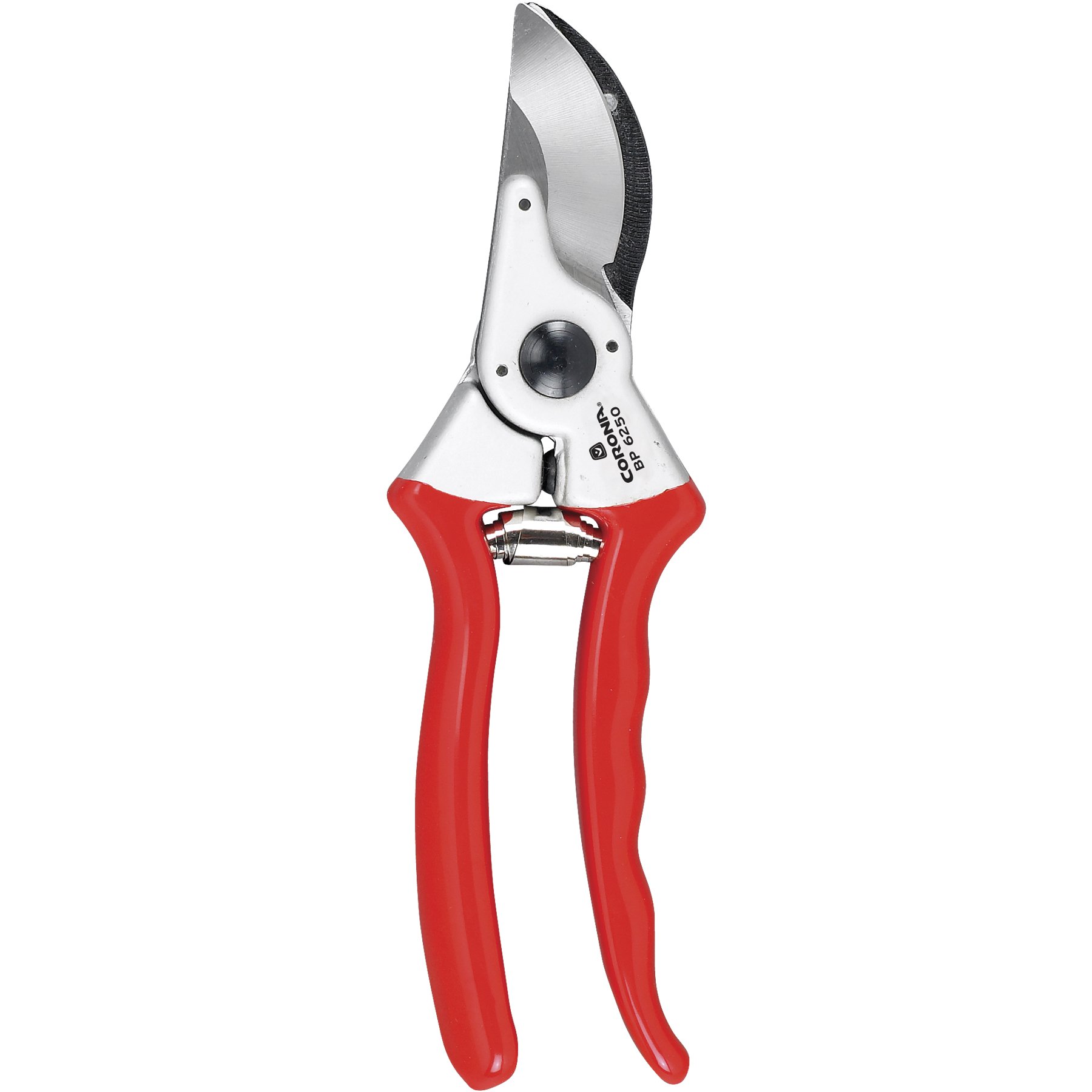
The Corona BP 6250 punches well above its mid-range price with a forged steel blade that slices through one-inch live branches as cleanly as a Felco at nearly half the cost. Its aluminum handles keep the overall weight at 9.6 ounces, which translates to noticeably less fatigue when you’re working through a full shrub line. The slant-ground hook and self-cleaning sap groove prevent the blade from gumming up on resinous stems, so you can keep cutting without constant wiping.
Serrated blade edges on the hook side help grip slippery bark, and the adjustable pivot bolt lets you fine-tune the tension as the blade wears. The one-thumb safety lock engages with a solid click, making it safe to toss into a tool bag. Users with arthritis report four-hour pruning sessions without hand pain thanks to the cushioned, contoured grips and the smooth volute spring that requires minimal squeeze force.
The carbon steel blade can develop surface rust if left wet or dirty, so a quick wipe and light oiling after each use is non-negotiable for longevity. The replaceable blade design means you can refresh the cutting edge rather than replacing the whole tool when it dulls after a few seasons. This is the pruner to pick if you want professional-grade performance without stepping into true premium pricing.
Why it’s great
- Cuts cleanly through 1-inch woody stems with minimal effort
- Lightweight aluminum construction reduces hand fatigue
- Replaceable forged steel blade extends tool life
Good to know
- Carbon steel blade requires regular cleaning and oiling to avoid rust
- No included sheath or scabbard for storage
2. Haus & Garten EnduroPRO Ergonomic Bypass Pruner
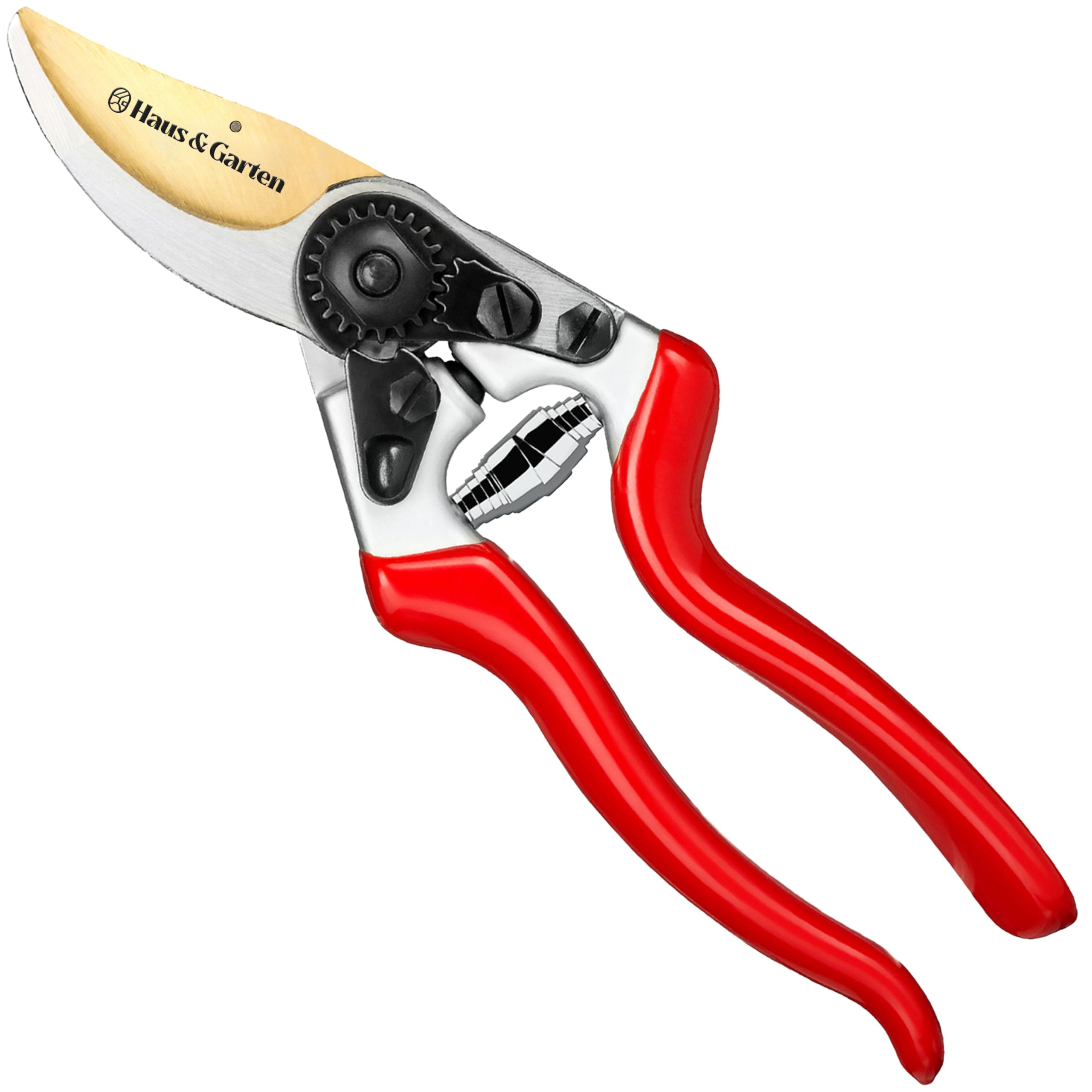
The EnduroPRO stands out for its Japanese-grade high-carbon steel blade with a titanium coating that dramatically reduces friction and resists rust far better than uncoated steel. On the bench, it handles stems up to an inch thick with the same confidence as the Corona BP 6250, but the titanium layer means sap and debris slide off rather than sticking, so you spend less time cleaning mid-job. The anodized aluminum body and drop-forged handles feel dense and durable without feeling heavy in the hand.
The ergonomic handle design is the real differentiator here — the grip contour angles your wrist into a neutral position that reduces strain on the carpal tunnel area. Users who suffer from arthritis or general hand weakness will notice the difference after twenty minutes of continuous cutting. The red anti-slip soft grips provide a secure hold even when your palms are sweaty or the weather is damp, a feature that becomes invaluable during long spring clean-up sessions.
The spring mechanism is stiffer than some competitors, which can cause a little extra finger fatigue if you’re snipping hundreds of small stems in a row. Also, the locking latch requires two hands to engage and disengage, which slows down quick-repeat tasks like deadheading a row of perennials. For dedicated gardeners who prioritize joint comfort and blade longevity, this is a strong premium option that will last for many seasons.
Why it’s great
- Titanium coating prevents rust and reduces sap buildup
- Wrist-aligning ergonomic grip minimizes hand strain
- Drop-forged aluminum body is lightweight yet tough
Good to know
- Spring action is stiffer, which may tire fingers during high-volume snipping
- Lock mechanism requires two hands to operate
3. ARS HP-130DX 7-Inch Ideal Light Pruner

The ARS HP-130DX is the lightest and most nimble pruner in this lineup, weighing just 136 grams with slender handles that fit small or medium hands perfectly. The high-carbon steel blade with hard-chrome plating arrives shaving-sharp out of the box and easily dispatches stems up to half an inch thick. For floral work, deadheading, and light garden maintenance, this tool feels like an extension of your fingers rather than a heavy tool you wield.
Professional florists who have tested this model praise the smooth one-hand operation and the low squeeze force required to make a clean cut. The soft PVC handles provide a comfortable grip that doesn’t slip even when hands are wet. The simple latch lock is intuitive and doesn’t interfere with the rhythm of cutting — a flick of the thumb locks or unlocks it without looking away from the plant. Three years of regular garden and wedding-flower use have proven the blade holds its edge remarkably well.
The thin blade profile means you shouldn’t force it through branches larger than five-eighths of an inch, or you risk bending the edge. The chrome plating offers some rust resistance, but the carbon steel core can still discolor if left damp. The non-replaceable blade means the tool is disposable when it finally dulls, but at this price point, replacing it every few seasons is still excellent value.
Why it’s great
- Ultra-light weight and slim grip perfect for small hands
- Extremely sharp with low squeeze force for clean cuts
- Intuitive latch lock that doesn’t interrupt workflow
Good to know
- Not designed for branches thicker than 0.5 inches
- Blade is not replaceable; tool is disposable after extended use
4. ARS Needle Nose Pruner HP-SE45

The ARS HP-SE45 is the specialist of the group — its needle-nose design reaches into dense foliage and tight branch intersections that bulkier pruners cannot access. The stainless steel blades resist rust far better than carbon steel, making this an ideal choice for damp climates or for gardeners who forget to wipe down tools after use. It cuts stems up to about 1.8 inches in diameter, but realistically shines on soft green growth, deadheading, and vegetable harvesting where precision matters more than brute force.
Customer reviews consistently highlight its exceptional sharpness and the comfortable ergonomic hand grips that accommodate arthritic hands surprisingly well. The locking latch keeps the blades securely closed for pocket or holster carry, and it fits the Felco 912 holster perfectly. Some users have even repurposed it for trimming goat hooves, a testament to the blade’s durability and edge retention. For high-volume delicate work like pruning buds, snipping vines, or cleaning up soft perennials, this tool feels purpose-built.
The plastic handles are functional but not as premium-feeling as the aluminum options on the Corona models. The thin needle nose also means you lose leverage for thicker stems — trying to cut a half-inch woody branch with these will require significant hand pressure and may strain the pivot. Pair them with a heavier-duty pruner for larger cuts and use these for the fine work where they truly excel.
Why it’s great
- Narrow needle-nose design reaches tight spots other pruners cannot
- Stainless steel blades resist rust and require less maintenance
- Ergonomic grip comfortable for users with hand arthritis
Good to know
- Not suitable for cutting thick woody branches
- Plastic handles feel less durable than metal alternatives
5. Corona FS-4350 Thinning Shears
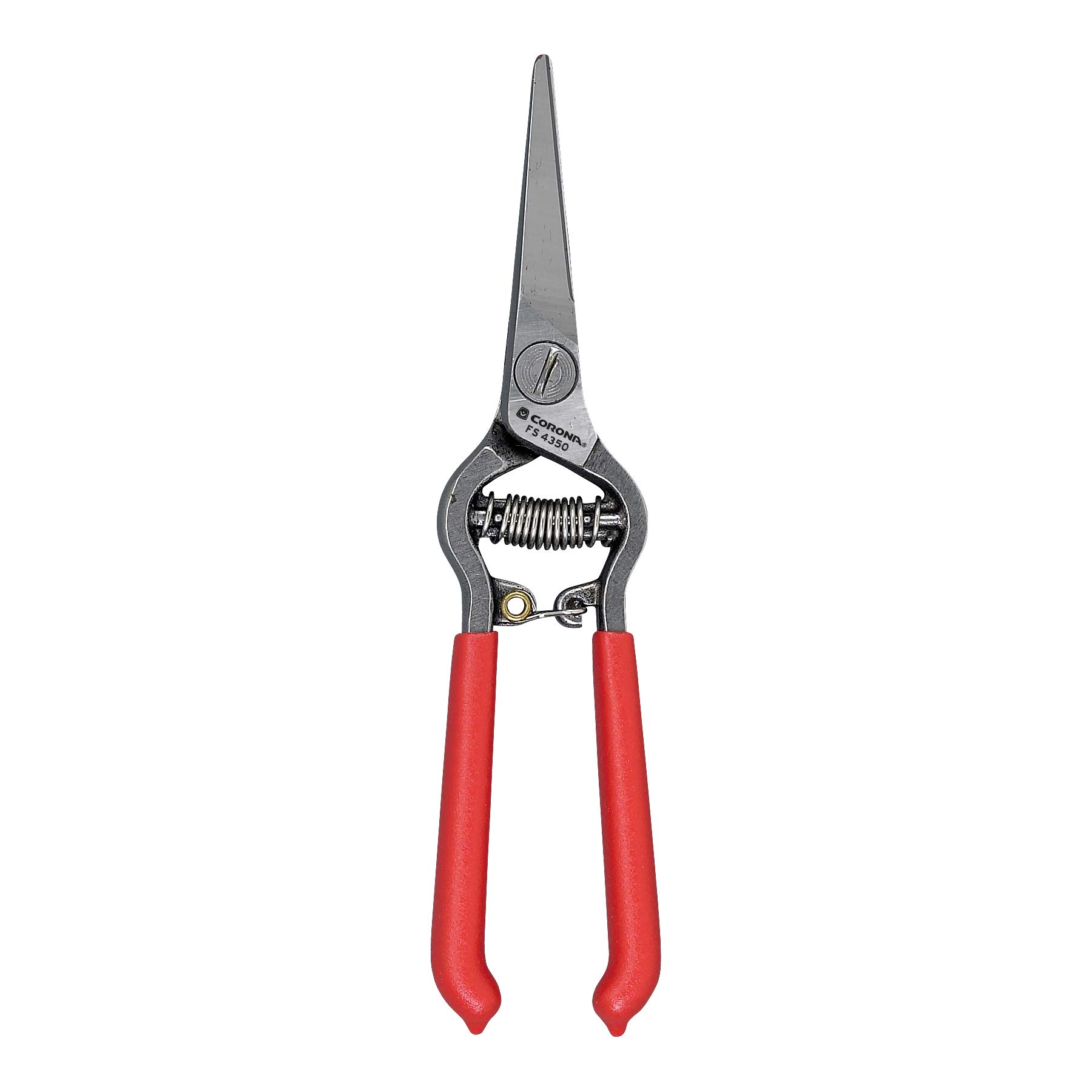
The Corona FS-4350 takes a different approach with its long, straight blades designed for thinning dense foliage rather than making precise branch cuts. The drop-forged steel construction gives it a solid, heavy feel that inspires confidence when you’re reaching into a thick shrub to selectively remove interior growth. The straight blades allow you to slide them into tight clusters of stems and snip precisely without damaging surrounding branches, which is ideal for improving airflow and light penetration in ornamentals.
The cushioned non-slip grips are generously padded and provide excellent control even when wearing gloves or working in damp conditions. The overall weight is slightly heavier than the ARS options, but that mass helps power through stems up to three-quarters of an inch with a bit of effort. Many users find the narrow tip doubles as a useful weed extractor — you can pry out long-rooted dandelions without bending over. This dual-purpose capability makes the FS-4350 a smart addition to any garden toolkit even as a secondary tool.
The latch mechanism feels secure but can be a bit stiff to engage one-handed. The straight blade geometry isn’t as effective for standard pruning cuts as a curved bypass blade, and the brushed steel finish is prone to surface rust if not dried properly. For its intended use of thinning, flower harvesting, and light shrub maintenance, this shear delivers excellent value without demanding a premium investment.
Why it’s great
- Long straight blades excel at thinning dense foliage
- Padded non-slip grips provide secure hold in wet conditions
- Versatile tip works for weeding and prying as well as cutting
Good to know
- Heavier than other pruners; less ideal for extended one-handed use
- Straight blades not optimized for standard bypass pruning cuts
FAQ
What is the difference between bypass and anvil pruners?
How often should I oil my garden pruners?
Can I sharpen my garden pruners at home?
Final Thoughts: The Verdict
For most users, the best garden pruners winner is the Corona BP 6250 because it combines a forged steel blade, a 1-inch cutting capacity, and lightweight aluminum handles at a price that undercuts comparable Felco models. If you want the maximum joint protection and rust resistance for long pruning sessions, grab the Haus & Garten EnduroPRO. And for fine detail work like deadheading and floral arranging, nothing beats the precision and comfort of the ARS HP-130DX.