
The wrong blade turns a five-minute cut into a fifteen-minute fight with bent teeth and snapped steel. Whether you are slicing through schedule-40 pipe, trimming stainless steel rod, or breaking down an old bed frame, the connection between your saw frame and the material lives entirely in those twelve inches of TPI. A few strokes separate smooth progress from a trip to the hardware store mid-job.
I’m Mohammad Maruf — the founder and writer behind Drink4Good. I spent months analyzing bi-metal construction, tooth geometry, and real-world durability across the most common hacksaw blade packs to find which ones hold an edge and which ones fold under pressure.
This guide focuses exclusively on the narrow sweet spot of replacement blades that fit a standard 12‑inch frame, sorting through material science and user reports to deliver a clear verdict on the best hacksaw blades for metal, wood, PVC, and the mixed jobs that pop up in real shops and garages.
How To Choose The Best Hacksaw Blades
Selecting the right blade pack for your frame comes down to three decisions: material construction, teeth per inch, and the tooth set pattern. A premium bi-metal blade costs more upfront but stays sharp longer than a standard carbon steel blade, especially when you cut abrasive materials like stainless or thin-wall conduit.
Material Construction: Bi-Metal vs. Carbon Steel
Carbon steel blades are cheap and work fine for soft materials like wood or PVC, but they dull fast on metal and snap easily under sideload. Bi-metal blades weld a high-speed steel (HSS) tooth strip onto a flexible spring steel back. That spine bends without breaking while the teeth stay hard enough to cut through hardened bolts and iron pipe. Every product in this guide uses bi-metal construction because the marginal cost difference is small and the durability gain is enormous.
TPI — Teeth Per Inch Explained
As a rule of thumb, you want at least three teeth in contact with the material at all times. An 18-TPI blade works best for thick, soft metals like aluminum or copper pipe. A 24-TPI blade is the general‑purpose sweet spot for steel angle, rebar, and threaded rod. A 32-TPI blade handles thin-wall tubing, conduit, and sheet metal without snagging. Multi‑count packs that include a mix of TPI options give you the most flexibility for a single purchase.
Tooth Set and Grind Quality
Wavy set teeth alternate left and right in a smooth curve, clearing chips efficiently during fast cuts. Precision ground teeth — ground after heat treatment rather than milled before — stay sharper longer because the cutting edge has no burrs. Both Bahco and Irwin use precision‑ground HSS teeth, which is one reason they outlast cheap economy blades.
Quick Comparison
On smaller screens, swipe sideways to see the full table.
| Model | Category | Best For | Key Spec | Amazon |
|---|---|---|---|---|
| BAHCO 3906-300-24-10P | Premium Bi-Metal | All-around metal cutting | 24 TPI – precision ground HSS | Amazon |
| BAHCO 3906-300-32-10P | Premium Bi-Metal | Thin-wall & sheet metal | 32 TPI – precision ground HSS | Amazon |
| Hanpex 10‑Pack Multi‑TPI | Mid-Range Multi‑Pack | Mixed material jobs | 18/24/32 TPI assortment | Amazon |
| JUGREAT 24 TPI 10‑Pack | Mid-Range Bi-Metal | DIY & general steel cutting | 24 TPI – D6A M2 HSS teeth | Amazon |
| Irwin 10504525 32 TPI | Premium 2‑Pack | Clean cuts on tubing | 32 TPI – shatter resistant | Amazon |
In‑Depth Reviews
1. Bahco 3906-300-24-10P 10‑Pack 24 TPI
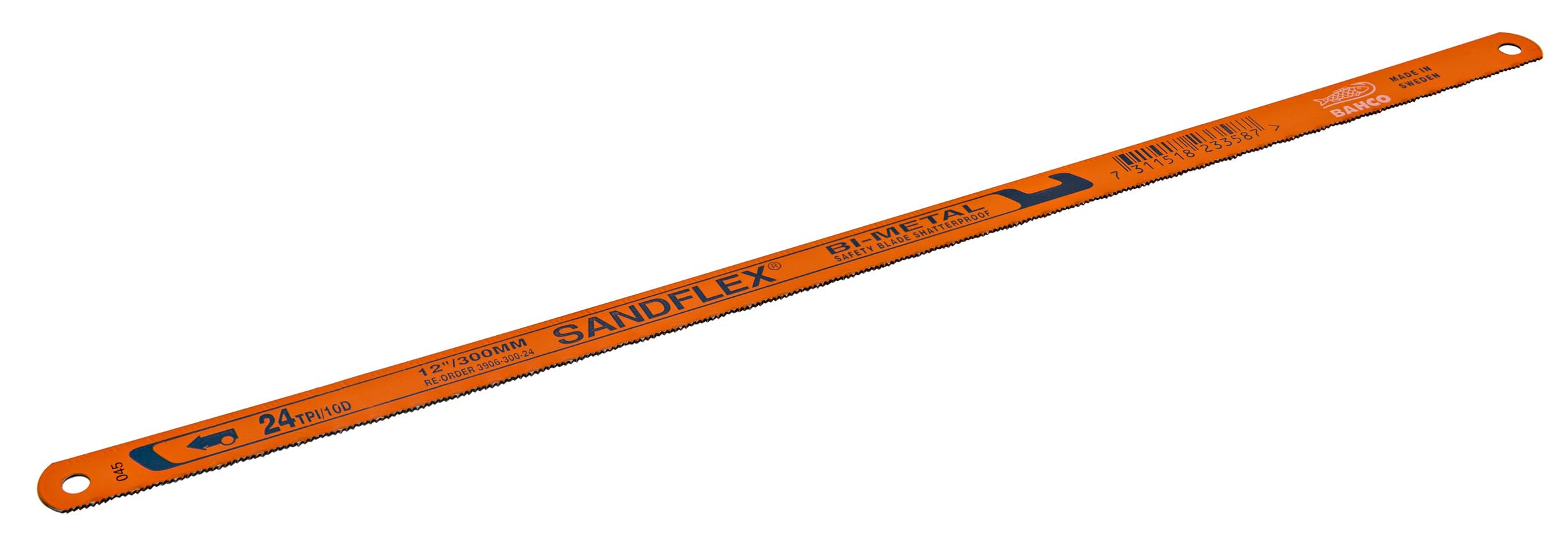
Bahco’s 3906 series is the benchmark that other bi-metal blades are measured against. The 24‑TPI version strikes the most balanced tooth count for general metalwork — it handles steel angle, rebar, and thick-wall pipe without clogging, and it still produces a clean enough edge for threaded rod. The precision‑ground HSS teeth are noticeably sharper out of the package than milled alternatives, and the spring‑steel back absorbs the kind of sideload that would snap a carbon steel blade instantly.
Users switching from economy blades consistently report cutting through 3/4‑inch steel rail in less than half the strokes. The shatterproof construction means you can push hard on aggressive material without worrying about a faceful of brittle shards. Each blade lasts longer than the cheaper bimetal options from bulk retailers, which makes the per‑blade cost lower over a project’s duration despite the higher initial outlay.
The only real friction point is packaging clarity — the product images can imply a boxed multi‑pack, but you receive a single sleeve of ten blades. That’s still an excellent value for a premium blade, but double‑check the listing if you are expecting a different presentation.
Why it’s great
- Precision‑ground HSS teeth stay sharp far longer than milled blades
- Flexible spring steel back resists snapping under heavy load
- 24 TPI is the most versatile pitch for mixed metal cutting
Good to know
- Packaging images can be misleading — you get one sleeve of ten, not ten individual packs
- Premium price per blade versus entry-level bi-metal options
2. Bahco 3906-300-32-10P 10‑Pack 32 TPI
When the material gets thin — sheet metal, conduit, thin-wall tubing, or hardened bolts — 32 TPI keeps the teeth engaged without skipping or grabbing. The Bahco 3906‑300‑32‑10P uses the same precision‑ground HSS tooth strip and flexible back as the 24‑TPI version, but with tighter spacing that prevents the blade from catching on thin edges. Users report cutting through grade 12.9 bolts with a clean finish and no tooth breakage.
The higher tooth count produces a smoother, quieter cut on thin metals because more teeth share the load. One user described it as “cutting steel channel easily with a hand saw, far outperforming others,” and noted that a single blade lasted an entire project without visible dulling. That kind of durability is unusual for a fine‑pitch blade, which typically wears faster due to the smaller tooth cross‑section.
Like its 24‑TPI sibling, the 32‑TPI Bahco runs at a premium per‑blade cost. For projects that involve mostly thick material, the 24‑TPI version is a better fit — but if you regularly cut thin-wall tubing or hardened fasteners, this is the sharper choice.
Why it’s great
- Exceptional edge retention on hardened steel and bolts
- Smooth, chatter-free cuts on thin-wall materials
- Same shatterproof bi-metal construction as the 24 TPI version
Good to know
- 32 TPI cuts slower on thick sections due to smaller gullets
- Premium price is noticeable if you burn through blades on abrasive material
3. Hanpex 10‑Pack Multi‑TPI (18/24/32)

Hanpex solves the “which TPI do I need” question by giving you three pitches in one box — three blades at 18 TPI, three at 24 TPI, and four at 32 TPI. That mix lets you switch from a thick aluminum extrusion to thin copper pipe without ordering separate packs. The bi-metal construction uses a D6A+M2 high‑speed steel tooth line welded to a spring steel back, which provides the same bend‑without‑break advantage that makes premium blades safer.
Users report that the 24‑ and 32‑TPI blades cut through 3/4‑inch metal rail quickly and leave a decent finish. The wavy set teeth clear chips well on softer metals like aluminum, and the included plastic case keeps the assortment organized in a toolbox drawer. At a per‑blade cost that lands well below the Bahco alternatives, this is a strong option for the DIYer who faces a different material every weekend.
The trade‑off is that the tooth hardness and edge retention don’t match the precision‑ground Bahco blades. Users note that the 18‑TPI blades dull faster on abrasive cuts, and the overall feel is slightly less refined. For professional shops cutting hard metals daily, the premium brands are worth the extra cost. For the home shop, this assortment covers more ground for less money.
Why it’s great
- Three TPI options cover wood, metal, and thin-wall cutting in one purchase
- Bi-metal construction with HSS teeth provides good flexibility
- Comes with a plastic storage case for organization
Good to know
- Edge retention is not as long as precision‑ground premium blades
- 18‑TPI blades wear fastest, especially on harder metals
4. JUGREAT 24 TPI 10‑Pack Bi-Metal
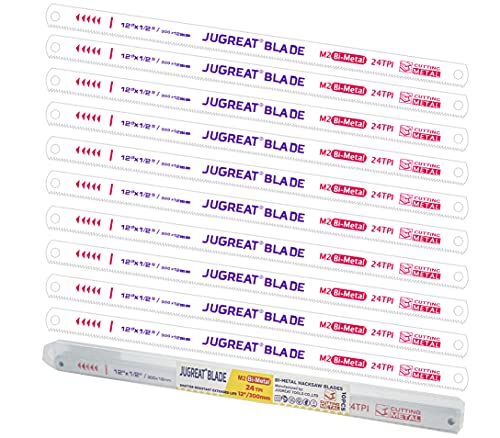
JUGREAT targets the value‑conscious buyer who still wants bi-metal durability. The 24‑TPI pitch fits the sweet spot for general steel cutting, and the D6A M2 HSS tooth line is the same material spec used by mid‑range industrial blades. Users who ordered multiple packs report consistent quality — the teeth are sharp out of the sleeve, and the spring steel back flexes without cracking under normal hand‑saw pressure.
DIY tinkerers praise these blades for everyday jobs like cutting french cleats from aluminum angle, slicing through iron pipe, and trimming stainless steel sheet. The 0.025‑inch thickness and 1/2‑inch width match standard 12‑inch frames, so there is no fitment issue. Several repeat buyers mention ordering the same pack multiple times because the durability meets their needs without the premium price of European brands.
The main trade‑off is that the precision of the grind is not as consistent as Bahco’s. A handful of users note that the first few strokes feel slightly rougher, and the blades may not last as long on hardened materials like grade‑8 bolts. For light‑to‑medium metalwork, the performance per dollar is excellent — just don’t expect Bahco longevity on demanding cuts.
Why it’s great
- Strong value for a 10‑pack of bi-metal blades
- 24 TPI works well for most DIY metal cutting tasks
- D6A M2 HSS teeth provide decent edge life
Good to know
- Grind consistency is not as refined as premium brands
- Wears faster on hardened steel or heavy‑duty use
5. Irwin 10504525 12‑Inch 32 TPI (Pack of 2)

Irwin brings over a century of tool manufacturing to this bi-metal blade, and it shows in the shatter‑resistant construction. The 32‑TPI pitch is ideal for copper tubing, aluminum sheets, u‑PVC, and thin‑wall conduit — basically any material where a coarse blade would snag and tear. Users consistently report clean, precise cuts with no tooth stripping, and the blade keeps its edge long enough to finish multiple jobs.
The pack of two is a smaller count than the 10‑packs from other brands, but each blade is built to a higher standard than most economy options. The HSS teeth are precision‑set for consistent kerf width, and the flexible back reduces the risk of snapping when you are cutting in tight spaces without a frame. Professional tradespeople who work with tubing and sheet metal often keep a few Irwin packs in their kit because the reliability is predictable
The per‑blade cost is significantly higher than the multi‑pack options, so this is not the right choice if you burn through blades quickly or cut mostly thick steel. But for clean, fast cuts on thin materials, the Irwin 32‑TPI blade is a top contender. The smaller pack size also makes it a good trial buy — you can test the quality before committing to a larger quantity.
Why it’s great
- Shatter‑resistant design prevents dangerous breakage
- Excellent cut quality on tubing, sheet metal, and PVC
- Consistent edge retention from a trusted industrial brand
Good to know
- Only two blades per pack — higher per‑blade cost than bulk options
- 32 TPI not ideal for thick steel or heavy structural cuts
FAQ
Which TPI should I use for cutting steel pipe?
How can I tell if a blade is real bi-metal or just painted HSS?
Why do my blades keep snapping near the frame pins?
Final Thoughts: The Verdict
For most users, the best hacksaw blades winner is the Bahco 3906-300-24-10P because it combines precision‑ground HSS teeth with a flexible spring steel back at a price that rewards users who value long blade life over the cheapest possible per‑unit cost. If you want a multi‑TPI assortment that covers wood, PVC, and metal in one box, grab the Hanpex 10‑Pack. And for thin‑wall tubing and clean cuts on sheet metal, nothing beats the Irwin 32‑TPI 2‑Pack.